Trademark License Agreement (Pro-Licensee) (Colorado): Free template
Customize it in Cobrief, send it for signature, and move straight to payment once it's approved.
Customize this template for free
TL;DR
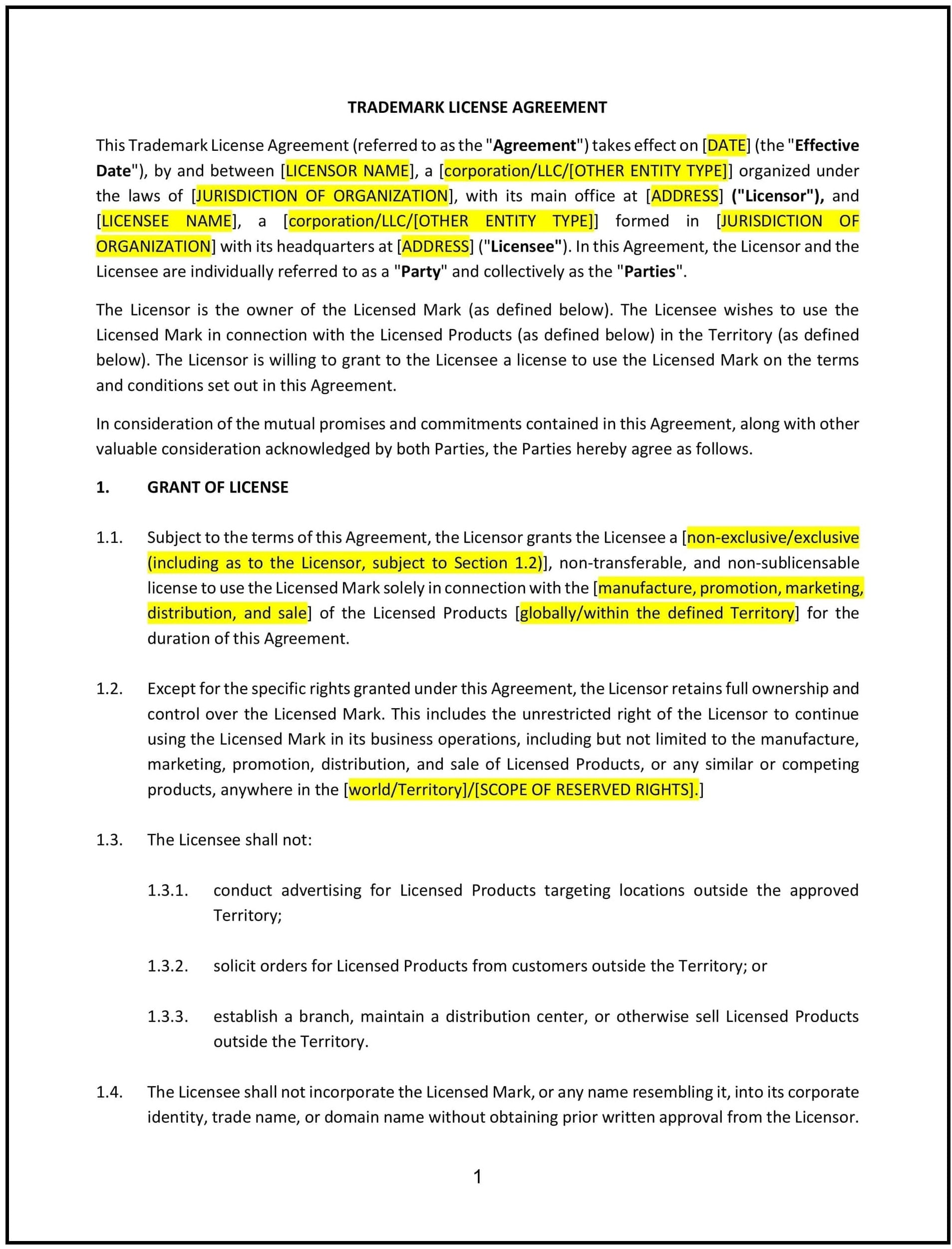
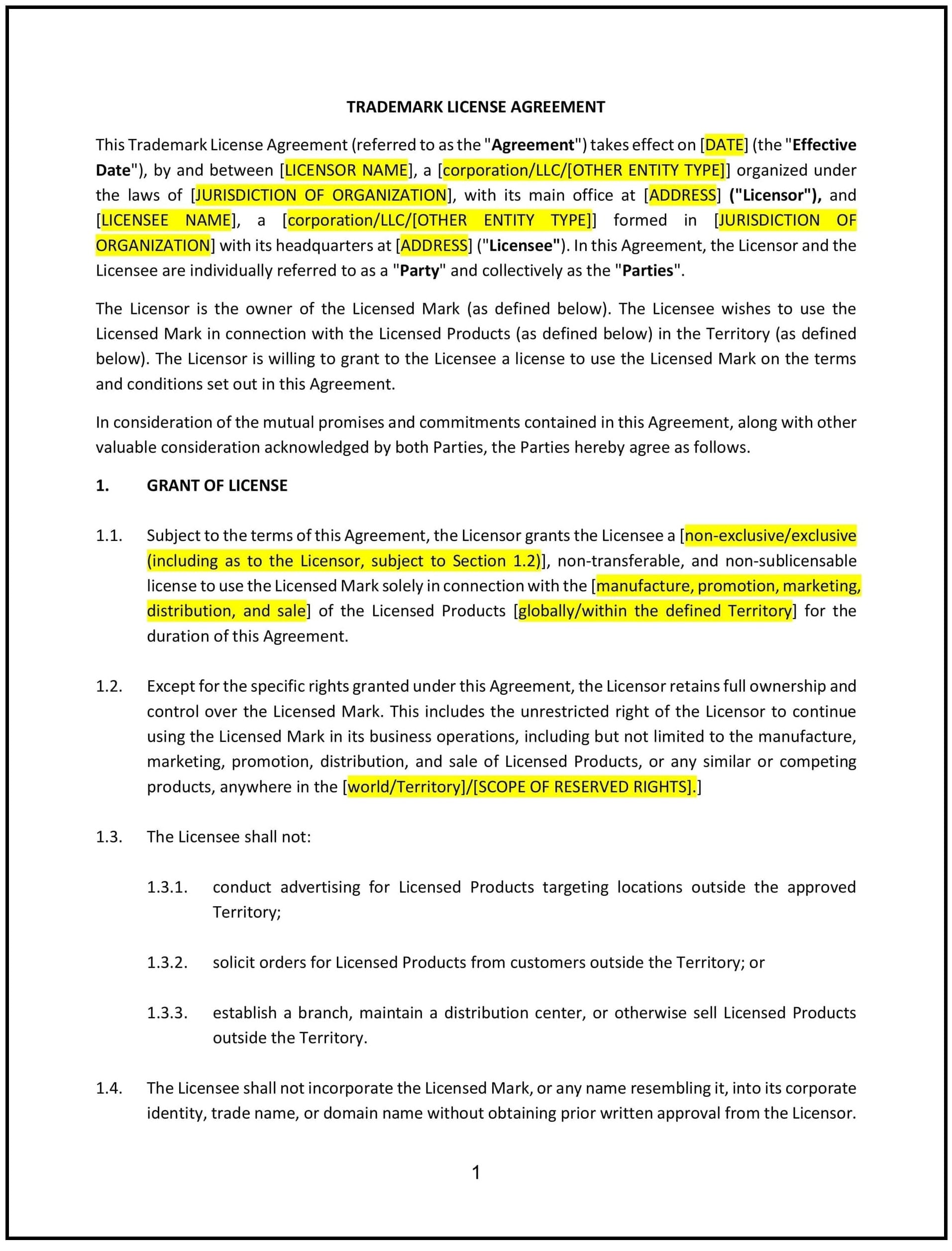
A Trademark License Agreement designed for licensees in Colorado, granting rights to use a trademark owned by another party. It emphasizes the licensee's interests, detailing scope, quality standards, financial terms, and compliance with state and federal laws, making it essential for businesses in sectors like retail and outdoor recreation looking to expand their brand presence.
Trademark License Agreement (Pro-Licensee) (Colorado)
A Trademark License Agreement is a legal contract that grants a licensee the right to use a trademark owned by another party. For businesses in Colorado, this agreement is a valuable tool for expanding brand reach while ensuring compliance with the licensor’s requirements. Whether you’re licensing a logo, brand name, or slogan, a well-drafted agreement ensures both parties understand their rights and obligations.
In Colorado, industries like outdoor recreation, retail, and manufacturing often rely on trademark license agreements to collaborate with partners, distributors, or franchisees. For example, a Boulder-based retailer might license a popular brand to enhance its product offerings, or a tech startup could use a trademark to promote its services. A pro-licensee agreement prioritizes the licensee’s interests, ensuring they have the flexibility and protection needed to operate effectively.
To minimize the risk of disagreements and preserve the integrity of the trademark, it’s crucial to define the scope of use, quality standards, and financial terms in clear and unambiguous language.
Tips for drafting and maintaining a Trademark License Agreement (Pro-Licensee) in Colorado
- Define the scope of the license: Clearly specify how the licensee can use the trademark. Include details such as geographic limitations, product categories, and exclusivity.
- Example: “The licensee is granted a non-exclusive license to use the trademark in connection with the sale of branded merchandise within the state of Colorado.”
- Set quality control standards: To protect the trademark’s reputation, include provisions requiring the licensee to maintain specific quality standards. This ensures the licensed products or services align with the licensor’s brand identity.
- Tip: Include examples of acceptable materials, designs, or processes to avoid ambiguity.
- Outline financial terms: Specify royalty rates, payment schedules, and any upfront fees. Ensure these terms are clear and realistic to avoid misunderstandings.
- Example: “The licensee agrees to pay a royalty of 5% of gross sales generated from the use of the trademark, payable quarterly.”
- Include termination clauses: Define conditions under which the agreement can be terminated, such as breach of terms, failure to meet sales targets, or expiration of the license period.
- Example: “This agreement may be terminated by the licensor if the licensee fails to make payments within 30 days of the due date.”
- Ensure compliance with Colorado and federal laws: Trademarks are governed by both state and federal laws. Ensure your agreement complies with Colorado’s regulations and U.S. trademark laws, including registration and usage requirements.
- Tip: If the trademark is federally registered, include the registration number in the agreement.
- Address dispute resolution: Specify how disputes will be resolved, whether through negotiation, mediation, or arbitration. Indicate that Colorado law will govern the agreement to avoid jurisdictional issues.
- Example: “Any disputes arising under this agreement shall be resolved through arbitration in Denver, Colorado.”
- Keep the agreement updated: As your business grows or market conditions change, review and update the agreement to reflect new terms or circumstances. Regular updates ensure the agreement remains relevant and enforceable.
- Tip: Schedule an annual review to assess whether the agreement still meets both parties’ needs.
Frequently asked questions (FAQs)

Establishes terms for licensing a trademark in Colorado, covering usage rights, quality standards, royalties, termination, compliance, and dispute resolution.
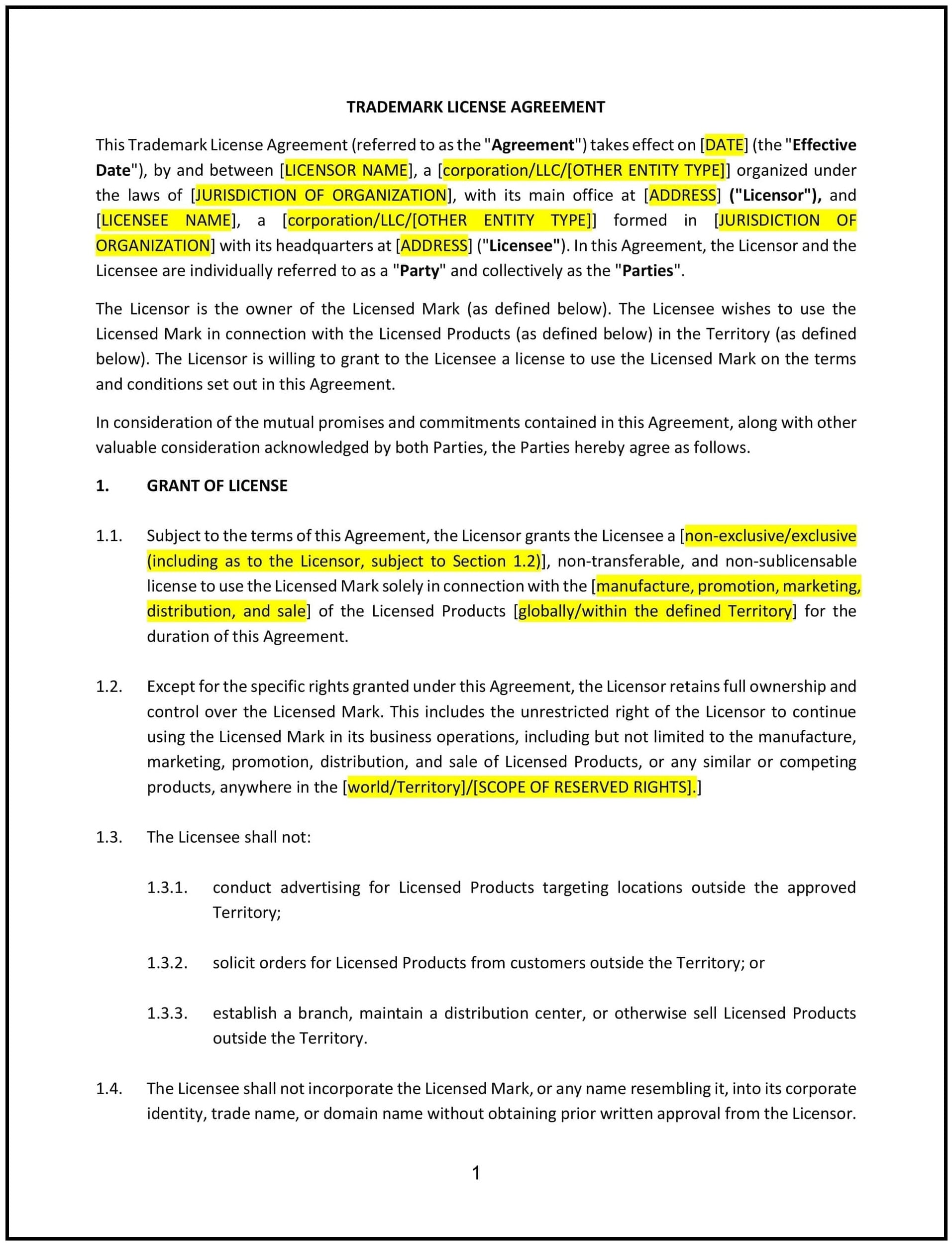
Defines a trademark license agreement favoring the licensee, detailing scope, quality control, royalties, termination, and Missouri legal compliance.
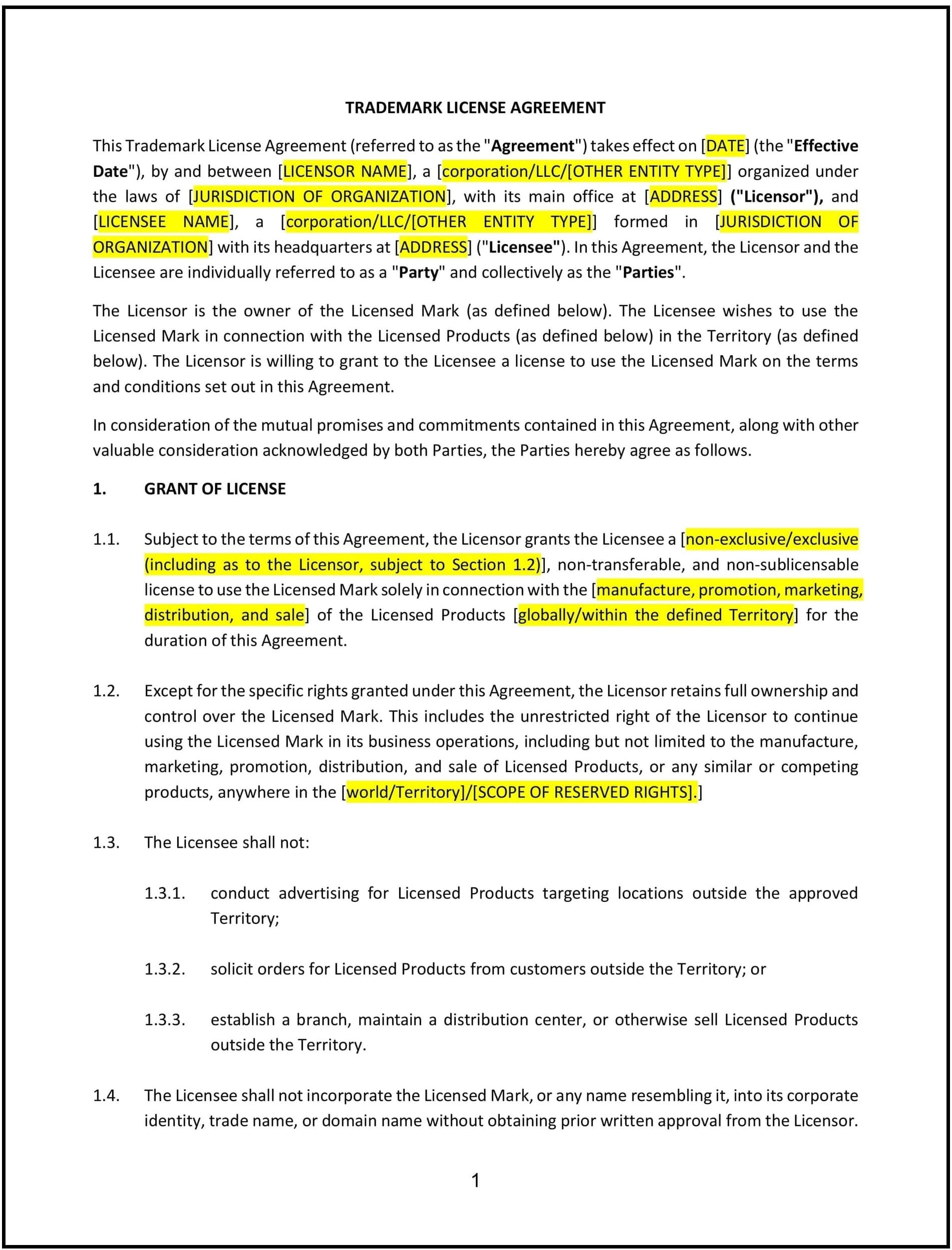
Grants a licensee rights to use a trademark in Minnesota, detailing scope, quality standards, financial terms, termination, compliance, and dispute resolution.
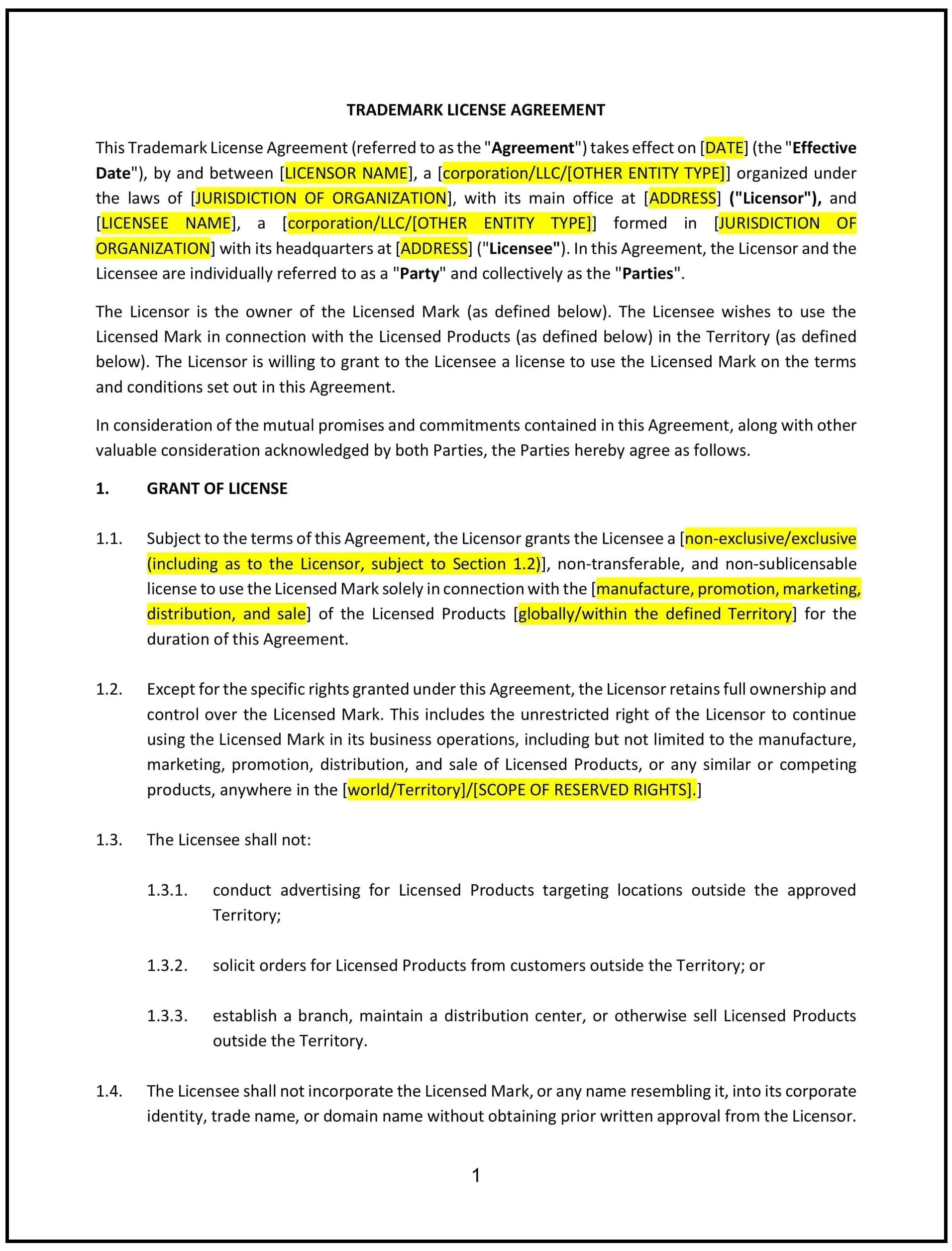
Grants a licensee the right to use a trademark in Connecticut, detailing scope, quality standards, financial terms, termination, and dispute resolution.
Grants a licensee the right to use a trademark in Arizona, detailing scope, quality standards, financial terms, termination, compliance, and dispute resolution.