Counteroffer to proposed contract terms letter: Free template
Customize it in Cobrief and see the moment it's opened, signed, or actioned.
Customize this template for free
TL;DR
A counteroffer letter template for negotiating contract terms, designed to help organizations propose adjustments to initial agreements while maintaining a collaborative tone. It outlines how to reference the original proposal, specify changes, and explain reasoning to foster constructive dialogue. Typically used by legal teams or contract managers, it aims to streamline negotiations and strengthen professional relationships.
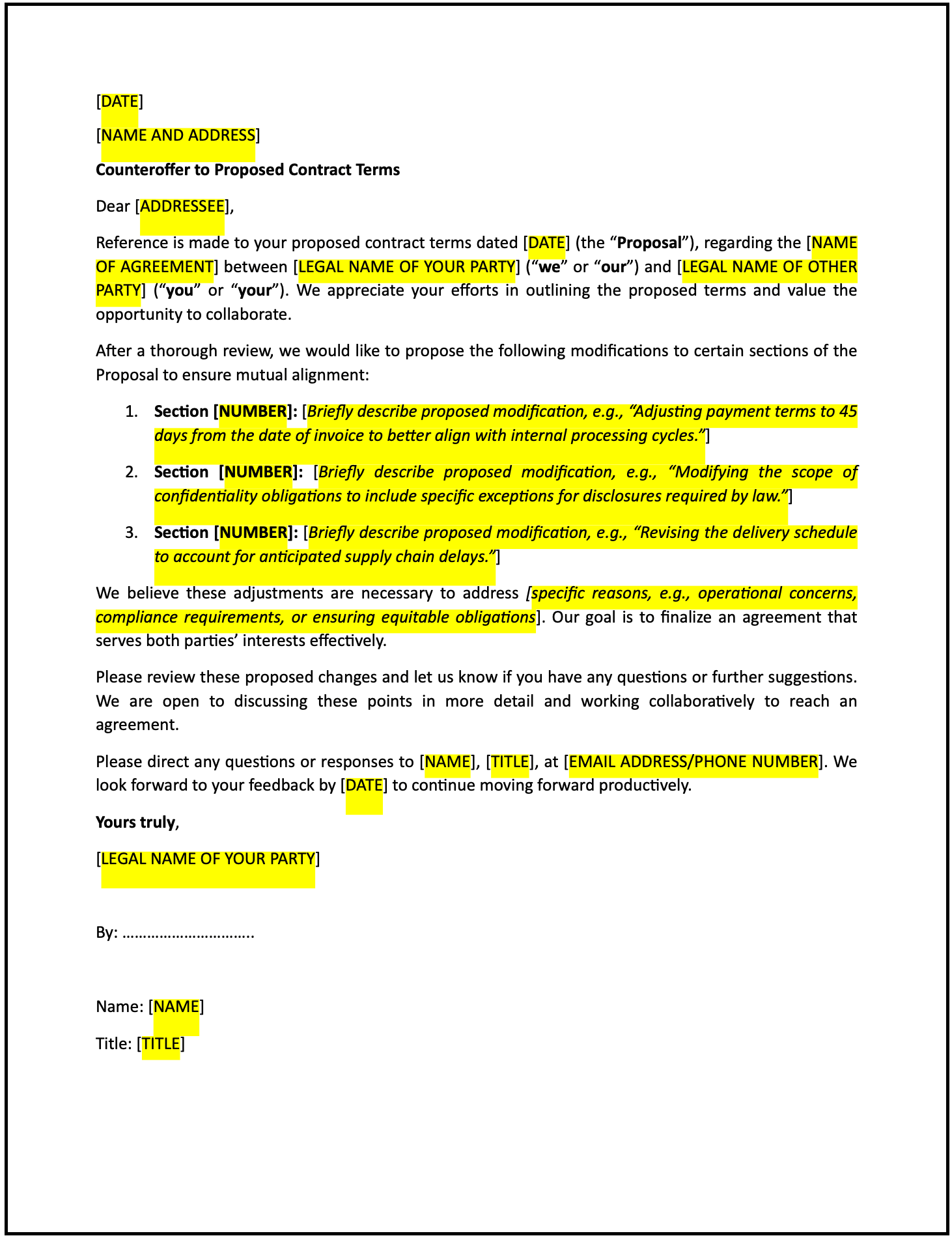
Counteroffer to proposed contract terms letter
Negotiating contract terms often requires presenting a counteroffer to align the agreement with your organization’s needs. This letter provides a professional way to propose adjustments to the initial terms, explain your reasoning, and maintain a collaborative tone to foster positive negotiations.
How to use this counteroffer to proposed contract terms letter
- Reference the original proposal: Clearly state the contract proposal you are responding to, including its title, reference number, or date.
- Customize the template: Replace placeholders with your organization’s details, the proposed contract terms, and the adjustments you are suggesting.
- Specify the counteroffer: Clearly outline the terms you propose, including specific changes and any reasoning behind them.
- Explain your reasoning: Provide a clear and concise explanation of why the changes are necessary, focusing on mutual benefits or operational needs.
- Maintain a collaborative tone: Ensure the letter emphasizes a willingness to work together to reach an agreement that suits both parties.
- Include a call for further discussion: Invite the other party to review the counteroffer and schedule a meeting or call to discuss further.
Benefits of using a counteroffer to proposed contract terms letter
This letter template provides a clear and professional way to negotiate contract terms while maintaining a positive and constructive relationship. Here’s how it helps:
- Foster collaboration: The letter frames the counteroffer as part of a constructive dialogue, emphasizing mutual benefits.
- Provide clarity: Clearly outlining the proposed changes ensures the other party understands your position and the reasons behind it.
- Demonstrate professionalism: A well-structured letter reflects respect and a commitment to reaching a fair agreement.
- Simplify negotiations: By presenting specific adjustments in writing, the letter reduces ambiguity and streamlines the negotiation process.
- Strengthen trust: Clearly articulating your needs and willingness to work together builds confidence and supports a positive working relationship.
Tips for writing an effective counteroffer to proposed contract terms letter
- Be specific: Clearly reference the original proposal and state the exact changes you are requesting.
- Justify your changes: Provide a logical and respectful explanation of why the adjustments are needed and how they benefit both parties.
- Use professional language: Maintain a collaborative and respectful tone to keep negotiations positive and constructive.
- Address potential objections: Anticipate and address any concerns the other party might have about the counteroffer.
- Keep it concise: Focus on the key changes and reasoning, avoiding unnecessary details that could detract from the main message.
Frequently asked questions (FAQs)
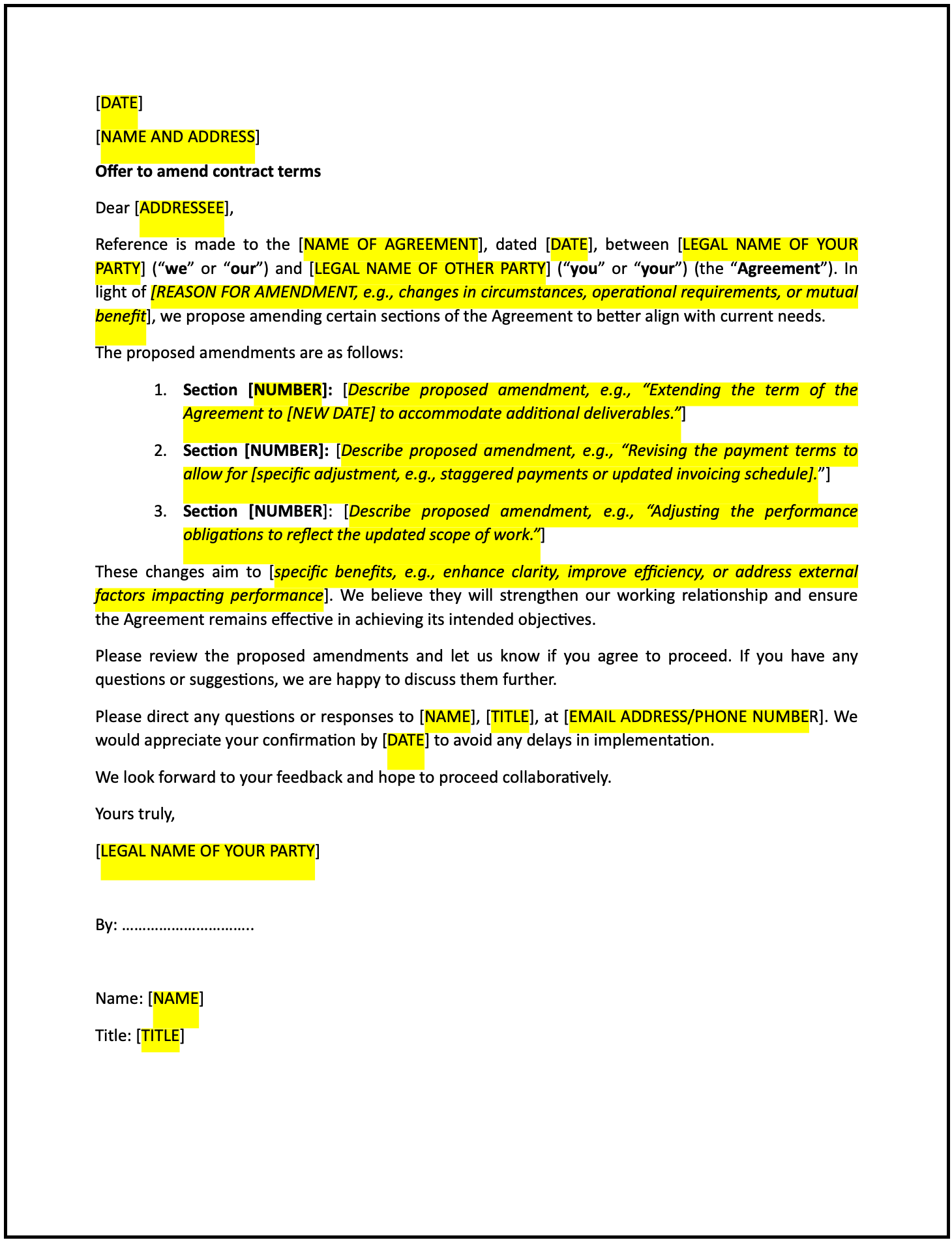
Requests amendments to specific contract terms, outlining the desired changes and providing justification for the adjustments.
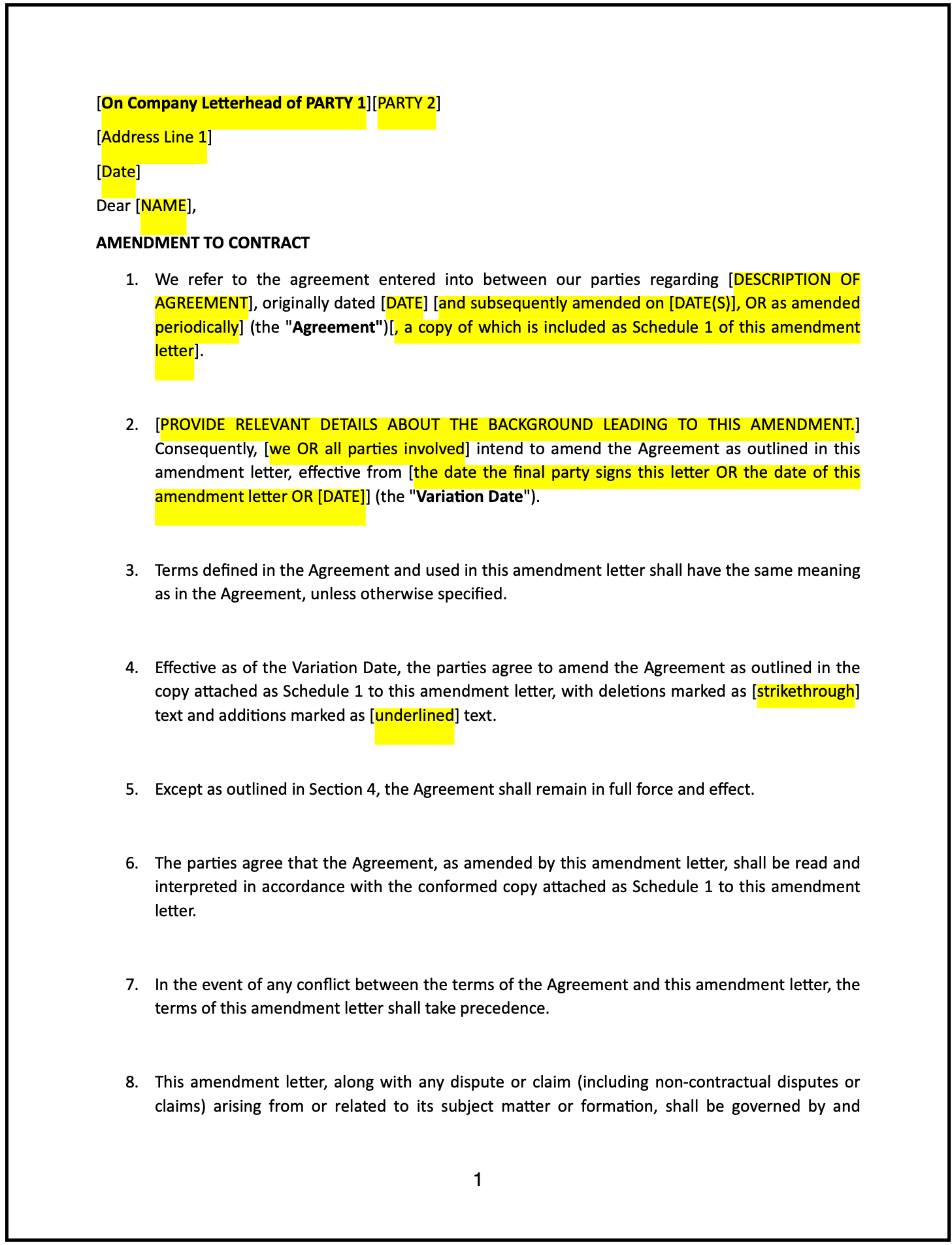
Requests a revision of the contract, outlining the specific terms to be modified and providing reasoning for the requested changes.
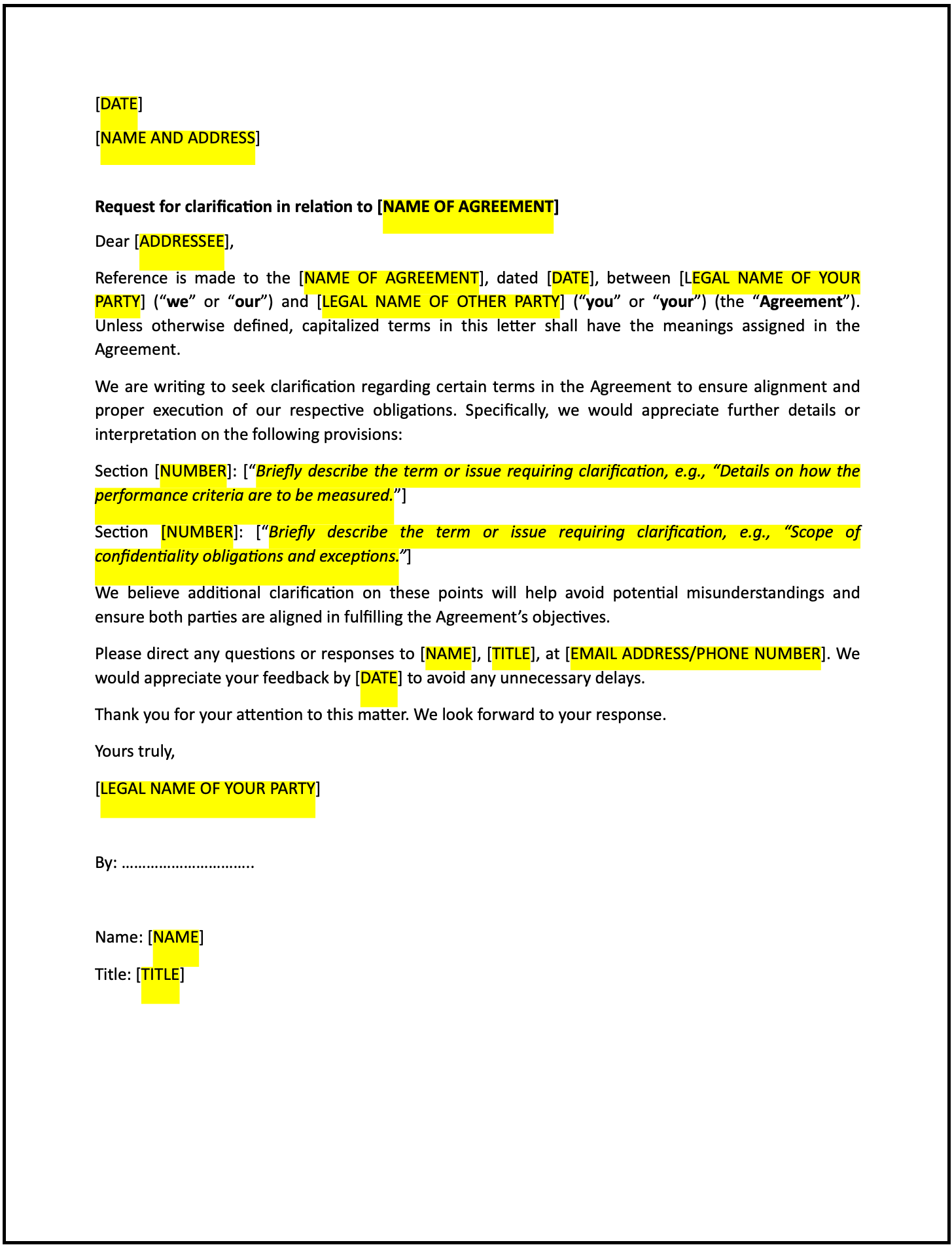
Requests clarification of specific contract terms, outlining the areas of uncertainty and seeking further explanation or documentation.
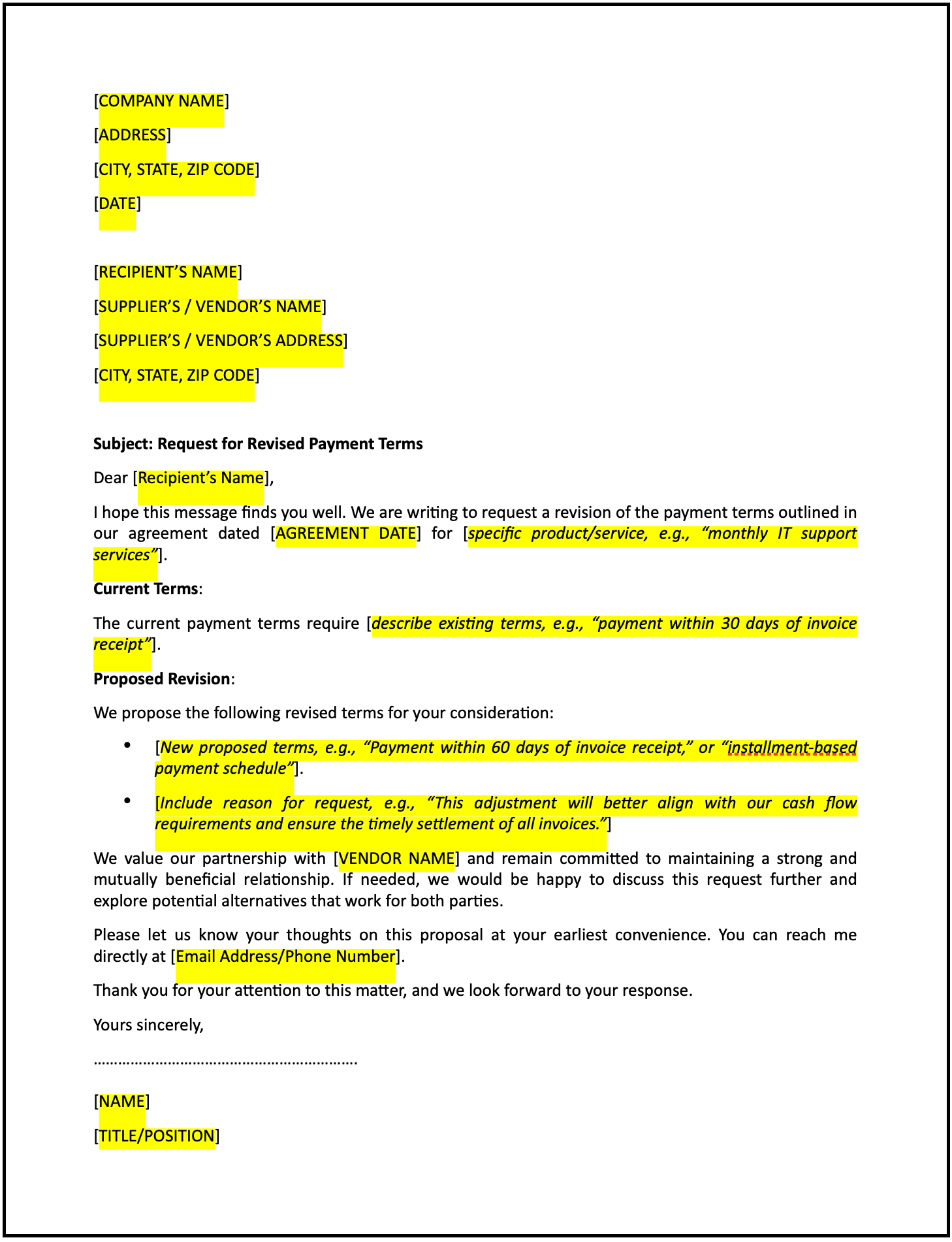
Requests revised payment terms, explaining the need for the adjustment and proposing new terms or a payment schedule.
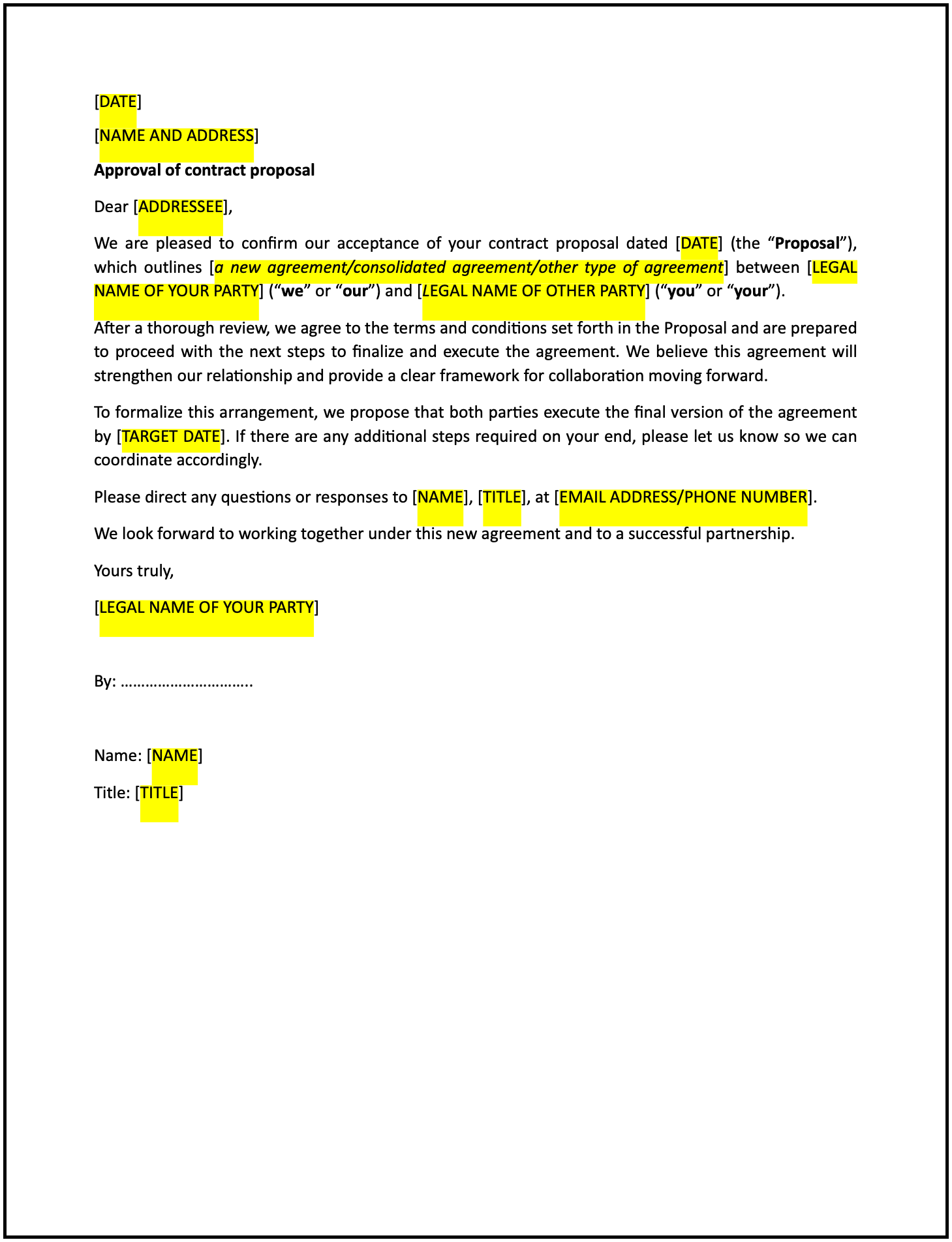
Approves a contract proposal, confirming the terms and expressing readiness to move forward with the agreement.