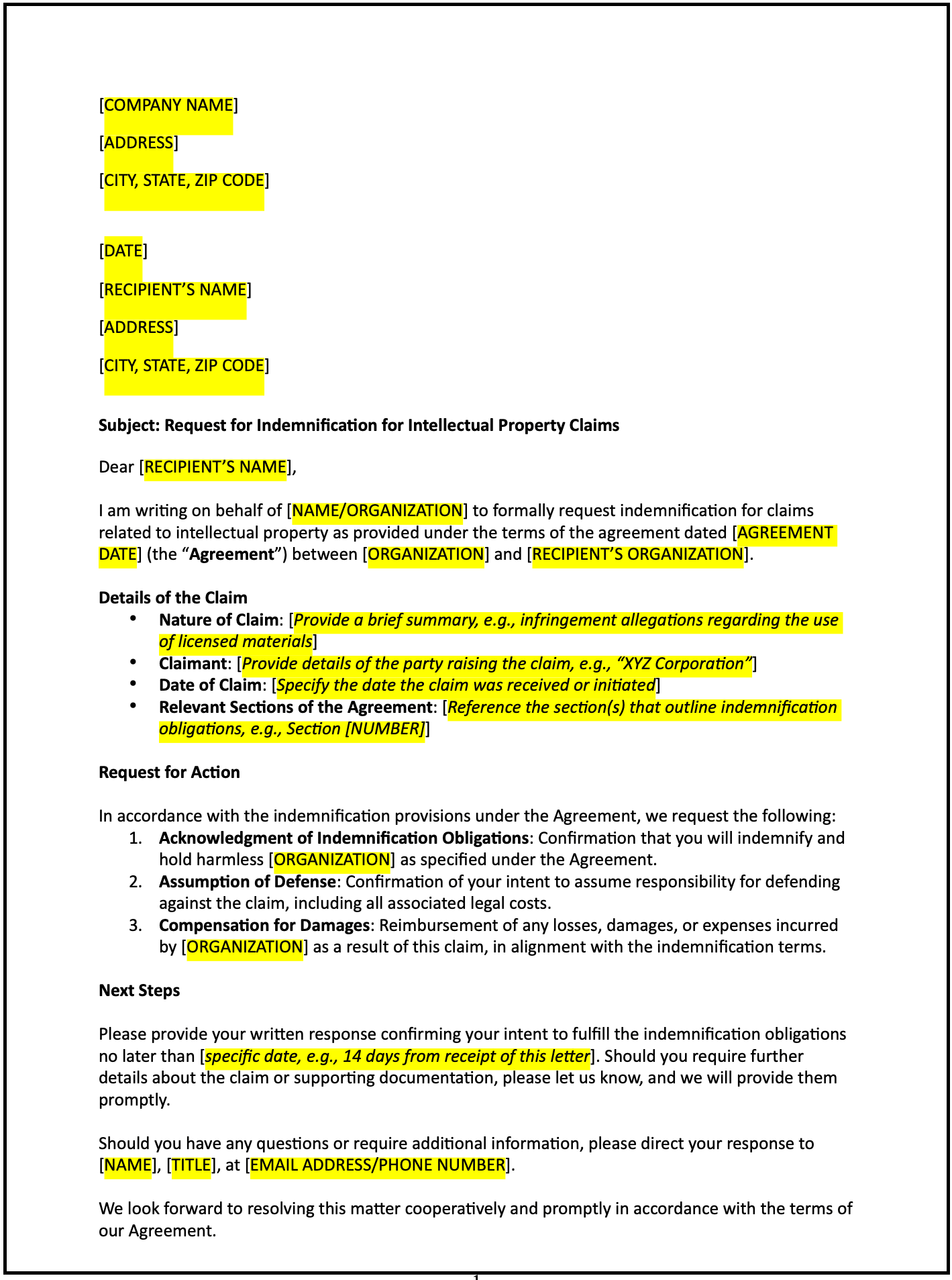
IP indemnification request letter: Free template
Requests indemnification for any intellectual property-related claims, outlining the circumstances and seeking protection against potential legal liabilities.
- Letters
IP indemnification request letter
An IP indemnification request letter is a formal way to ask another party to cover intellectual property (IP)-related claims, liabilities, or costs under an existing contract. If your business is facing a legal claim—such as alleged infringement of patents, trademarks, copyrights, or trade secrets—this letter helps you formally trigger the indemnification clause in your agreement. It references the relevant contract terms, explains the issue in detail, and requests a response or proposed action from the indemnifying party.
This type of letter is important for documenting your position, protecting your business interests, and promoting a clear path to resolution.
How to use this IP indemnification request letter
- Start with an introduction: Address the recipient respectfully and identify the agreement under which the request is being made. Mention the agreement name, effective date, and parties involved.
- State the purpose: Explain that you are making a formal request for indemnification based on an IP-related claim or liability that has arisen in connection with the contract.
- Reference the contract: Point to the specific indemnification provision that outlines the other party’s obligations in the event of IP-related claims. Include the section number or heading.
- Provide details: Describe the issue that has prompted the request. Include relevant dates, the nature of the claim, the party making the claim, and any supporting documents, such as a legal notice or correspondence.
- Outline the obligations: Reiterate what the contract requires the indemnifying party to do—such as defending the claim, reimbursing legal costs, or resolving the matter. Clarify your expectations based on those terms.
- Request action: Ask the recipient to confirm their acceptance of the indemnification request and indicate what steps they will take next. You may also request a written response within a certain timeframe or propose a call to discuss the matter further.
- Maintain a professional tone: Keep the language respectful, factual, and focused on collaboration. The goal is to prompt action without escalating the situation unnecessarily.
- Provide contact information: Include the sender’s name, title, phone number, and email address so the recipient can respond directly or ask questions.
Benefits of using an IP indemnification request letter
- Promotes clarity: The letter outlines your position and expectations in a structured way, reducing confusion and misunderstandings.
- Reflects professionalism: A formal written request shows respect for the contract and the business relationship.
- Encourages resolution: A clearly worded letter increases the chances of a prompt and constructive response from the indemnifying party.
- Builds trust: Demonstrating that you are following the agreed process strengthens your credibility and commitment to fair dealing.
- Supports legal protection: A written record of your request may be useful if the matter develops further or requires escalation.
Tips for writing an effective IP indemnification request letter
- Be specific: Include the name of the agreement, the relevant clause, and a clear description of the claim or liability.
- Use professional language: Keep your tone courteous and businesslike, even if the situation is contentious.
- Provide context: Briefly explain how the claim arose and why it falls within the scope of indemnification under the contract.
- Highlight mutual benefits: Emphasize how honoring the indemnification terms protects both parties and preserves the relationship.
- Include actionable steps: Make it easy for the recipient to respond—whether by confirming the request, sharing a proposed plan, or arranging a meeting.
- Keep it focused: Stick to the key points while making sure the letter covers everything needed to move the issue forward.
Frequently asked questions (FAQs)
Similar templates
Where deals go from offer to paid
