Letter disputing allegations of IP infringement: Free template
Customize it in Cobrief and see the moment it's opened, signed, or actioned.
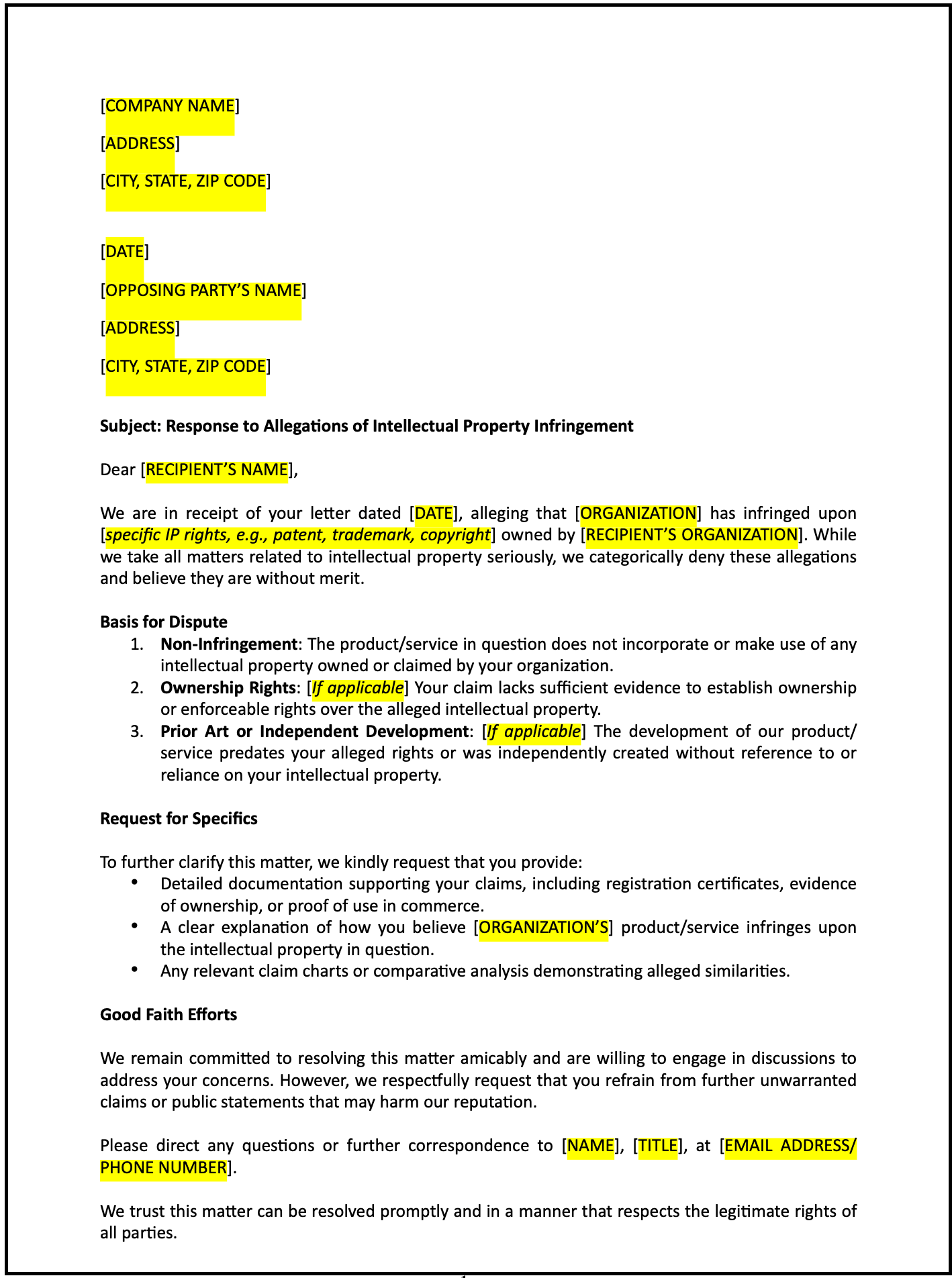
Customize this template for free
TL;DR
A letter disputing allegations of intellectual property infringement that organizations use to formally contest claims of IP violations. It articulates the disputing party's position, provides supporting evidence, and seeks to resolve the issue amicably while maintaining professionalism.
Letter disputing allegations of IP infringement
A letter disputing allegations of intellectual property (IP) infringement is a formal communication used to contest claims that your organization has violated another party's intellectual property rights. This letter outlines your position, provides relevant evidence or clarifications, and seeks to address the matter constructively and professionally.
How to use this letter disputing allegations of IP infringement
- Open with an introduction: Address the claimant respectfully and acknowledge their correspondence regarding the alleged infringement.
- State the purpose: Clearly communicate your intent to dispute the allegations and provide the rationale for your position.
- Reference the claim: Specify the details of the claim, such as the IP in question, dates, and any provided evidence.
- Present your position: Explain why the allegations are unfounded, citing relevant legal or factual grounds.
- Include supporting evidence: Provide documentation, agreements, or examples to support your position and refute the allegations.
- Reaffirm commitment: Emphasize your organization’s respect for IP rights and willingness to address misunderstandings professionally.
- Propose resolution: Suggest next steps, such as a discussion, mediation, or clarification of rights.
- Maintain a professional tone: Ensure the letter is clear, respectful, and focused on resolving the issue amicably.
- Provide contact information: Include details for the claimant to respond or discuss further.
Benefits of using a letter disputing allegations of IP infringement
This letter ensures a structured and professional way to address IP allegations while fostering collaboration and trust. Here's how it helps:
- Promotes transparency: Clearly disputing the allegations helps prevent misunderstandings and miscommunications.
- Reflects professionalism: A well-crafted letter demonstrates respect and a commitment to resolving disputes constructively.
- Encourages resolution: Proposing next steps fosters a positive and cooperative dialogue.
- Builds trust: Transparent communication reinforces credibility and your respect for IP rights.
- Supports legal defense: Providing evidence and clarifications helps protect your organization’s position in case of escalation.
Tips for writing an effective letter disputing allegations of IP infringement
- Be specific: Clearly reference the allegations, including details about the IP in question and any relevant context.
- Use professional language: Maintain a respectful and constructive tone to foster collaboration.
- Provide context: Briefly explain your actions or circumstances to clarify your compliance with IP laws or agreements.
- Highlight mutual benefits: Emphasize the importance of resolving the matter to maintain a positive relationship.
- Include actionable steps: Share instructions for next steps, such as scheduling a discussion or providing additional documentation.
- Keep it concise: Focus on the essential points while ensuring the tone is professional and engaging.
Frequently asked questions (FAQs)
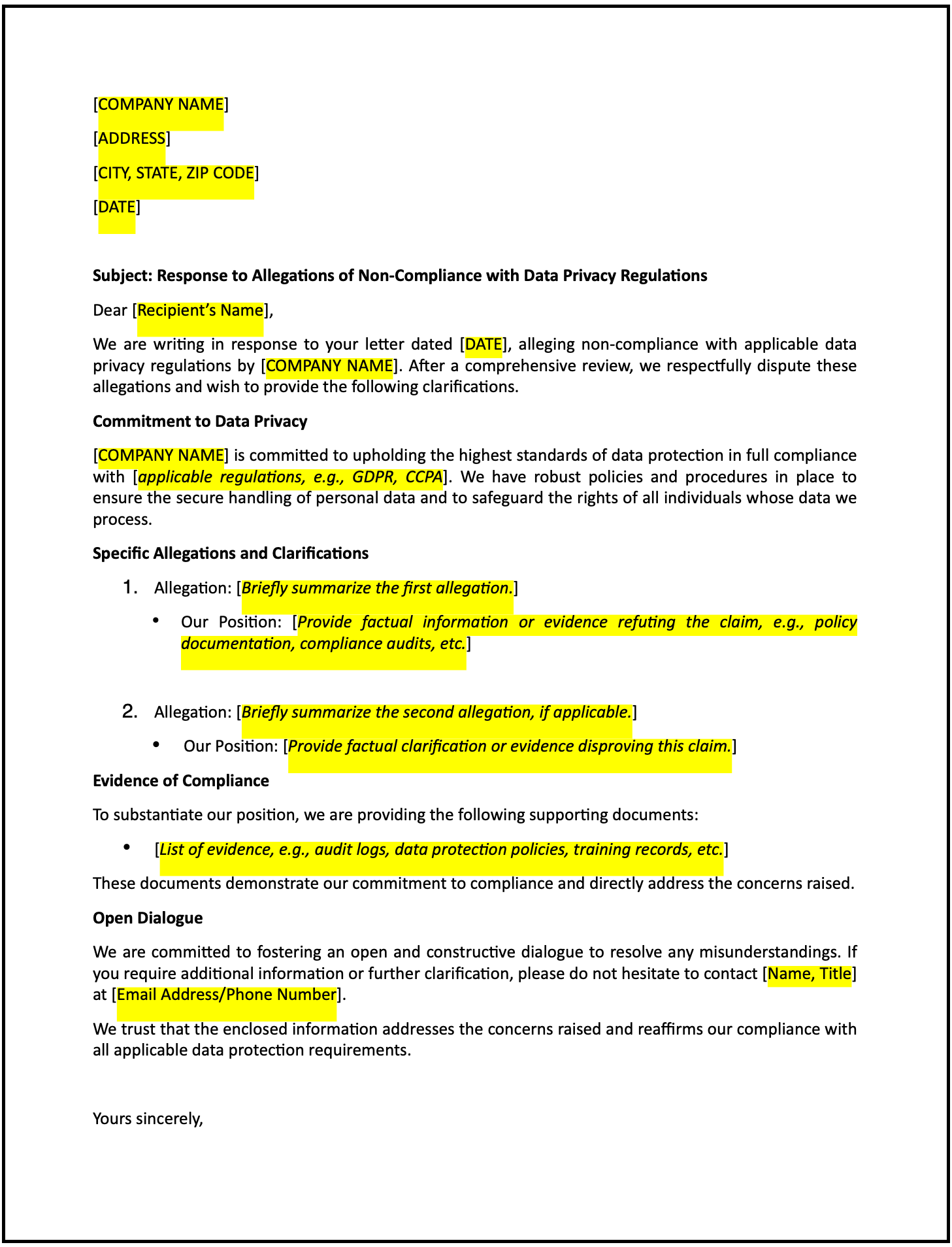
Disputes allegations of data privacy non-compliance, providing evidence or clarifications to refute the claims and emphasizing adherence to relevant privacy laws and regulations.
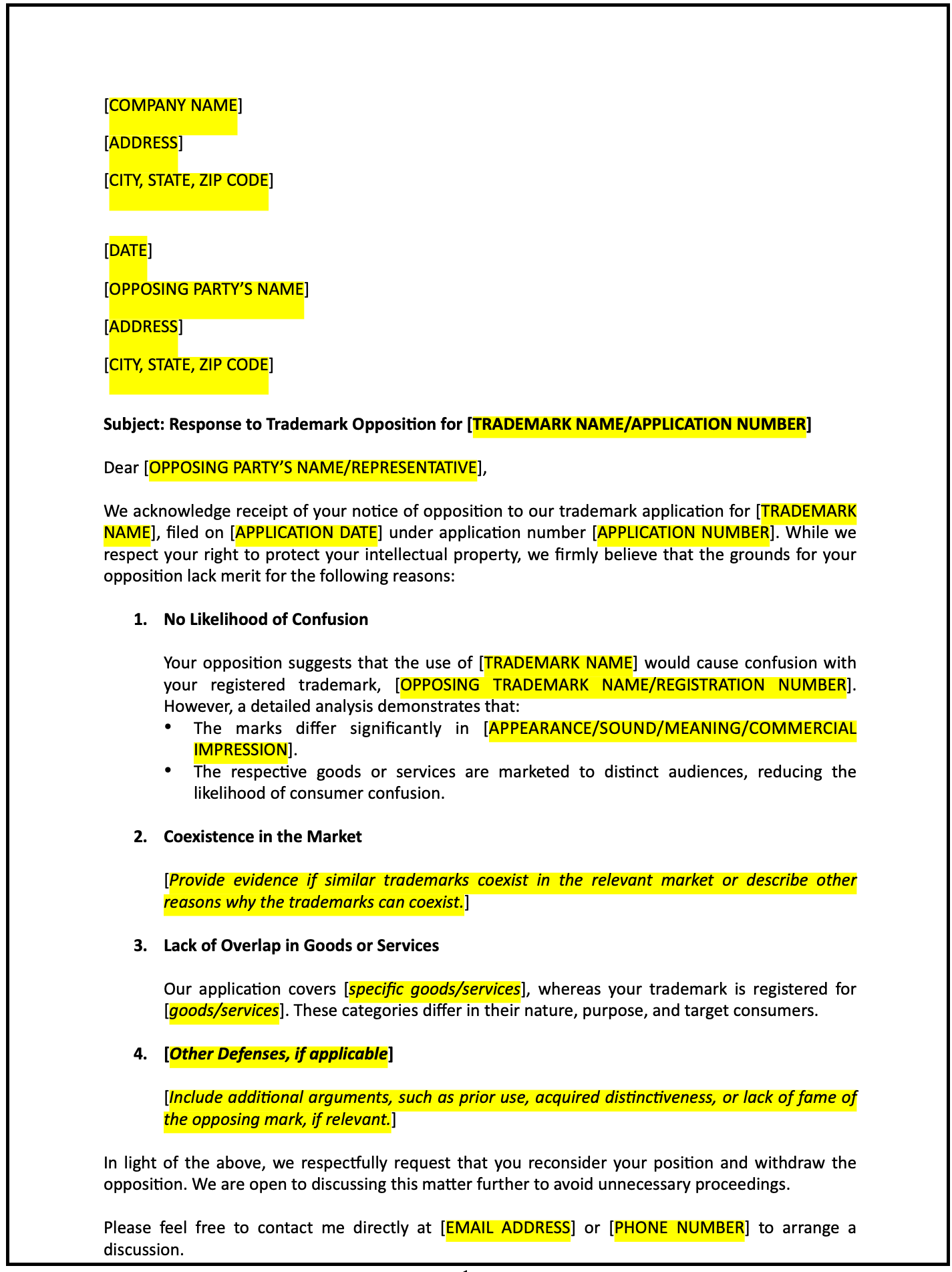
Disputes a trademark opposition, outlining the reasons for the challenge and providing supporting evidence to defend the trademark registration.
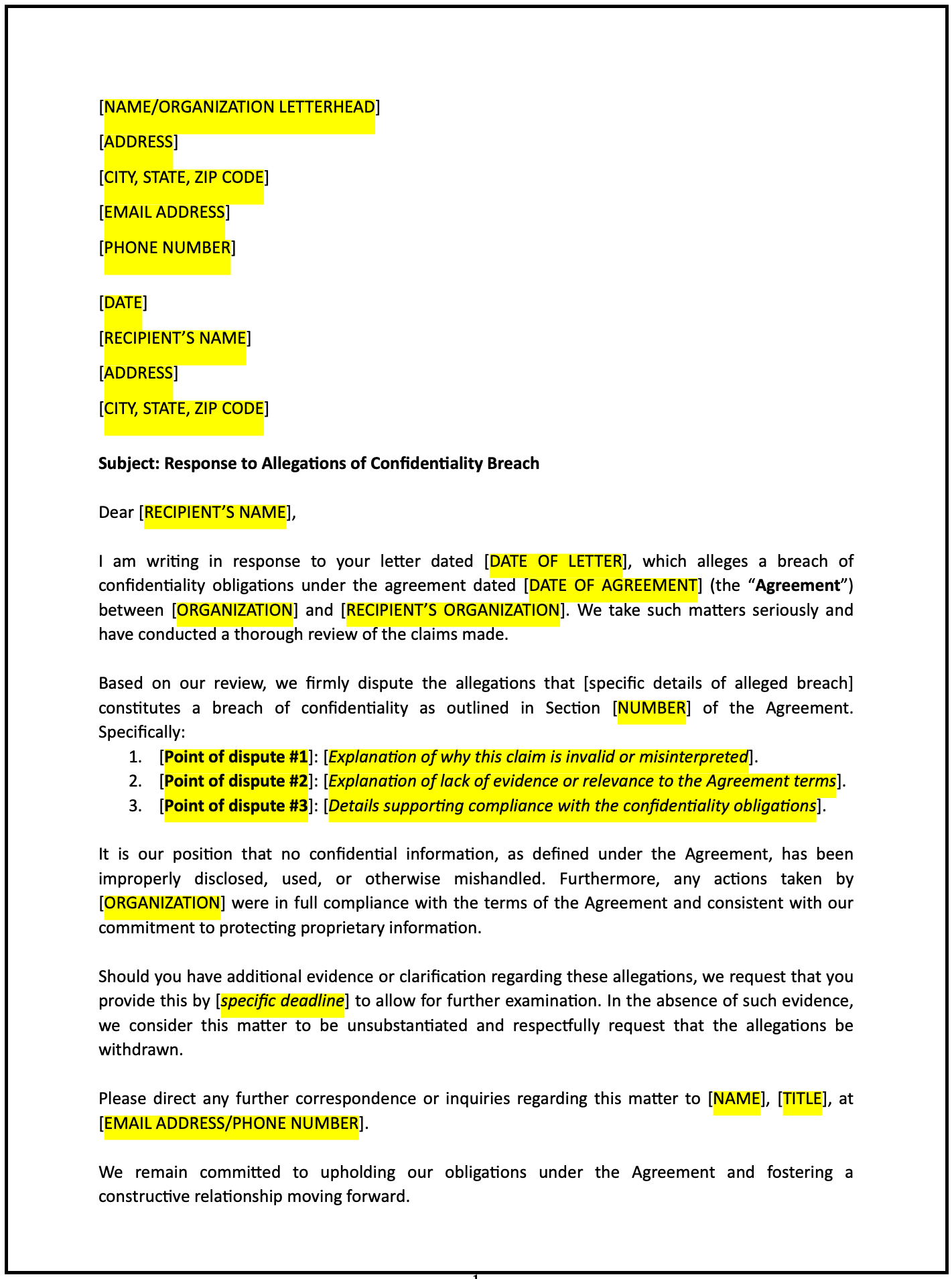
Disputes allegations of a confidentiality breach, offering clarification, providing evidence, and requesting resolution of the issue.
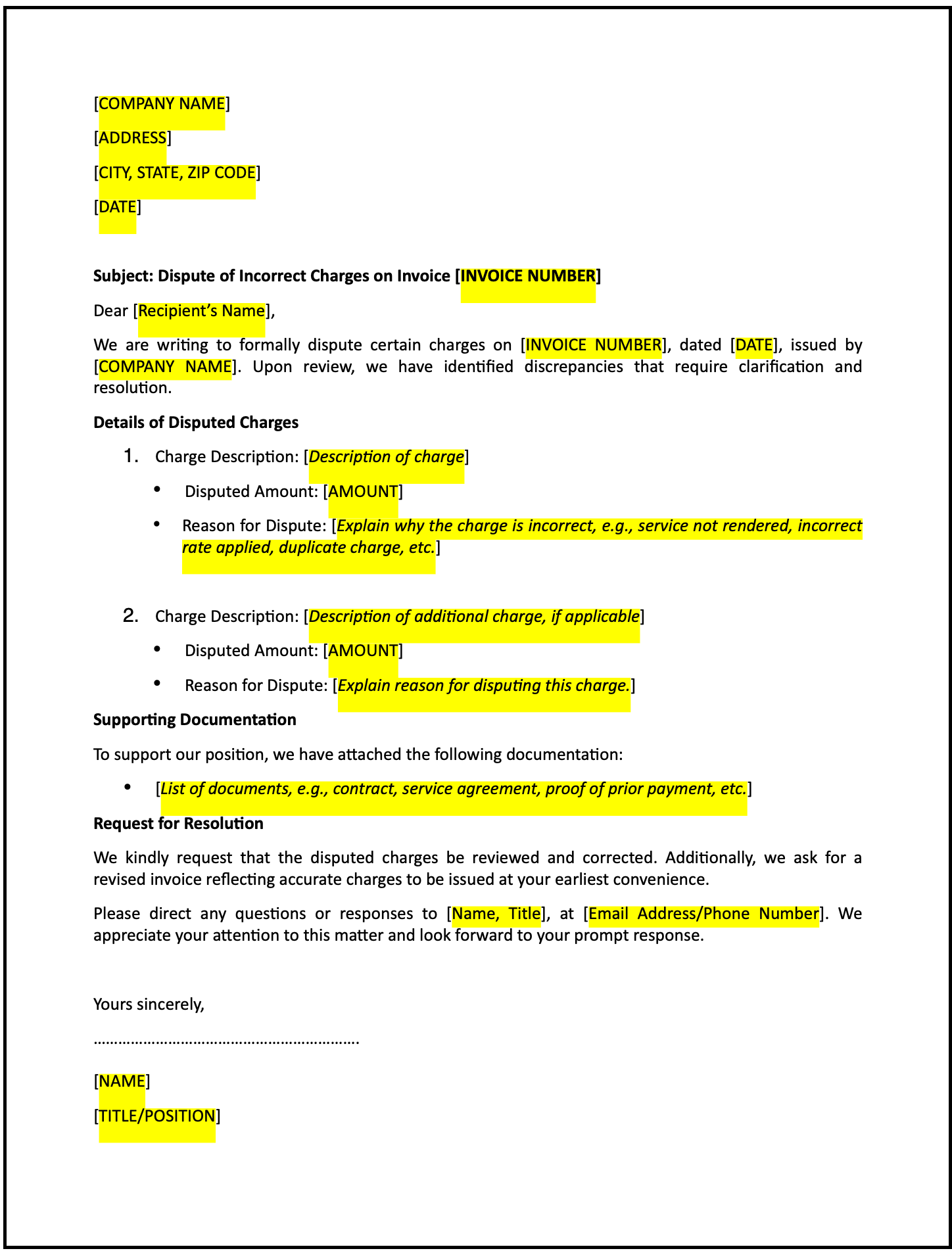
Disputes incorrect charges on an invoice, outlining the specific discrepancies and requesting a corrected invoice or clarification.
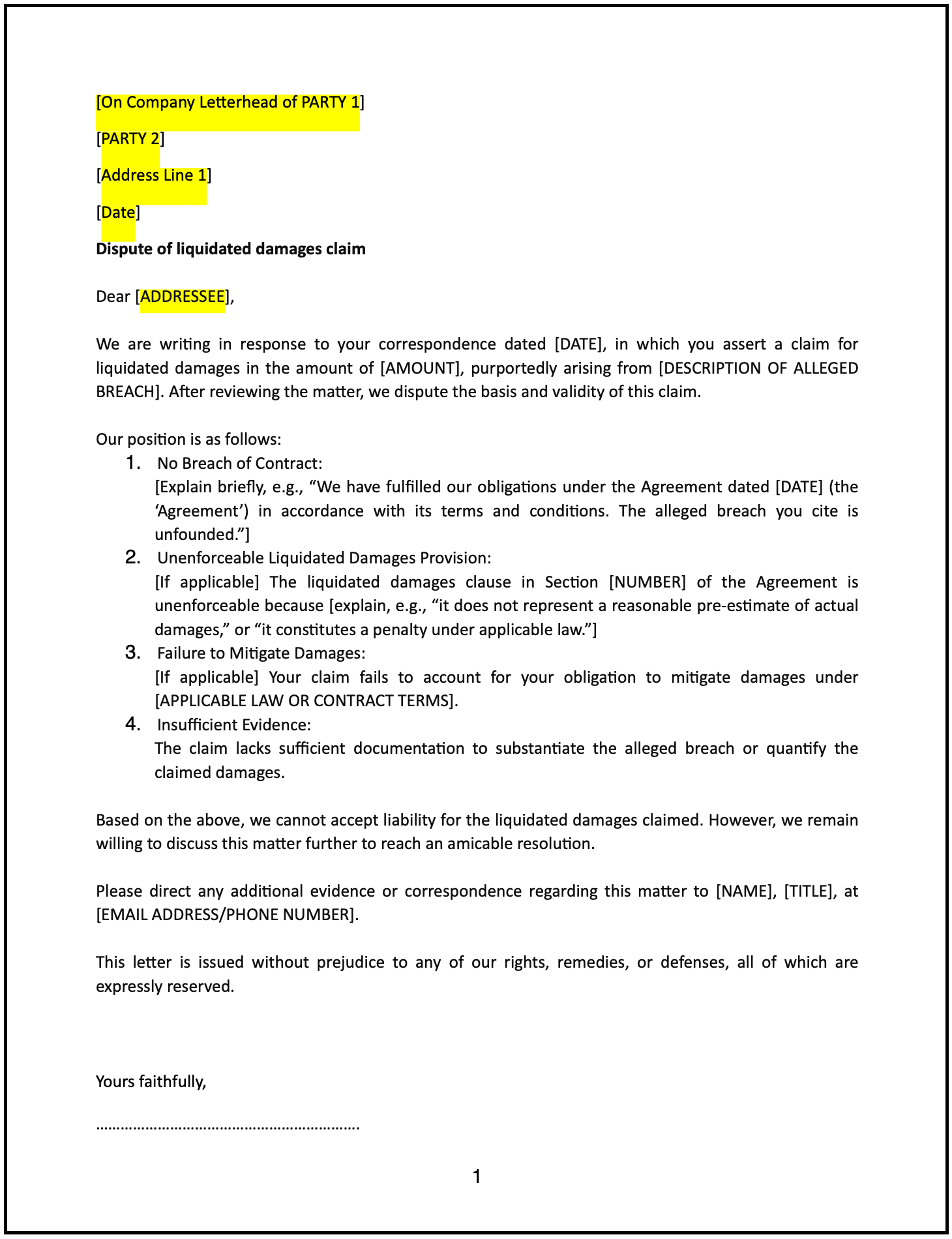
Disputes a liquidated damages claim, providing reasons for the dispute and referencing the terms of the contract that justify the claim’s invalidity.