Letter disputing vendor invoice charges: Free template
Customize it in Cobrief and see the moment it's opened, signed, or actioned.
Customize this template for free
TL;DR
A formal letter template for disputing specific charges on a vendor's invoice, designed to address discrepancies and seek resolution. It provides a structured approach to outline the disputed amounts, reference supporting documents, and maintain a professional tone, making it suitable for finance teams and procurement professionals.
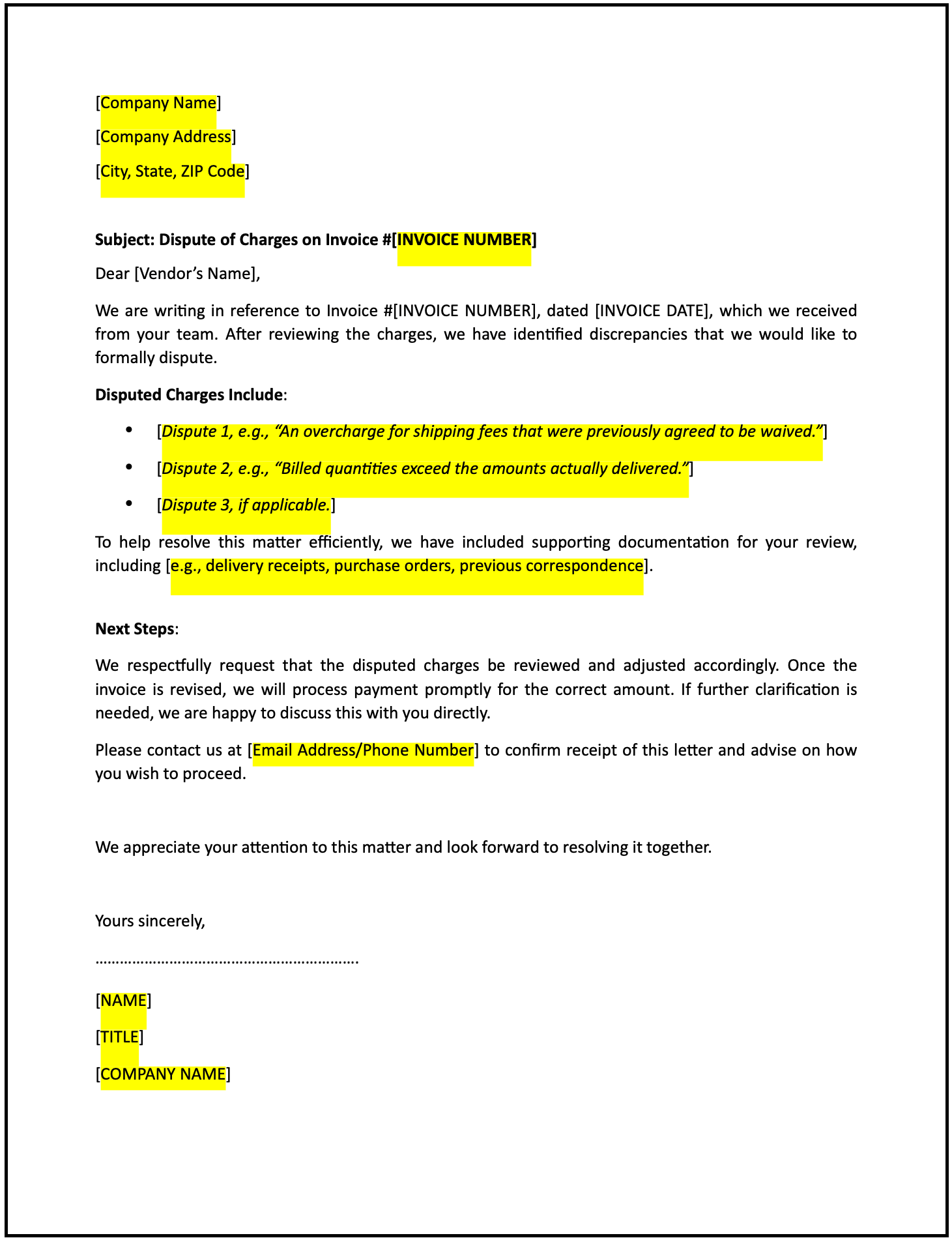
Letter disputing vendor invoice charges
A letter disputing vendor invoice charges is a formal communication used to raise concerns about specific discrepancies or inaccuracies in a vendor’s invoice. This letter outlines the disputed charges, provides evidence or context for the dispute, and seeks a resolution in a professional and collaborative manner.
How to use this letter disputing vendor invoice charges
- Open with an introduction: Address the vendor respectfully and reference the invoice by number, date, or other identifying details.
- State the purpose: Clearly communicate that the purpose of the letter is to dispute specific charges on the invoice.
- Provide details: Specify the charges being disputed, including amounts, descriptions, and why they are incorrect or unexpected.
- Reference supporting documents: Mention any contracts, purchase orders, or previous agreements that support your claim.
- Emphasize impact: Briefly explain how the disputed charges could affect your financials or operations.
- Request resolution: Propose a solution, such as correcting the charges, issuing a credit, or arranging a meeting to discuss further.
- Maintain a professional tone: Ensure the letter is clear, respectful, and focused on fostering a resolution while preserving the business relationship.
- Provide contact information: Include details for the recipient to reach out with questions or to discuss the matter further.
Benefits of using a letter disputing vendor invoice charges
This letter ensures a structured and professional way to address invoice discrepancies while fostering accountability and collaboration. Here’s how it helps:
- Promotes transparency: Clearly outlining the dispute ensures alignment and understanding.
- Reflects professionalism: A well-crafted letter demonstrates respect and a commitment to resolving issues constructively.
- Encourages accountability: Highlighting discrepancies reinforces the importance of accurate billing.
- Builds trust: Addressing concerns professionally fosters a positive and honest relationship.
- Supports resolution: Documenting disputes and proposed solutions ensures clarity and alignment.
Tips for writing an effective letter disputing vendor invoice charges
- Be specific: Clearly describe the disputed charges, referencing invoice details and supporting agreements.
- Use professional language: Maintain a respectful and constructive tone to foster collaboration.
- Provide context: Briefly explain why the charges are incorrect and how they deviate from agreements.
- Highlight mutual benefits: Emphasize how resolving the dispute supports a transparent and successful partnership.
- Include actionable steps: Share instructions for resolving the issue, such as issuing a corrected invoice or scheduling a meeting.
- Keep it concise: Focus on the essential points while ensuring the tone is professional and engaging.
Frequently asked questions (FAQs)
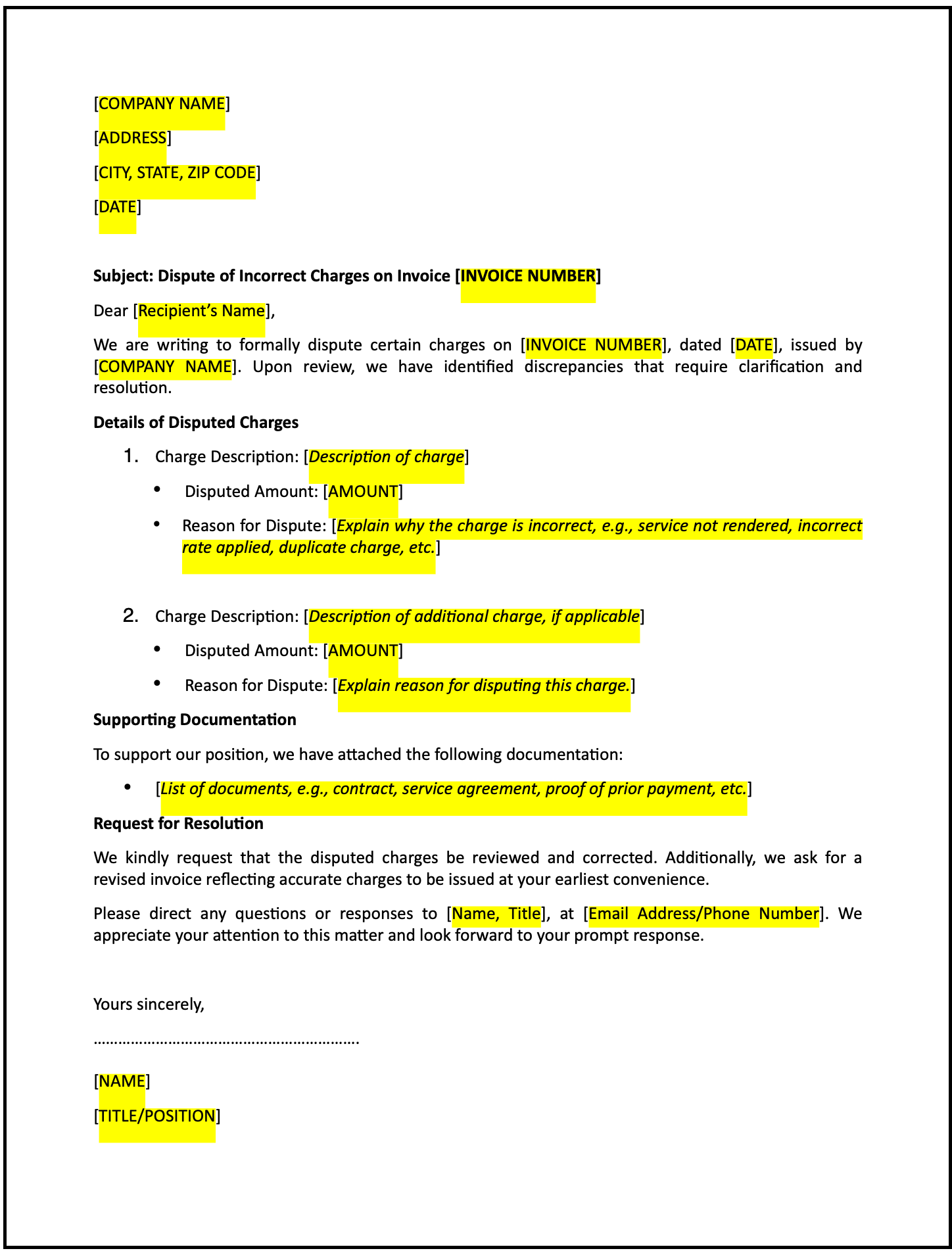
Disputes incorrect charges on an invoice, outlining the specific discrepancies and requesting a corrected invoice or clarification.
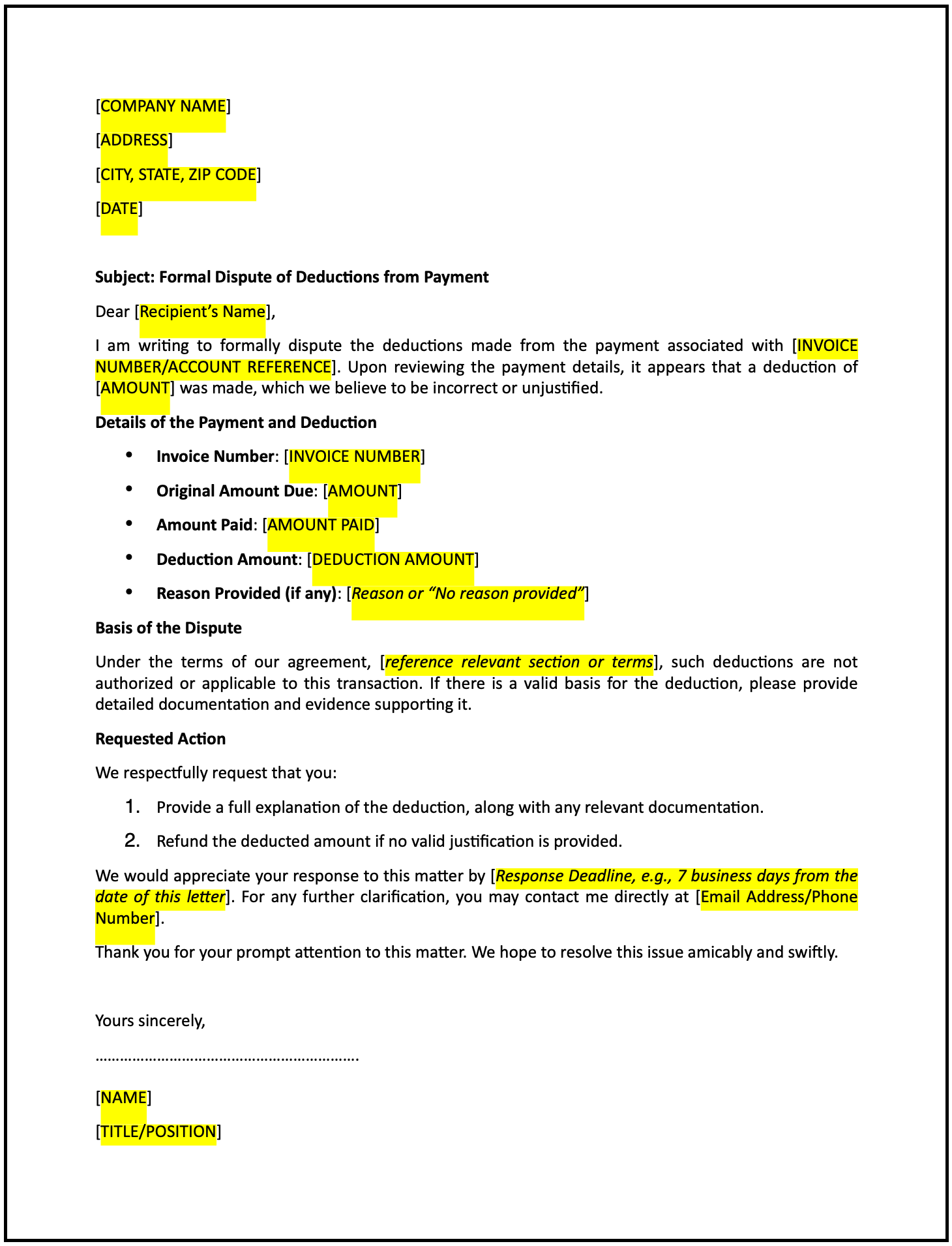
Disputes specific deductions from a payment, outlining the reasons for the disagreement and requesting a revision or clarification of the charges.
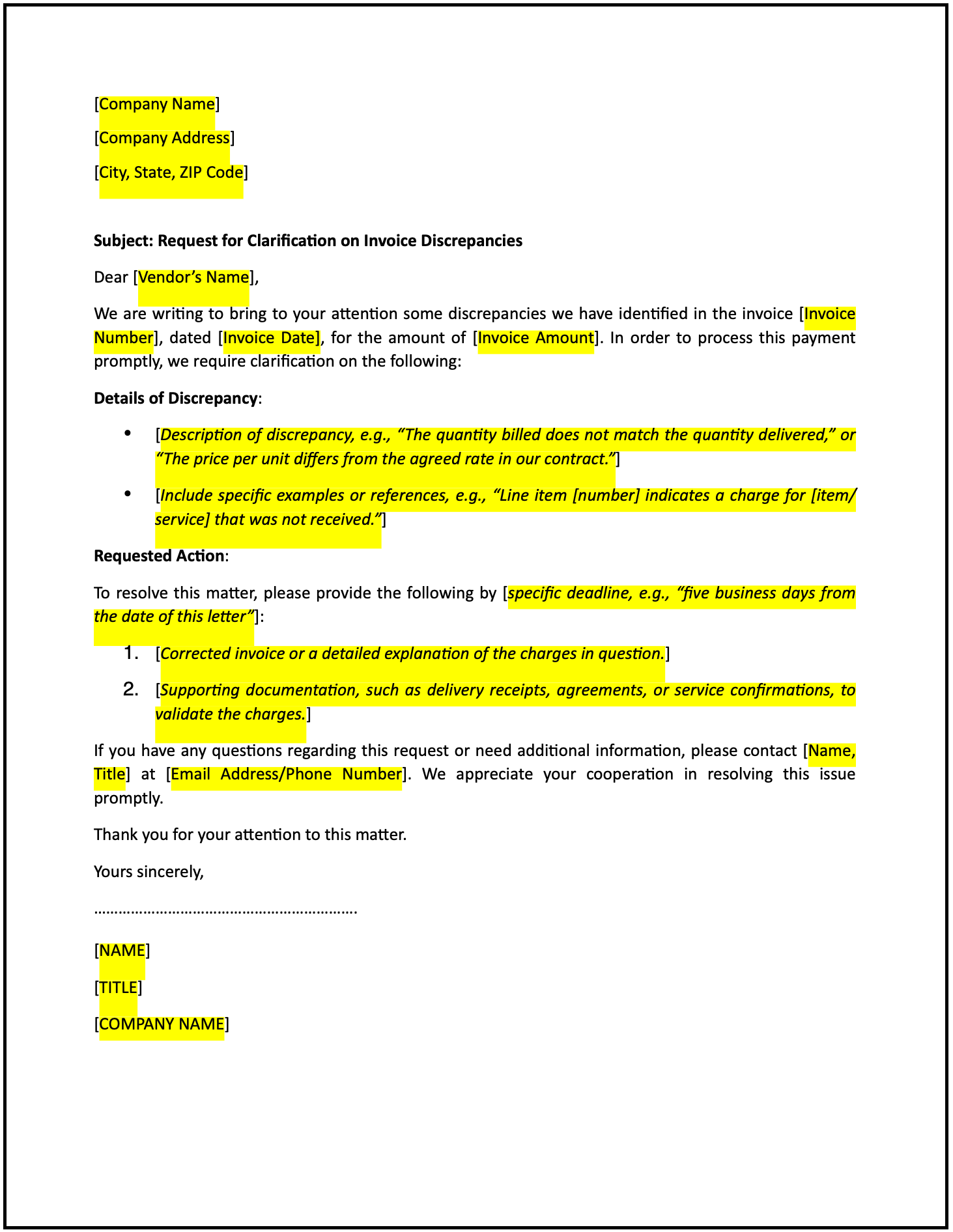
Requests clarification on invoice discrepancies, outlining the specific items or charges in question and seeking a detailed explanation or correction.
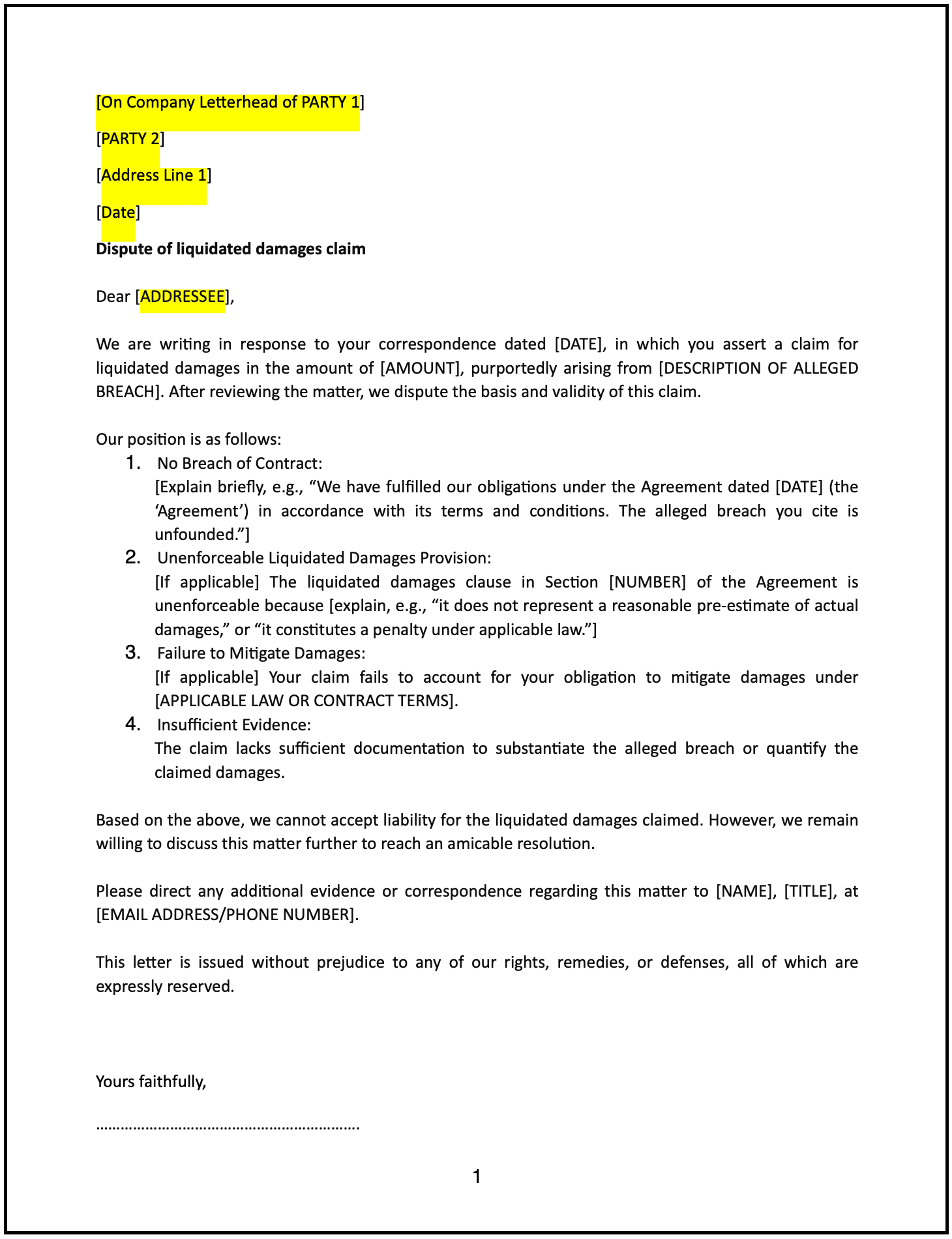
Disputes a liquidated damages claim, providing reasons for the dispute and referencing the terms of the contract that justify the claim’s invalidity.
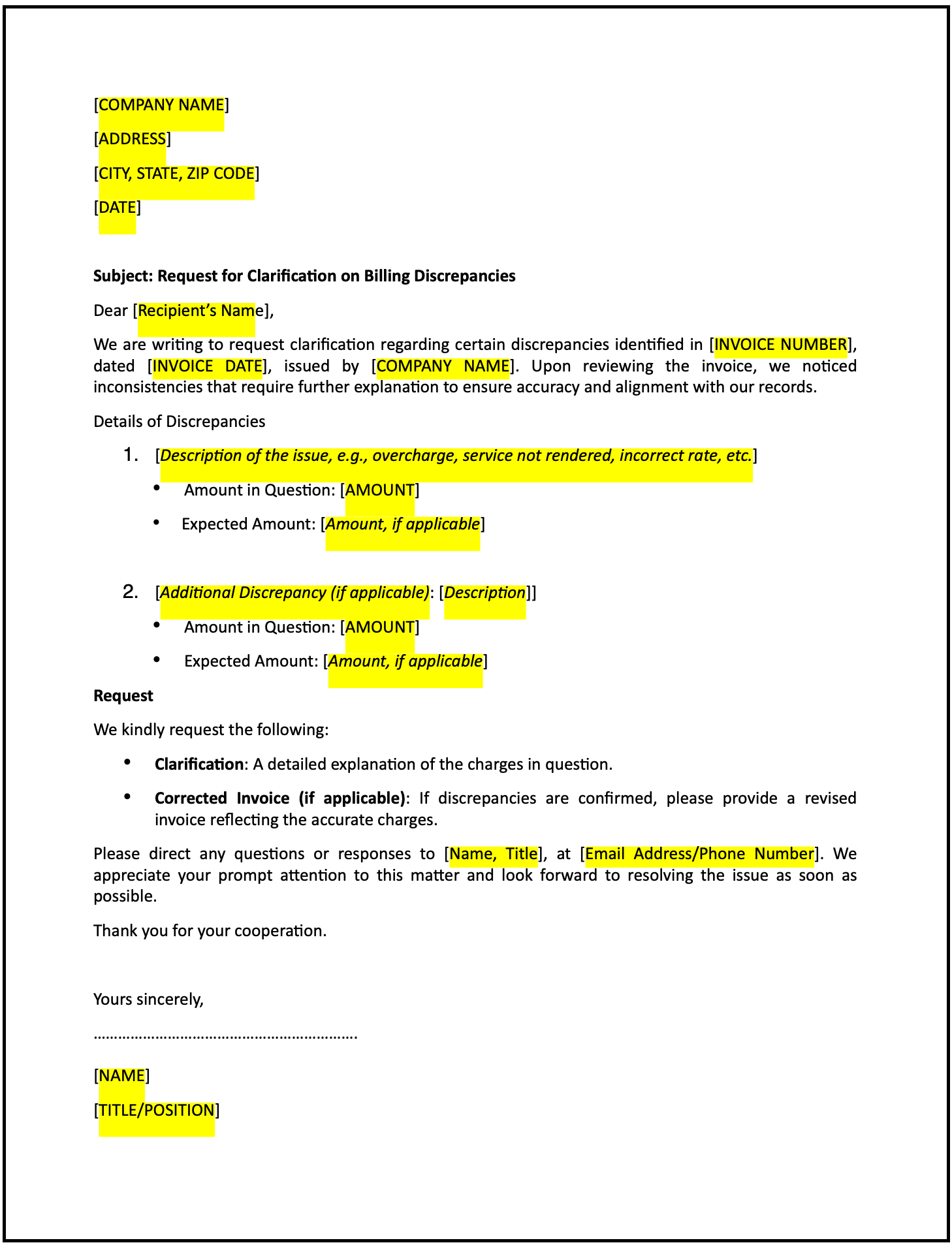
Requests clarification regarding billing discrepancies, specifying the discrepancies and asking for a detailed explanation.