Letter disputing liquidated damages claim: Free template
Customize it in Cobrief and see the moment it's opened, signed, or actioned.
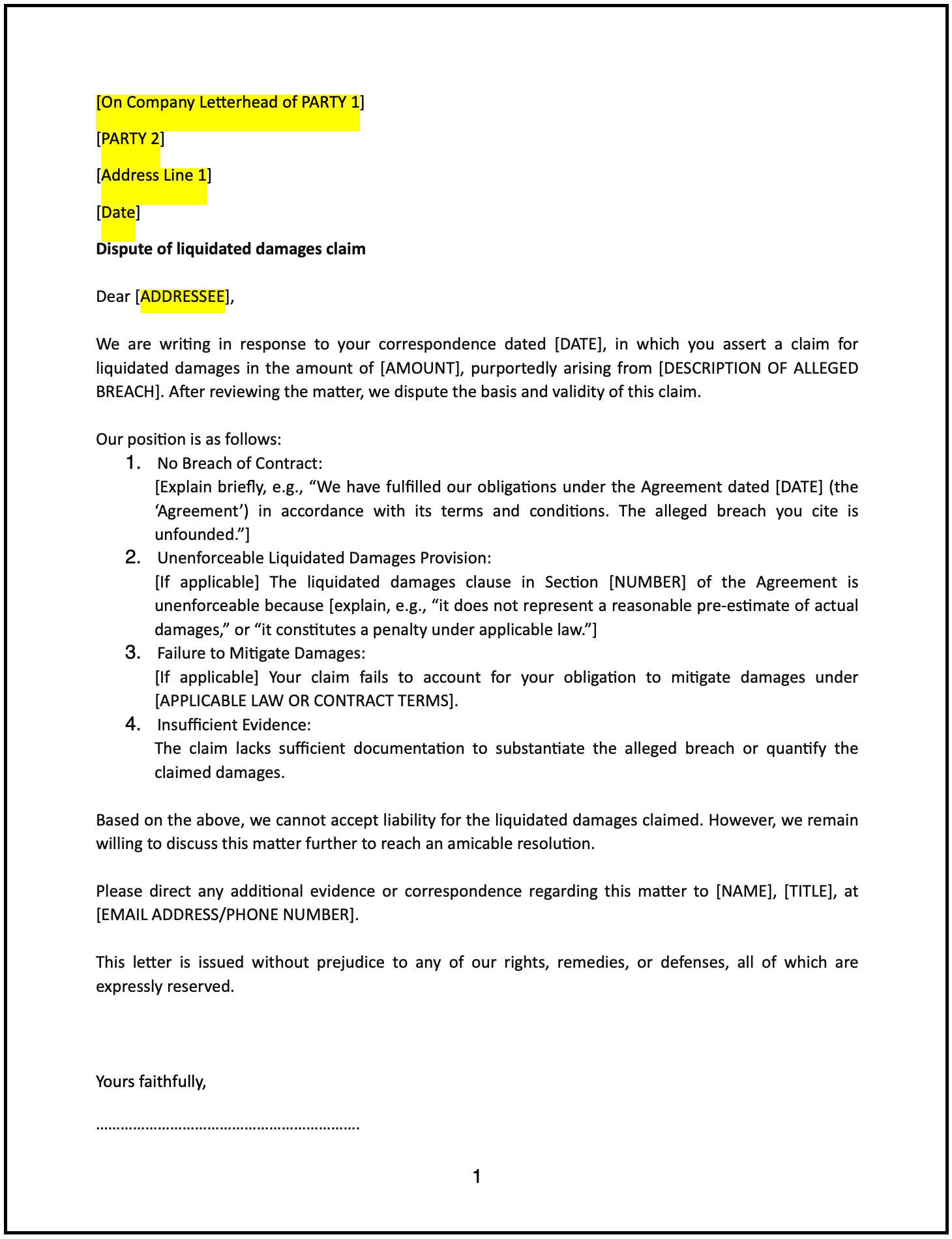
Customize this template for free
TL;DR
A formal letter template for disputing a liquidated damages claim, designed to help individuals or businesses articulate their position and challenge the claim's validity. It provides a structured approach to present reasoning, cite contractual terms, and include supporting evidence while maintaining professionalism and encouraging constructive dialogue.
Letter disputing liquidated damages claim
A letter disputing a liquidated damages claim is a formal response to refute the validity of the claim while maintaining professionalism and protecting your rights. This letter provides a structured approach to explain your position, challenge the claim’s basis, and seek resolution.
How to use this letter disputing liquidated damages claim
- Open with acknowledgment: Start by referencing the claim and confirming receipt of the correspondence.
- State your position: Clearly dispute the validity of the liquidated damages claim and outline your stance.
- Provide reasoning: Explain why the claim is unwarranted, such as failure to meet contractual conditions, factual inaccuracies, or lack of evidence.
- Reference the contract: Cite specific terms or clauses in the agreement that support your position and refute the claim.
- Include supporting evidence: Attach any relevant documentation or records that substantiate your argument.
- Maintain a professional tone: Ensure the letter is respectful, factual, and focused on resolving the matter amicably.
- Offer further engagement: Indicate your willingness to discuss the matter further or explore alternative resolutions.
- Provide contact information: Include details for follow-up communication or additional clarification.
Benefits of using a letter disputing liquidated damages claim
This letter template ensures a structured and professional way to challenge the claim while fostering constructive dialogue and protecting your position. Here’s how it helps:
- Protects your interests: Clearly disputing the claim demonstrates your commitment to defending your rights.
- Reduces misunderstandings: Providing clear reasoning and evidence ensures the claimant understands your perspective.
- Reflects professionalism: A well-crafted letter reinforces your credibility and approach to resolving disputes.
- Supports documentation: Creating a formal record of your position is valuable for future reference or legal proceedings.
- Encourages constructive dialogue: Inviting further discussion fosters opportunities for resolution without escalation.
Tips for writing an effective letter disputing liquidated damages claim
- Be specific: Clearly reference the claim, cite relevant contractual terms, and outline your reasons for disputing it.
- Use professional language: Maintain a respectful and factual tone to encourage constructive communication.
- Support with evidence: Include documentation or references that substantiate your position and challenge the claim.
- Emphasize clarity: Avoid ambiguous statements to ensure your stance is fully understood.
- Keep it concise: Focus on the key points without overwhelming the recipient with unnecessary details.
Frequently asked questions (FAQs)
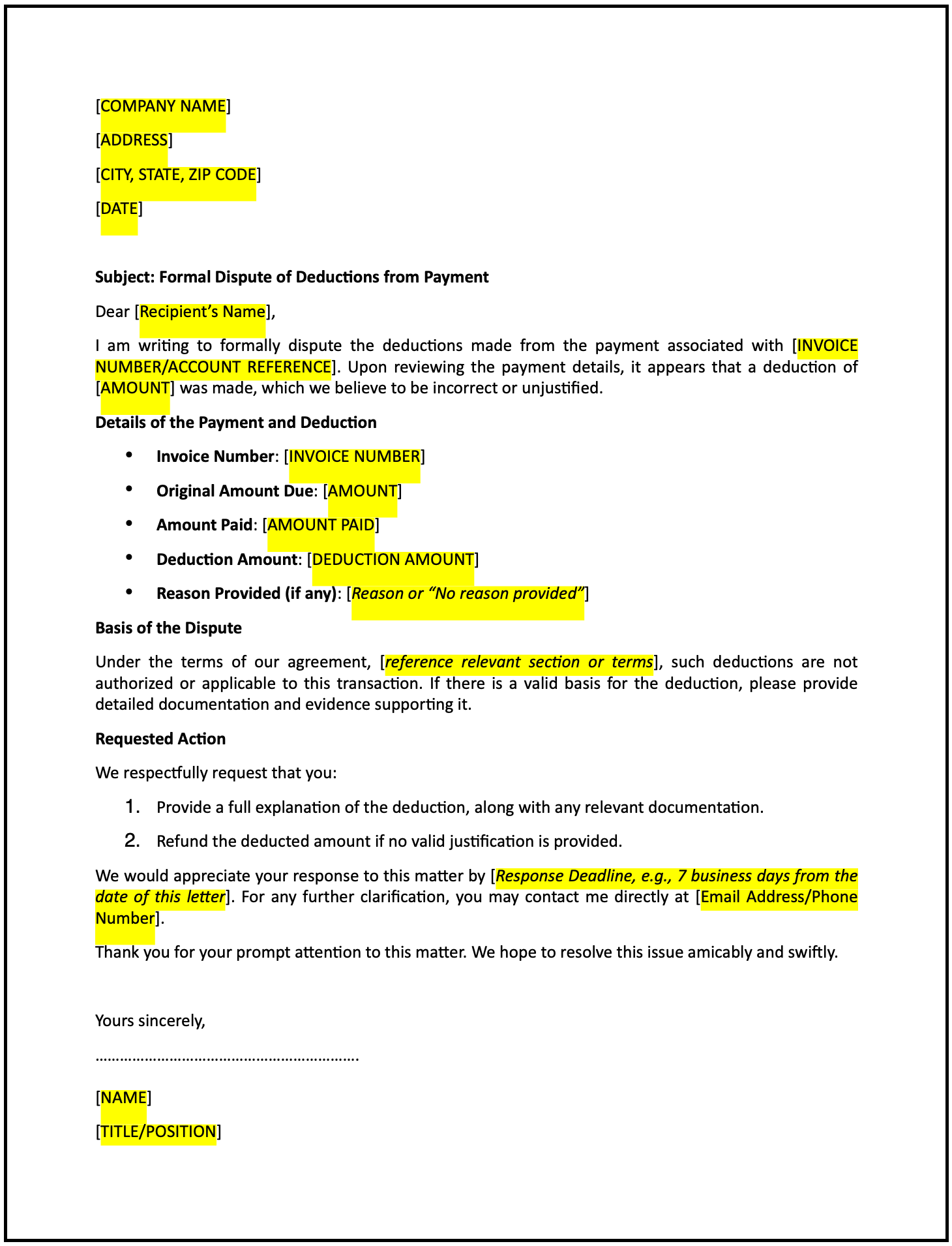
Disputes specific deductions from a payment, outlining the reasons for the disagreement and requesting a revision or clarification of the charges.
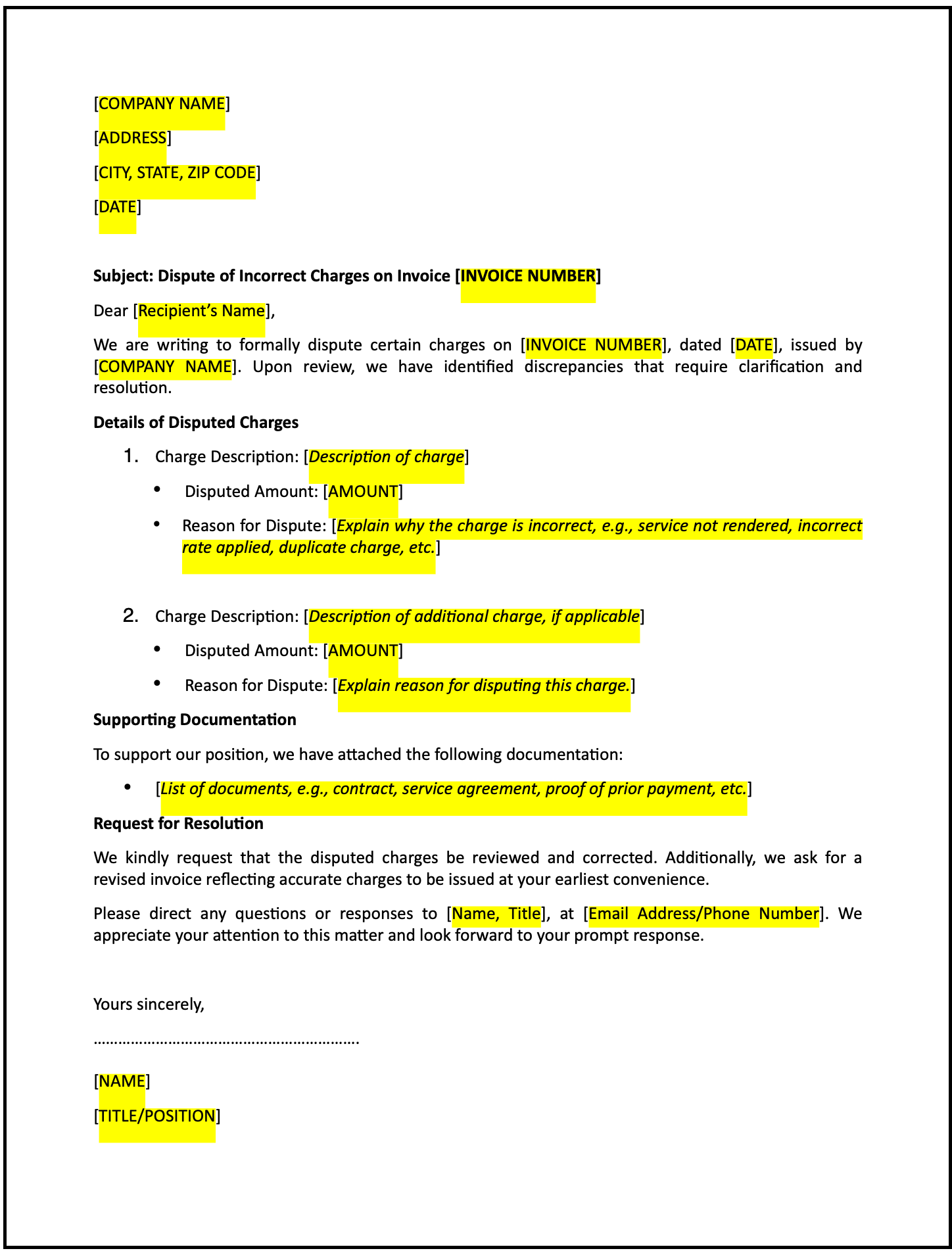
Disputes incorrect charges on an invoice, outlining the specific discrepancies and requesting a corrected invoice or clarification.
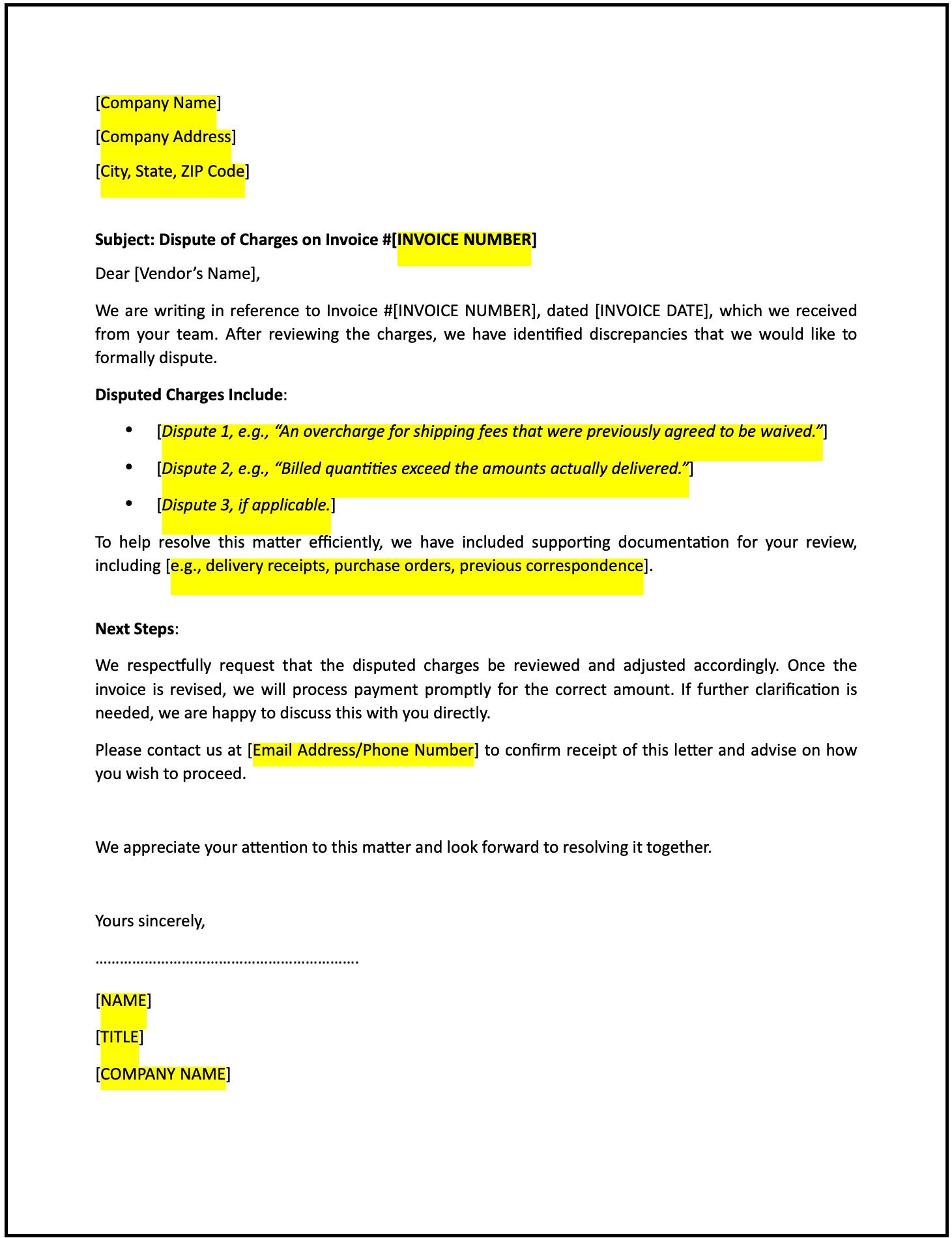
Disputes specific charges on a vendor invoice, outlining the reasons for the dispute and requesting a revision or clarification.
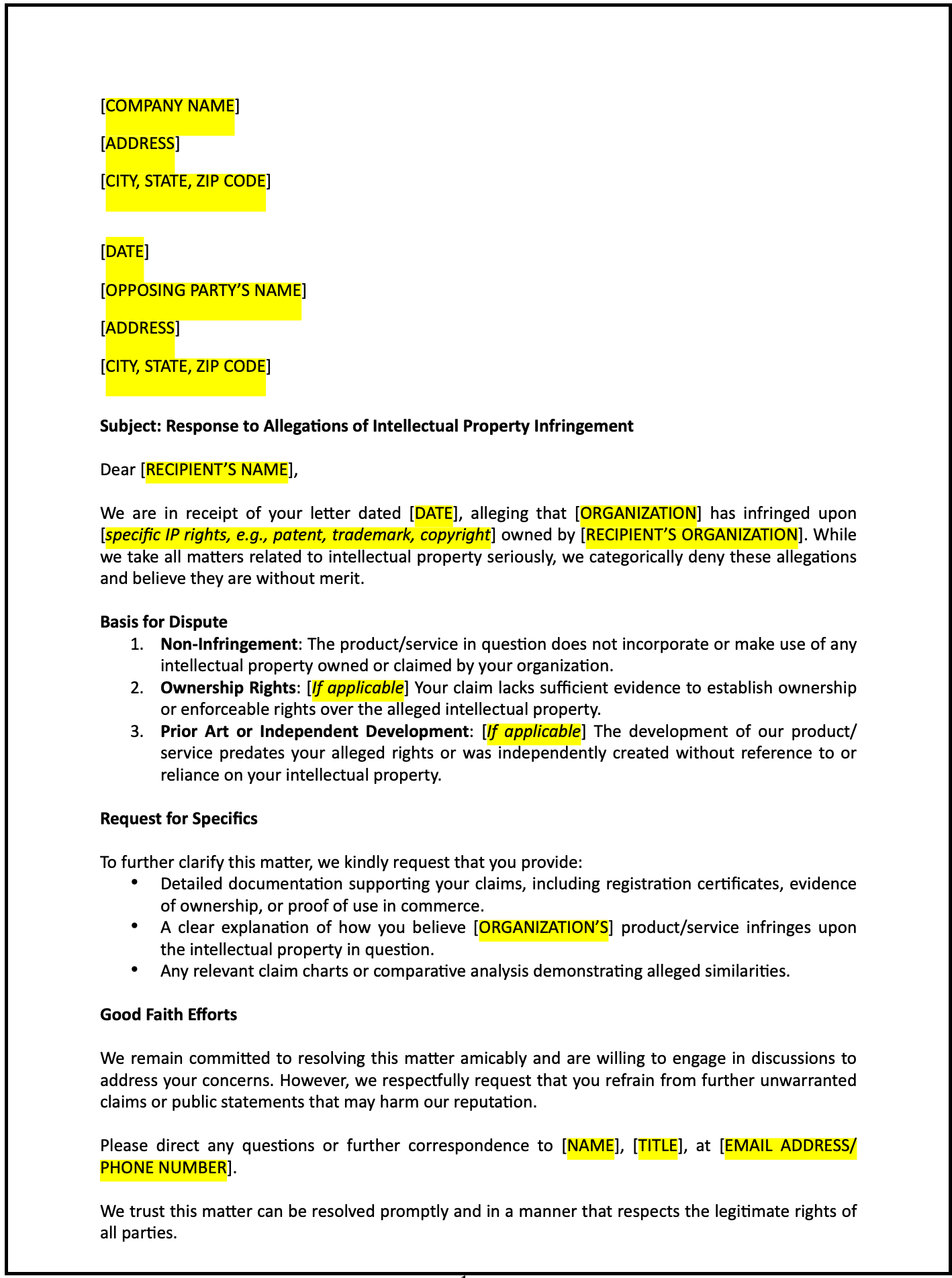
Disputes allegations of intellectual property infringement, providing evidence or reasoning to refute the claims.
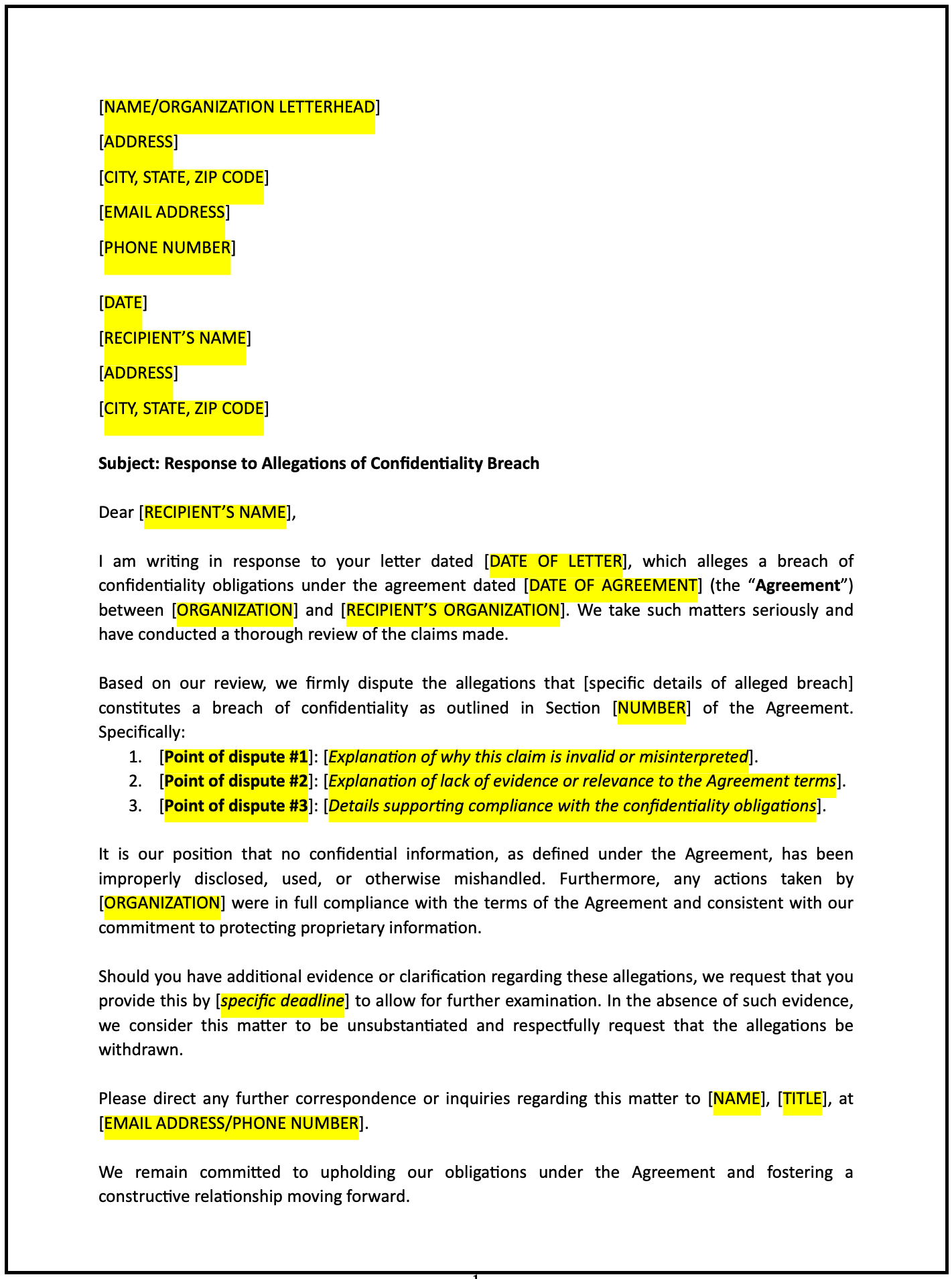
Disputes allegations of a confidentiality breach, offering clarification, providing evidence, and requesting resolution of the issue.