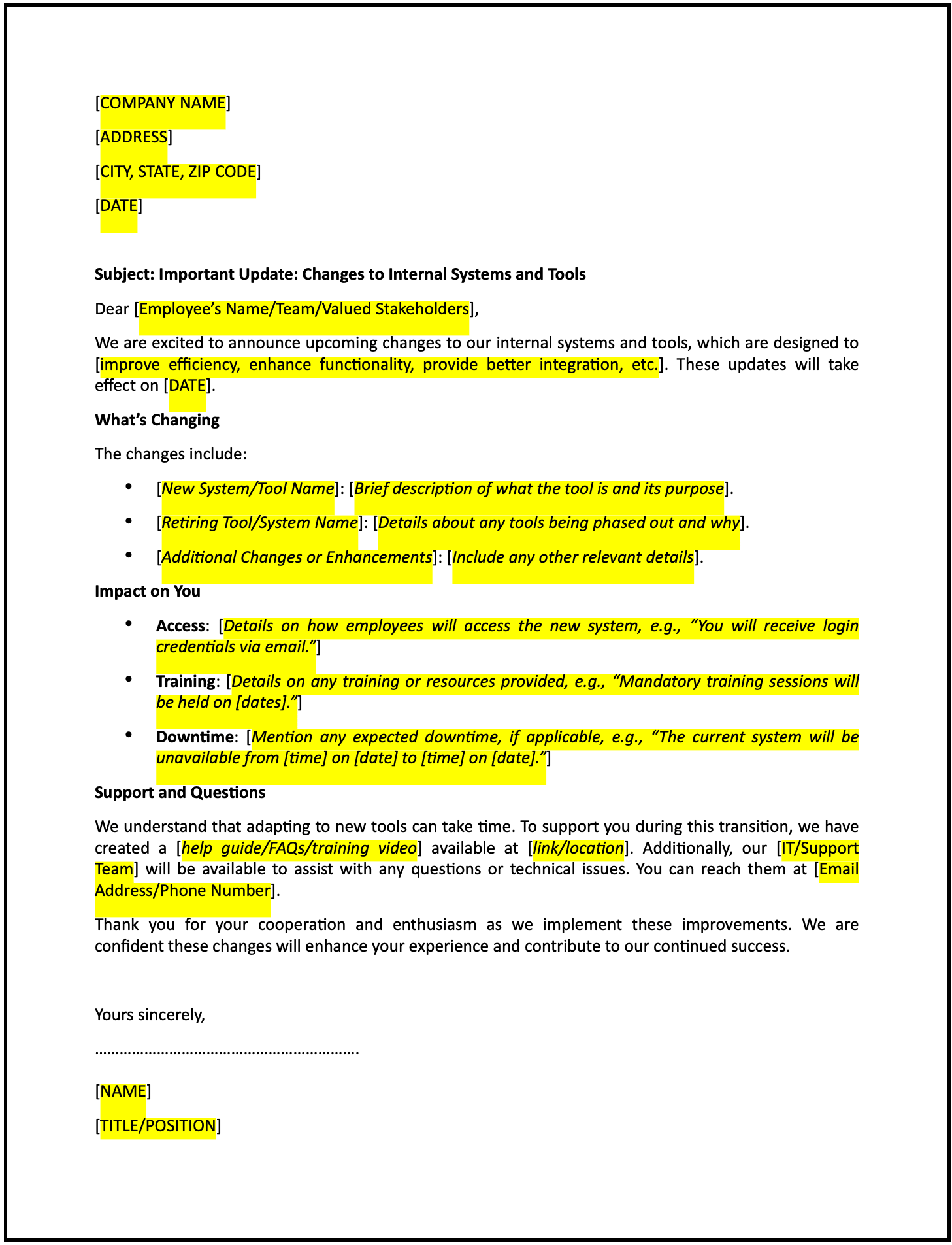
Letter of changes to internal systems and tools: Free template
Notifies employees or stakeholders of changes to internal systems and tools, outlining the updates and any actions required to adapt to the new processes.
- Letters
Letter of changes to internal systems and tools
A notification letter of changes to internal systems and tools is a formal communication used to inform employees about updates, upgrades, or replacements of systems and tools they use. This letter outlines the purpose of the changes, key details, and instructions for a smooth transition, ensuring transparency and engagement.
How to use this letter of changes to internal systems and tools
- Open with an introduction: Address employees respectfully and explain the purpose of the letter—to announce changes to internal systems and tools.
- Provide context: Briefly describe the reason for the changes, such as improving efficiency, updating outdated systems, or enhancing user experience.
- Specify the changes: Clearly outline what systems or tools are being updated, added, or replaced, and highlight key features or improvements.
- Include implementation details: Provide the timeline for the changes, including start and end dates, downtime (if any), and key milestones.
- Offer guidance: Share instructions on accessing and using the new or updated systems and tools, including training sessions or user guides if applicable.
- Reassure employees: Emphasize how the changes will benefit them and address potential concerns about disruptions or adjustments.
- Maintain a professional tone: Ensure the letter is clear, respectful, and supportive.
- Provide contact information: Include details for employees to reach out with questions, concerns, or technical support needs.
Benefits of using a letter of changes to internal systems and tools
This letter ensures a structured and professional way to communicate system updates while fostering engagement and understanding among employees. Here’s how it helps:
- Promotes transparency: Clearly outlining the changes and their purpose builds trust and minimizes confusion.
- Reflects professionalism: A well-crafted letter demonstrates respect and attentiveness to employee needs.
- Encourages adaptability: Providing clear guidance helps employees adjust to the changes with confidence.
- Supports productivity: Informing employees in advance ensures minimal disruptions during the transition.
- Strengthens communication: A proactive approach reinforces open and effective dialogue between leadership and employees.
Tips for writing an effective letter of changes to internal systems and tools
- Be specific: Clearly describe the systems or tools being changed, the reasons for the changes, and the timeline for implementation.
- Use professional language: Maintain a respectful and informative tone to encourage engagement.
- Highlight benefits: Emphasize how the updates will improve workflows or address existing challenges.
- Provide actionable steps: Include instructions for accessing resources, training, or technical support.
- Keep it concise: Focus on the key points while ensuring the tone is clear and supportive.
Frequently asked questions (FAQs)
Similar templates
Where deals go from offer to paid
