Customize it in Cobrief and see the moment it's opened, signed, or actioned.
Customize this template for free
TL;DR
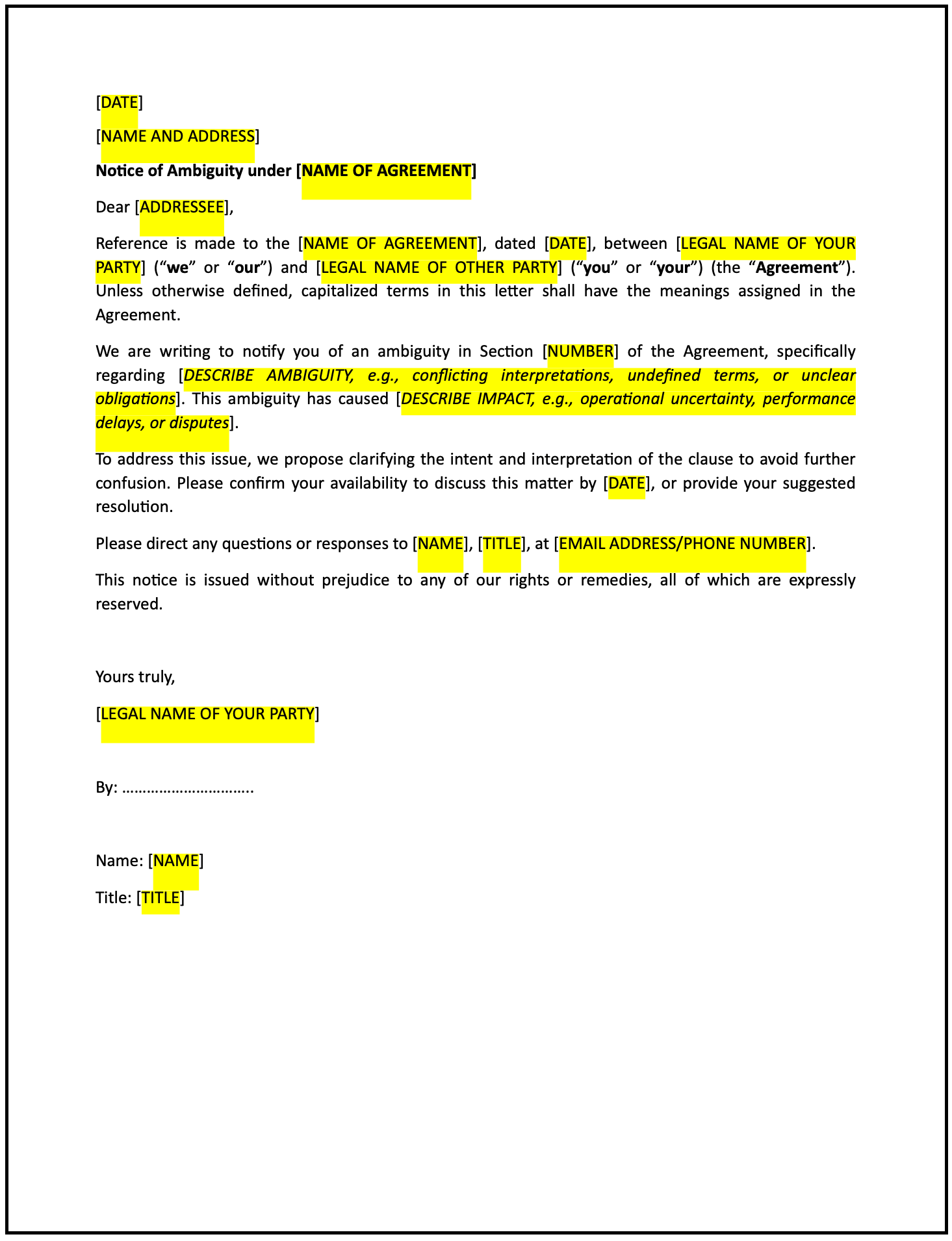
A letter template for addressing ambiguities in contracts, aimed at clarifying unclear terms to prevent misunderstandings and disputes. It guides users in identifying specific clauses, proposing clarifications, and maintaining a collaborative tone, making it suitable for legal professionals and business managers involved in contract negotiations.
Letter addressing contract ambiguity
Addressing ambiguities in a contract is essential to avoid misunderstandings, clarify terms, and prevent potential disputes. This letter provides a professional way to raise concerns about unclear provisions, propose clarifications, and maintain a collaborative tone to ensure alignment between all parties.
How to use this letter addressing contract ambiguity
- Reference the contract: Clearly identify the contract in question by its title, reference number, and the parties involved. Include the execution date for context.
- Customize the template: Replace placeholders with your organization’s details, the ambiguous sections or terms, and proposed clarifications or questions.
- Specify the ambiguity: Clearly outline the specific clauses or terms that require clarification, referencing section numbers or titles where possible.
- Propose clarifications: Offer potential interpretations or request specific clarifications from the other party to resolve the ambiguity.
- Maintain a collaborative tone: Frame the letter as part of a constructive dialogue, emphasizing the importance of mutual understanding.
- Suggest next steps: Propose a meeting, call, or written confirmation to discuss and finalize the necessary clarifications.
Benefits of using a letter addressing contract ambiguity
This letter template provides a clear and professional way to address unclear contract terms while maintaining a positive working relationship. Here’s how it helps:
- Prevents misunderstandings: Raising ambiguities early ensures all parties are aligned on the contract’s terms and expectations.
- Promotes transparency: The letter demonstrates your commitment to clear communication and collaborative problem-solving.
- Strengthens relationships: Addressing ambiguities constructively reinforces trust and fosters a spirit of cooperation.
- Reduces risk: Clarifying terms minimizes the likelihood of disputes or disagreements later in the contract’s lifecycle.
- Provides a formal record: The letter serves as documentation of your efforts to address and resolve ambiguities in the agreement.
Tips for writing an effective letter addressing contract ambiguity
- Be specific: Clearly identify the ambiguous sections or terms, referencing clause numbers or titles to avoid confusion.
- Propose solutions: Offer potential interpretations or clarifications to guide the resolution process.
- Use professional language: Maintain a respectful and collaborative tone, emphasizing your commitment to mutual understanding.
- Address potential concerns: Anticipate any questions or objections and include explanations to support your points.
- Keep it concise: Focus on the key issues and avoid overloading the letter with unnecessary details or commentary.
Frequently asked questions (FAQs)
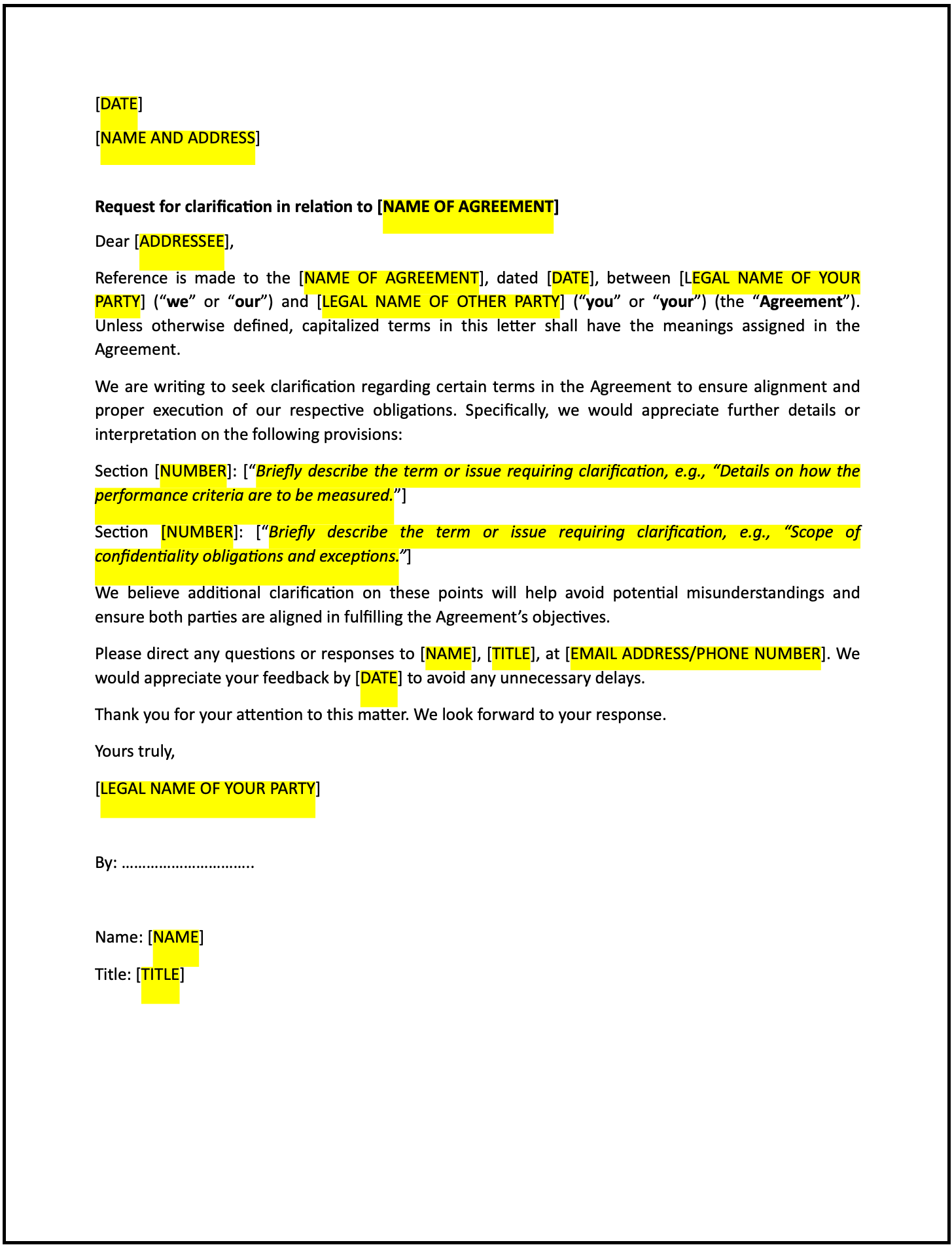
Requests clarification of specific contract terms, outlining the areas of uncertainty and seeking further explanation or documentation.
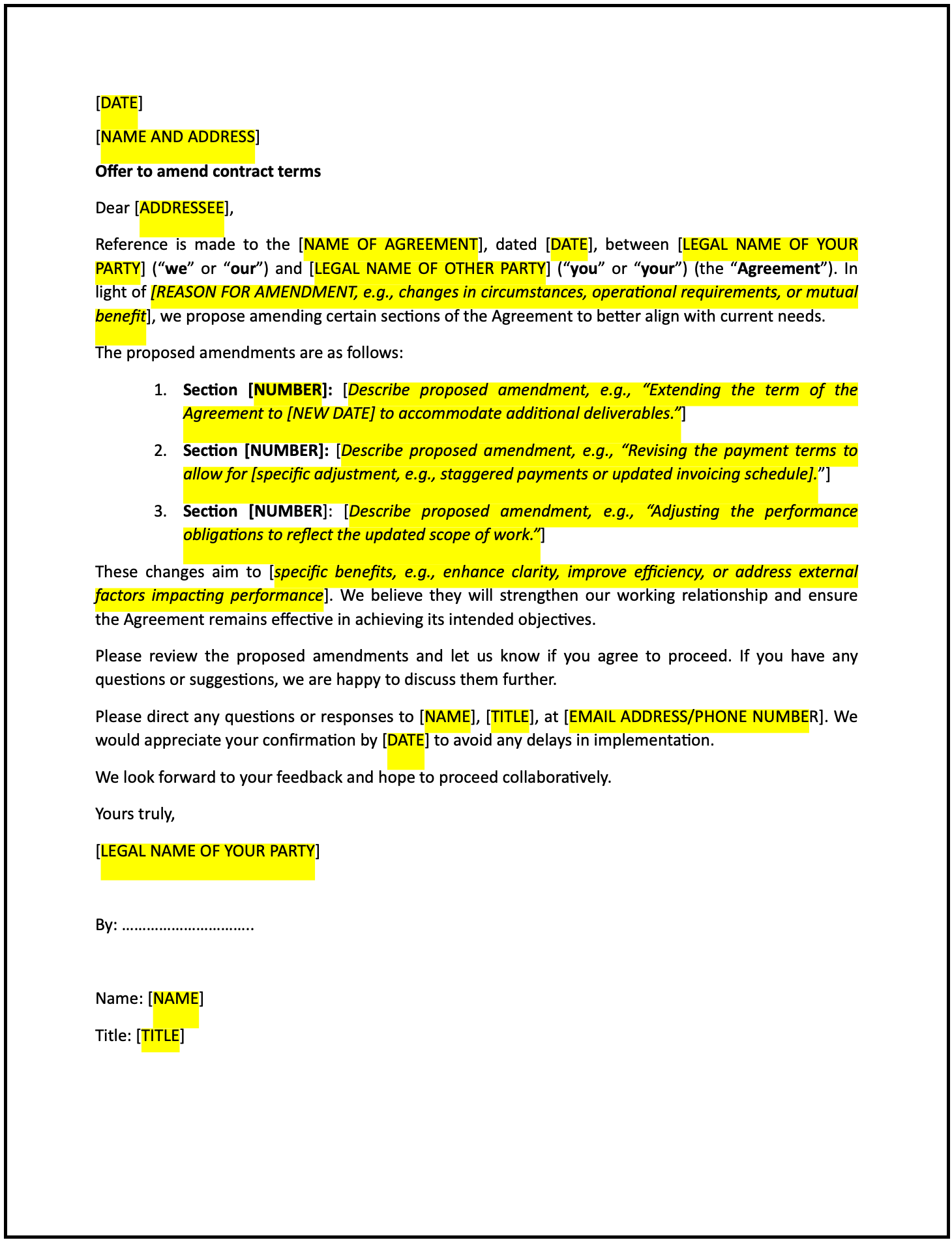
Requests amendments to specific contract terms, outlining the desired changes and providing justification for the adjustments.
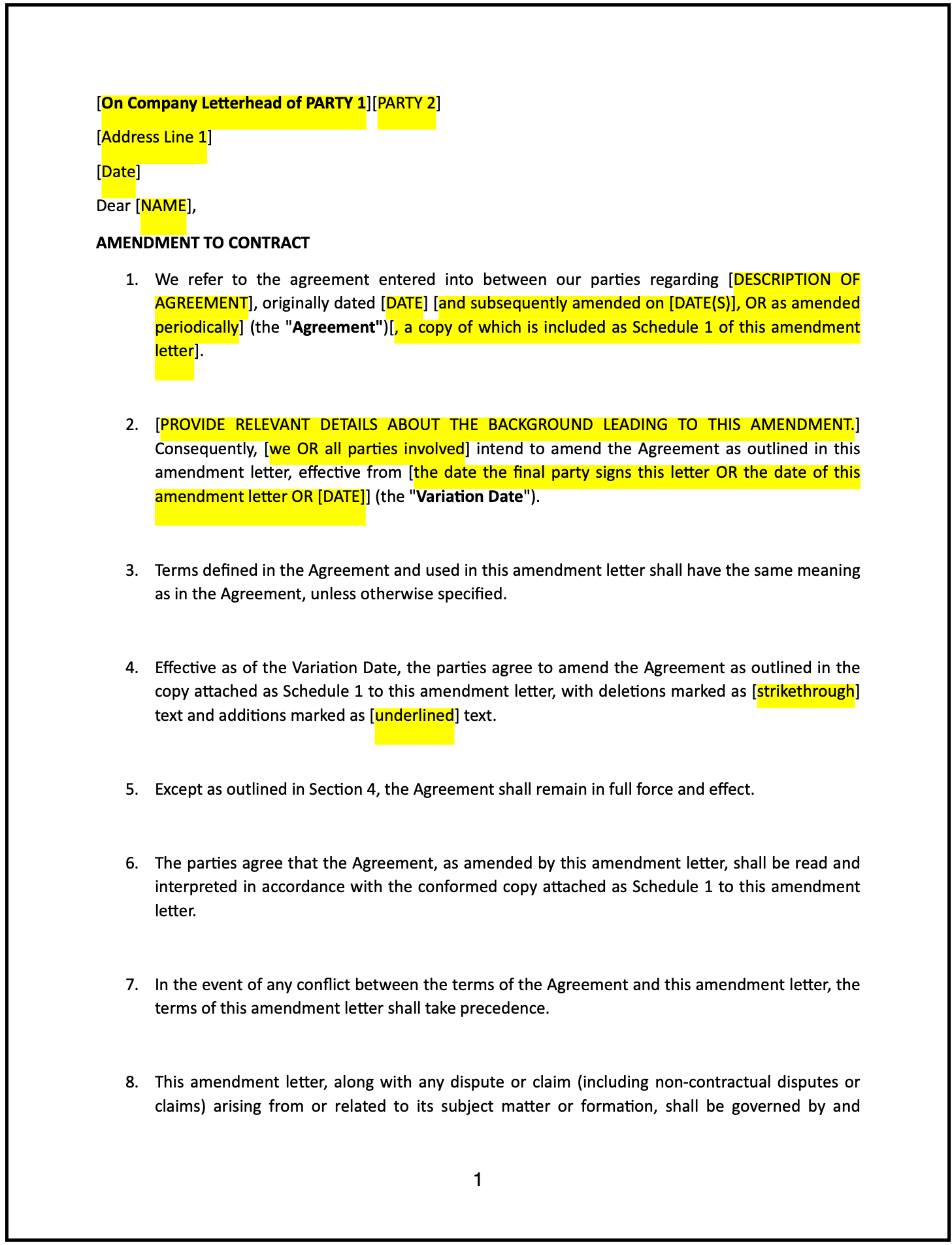
Requests a revision of the contract, outlining the specific terms to be modified and providing reasoning for the requested changes.
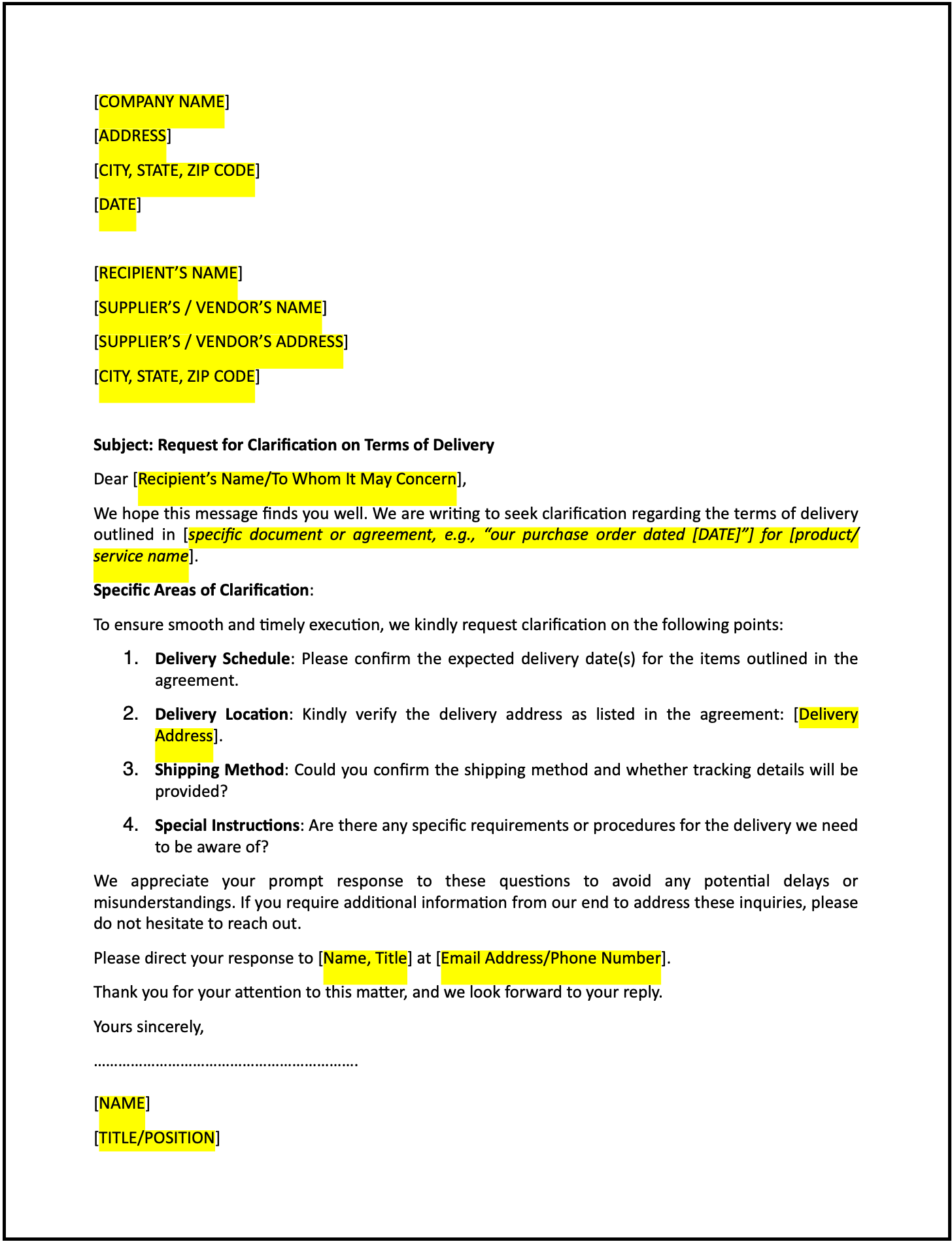
Requests clarification on the terms of delivery, outlining specific points of confusion and seeking further explanation on delivery schedules, costs, or conditions.
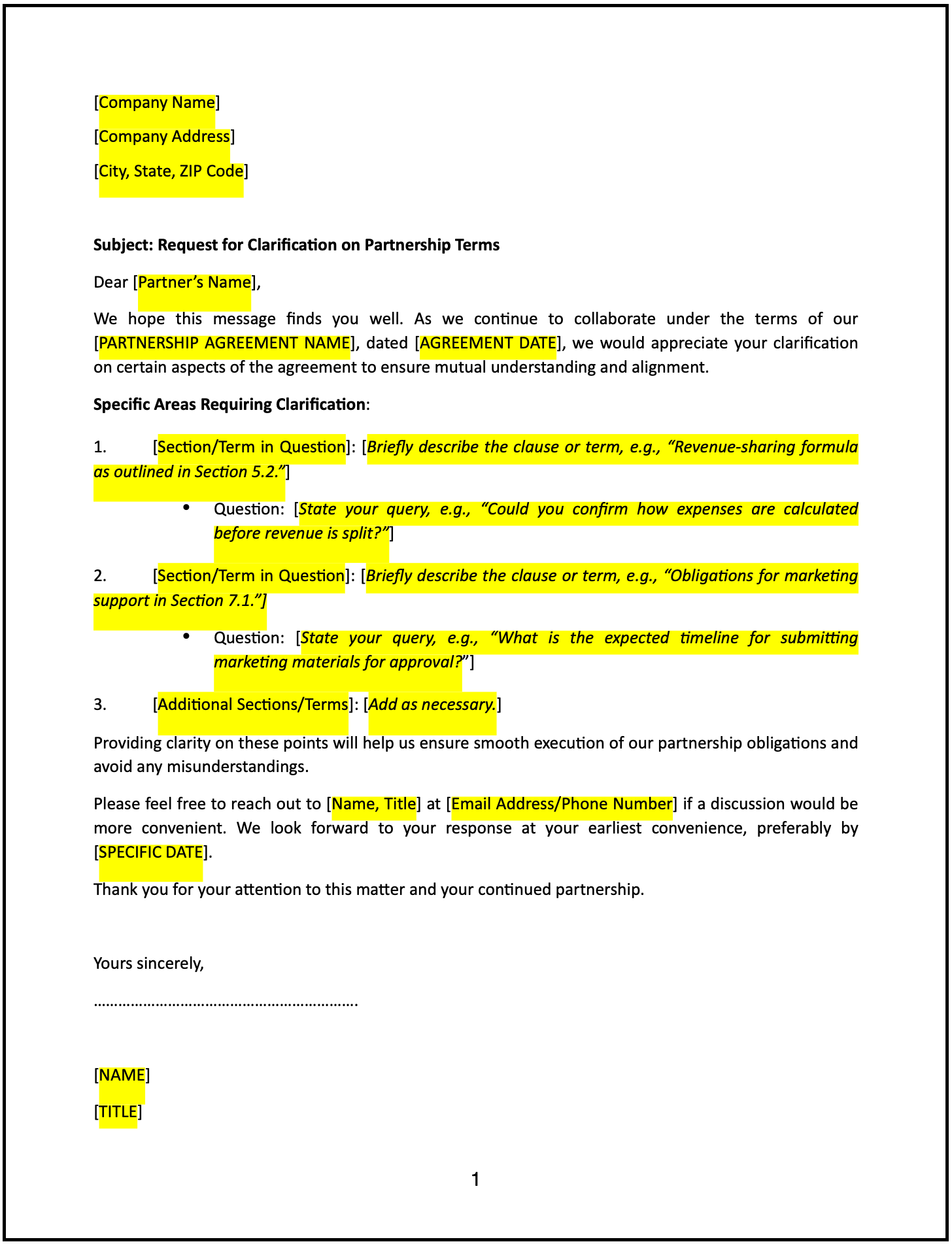
Requests clarification on specific partnership terms, outlining the areas of uncertainty and seeking further explanation or details.