Letter of failure to meet contractual obligations: Free template
Customize it in Cobrief and see the moment it's opened, signed, or actioned.
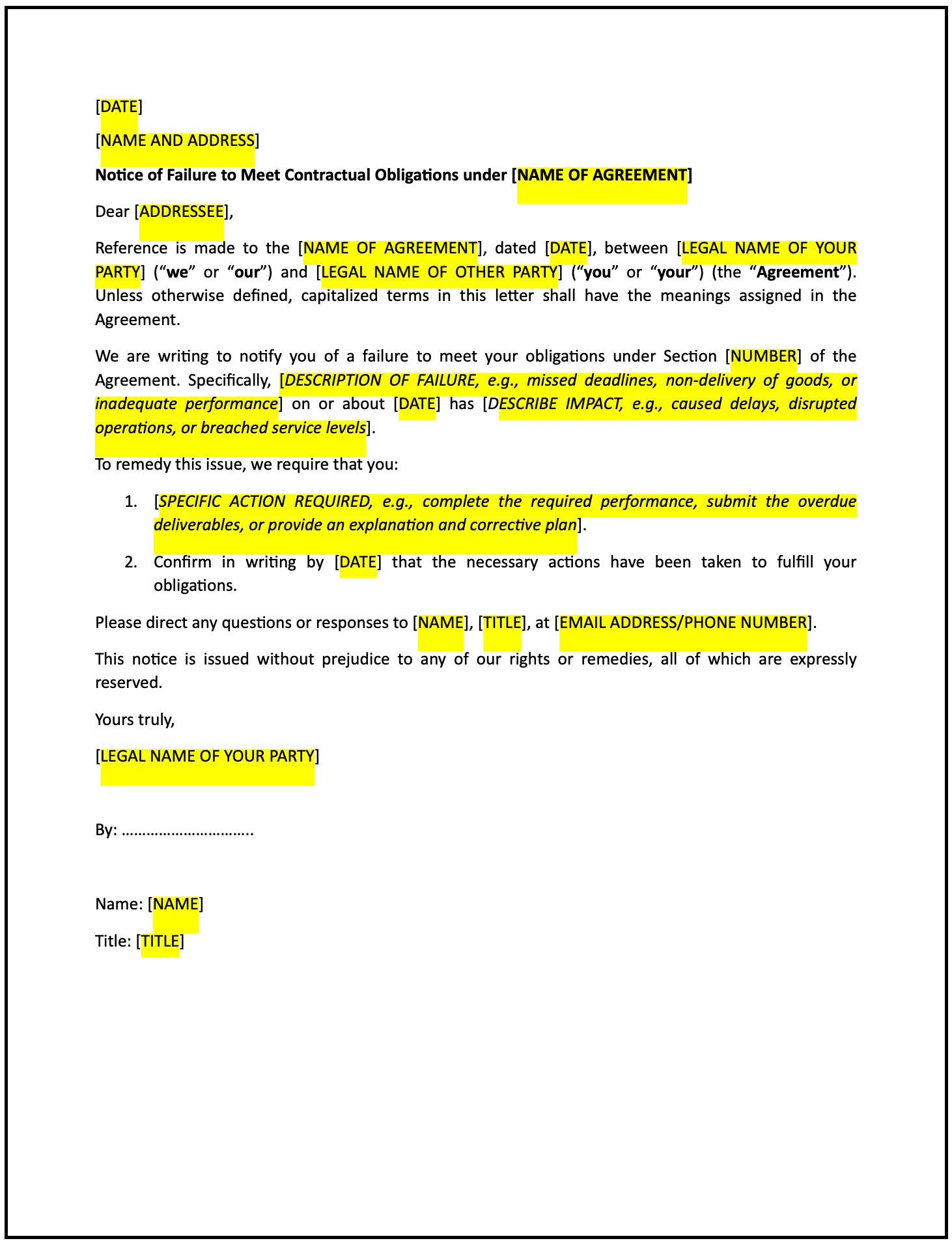
Customize this template for free
TL;DR
A letter template for addressing failures to meet contractual obligations, aimed at maintaining professionalism while outlining the issue and proposing solutions. It helps businesses document the failure, clarify responsibilities, and suggest corrective actions to preserve relationships and minimize disputes.
Letter of failure to meet contractual obligations
Failure to meet contractual obligations can disrupt business operations and strain professional relationships. This letter provides a professional and constructive way to address the issue, remind the other party of their responsibilities, and propose steps to resolve the matter while maintaining a collaborative tone.
How to use this letter of failure to meet contractual obligations
- Reference the contract: Clearly identify the contract, including its title, reference number, and the parties involved. Specify the relevant clauses outlining the obligations.
- Customize the template: Replace placeholders with your organization’s details, the obligations that were not met, and the impact caused by the failure.
- Specify the failure: Clearly describe the obligations that were not fulfilled, including dates, deliverables, or actions that were due.
- Explain the impact: Provide a concise explanation of how the failure has affected your organization or the agreement’s execution.
- Propose corrective actions: Suggest specific steps or timelines for resolving the issue and fulfilling the obligations.
- Maintain a professional tone: Keep the letter respectful and solution-focused to preserve the business relationship.
- Request acknowledgment: Ask the other party to confirm receipt of the letter and provide a response to the proposed resolution.
Benefits of using a letter of failure to meet contractual obligations
This letter template provides a professional and constructive way to address contractual failures while maintaining clarity and accountability. Here’s how it helps:
- Address issues promptly: Raising the failure in a timely manner ensures it is addressed before causing further disruption.
- Reinforce accountability: Clearly outlining the obligations and the failure emphasizes the importance of meeting contractual commitments.
- Propose solutions: Suggesting corrective actions demonstrates your willingness to resolve the issue constructively.
- Minimize disputes: Addressing the failure professionally helps maintain a positive relationship and reduces the risk of escalation.
- Provide documentation: The letter serves as a formal record of the issue and your efforts to address it, which can be useful for future reference.
Tips for writing an effective letter of failure to meet contractual obligations
- Be specific: Clearly reference the contract and the obligations that were not met to avoid ambiguity.
- Explain the impact: Provide a factual explanation of how the failure has affected your organization or the agreement’s execution.
- Propose solutions: Suggest clear and actionable steps to address the failure and prevent recurrence.
- Use professional language: Maintain a respectful and solution-oriented tone, focusing on resolving the issue rather than assigning blame.
- Keep it concise: Focus on the key points and avoid unnecessary details that could detract from the main message.
Frequently asked questions (FAQs)
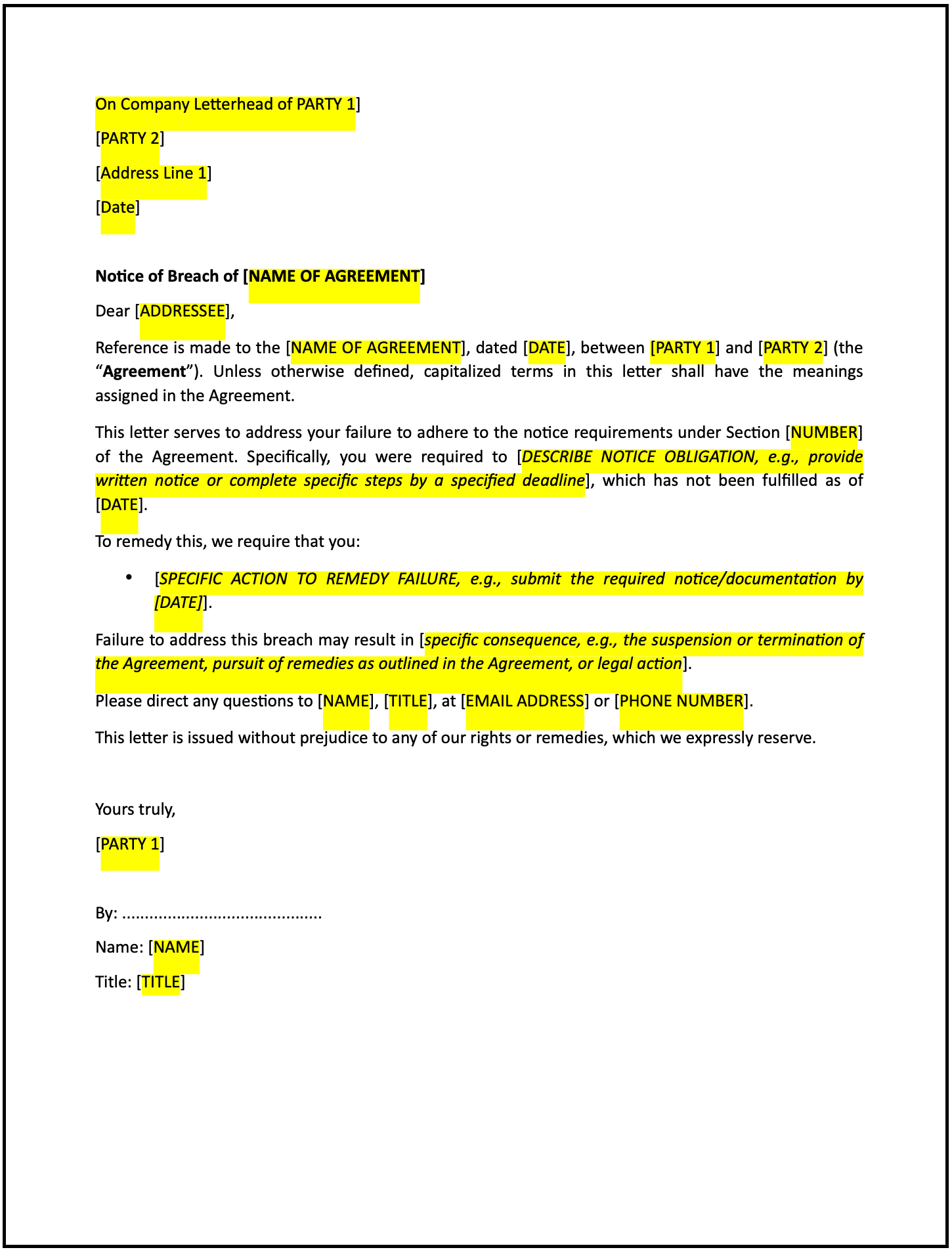
Notifies the recipient of their failure to adhere to notification requirements in the contract, requesting immediate compliance and outlining potential consequences.
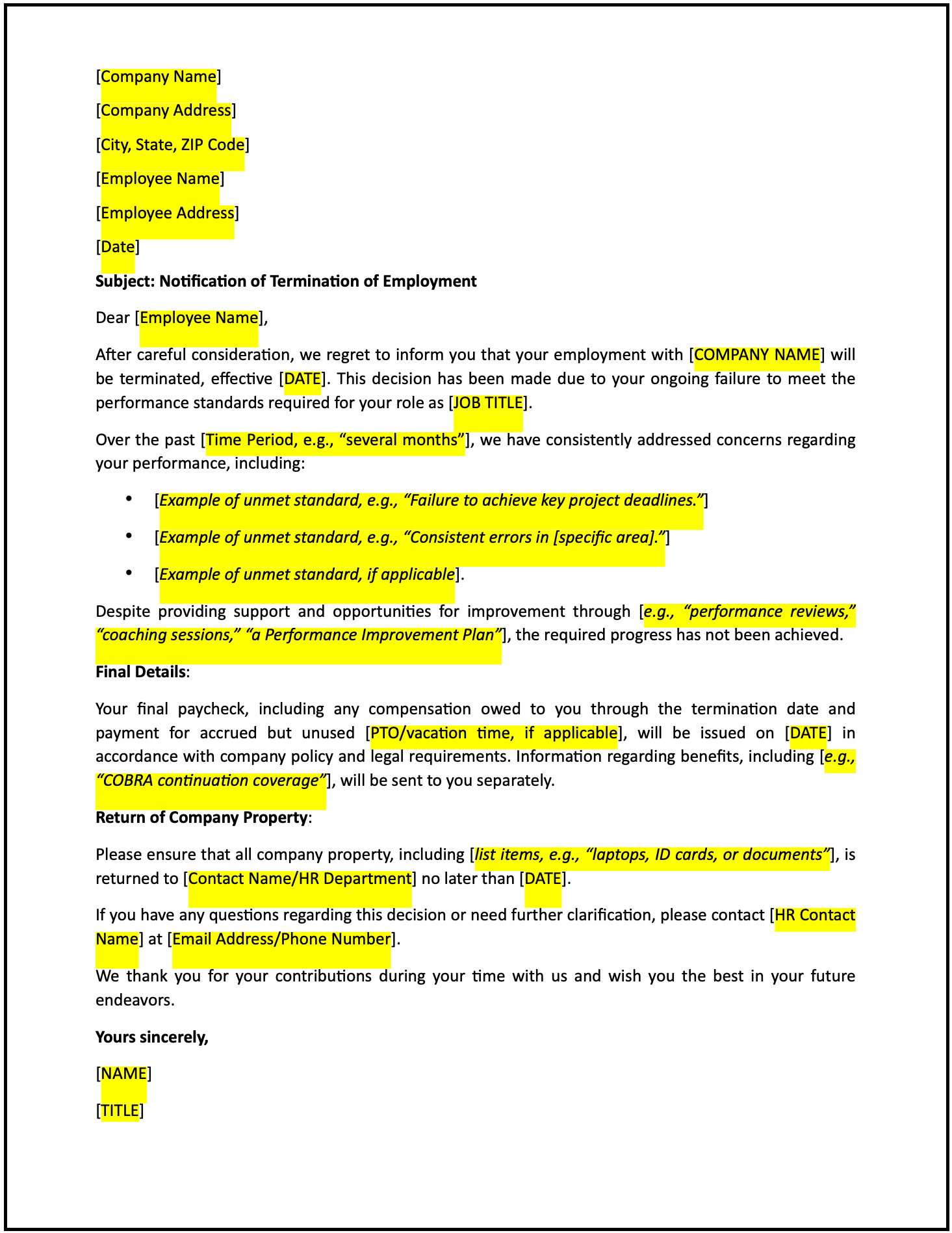
Notifies the recipient of contract termination due to failure to meet performance standards, outlining the specific deficiencies and the effective termination date.
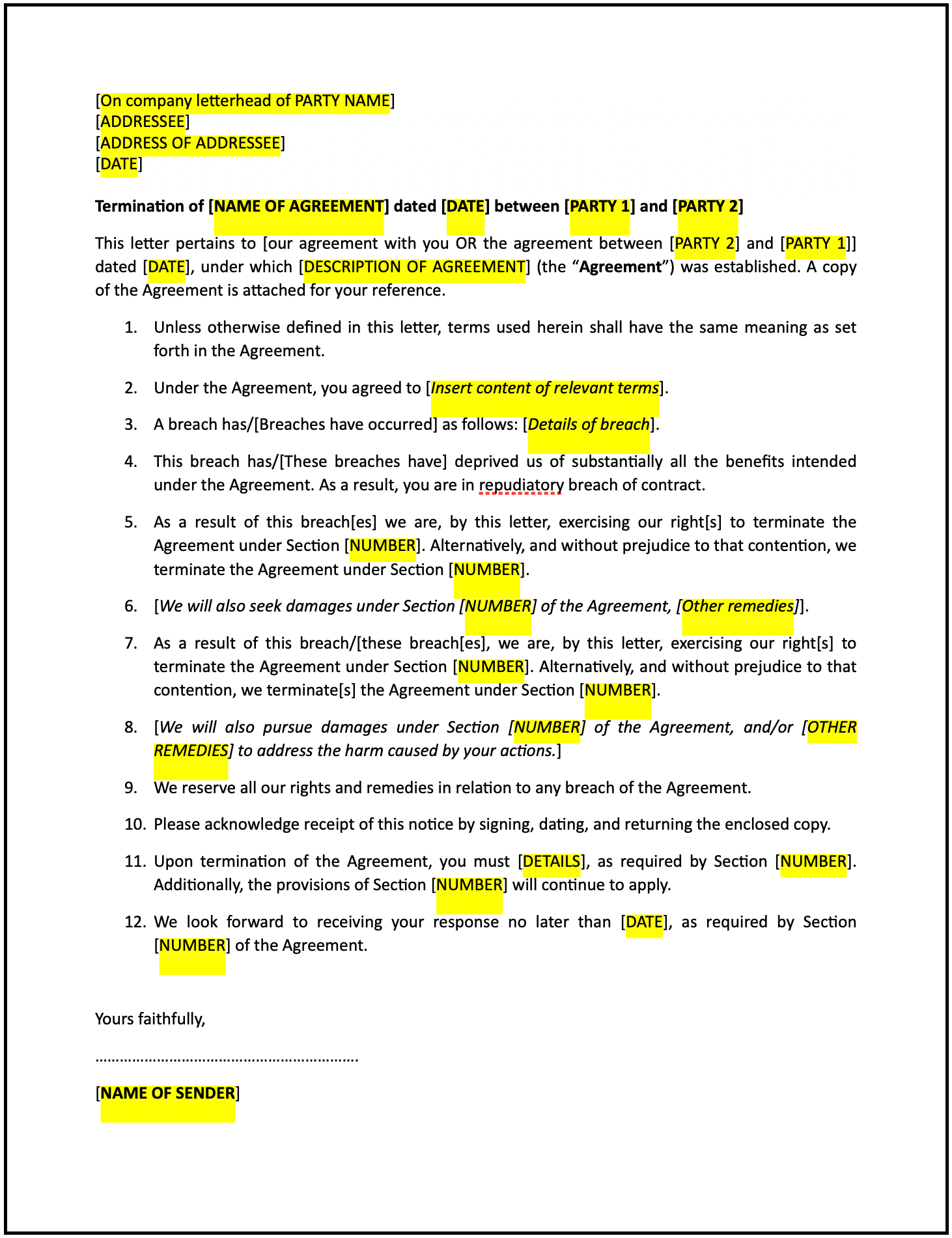
Notifies the recipient of contract termination due to non-performance, outlining the specific breaches and the effective date of termination.
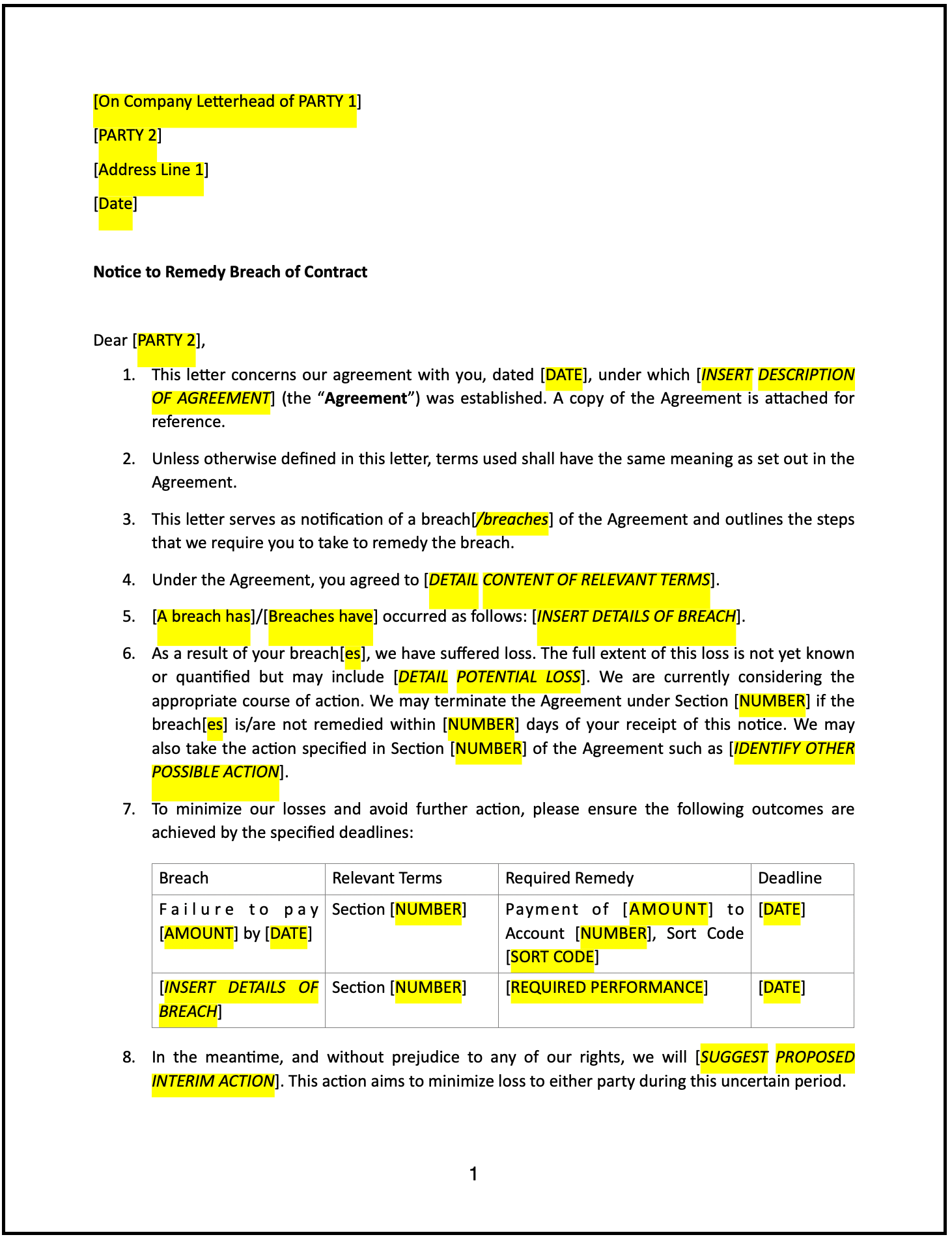
Notifies the recipient of a breach of contract and outlines the steps being taken to remedy the situation and fulfill contractual obligations.
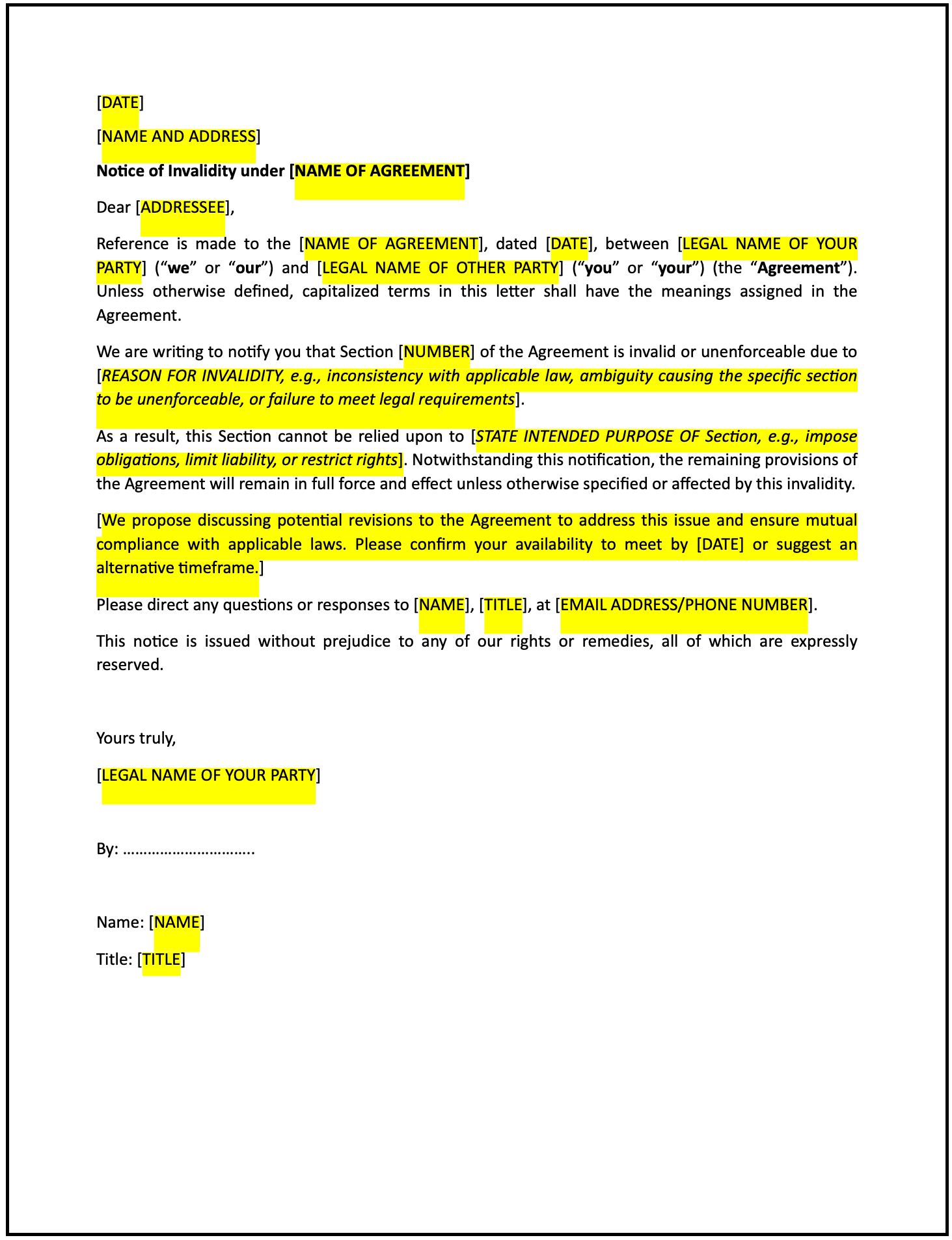
Notifies the recipient that the contract is invalid, providing the reasons for its invalidity and any necessary steps to resolve the issue.