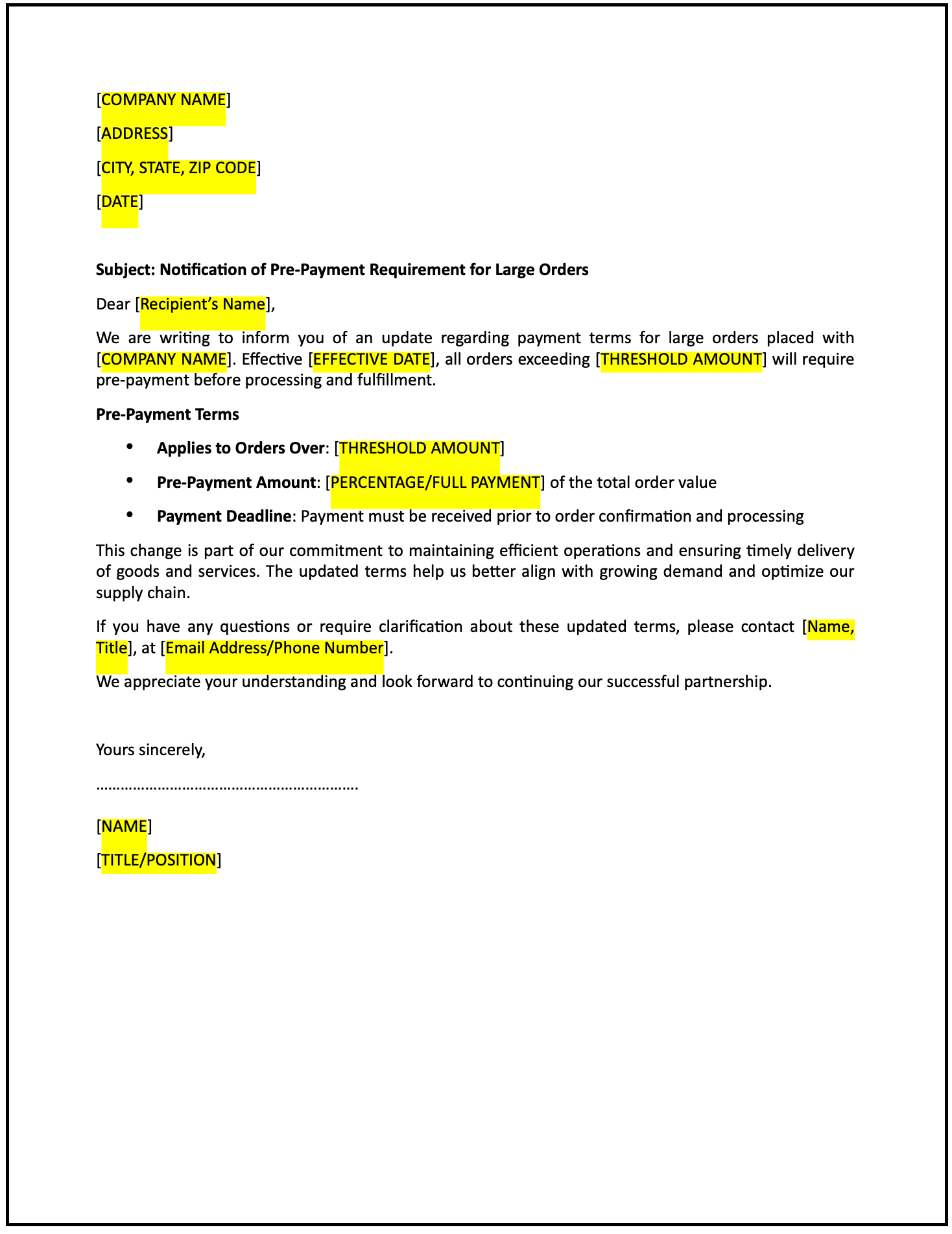
Letter of pre-payment requirements for large orders: Free template
Requests pre-payment for large orders, outlining the pre-payment amount required and the reason for this requirement before processing the order.
- Letters
Letter of pre-payment requirements for large orders
A notification letter of pre-payment requirements for large orders is a formal communication used to inform customers about a new policy requiring advance payment for high-value purchases. This letter outlines the policy, explains its purpose, and provides instructions to ensure transparency and maintain a strong customer relationship.
How to use this letter of pre-payment requirements for large orders
- Open with acknowledgment: Begin by addressing the customer respectfully and referencing their account or recent transactions, if applicable.
- Announce the new requirement: Clearly state the introduction of pre-payment requirements for large orders and define what qualifies as a large order.
- Provide the rationale: Briefly explain why this policy is being implemented, such as mitigating financial risk, ensuring timely fulfillment, or streamlining operations.
- Highlight the impact: Specify how the change will affect the customer and any adjustments they may need to make when placing large orders.
- Include implementation details: Mention the effective date of the policy and any conditions or exceptions that may apply.
- Offer instructions: Provide clear steps for making pre-payments, including payment methods and deadlines.
- Reassure the customer: Emphasize that this change is designed to improve the ordering process and ensure better service.
- Maintain a professional tone: Ensure the letter is clear, polite, and focused on fostering understanding.
- Provide contact information: Include details for the customer to reach out with questions or for assistance in navigating the new requirements.
Benefits of using a letter of pre-payment requirements for large orders
This letter ensures clear and professional communication about the new policy while fostering trust and understanding. Here’s how it helps:
- Promotes transparency: Clearly outlining the policy and its purpose builds trust and reduces confusion.
- Reflects professionalism: A well-crafted letter demonstrates respect and attentiveness to customer needs.
- Encourages compliance: Providing clear instructions ensures customers can easily adapt to the new policy.
- Supports risk management: Communicating pre-payment requirements minimizes financial risks and ensures smoother transactions.
- Maintains relationships: Clear and proactive communication helps preserve goodwill and trust.
Tips for writing an effective letter of pre-payment requirements for large orders
- Be specific: Clearly describe the pre-payment requirement, including what qualifies as a large order and the effective date.
- Use professional language: Maintain a respectful tone to encourage understanding and cooperation.
- Highlight next steps: Provide actionable advice, such as payment methods and deadlines for pre-payment.
- Address potential concerns: Offer reassurance and support for customers adjusting to the new policy.
- Keep it concise: Focus on the key points while ensuring the tone is professional and customer-focused.
Frequently asked questions (FAQs)
Similar templates
Where deals go from offer to paid
