Letter of proposal for IP audit or valuation: Free template
Customize it in Cobrief and see the moment it's opened, signed, or actioned.
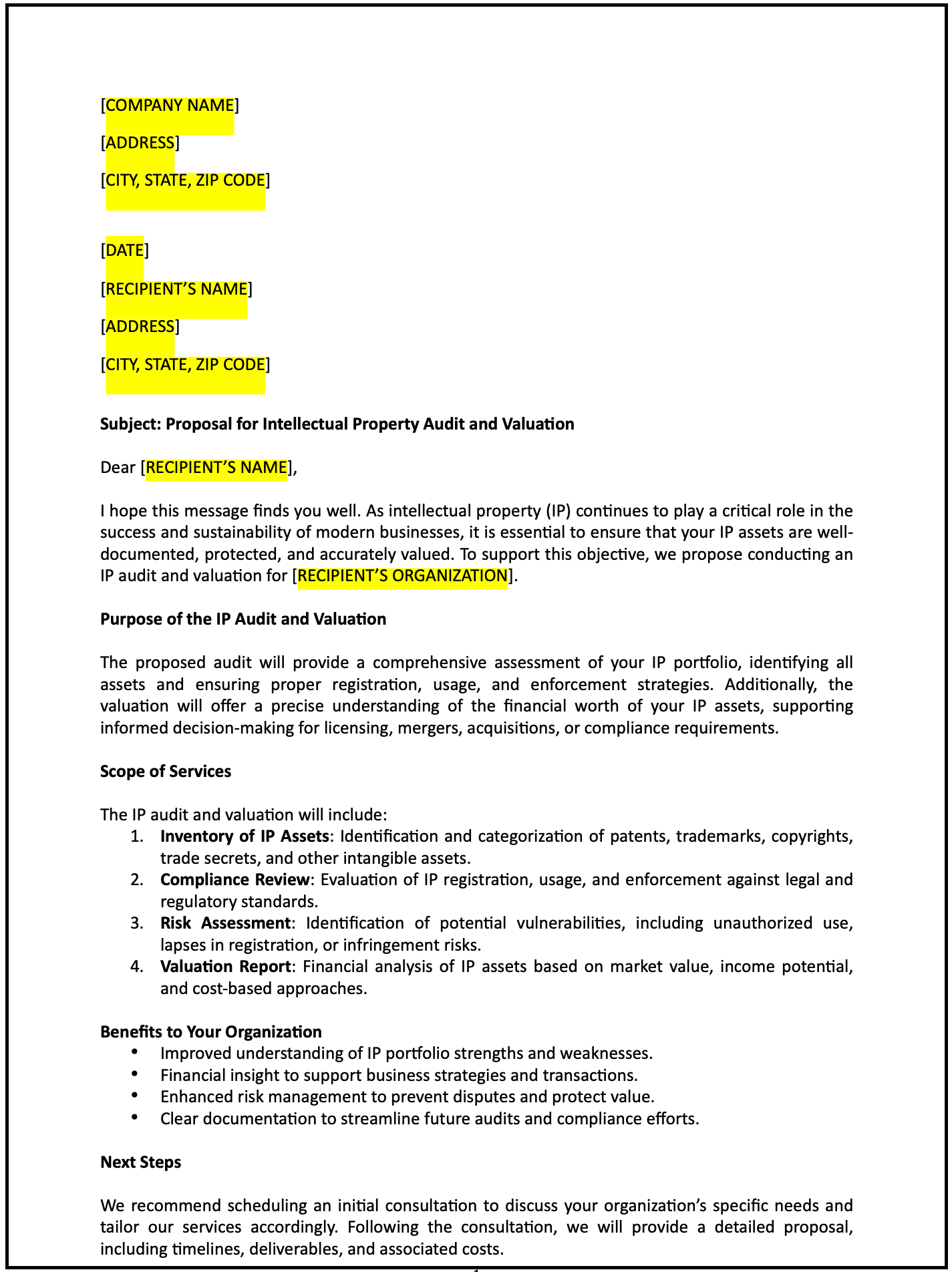
Customize this template for free
TL;DR
A formal letter proposing an intellectual property (IP) audit or valuation, aimed at organizations looking to assess their IP portfolio. It details the purpose, benefits, and proposed scope of the audit, while encouraging proactive management and informed decision-making. Typically used by consultants or IP professionals to communicate the value of IP assessments to clients.
Letter of proposal for IP audit or valuation
A letter of proposal for an intellectual property (IP) audit or valuation is a formal communication used to recommend a detailed review or assessment of an organization’s IP portfolio. This letter outlines the purpose of the audit or valuation, the benefits, and the proposed scope of work.
How to use this letter of proposal for IP audit or valuation
- Open with an introduction: Address the recipient respectfully and provide context for why the proposal is being made.
- State the purpose: Clearly communicate the intent to propose an IP audit or valuation, highlighting its relevance to the recipient’s business goals.
- Provide context: Briefly explain the significance of understanding and managing IP, such as improving asset management, ensuring compliance, or preparing for transactions.
- Outline the scope: Specify the proposed activities, such as identifying IP assets, assessing their value, or analyzing compliance with IP laws.
- Highlight the benefits: Explain how the audit or valuation will add value, such as optimizing IP protection, improving monetization strategies, or enhancing negotiation positions.
- Propose next steps: Suggest a meeting or discussion to finalize the scope, timeline, and costs of the audit or valuation.
- Maintain a professional tone: Ensure the letter is clear, respectful, and focused on fostering collaboration.
- Provide contact information: Include details for the recipient to respond or address any questions about the proposal.
Benefits of using a letter of proposal for IP audit or valuation
This letter ensures a structured and professional way to recommend an IP audit or valuation while fostering trust and collaboration.
- Promotes informed decision-making: An IP audit provides clarity on asset management and monetization opportunities.
- Reflects professionalism: A well-crafted letter demonstrates respect and a commitment to delivering value.
- Encourages proactive management: Highlighting the benefits of an audit fosters a forward-thinking approach to IP protection.
- Builds trust: Transparent communication strengthens relationships and positions your services as credible.
- Supports strategic planning: Understanding IP assets helps align them with broader business goals.
Tips for writing an effective letter of proposal for IP audit or valuation
- Be specific: Clearly define the scope and objectives of the proposed audit or valuation.
- Use professional language: Maintain a respectful and constructive tone to foster trust and collaboration.
- Provide context: Briefly explain why an IP audit or valuation is relevant to the recipient’s business or current situation.
- Highlight mutual benefits: Emphasize how the audit or valuation protects and enhances the recipient’s business interests.
- Include actionable steps: Share instructions for scheduling a meeting, providing additional information, or confirming interest.
- Keep it concise: Focus on the essential points while ensuring the tone is professional and engaging.
Frequently asked questions (FAQs)
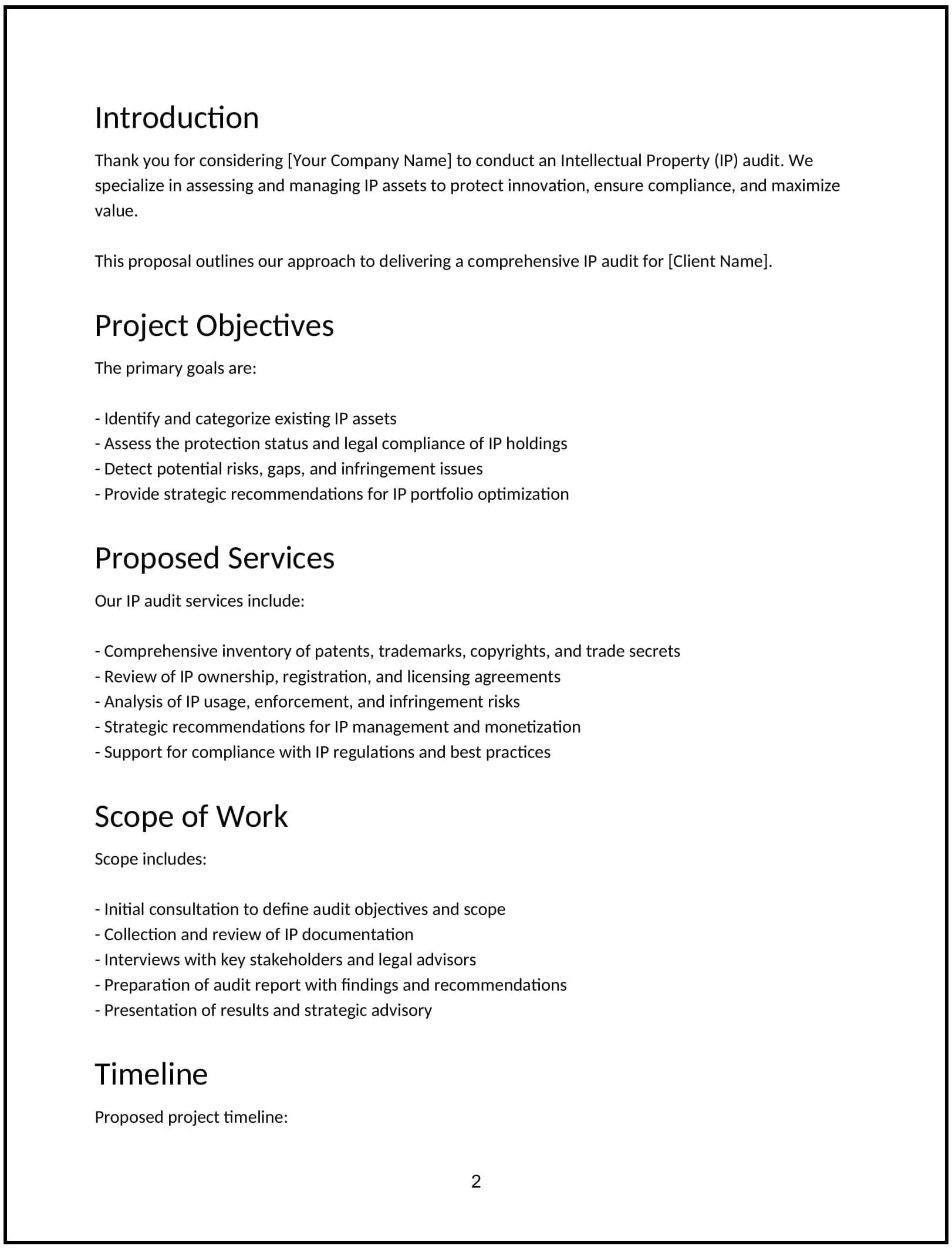
Proposes an intellectual property audit, outlining asset identification, risk assessment, protection strategies, and reporting deliverables.
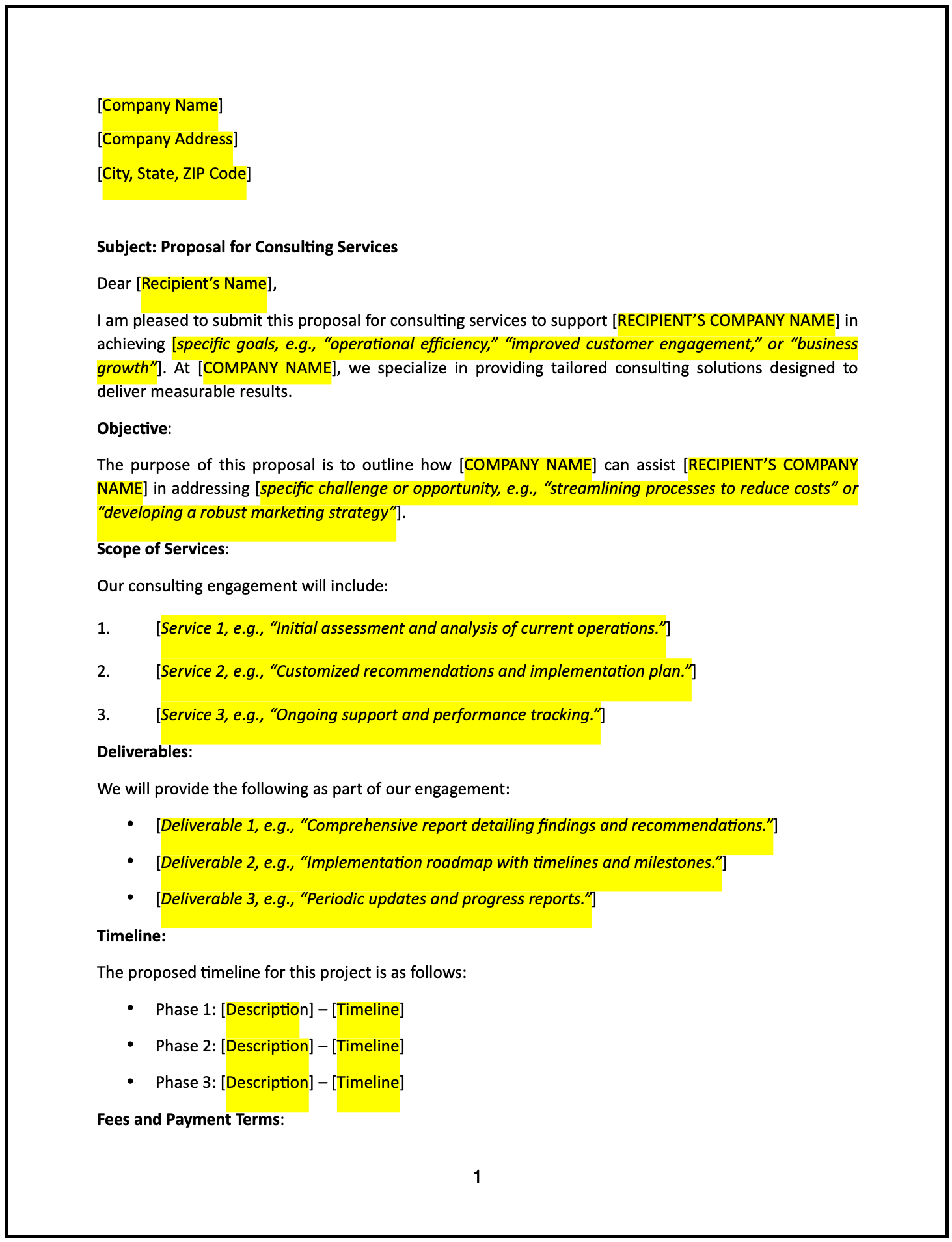
Proposes consulting services, outlining the scope, objectives, and benefits of the services being offered, along with proposed terms and costs.
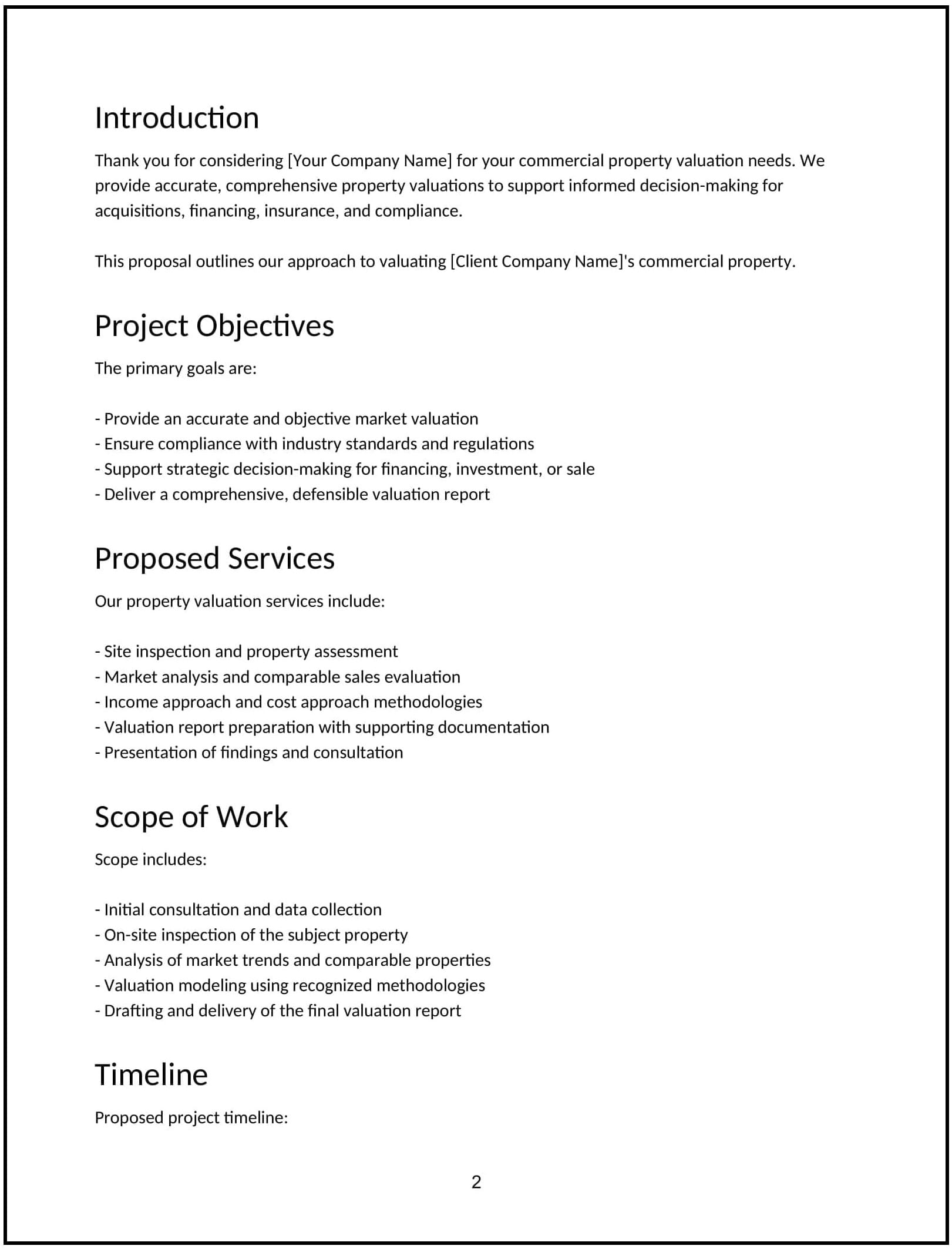
Proposes a commercial property valuation project, outlining assessment methods, data sources, valuation criteria, and reporting format.
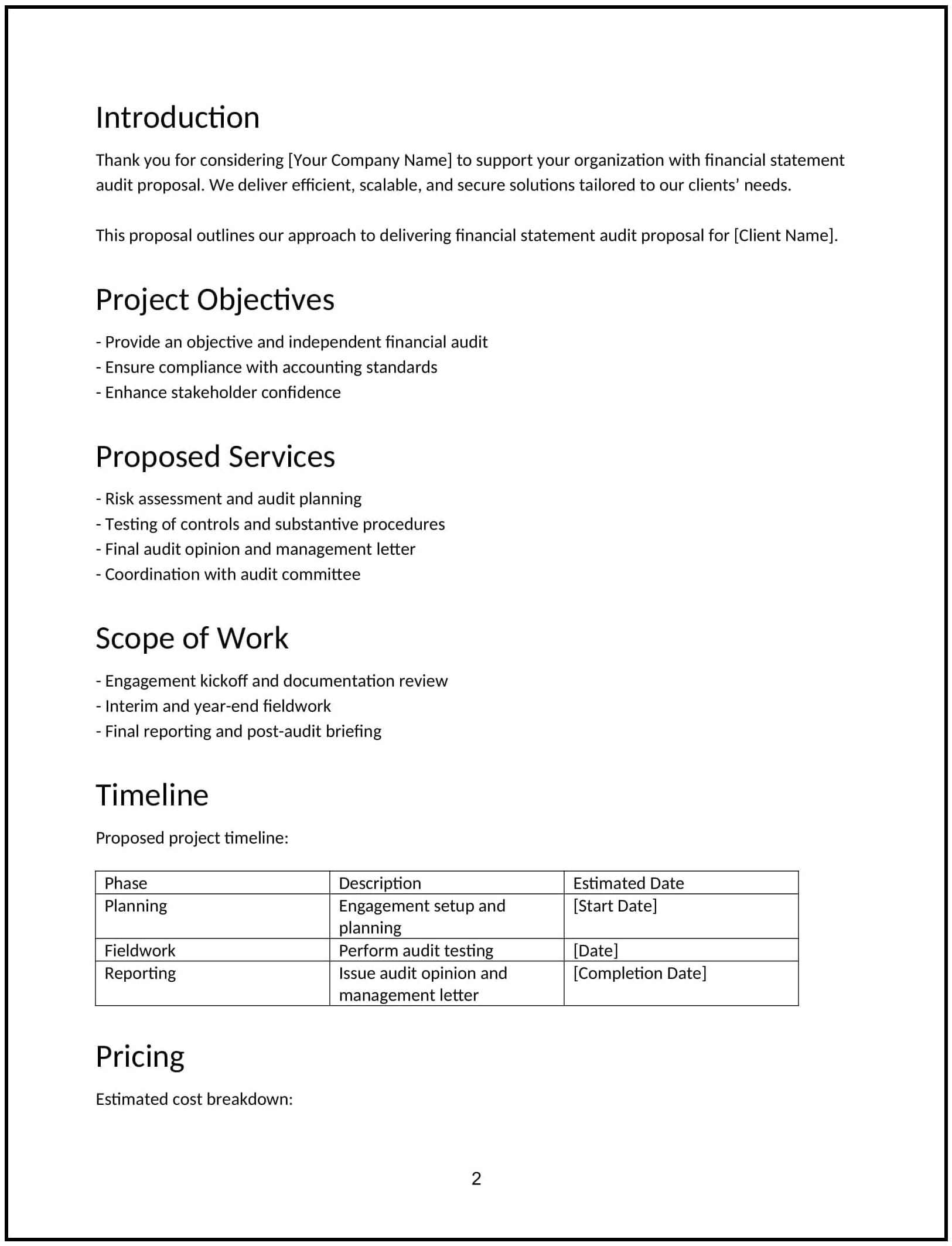
Proposes a financial statement audit, covering audit scope, methodology, compliance standards, and reporting procedures to ensure transparency and regulatory accuracy.
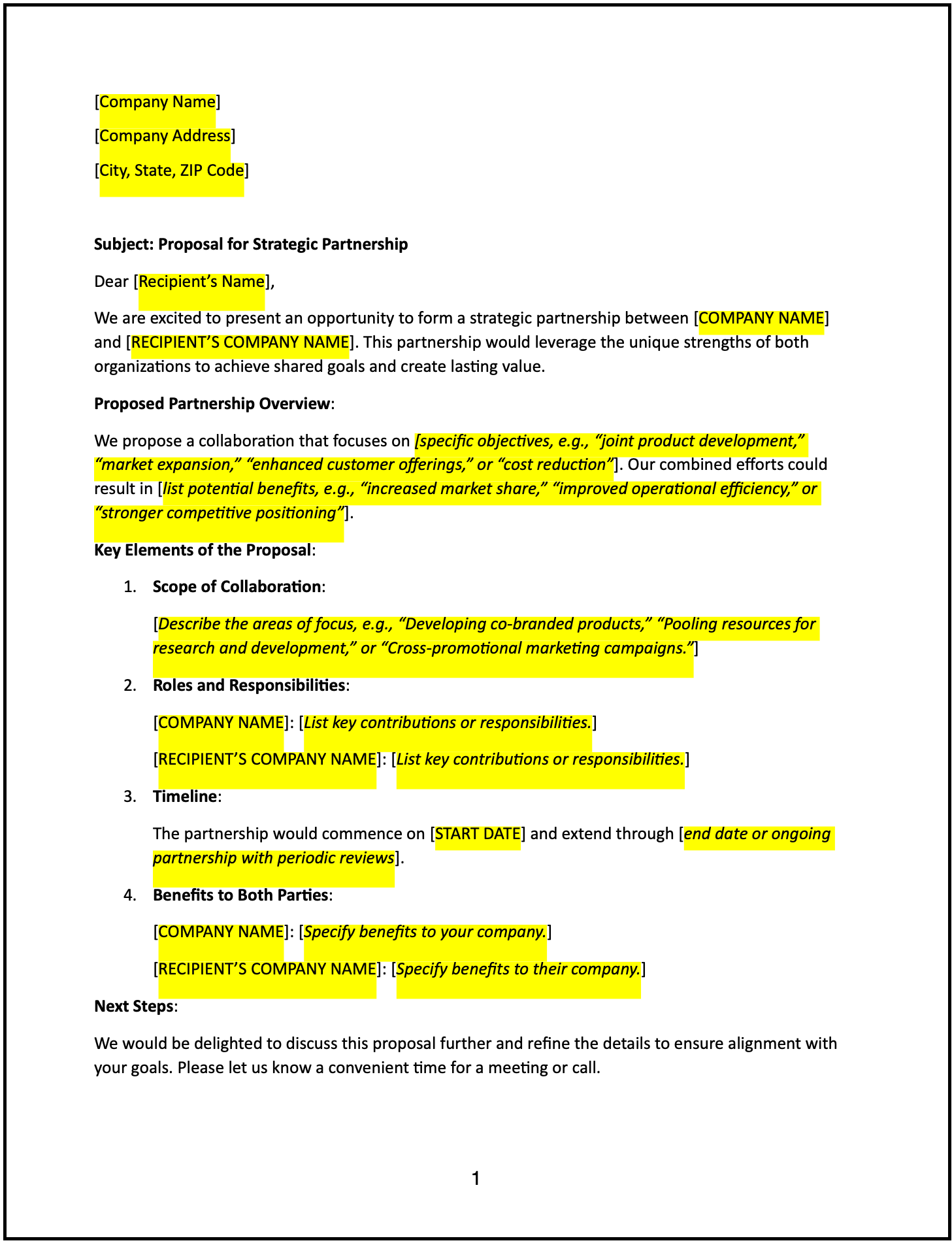
Proposes a strategic partnership, highlighting the mutual benefits, goals, and potential collaboration opportunities.