Letter of request for a progress report on consulting deliverables: Free template
Customize it in Cobrief and see the moment it's opened, signed, or actioned.
Customize this template for free
TL;DR
A formal letter template used to request a progress report on consulting deliverables under a consulting agreement. It facilitates transparency and accountability by outlining specific deliverables and timelines, making it useful for project managers and stakeholders seeking timely updates on project status.
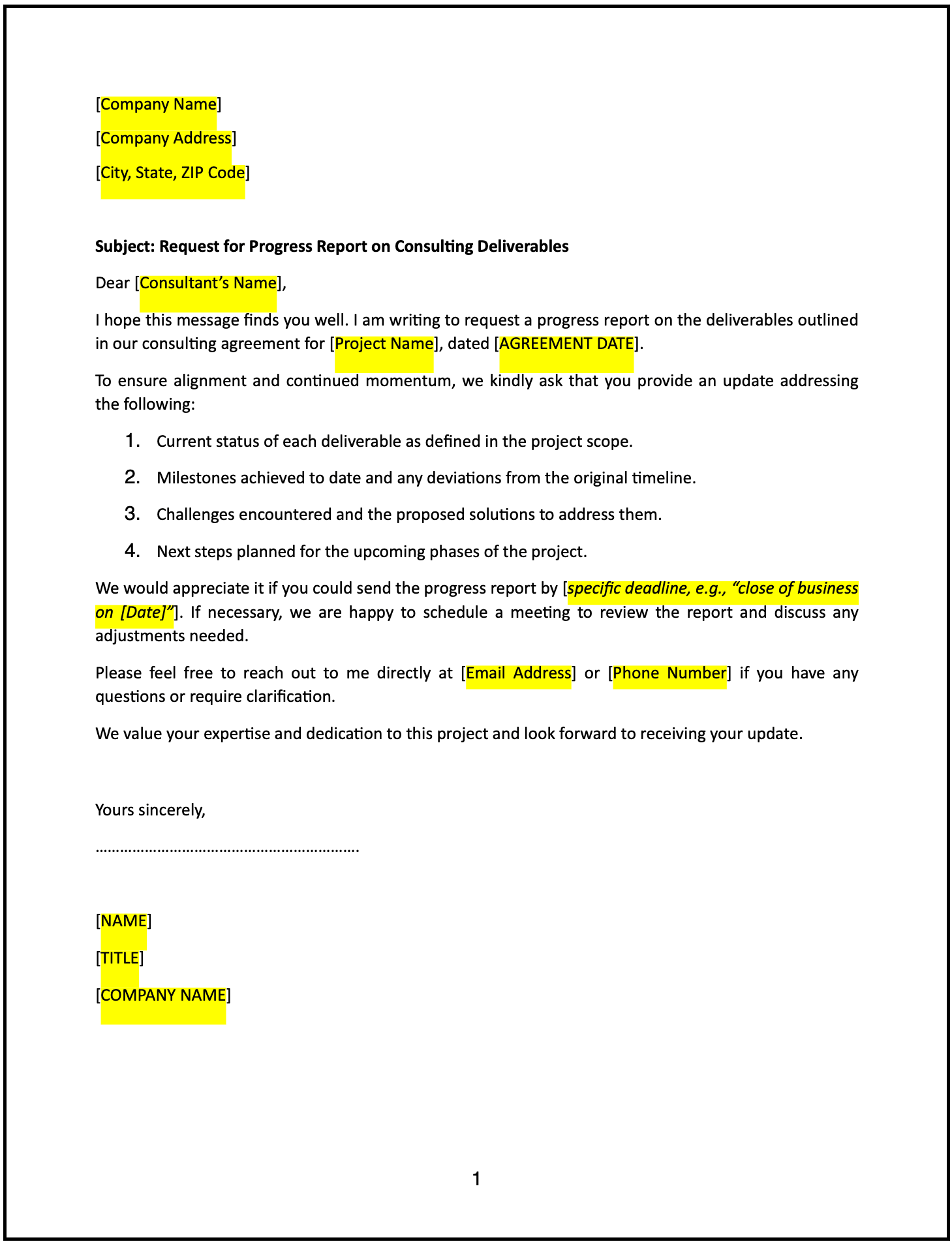
Letter of request for a progress report on consulting deliverables
A letter of request for a progress report on consulting deliverables is a formal communication used to inquire about the status of work being performed under a consulting agreement. This letter ensures transparency, alignment, and timely updates on the project’s progress.
How to use this letter of request for a progress report on consulting deliverables
- Open with an introduction: Address the recipient respectfully and reference the consulting project by name or identification number.
- State the purpose: Clearly communicate your intent to request a progress report on the project deliverables.
- Specify the details: Outline the specific deliverables, milestones, or areas of focus for the progress report.
- Provide context: Briefly explain why the progress report is important, such as tracking alignment with timelines, objectives, or quality standards.
- Request a format: Indicate whether the report should include metrics, milestones, challenges, or other key details.
- Set a timeline: Politely request that the report be submitted by a specific date.
- Encourage collaboration: Reassure the consultant of your support and invite them to reach out with any questions or updates.
- Maintain a professional tone: Ensure the letter is clear, respectful, and focused on fostering a constructive relationship.
- Provide contact information: Include details for the recipient to submit the report or reach out for clarification.
Benefits of using a letter of request for a progress report on consulting deliverables
This letter ensures a structured and professional way to track project progress while fostering transparency and collaboration. Here’s how it helps:
- Promotes accountability: Requesting a progress report ensures consultants stay aligned with project goals and timelines.
- Reflects professionalism: A well-crafted letter demonstrates respect and a commitment to effective communication.
- Encourages alignment: Progress updates ensure that deliverables meet expectations and standards.
- Supports decision-making: Timely reports provide insights needed to adjust plans or address challenges.
- Strengthens relationships: Open communication fosters trust and collaboration between stakeholders.
Tips for writing an effective letter of request for a progress report on consulting deliverables
- Be specific: Clearly identify the project and the deliverables or milestones you’re inquiring about.
- Use professional language: Maintain a respectful and solution-oriented tone to build trust.
- Provide context: Briefly explain why the progress report is needed and how it supports the project.
- Highlight mutual benefits: Emphasize how timely updates support shared goals and project success.
- Include actionable steps: Share clear instructions for submitting the report or scheduling a follow-up discussion.
- Keep it concise: Focus on the essential points while ensuring the tone is professional and engaging.
Frequently asked questions (FAQs)
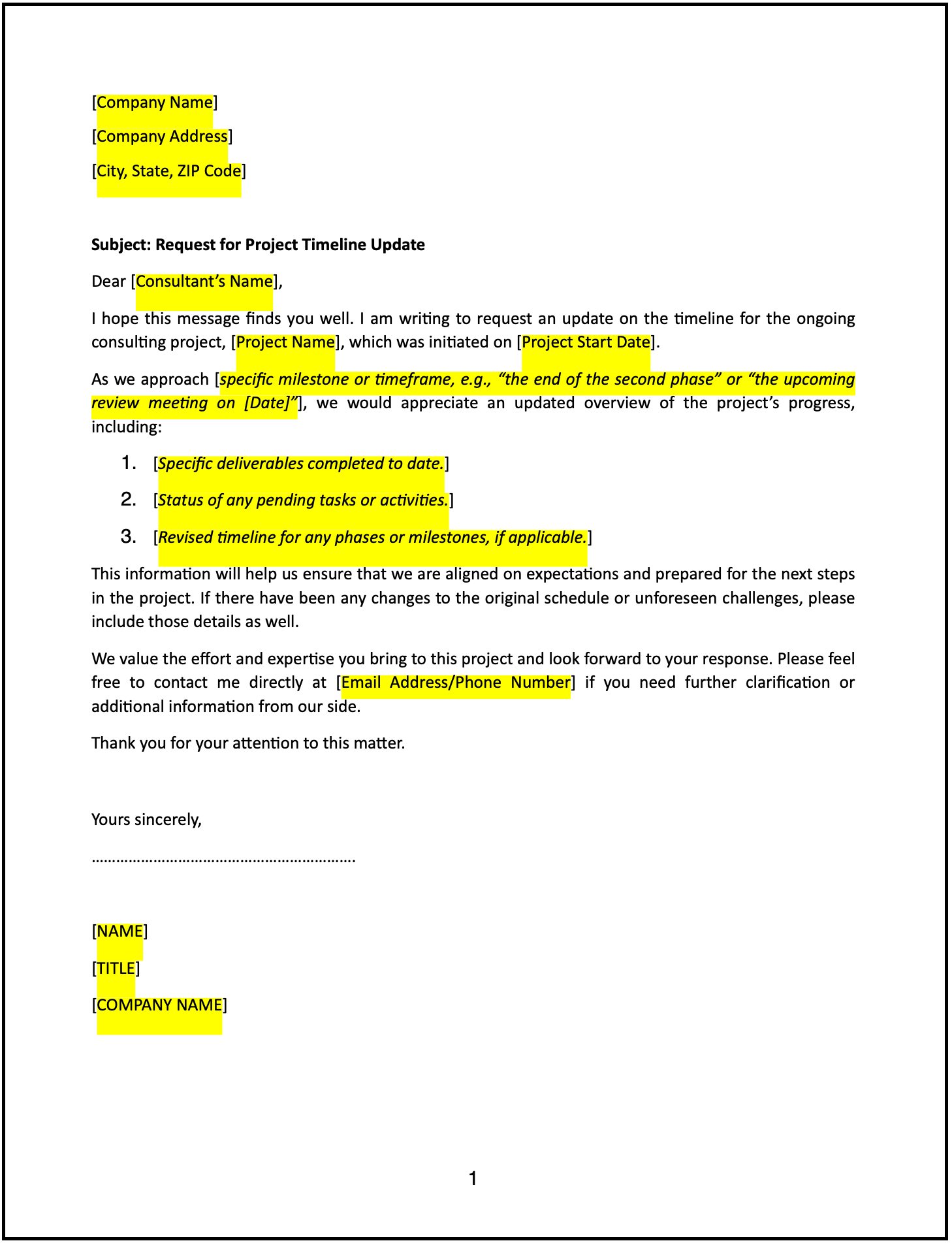
Requests an update on the consulting project timeline, asking for a revised schedule and any adjustments that may affect project completion.
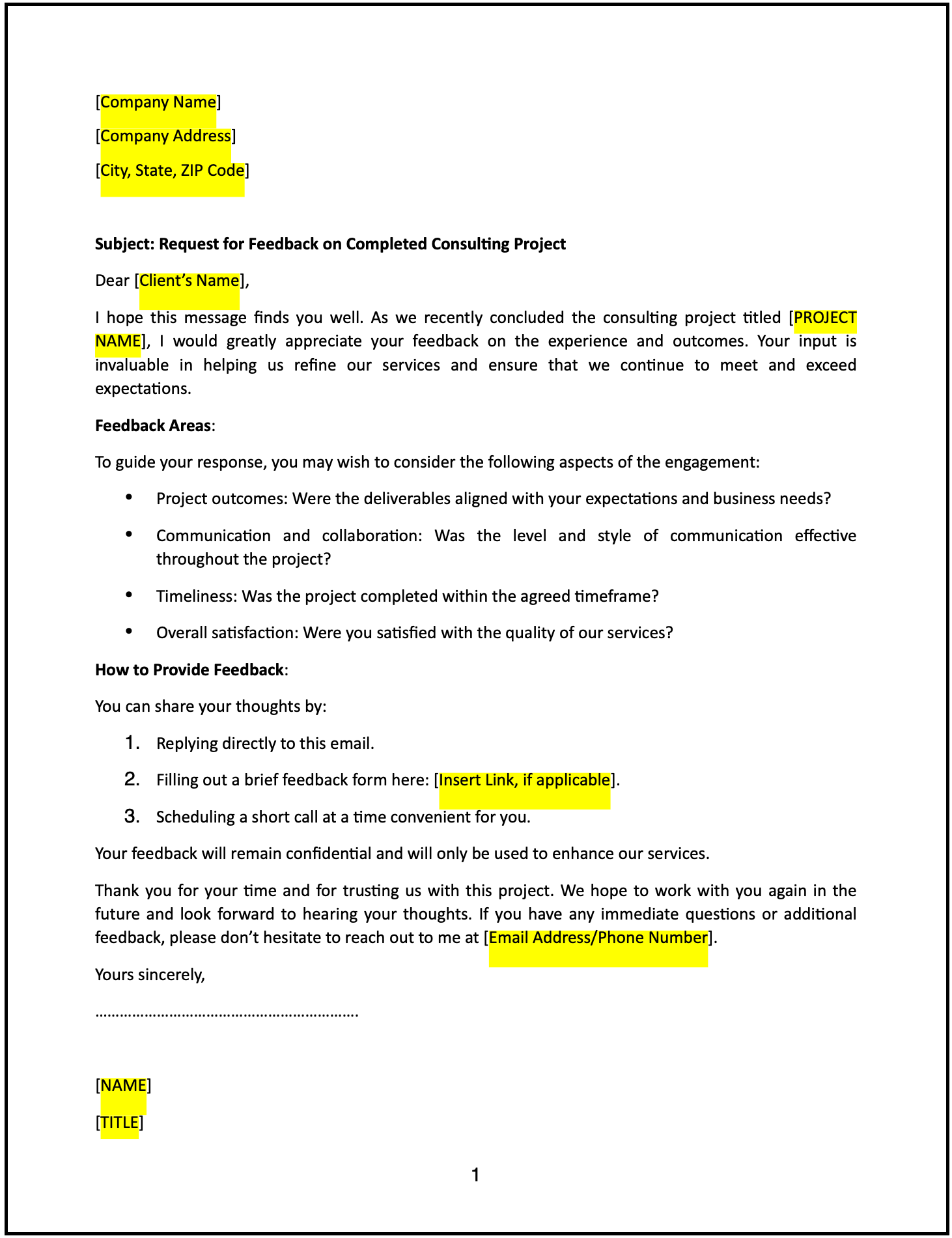
Requests feedback on a completed consulting project, asking for insights on the deliverables, overall satisfaction, and areas for improvement.
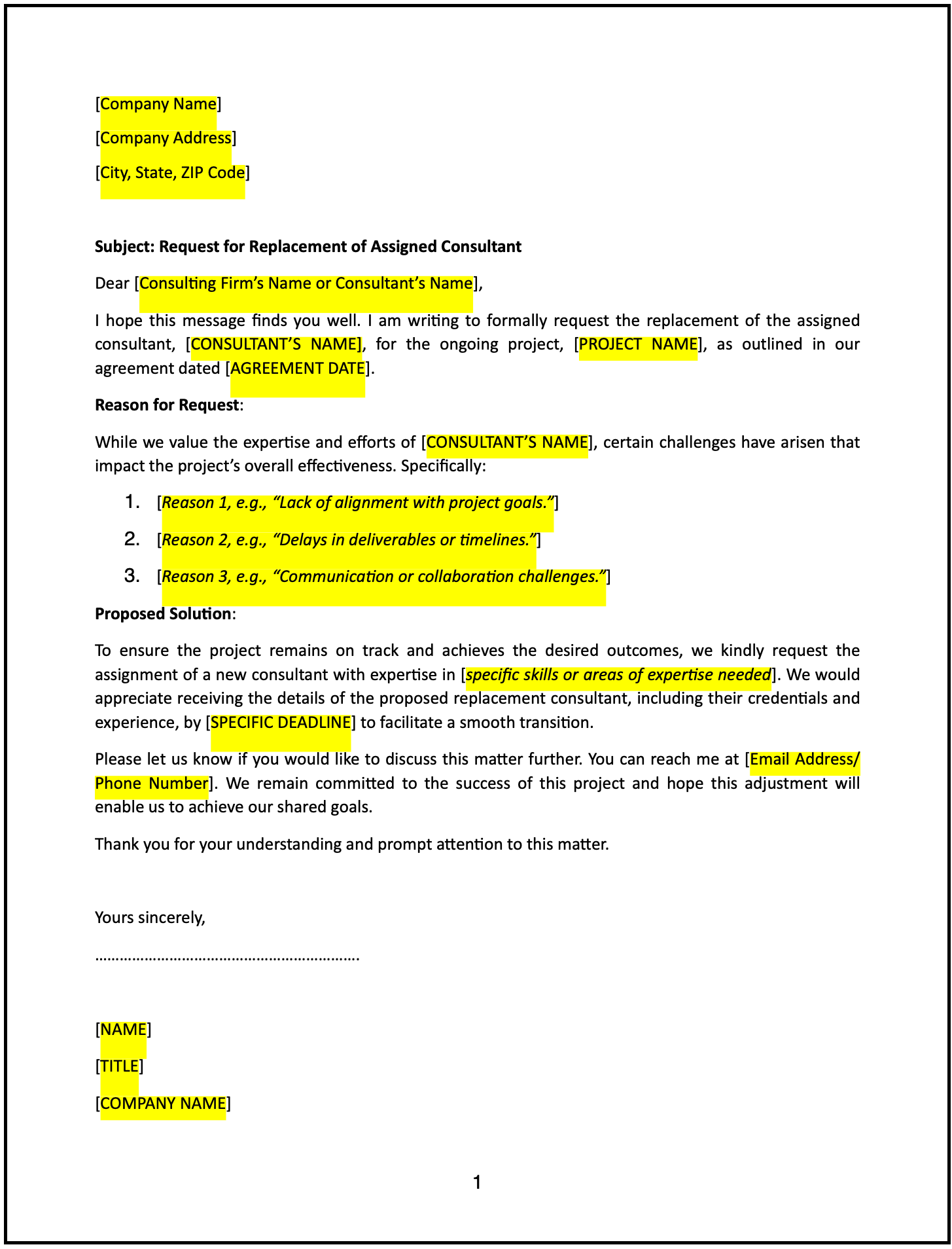
Requests the replacement of the assigned consultant, explaining the reasons for the request and any qualifications or requirements for the new consultant.
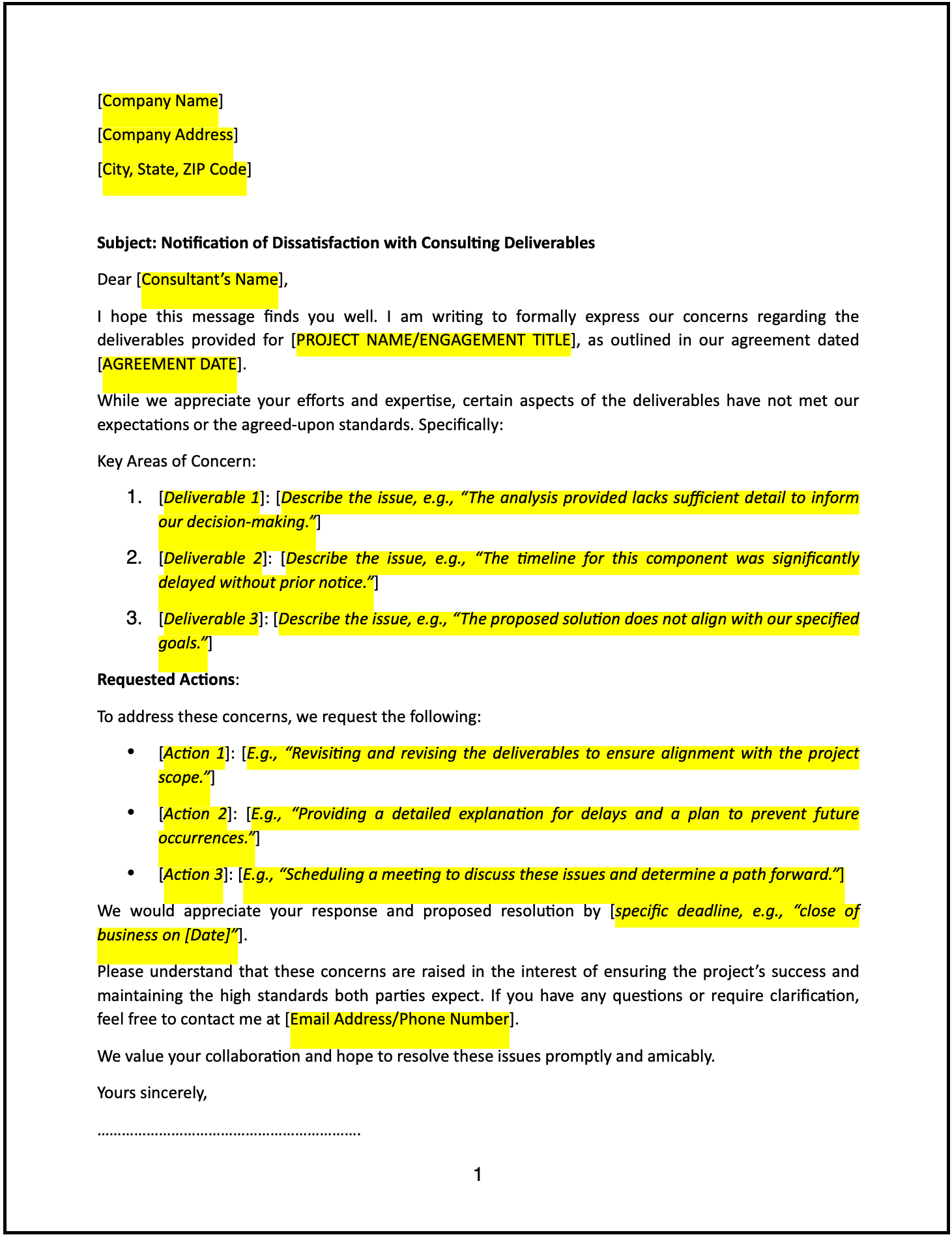
Expresses dissatisfaction with consulting deliverables, outlining specific areas of concern and requesting corrective actions or adjustments to meet expectations.
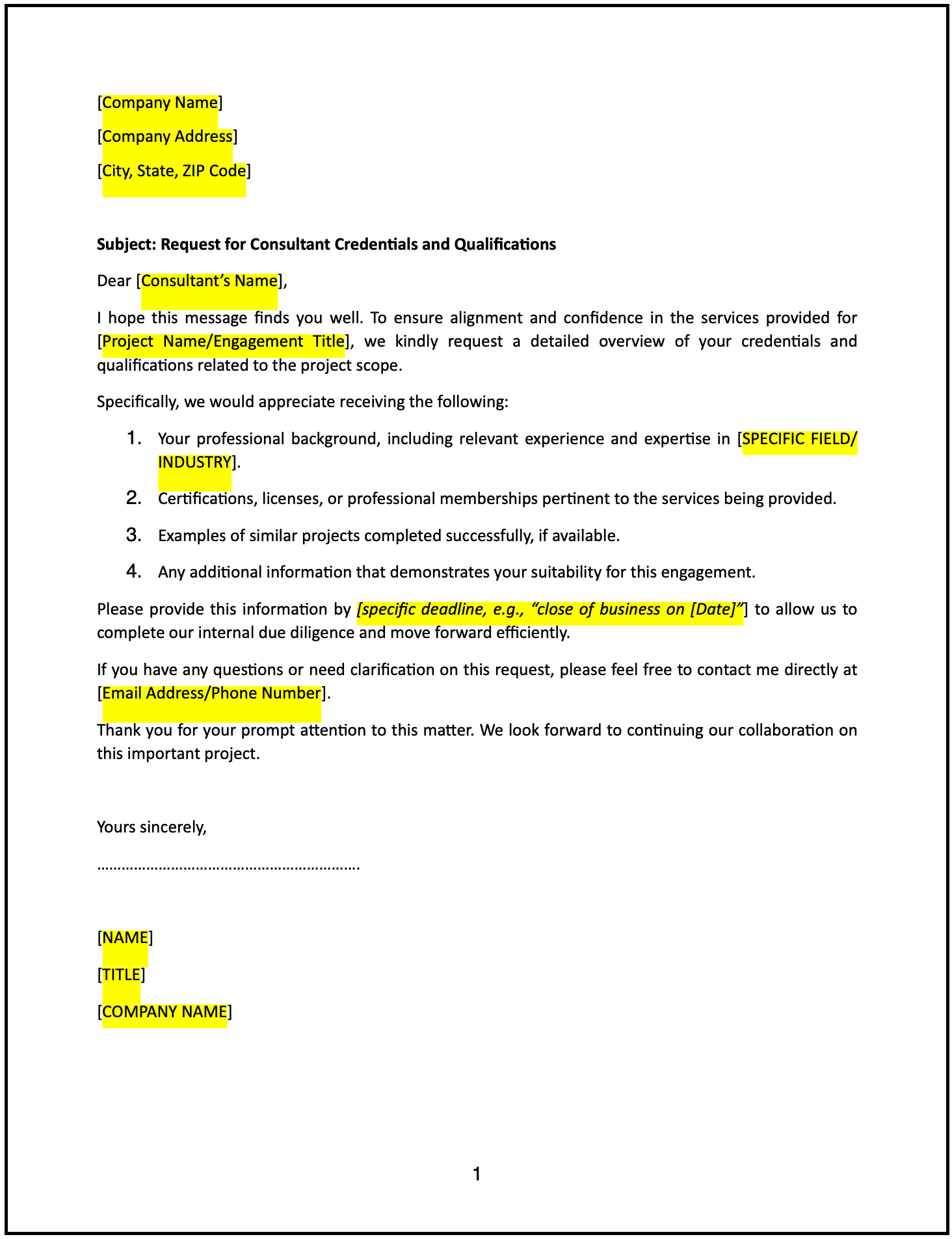
Requests the credentials or qualifications of a consultant, specifying the required documentation or certifications for evaluation.