Letter of response to frivolous legal claims: Free template
Customize it in Cobrief and see the moment it's opened, signed, or actioned.
Customize this template for free
TL;DR
A formal letter template used to respond to frivolous legal claims, refuting baseless allegations and asserting one's position. It provides a structured approach to outline the lack of merit in the claims, reference supporting evidence, and discourage further legal action, making it suitable for individuals or businesses facing unwarranted legal disputes.
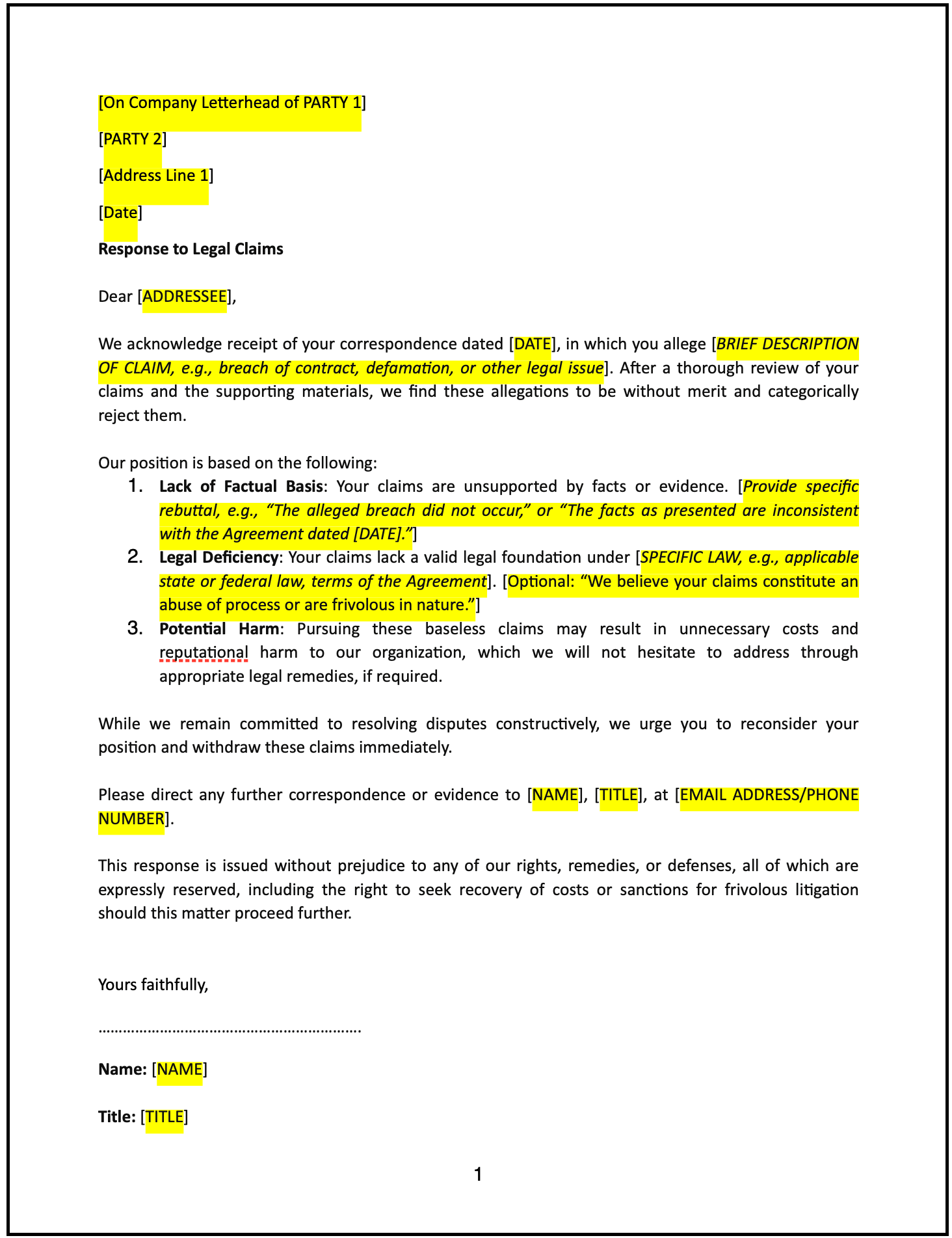
Letter of response to frivolous legal claims
A letter of response to frivolous legal claims is a formal way to refute baseless allegations, assert your position, and discourage further unnecessary legal action. This letter outlines the lack of merit in the claims, references supporting facts or legal principles, and seeks to resolve the matter efficiently.
How to use this letter of response to frivolous legal claims
- Open with acknowledgment: Begin by referencing the correspondence or notice containing the frivolous claims.
- State your position: Clearly outline that the claims lack merit and provide a concise explanation of why they are baseless.
- Provide evidence: Include any supporting documentation or facts that demonstrate the claims’ lack of validity.
- Reference applicable laws or agreements: Cite relevant legal principles or contractual terms that counter the claims.
- Highlight potential consequences: Indicate that pursuing baseless claims could result in legal or financial repercussions, such as sanctions or cost recovery.
- Maintain a professional tone: Ensure the letter is respectful, clear, and focused on discouraging further action.
- Invite resolution: Express a willingness to resolve the matter amicably or request that the claims be withdrawn.
- Provide contact information: Include details for follow-up communication or clarification if necessary.
Benefits of using a letter of response to frivolous legal claims
This letter template ensures a structured and professional way to address baseless claims while protecting your interests and discouraging unnecessary disputes. Here’s how it helps:
- Protects your rights: Clearly asserting your position demonstrates your commitment to defending against unwarranted claims.
- Discourages escalation: Highlighting the lack of merit in the claims reduces the likelihood of further action.
- Reflects professionalism: A well-crafted letter reinforces your credibility and seriousness.
- Reduces legal risks: Addressing frivolous claims promptly minimizes potential legal or reputational harm.
- Supports documentation: Creating a formal record of your response is valuable for future reference or legal proceedings.
Tips for writing an effective letter of response to frivolous legal claims
- Be specific: Clearly reference the claims, outline their lack of merit, and provide supporting evidence.
- Use professional language: Maintain a respectful yet assertive tone to convey the seriousness of your position.
- Reference legal principles: Cite applicable laws or precedents that counter the frivolous claims.
- Highlight consequences: Explain the potential repercussions of pursuing baseless allegations.
- Keep it concise: Focus on the key points without overwhelming the recipient with unnecessary details.
Frequently asked questions (FAQs)
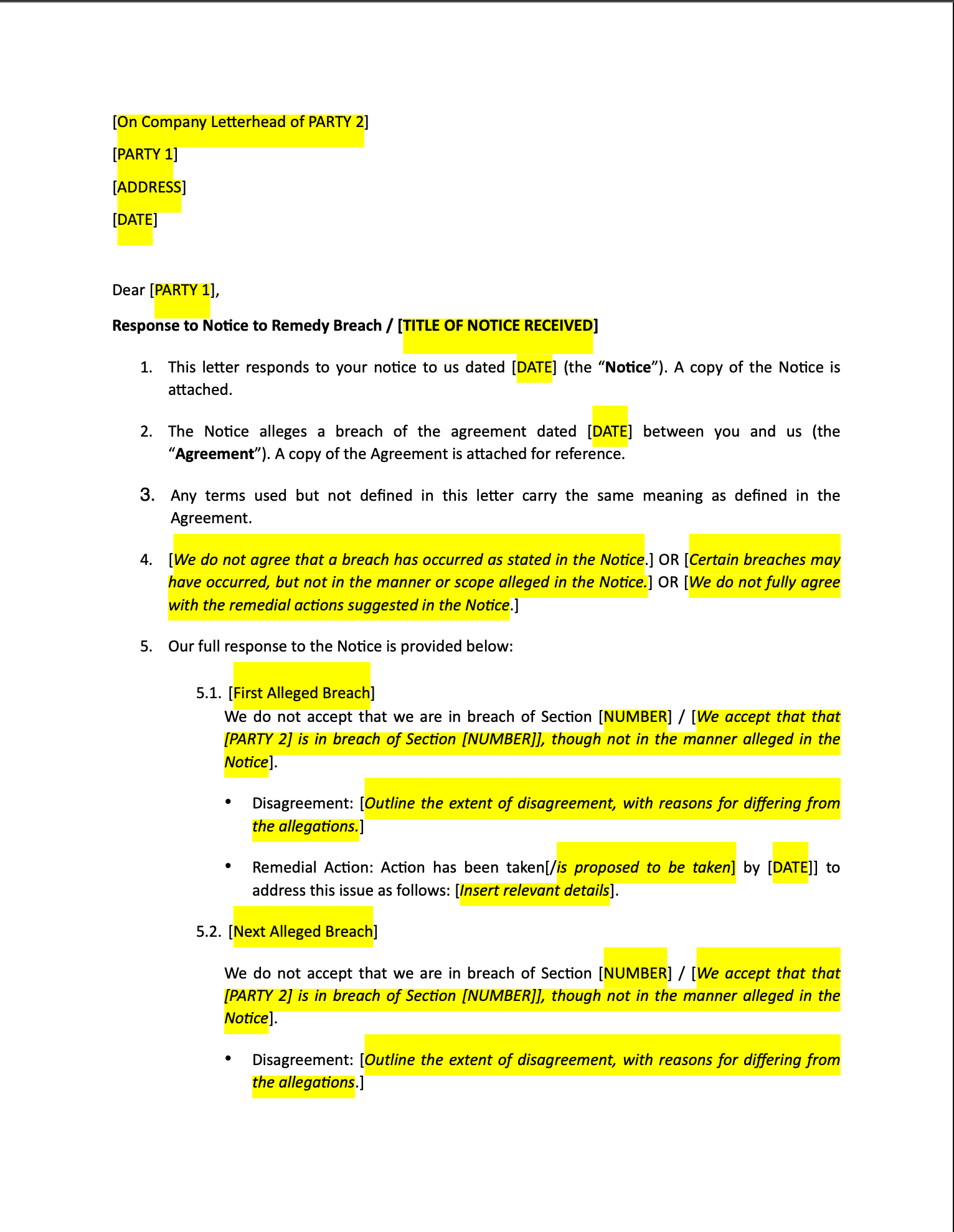
Responds to a notice of alleged contract violation, addressing the claimed breach, explaining corrective actions being taken, and outlining steps to remedy the situation.
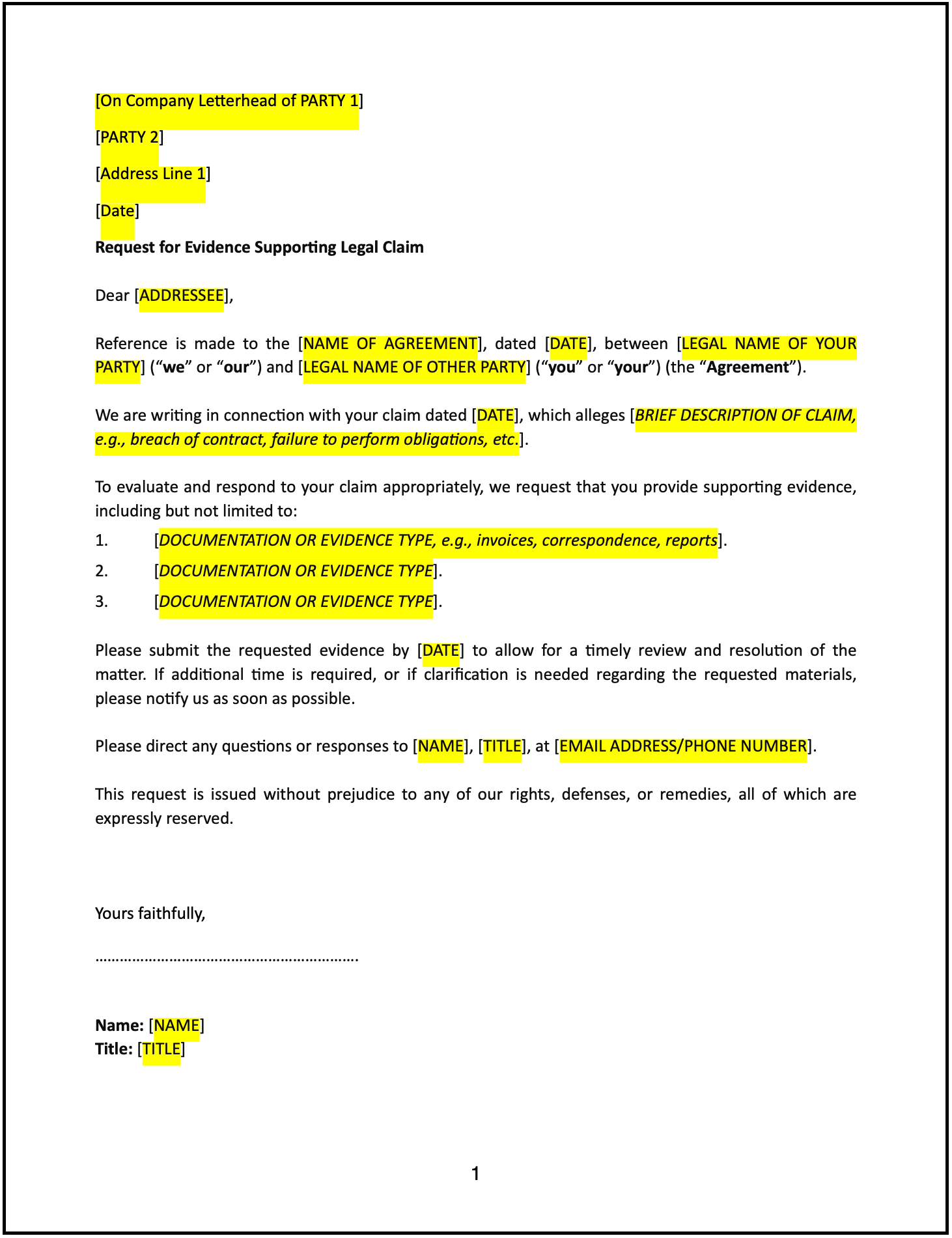
Requests supporting evidence for a legal claim, specifying the types of evidence needed and the deadline for submission.
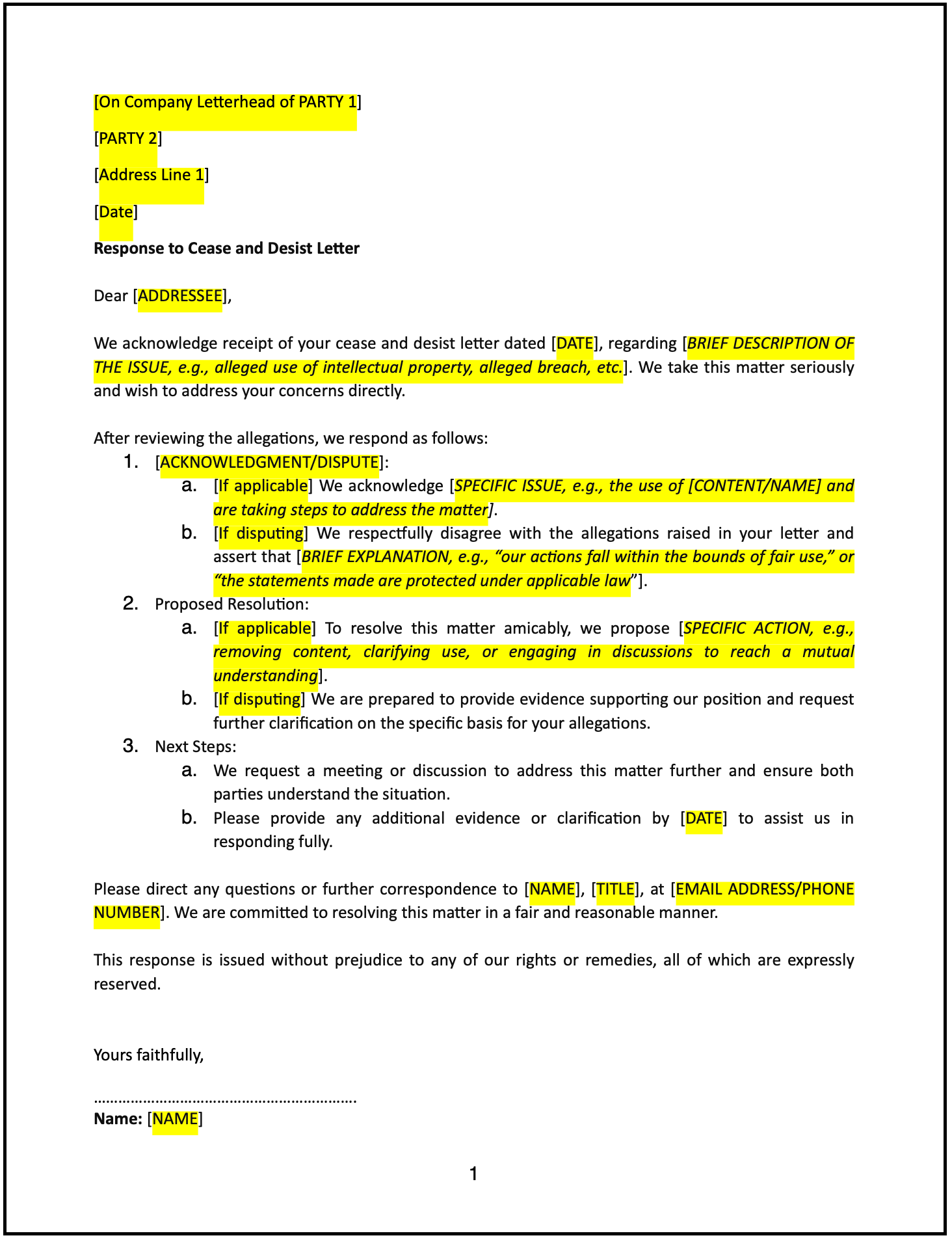
Responds to a cease and desist letter, addressing the claims made, providing a defense or clarification, and outlining the next steps.
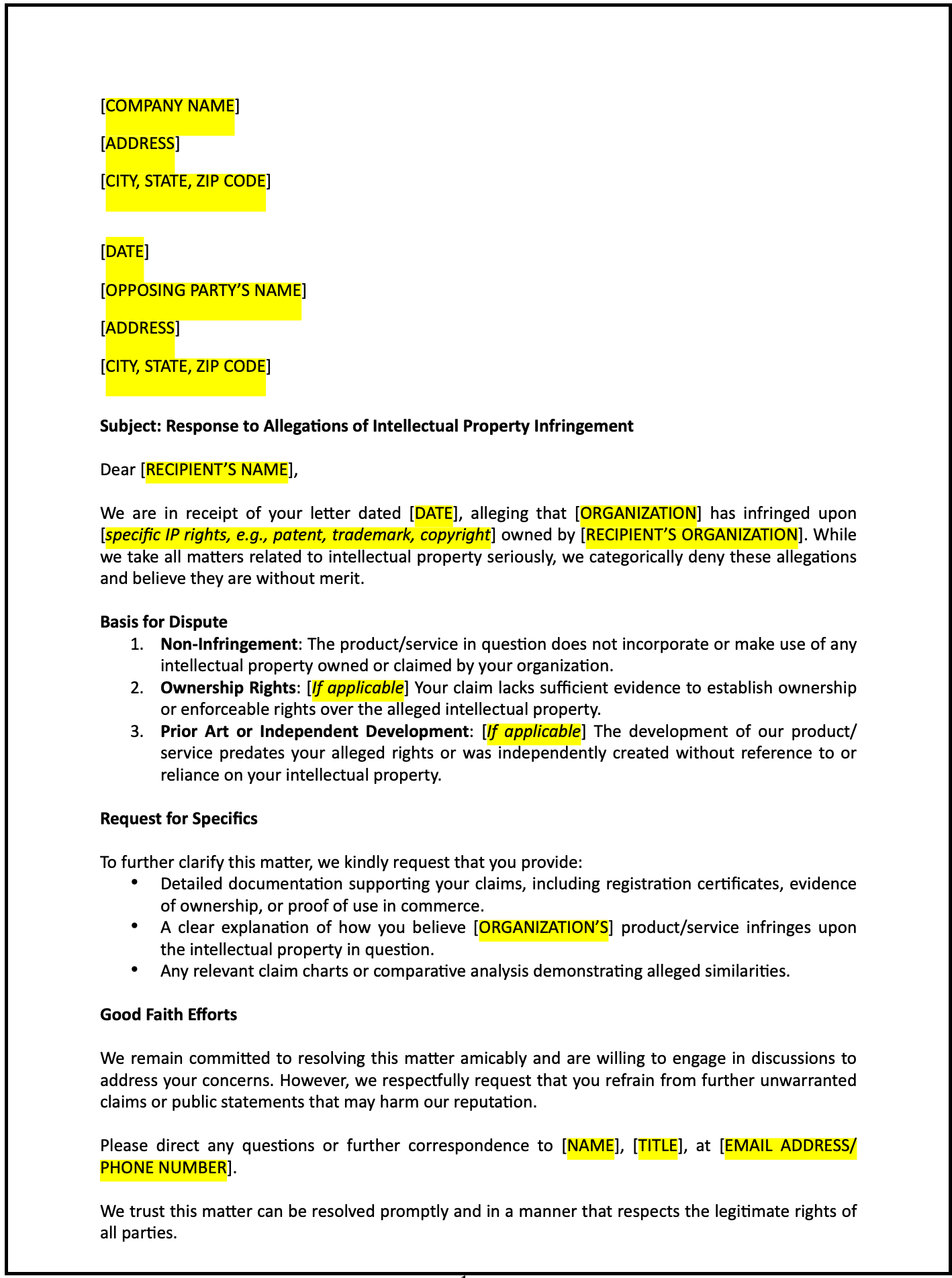
Disputes allegations of intellectual property infringement, providing evidence or reasoning to refute the claims.
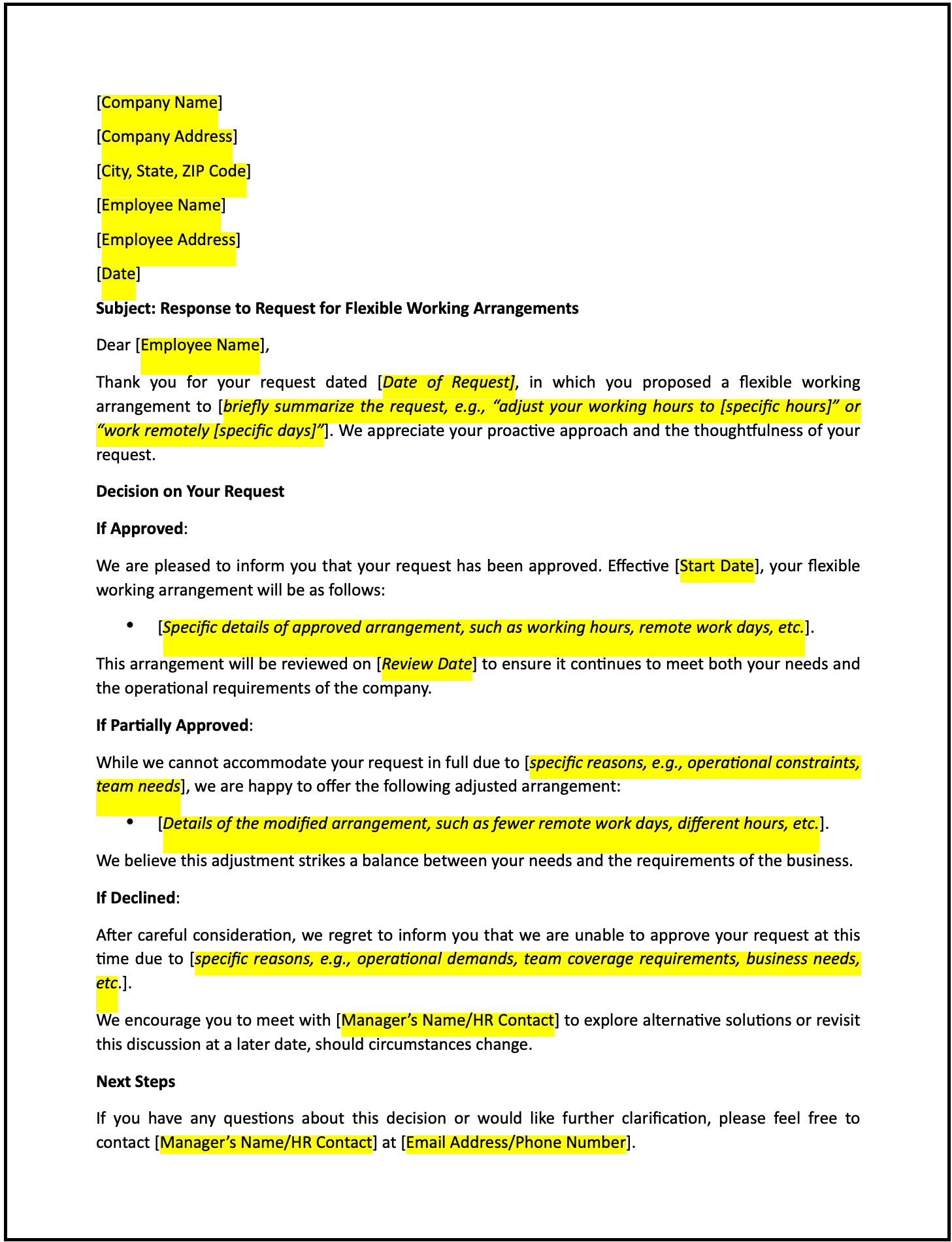
Responds to a request for flexible working arrangements, either approving or politely declining, and offering any relevant alternatives.