Customize it in Cobrief and see the moment it's opened, signed, or actioned.
Customize this template for free
TL;DR
A notification letter template for informing employees, customers, or stakeholders about temporary office closures. It details the reasons for the closure, expected duration, and alternative arrangements to minimize disruptions, ensuring clear communication and professionalism.
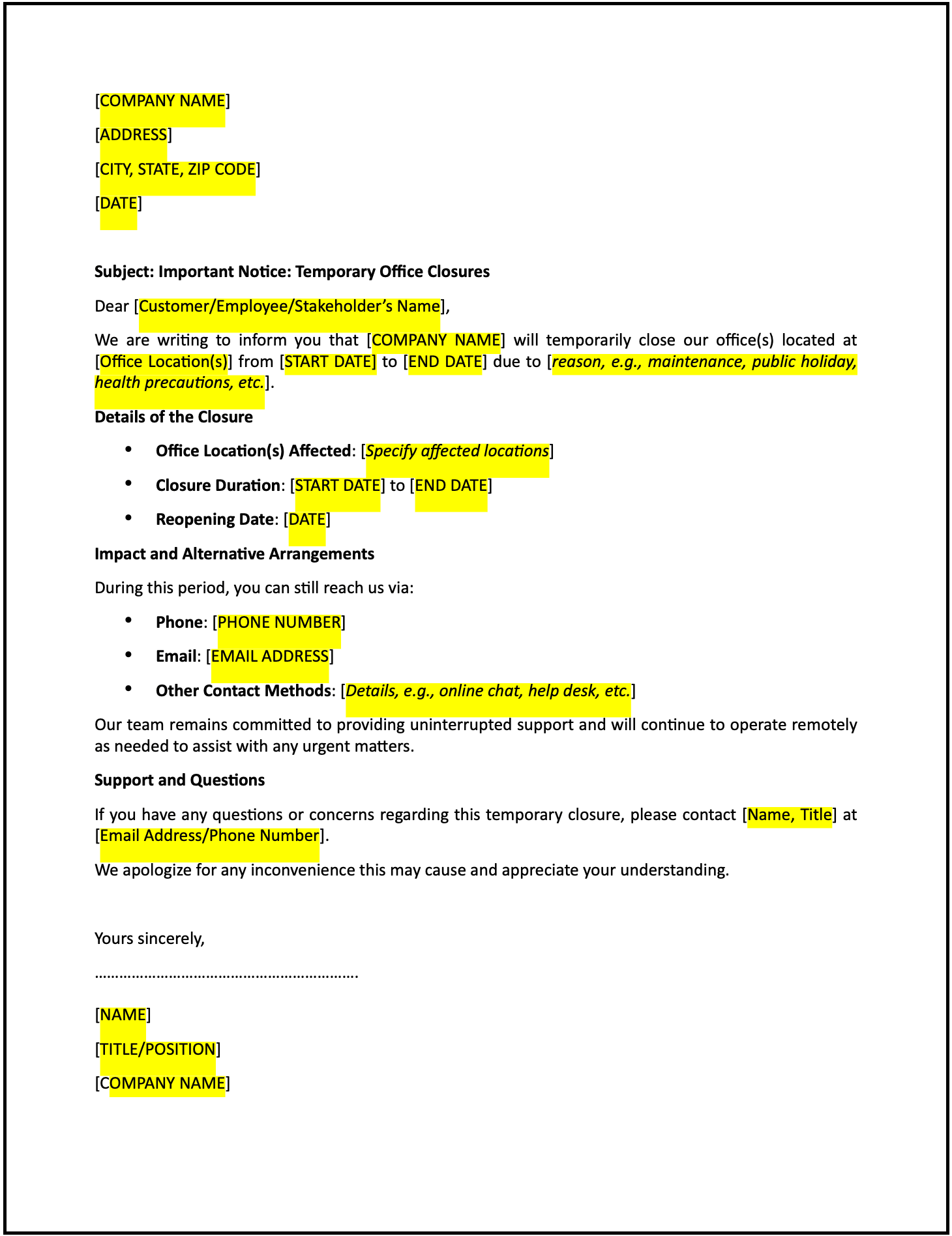
Letter of temporary office closures
A notification letter of temporary office closures is a formal communication used to inform employees, customers, or stakeholders about the temporary unavailability of an office or workspace. This letter outlines the reasons for the closure, the expected duration, and alternative arrangements to minimize disruptions while maintaining transparency and professionalism.
How to use this letter of temporary office closures
- Open with an introduction: Address the recipients respectfully and state the purpose of the letter—to announce the temporary closure of an office.
- Provide the reason: Briefly explain the reason for the closure, such as renovations, health and safety concerns, or weather-related issues.
- Specify the closure details: Clearly outline the dates and duration of the closure to ensure clarity.
- Highlight alternative arrangements: Mention any temporary solutions, such as remote work policies, alternative office locations, or online support channels.
- Reassure the recipients: Emphasize that steps are being taken to minimize disruptions and ensure normal operations resume as soon as possible.
- Include instructions: Provide guidance on how employees or customers can address concerns, access resources, or continue services during the closure.
- Maintain a professional tone: Ensure the letter is clear, polite, and focused on fostering understanding.
- Provide contact information: Include details for recipients to reach out with questions or for additional support.
Benefits of using a letter of temporary office closures
This letter ensures a structured and professional way to communicate office closures while maintaining trust and minimizing confusion. Here’s how it helps:
- Promotes transparency: Clearly outlining the reason and duration of the closure builds trust and reduces uncertainty.
- Reflects professionalism: A well-crafted letter demonstrates respect and attentiveness to employees and stakeholders.
- Encourages adaptability: Providing alternative arrangements helps minimize disruptions to operations.
- Supports productivity: Informing recipients in advance ensures smooth transitions during the closure period.
- Strengthens communication: A proactive approach fosters open and effective dialogue between leadership and stakeholders.
Tips for writing an effective letter of temporary office closures
- Be specific: Clearly describe the reason for the closure, the dates involved, and any temporary arrangements.
- Use professional language: Maintain a respectful and informative tone to encourage understanding and cooperation.
- Highlight alternative solutions: Emphasize how operations will continue during the closure, if applicable.
- Provide actionable steps: Include instructions for accessing resources, contacting support, or addressing specific needs.
- Keep it concise: Focus on the key points while ensuring the tone is professional and supportive.
Frequently asked questions (FAQs)
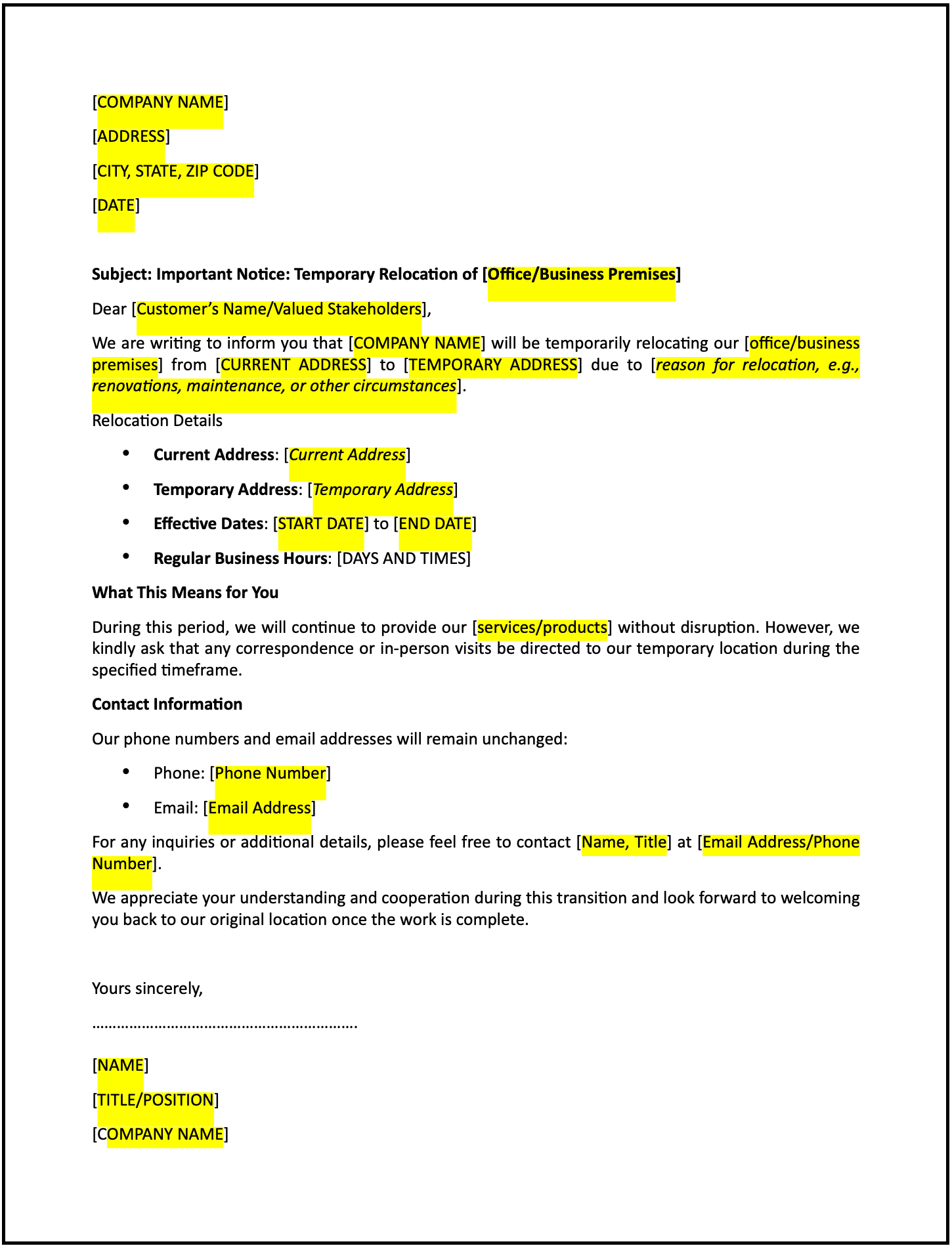
Notifies stakeholders of the temporary relocation of office or business premises, providing the new address and the expected duration of the move.
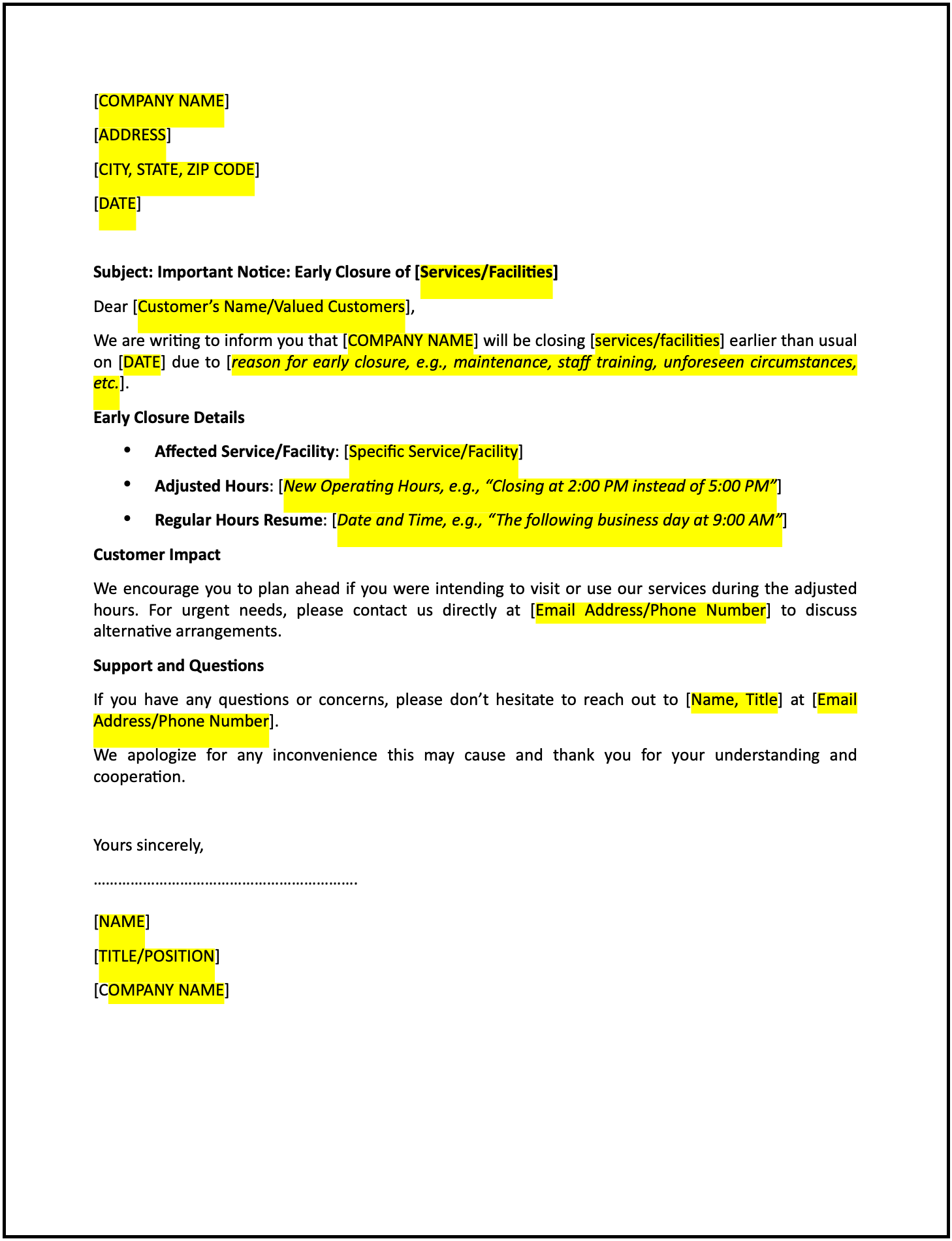
Notifies recipients of the early closure of services or facilities, providing the reason for the change and the new closure time.
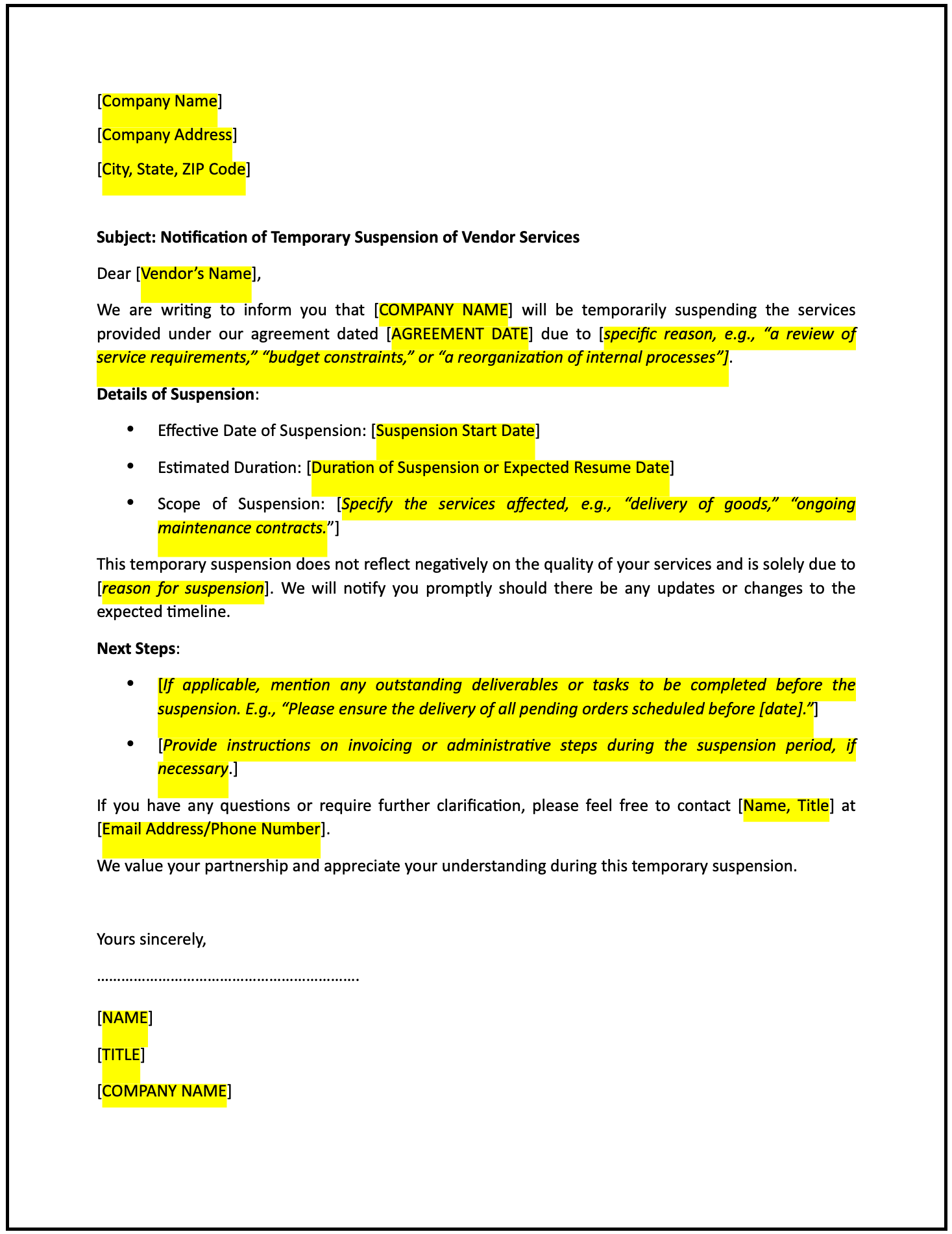
Notifies a vendor of the temporary suspension of their services, providing the reason for the suspension and any expected timeline for resumption.
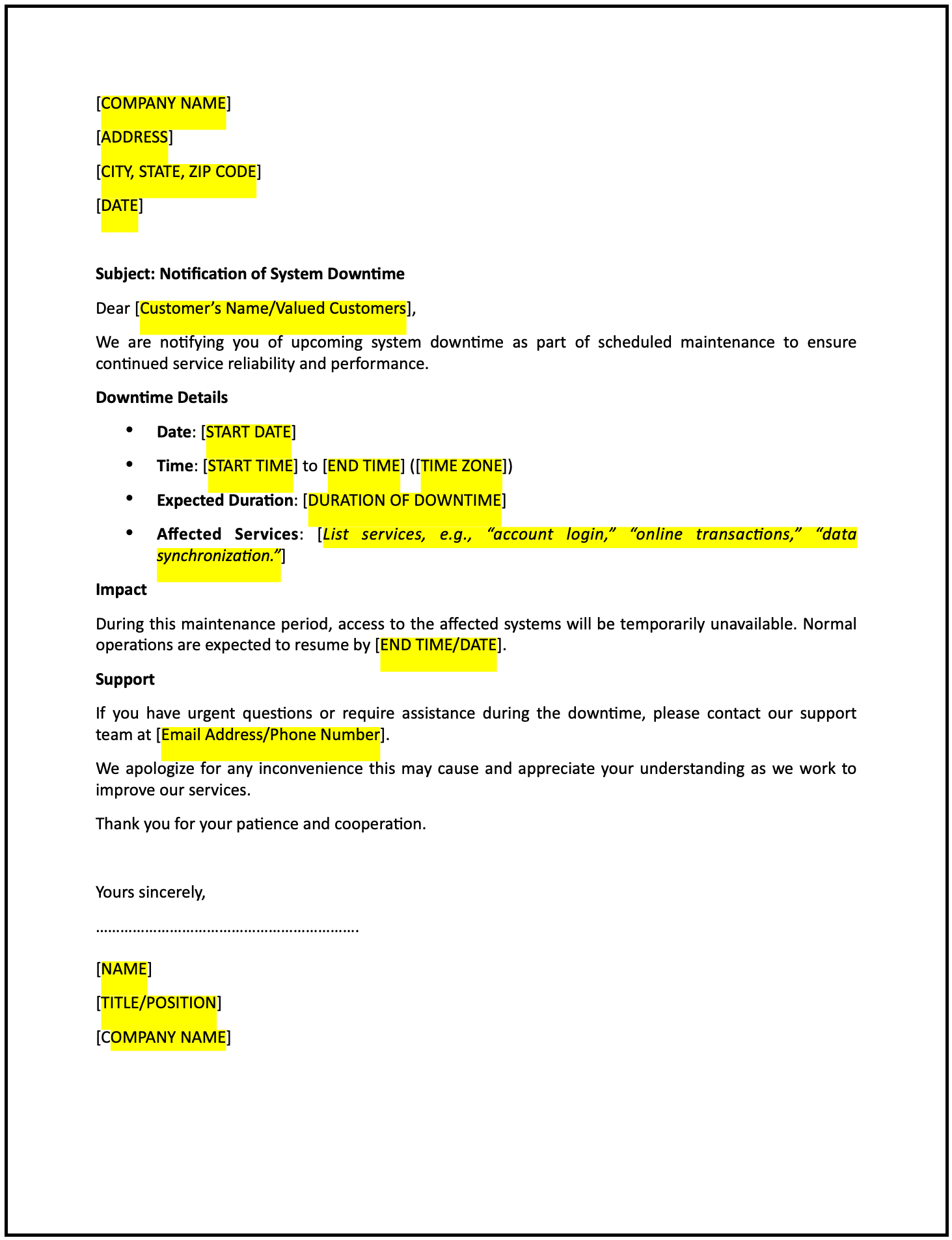
Notifies recipients of system downtime, explaining the cause, expected duration, and any steps taken to resolve the issue.
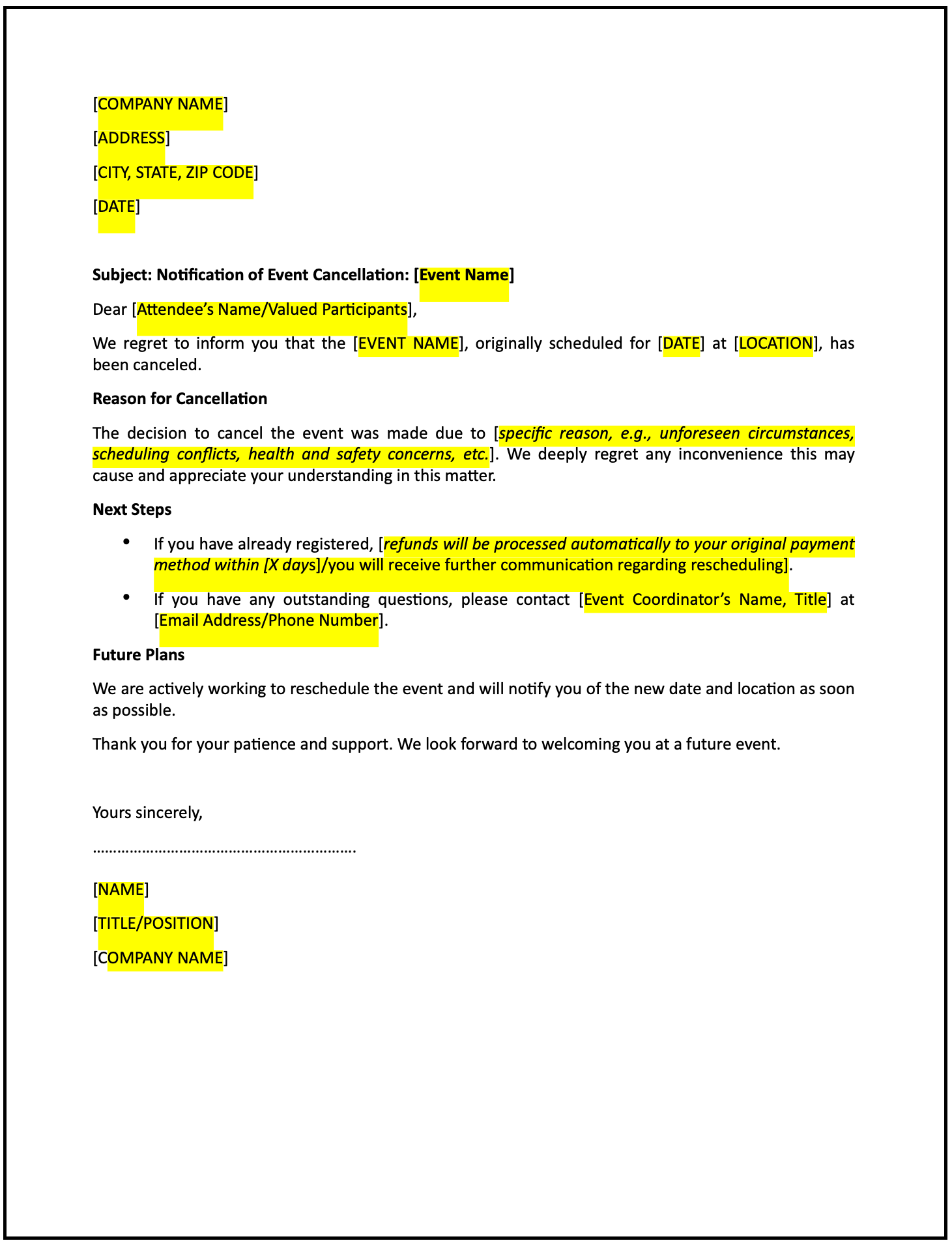
Notifies recipients of the cancellation of a scheduled event, providing the reason for the cancellation and any alternative arrangements or next steps.