Letter of unauthorized access attempt: Free template
Customize it in Cobrief and see the moment it's opened, signed, or actioned.
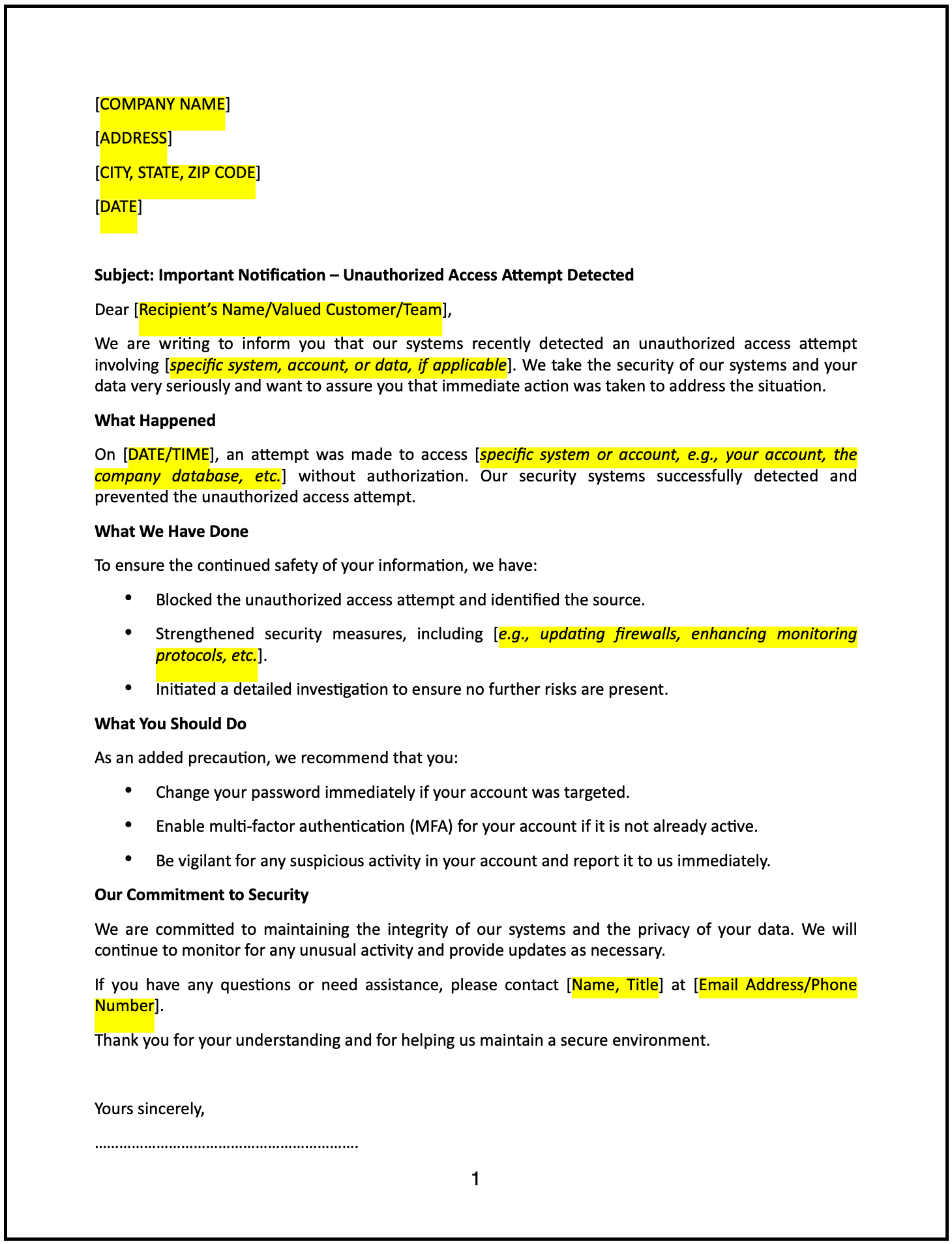
Customize this template for free
TL;DR
A notification letter used to inform stakeholders about a detected unauthorized access attempt that was successfully blocked. It details the nature of the breach, reassures recipients about security measures taken, and provides guidance on enhancing personal security practices. Commonly utilized by IT departments and security teams to maintain transparency and trust with employees and customers.
Letter of unauthorized access attempt
A notification letter of unauthorized access attempt is a formal communication used to inform stakeholders, employees, or customers about a security breach attempt that was detected and successfully blocked. This letter emphasizes the actions taken to protect sensitive information, provides reassurance, and outlines any recommended steps for stakeholders to enhance their security.
How to use this letter of unauthorized access attempt
- Open with an introduction: Address the recipients respectfully and state the purpose of the letter—to inform them of a recent unauthorized access attempt.
- Provide context: Briefly explain the nature of the attempt, such as when it occurred, how it was detected, and the systems or data targeted.
- Confirm security measures: Reassure recipients that the attempt was blocked and no unauthorized access was achieved.
- Outline actions taken: Highlight the steps implemented to mitigate the incident and strengthen security protocols.
- Reassure stakeholders: Emphasize the organization’s commitment to safeguarding data and maintaining robust security measures.
- Include guidance: Offer actionable advice, such as updating passwords, enabling multi-factor authentication, or monitoring accounts for suspicious activity.
- Maintain a professional tone: Ensure the letter is clear, respectful, and focused on fostering trust.
- Provide contact information: Include details for recipients to reach out with questions or concerns.
Benefits of using a letter of unauthorized access attempt
This letter ensures a structured and professional way to communicate security incidents while maintaining transparency and trust. Here’s how it helps:
- Promotes transparency: Open communication demonstrates accountability and reduces uncertainty.
- Reflects professionalism: A well-crafted letter shows attentiveness and commitment to security.
- Builds trust: Reassuring recipients of blocked threats demonstrates effective security measures.
- Encourages engagement: Providing guidance fosters proactive collaboration in maintaining security.
- Mitigates reputational risk: Proactively addressing threats enhances confidence in the organization’s security posture.
Tips for writing an effective letter of unauthorized access attempt
- Be specific: Clearly describe the nature of the attempt, the targeted systems, and the actions taken to block it.
- Use professional language: Maintain a respectful and transparent tone to build trust and confidence.
- Provide context: Briefly explain the measures in place that successfully mitigated the incident.
- Highlight next steps: Share actionable advice for recipients to enhance their own security practices.
- Keep it concise: Focus on the key points while ensuring the tone is professional and reassuring.
Frequently asked questions (FAQs)
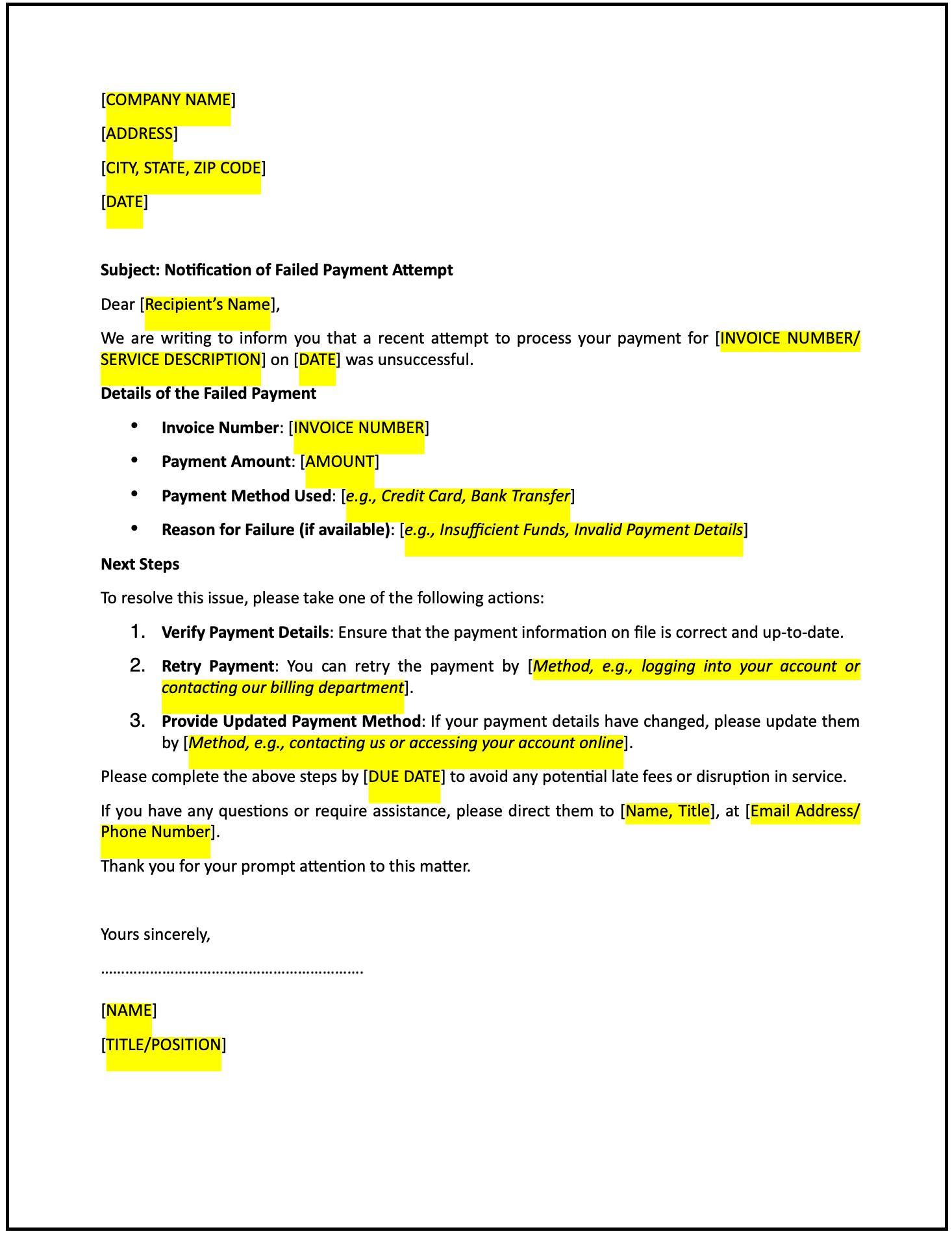
Notifies the recipient of a failed payment attempt, explaining the reason for the failure and providing instructions for resolving the issue and retrying the payment.
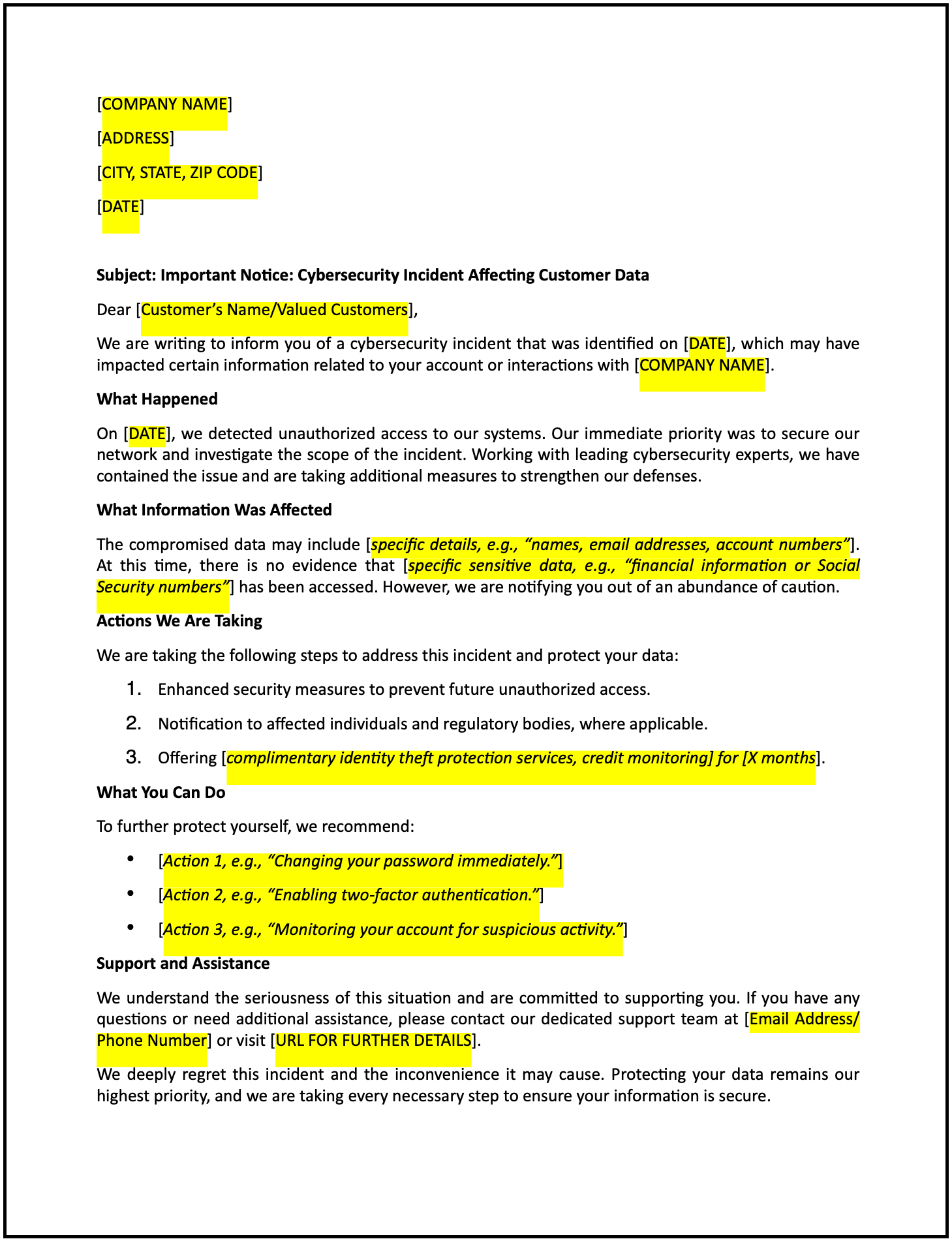
Notifies customers of a cybersecurity incident affecting their data, detailing the nature of the breach, the steps taken to secure the data, and any actions customers should take.
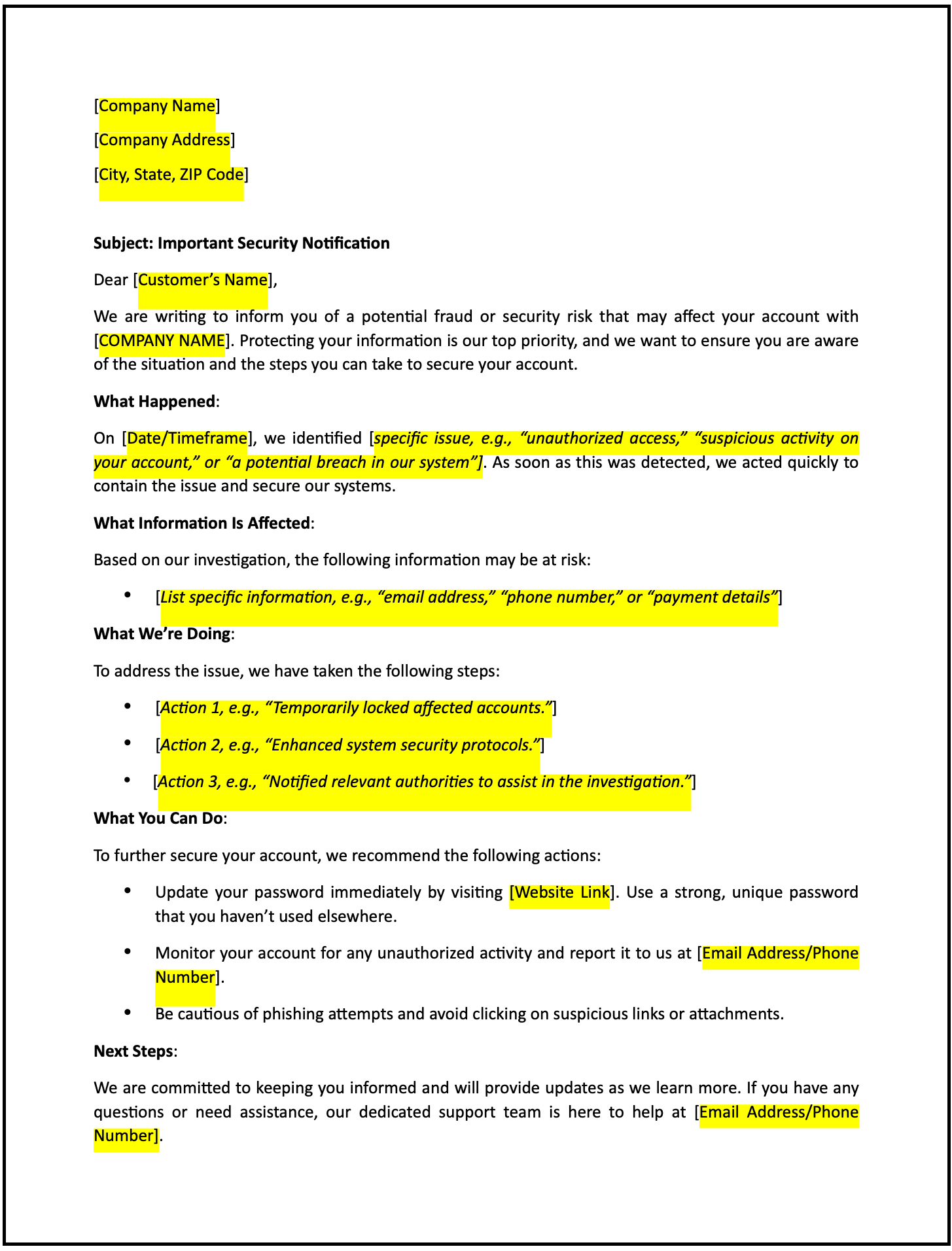
Notifies the customer of a potential fraud or security risk, detailing the issue, steps taken to address it, and any actions the customer should take to protect their account.
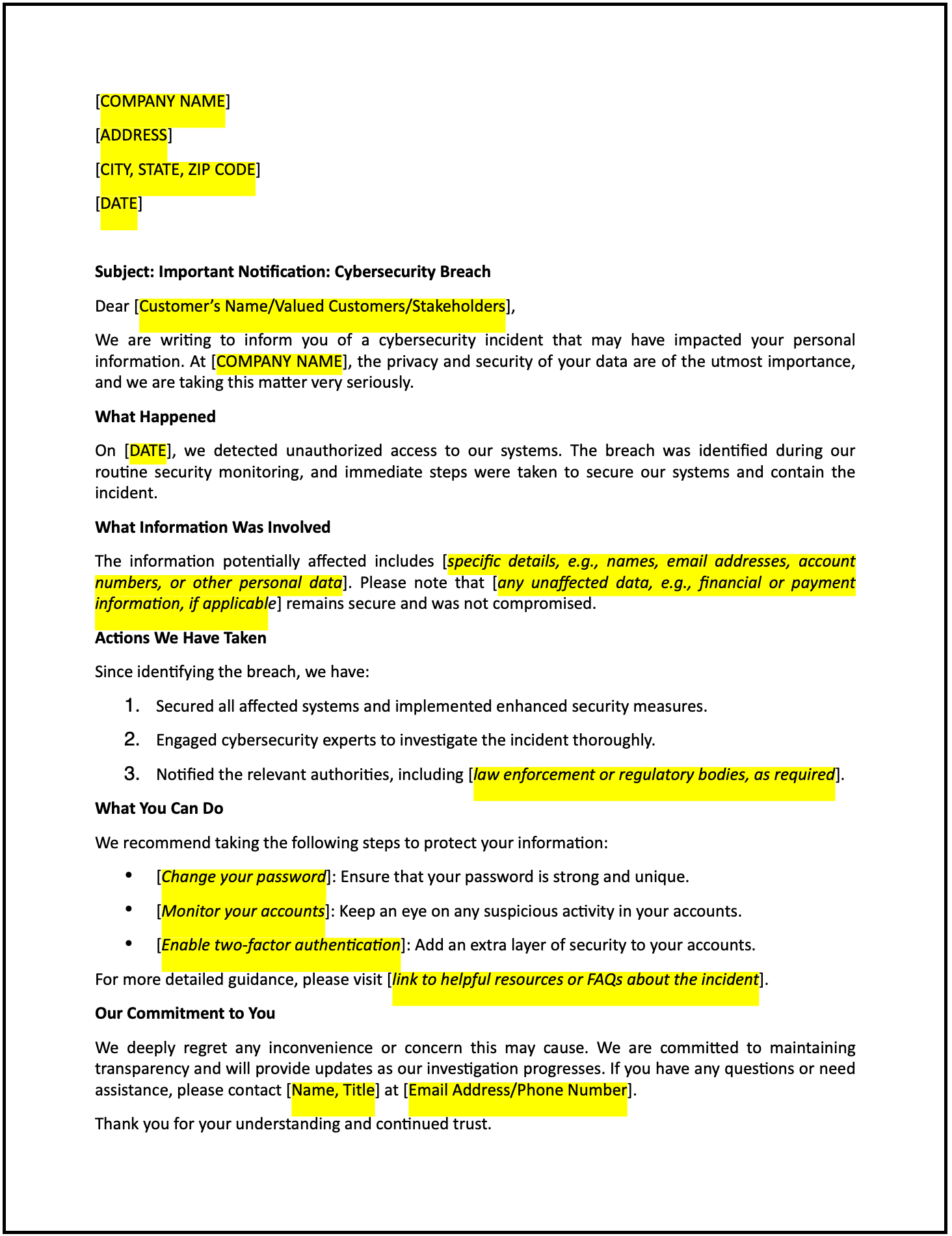
Notifies recipients of a cybersecurity breach, detailing the scope of the breach, potential impact, and steps being taken to address the issue.
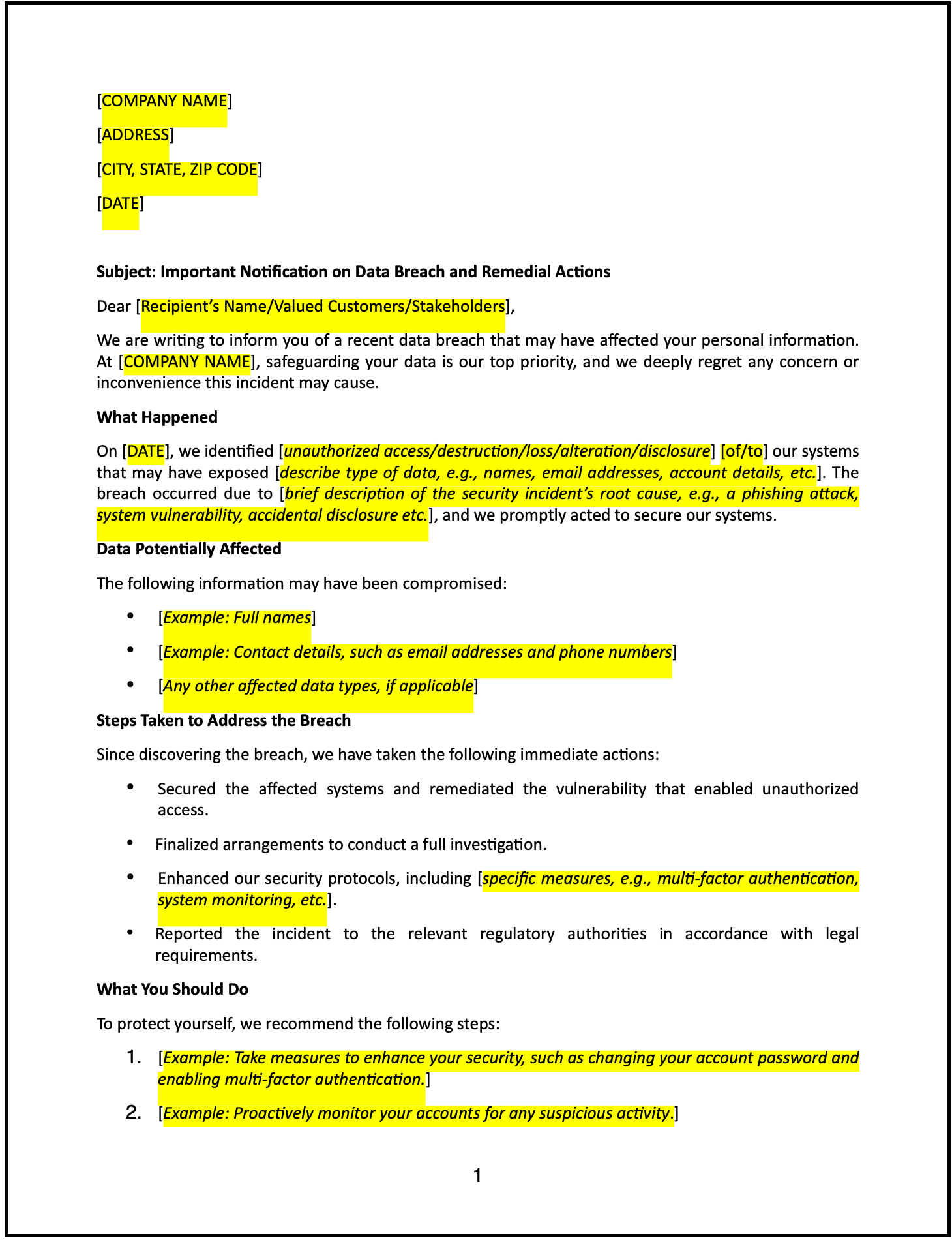
Notifies the recipient of a data breach, outlining the details of the breach, the data affected, and the steps taken to address the issue and prevent future incidents.