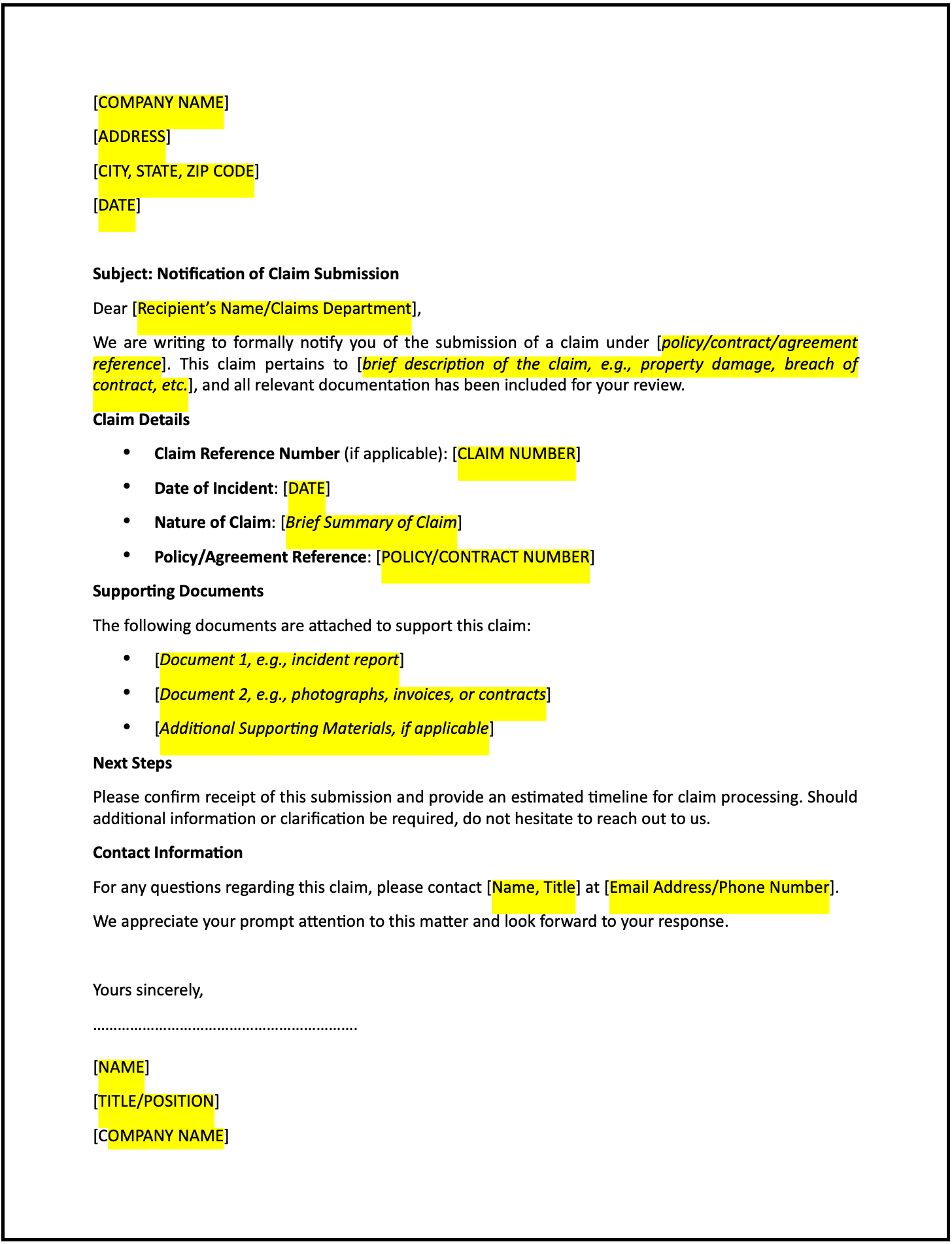
Notification letter of claim submission: Free template
Notifies the recipient of a claim submission, providing the details of the claim and any necessary documentation for review.
- Letters
Notification letter of claim submission
A notification letter of claim submission is a formal communication used to inform an insurance provider, risk management entity, or relevant party about the filing of a claim. This letter ensures clarity regarding the claim details, supporting documentation, and next steps in the claims process.
How to use this notification letter of claim submission
- Open with an introduction: Address the recipient respectfully and reference your policy or account number.
- State the purpose: Clearly communicate that you are submitting a claim and provide a brief overview of the claim’s nature.
- Provide claim details: Include the type of claim, the event date, and a concise description of the incident or loss.
- Attach supporting documentation: Mention any attached or included documents, such as reports, receipts, photos, or other relevant evidence.
- Request confirmation: Politely ask the recipient to acknowledge receipt of the claim and provide details about the next steps or timelines.
- Reassure compliance: Indicate your willingness to cooperate fully with the claims process and provide additional information if needed.
- Maintain a professional tone: Ensure the letter is clear, respectful, and focused on facilitating an efficient claims process.
- Provide contact information: Include details for the recipient to contact you with questions or updates.
Benefits of using a notification letter of claim submission
This letter ensures a structured and professional way to submit a claim while fostering transparency and efficiency. Here’s how it helps:
- Promotes clarity: Clearly outlining the claim details ensures a smooth review process.
- Reflects professionalism: A well-crafted letter demonstrates respect and a commitment to compliance.
- Supports documentation: Providing evidence and details upfront streamlines claim processing.
- Encourages accountability: Requesting acknowledgment ensures the claim is officially recorded.
- Builds trust: Professional communication fosters a positive relationship with the recipient.
Tips for writing an effective notification letter of claim submission
- Be specific: Clearly describe the claim, referencing your policy and providing relevant details about the incident.
- Use professional language: Maintain a respectful and concise tone to foster collaboration.
- Provide context: Briefly explain the circumstances surrounding the claim and its significance.
- Highlight mutual benefits: Emphasize how submitting complete information supports timely processing.
- Include actionable steps: Share instructions for further communication or next steps, such as inspections or additional submissions.
- Keep it concise: Focus on the essential points while ensuring the tone is professional and solution-oriented.
Frequently asked questions (FAQs)
Similar templates
Where deals go from offer to paid
