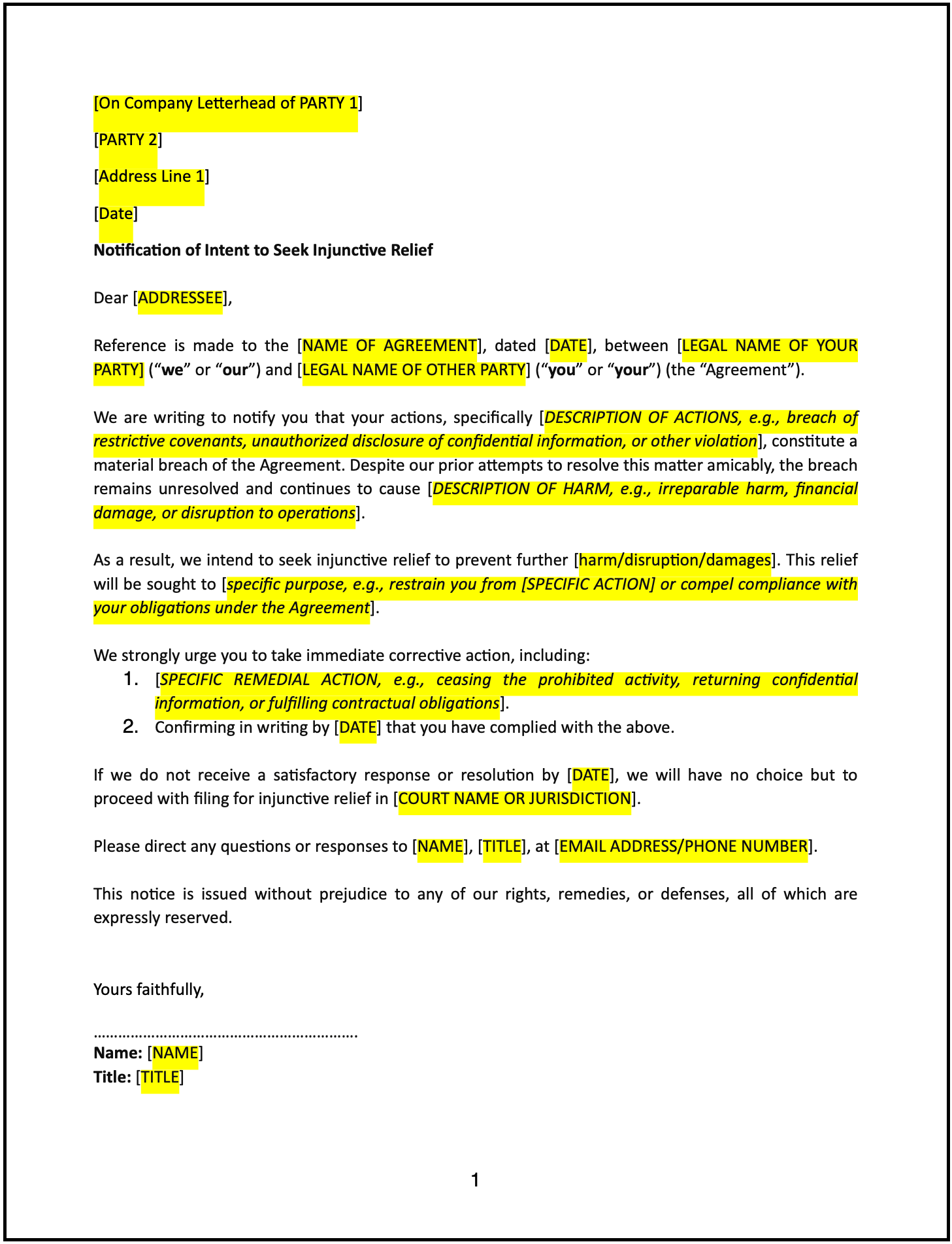
Notification letter of intent to seek injunctive relief: Free template
Notifies the recipient of the intent to seek injunctive relief, outlining the reasons for the action and the desired outcome.
- Letters
Notification letter of intent to seek injunctive relief
A notification letter of intent to seek injunctive relief is a formal way to inform the other party of your intention to pursue a court order to prevent or remedy harmful actions. This letter outlines the basis for the injunctive relief, asserts your rights, and provides an opportunity for resolution before legal action.
How to use this notification letter of intent to seek injunctive relief
- Open with context: Begin by referencing the issue or breach that has led to the consideration of injunctive relief.
- State the intent: Clearly communicate your intent to seek injunctive relief if the issue is not resolved promptly.
- Describe the harm: Specify the actions or omissions causing harm and the reasons why injunctive relief is necessary to prevent further damage.
- Reference applicable laws or agreements: Cite the contract clauses or legal principles that support your position.
- Request corrective action: Outline the steps the other party must take to avoid further escalation, such as ceasing harmful activities or providing assurances.
- Highlight potential consequences: Emphasize that failure to comply will result in legal action to protect your rights and interests.
- Maintain a professional tone: Ensure the letter is clear, respectful, and focused on resolution.
- Provide contact information: Include details for further communication or clarification if necessary.
Benefits of using a notification letter of intent to seek injunctive relief
This letter template ensures a structured and professional way to address serious issues while fostering resolution and protecting your rights. Here’s how it helps:
- Protects your interests: Clearly asserting your intent demonstrates your commitment to defending your position.
- Encourages compliance: Notifying the other party provides an opportunity for resolution before legal action.
- Reflects professionalism: A well-crafted letter reinforces your credibility and seriousness.
- Reduces disputes: Providing clear reasoning and consequences minimizes misunderstandings and potential conflicts.
- Supports documentation: Creating a formal record of your intent is valuable for legal proceedings or future reference.
Tips for writing an effective notification letter of intent to seek injunctive relief
- Be specific: Clearly describe the issue, the harm caused, and your legal basis for seeking injunctive relief.
- Use professional language: Maintain a respectful yet assertive tone to convey the seriousness of the matter.
- Highlight urgency: Explain why injunctive relief is necessary and the potential harm of further delay.
- Include corrective actions: Provide a clear path for the other party to resolve the issue without escalating to court.
- Keep it concise: Focus on the key points without overwhelming the recipient with unnecessary details.
Frequently asked questions (FAQs)
Similar templates
Where deals go from offer to paid
