Notification letter of starting a compliance audit: Free template
Customize it in Cobrief and see the moment it's opened, signed, or actioned.
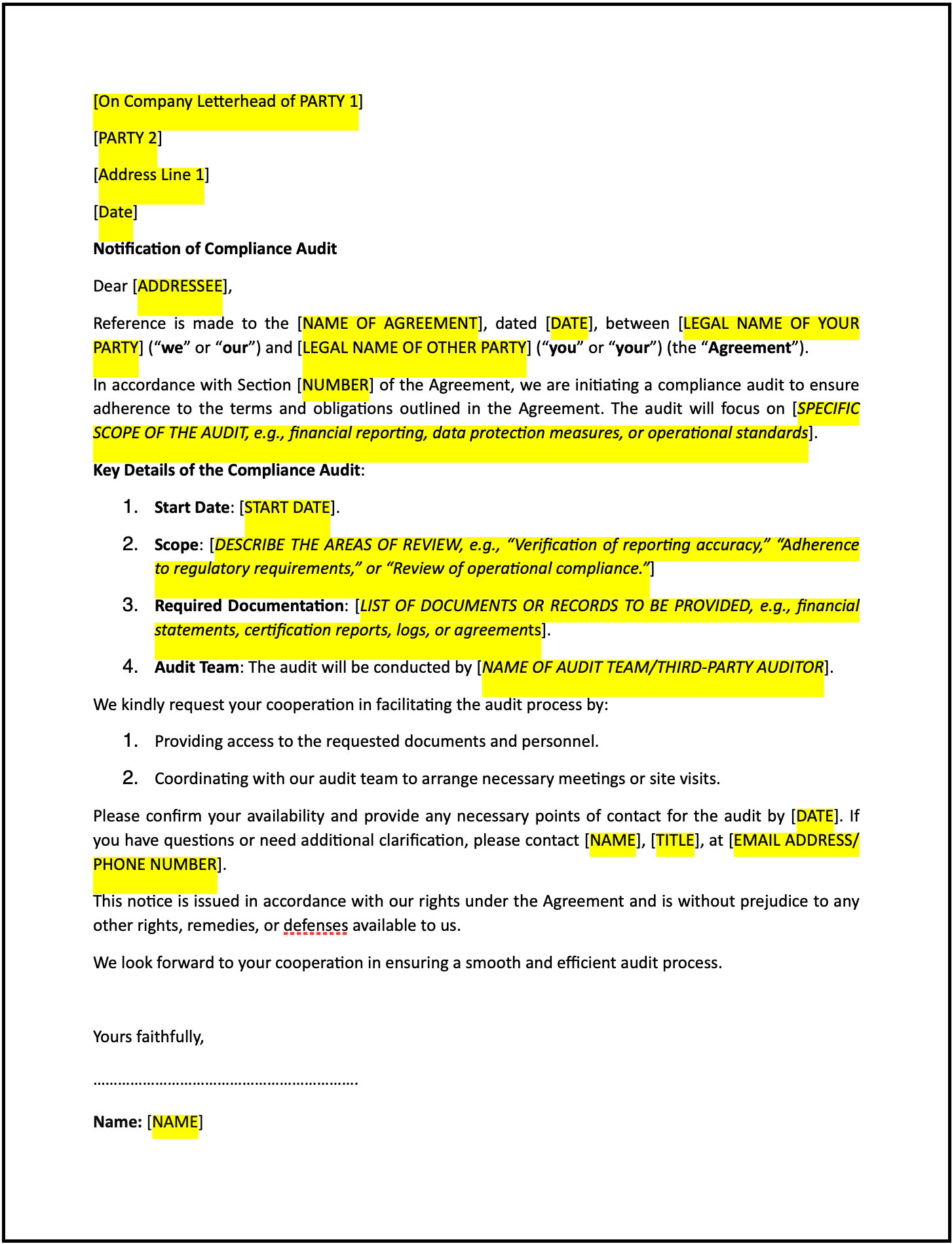
Customize this template for free
TL;DR
A notification letter template for initiating a compliance audit, designed to inform stakeholders about the audit's purpose, scope, and timeline. It helps organizations communicate expectations clearly, foster collaboration, and maintain professionalism during the audit process, making it useful for compliance officers and audit teams.
Notification letter of starting a compliance audit
Compliance audits are a critical component of maintaining regulatory adherence and ensuring operational integrity. This letter provides a professional way to notify stakeholders, clients, or internal teams about the initiation of a compliance audit. It explains the purpose, scope, and timeline of the audit, setting clear expectations and emphasizing the importance of collaboration.
How to use this notification letter of starting a compliance audit
- Define the scope of the audit: Clearly identify the areas, departments, or processes being audited and the compliance standards or regulations that will be assessed.
- Customize the template: Replace placeholders with your organization’s details, the audit scope, and specific timelines or milestones.
- Explain the purpose: Provide a clear explanation of why the audit is being conducted, such as regulatory requirements, internal reviews, or risk management.
- Include expectations: Outline what stakeholders or teams need to do to support the audit, including any documentation, access, or participation required.
- Maintain a professional tone: Ensure the letter is respectful, collaborative, and focused on achieving compliance goals.
- Share contact details: Provide the contact information of the audit coordinator or team for any questions or clarifications.
Benefits of using a notification letter of starting a compliance audit letter
This letter template is an effective tool for initiating compliance audits while maintaining professionalism and fostering collaboration. Here’s how it helps:
- Set clear expectations: The letter outlines the scope, purpose, and timeline of the audit, ensuring all parties understand their roles and responsibilities.
- Foster transparency: Proactively notifying stakeholders about the audit demonstrates your organization’s commitment to openness and regulatory adherence.
- Support collaboration: By clearly communicating the requirements of the audit, this letter encourages cooperation and minimizes disruptions.
- Ensure preparedness: The structured format of the letter ensures all necessary details are communicated, reducing the risk of misunderstandings.
- Reinforce accountability: Notifying stakeholders of the audit emphasizes your organization’s dedication to maintaining high compliance standards.
Tips for writing an effective notification letter of starting a compliance audit letter
- Be specific: Clearly define the scope of the audit and the regulations or standards being assessed to avoid ambiguity.
- Explain the purpose: Emphasize the importance of the audit and how it supports regulatory compliance or operational integrity.
- Include a timeline: Provide a clear schedule for the audit, including key dates and milestones, so stakeholders can plan accordingly.
- Use professional language: Maintain a respectful and factual tone, focusing on collaboration and achieving shared compliance goals.
- Address potential concerns: Reassure stakeholders about the process and provide contact details for questions or support.
Frequently asked questions (FAQs)
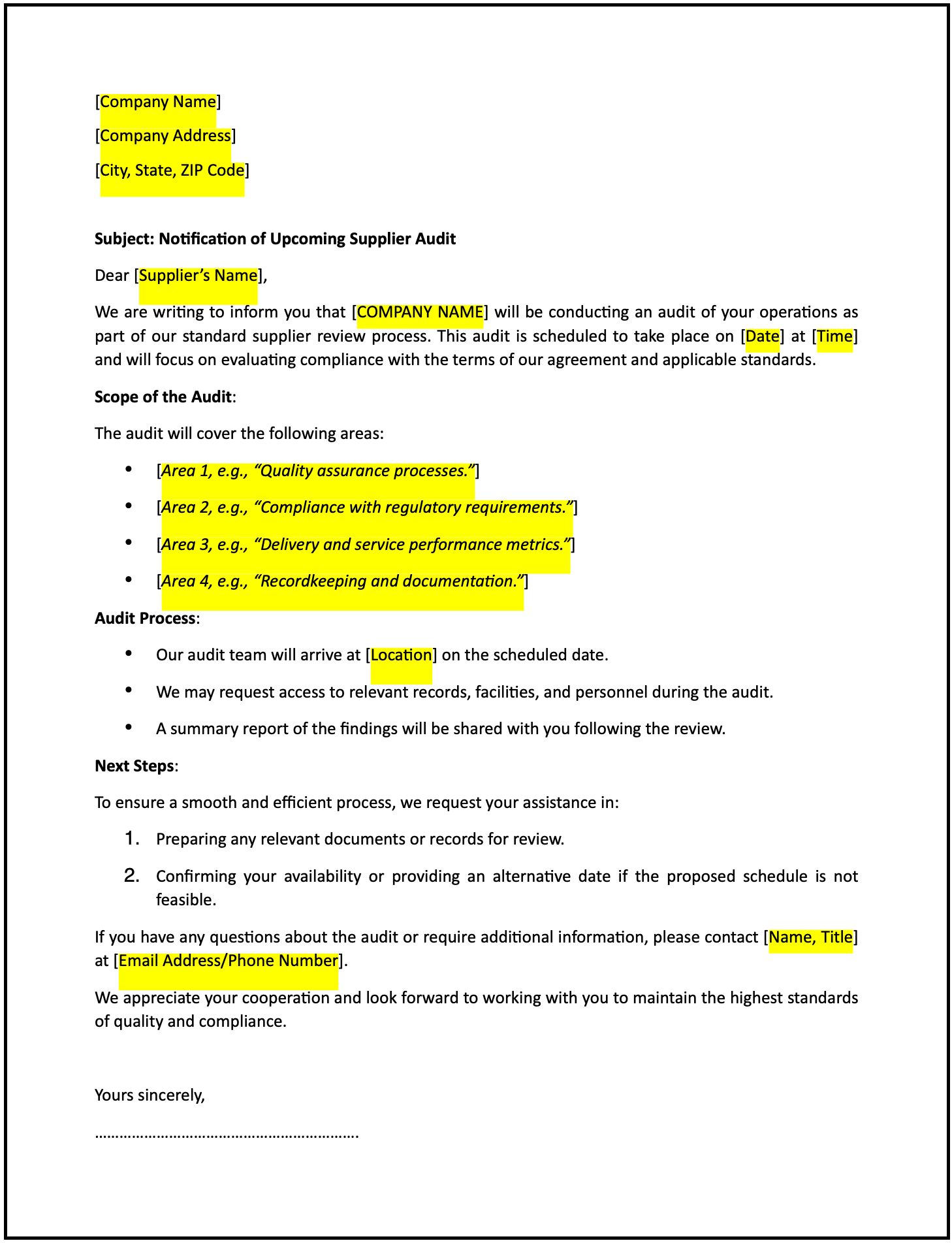
Notifies the supplier of an upcoming audit, outlining the scope, timeline, and any preparation needed for the audit process.
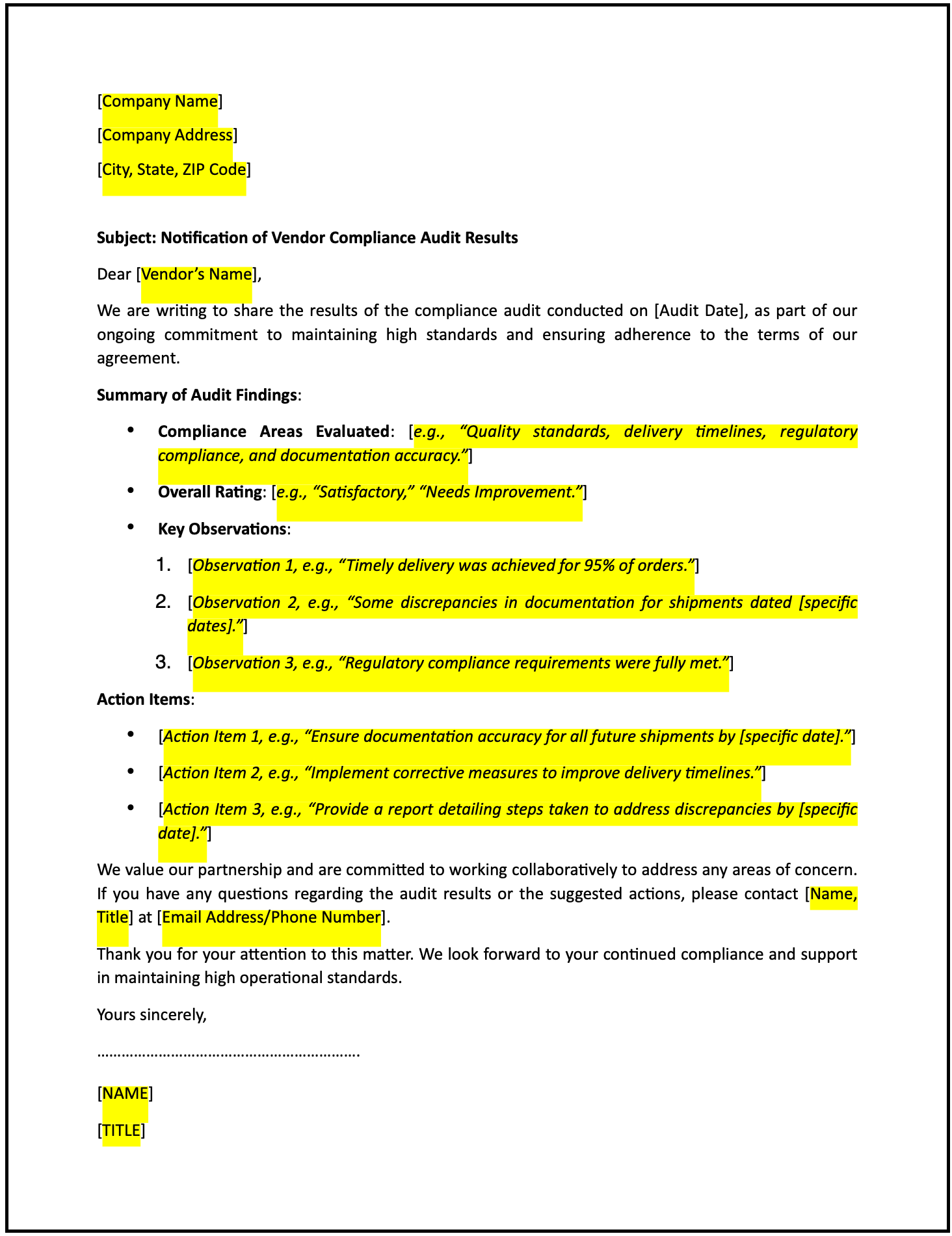
Notifies the vendor of the results of a compliance audit, detailing findings, areas of concern, and any required actions or corrective measures.
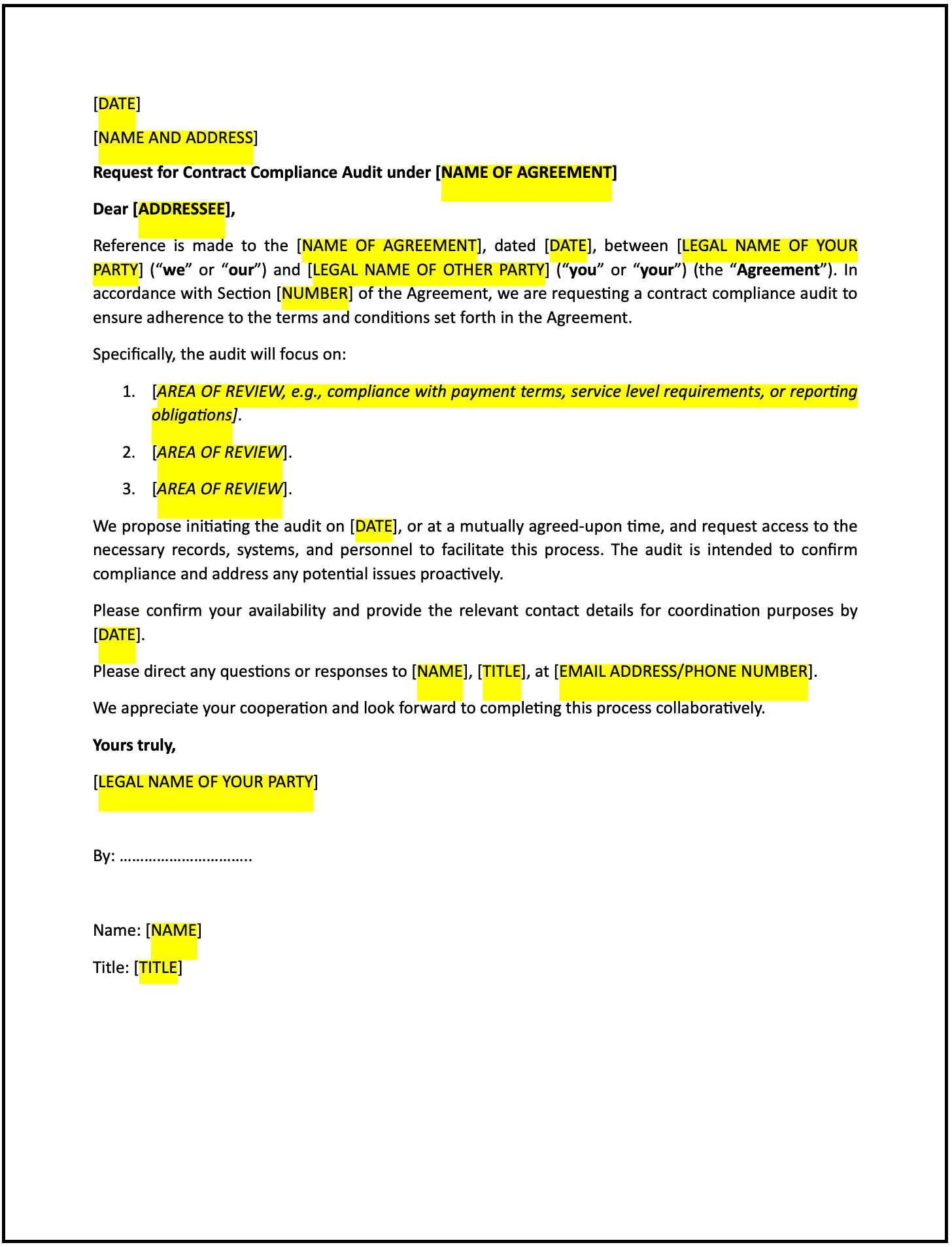
Requests a contract compliance audit, specifying the scope, purpose, and timeline for the audit.
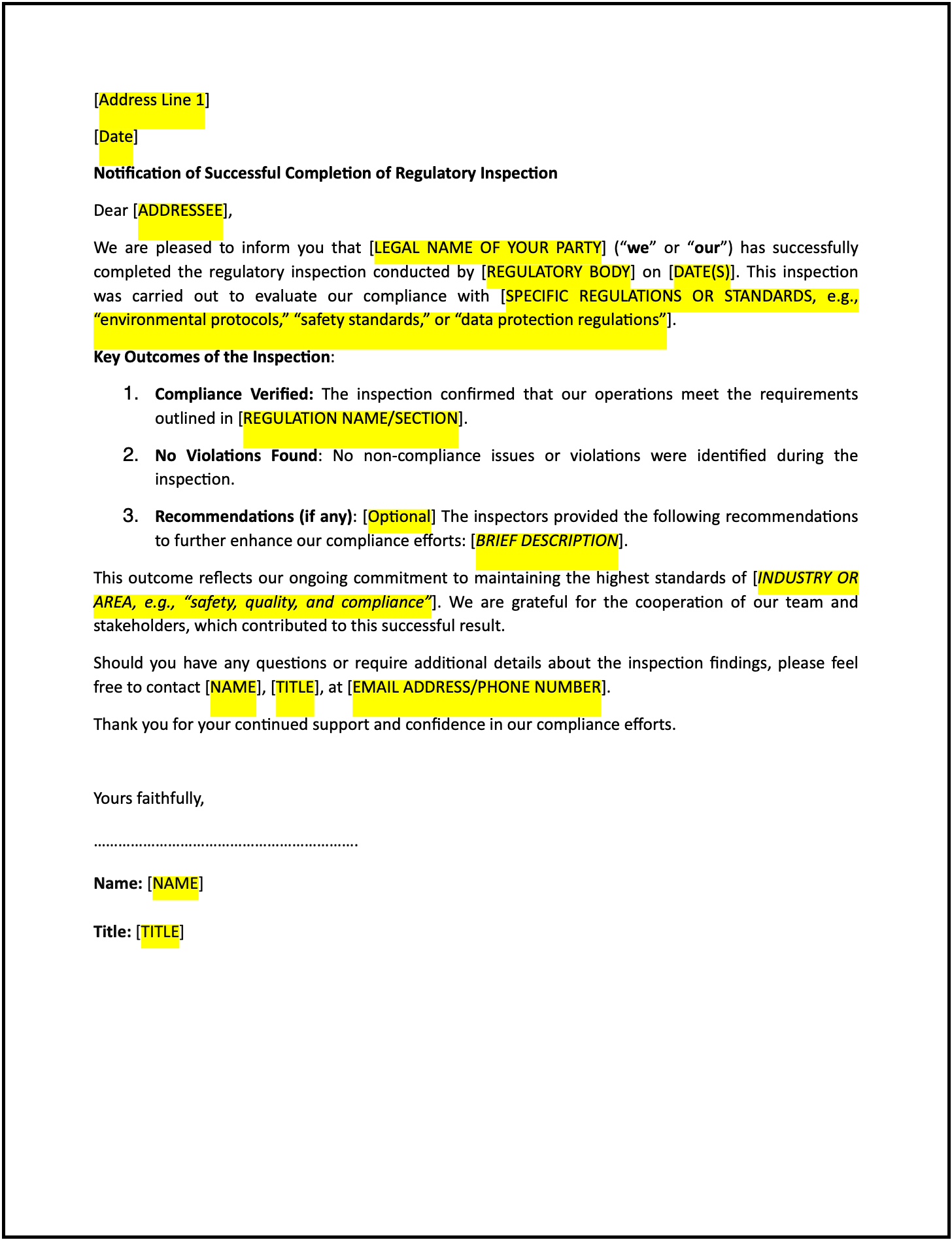
Notifies the recipient of the successful completion of regulatory inspections, confirming compliance and any follow-up actions required.
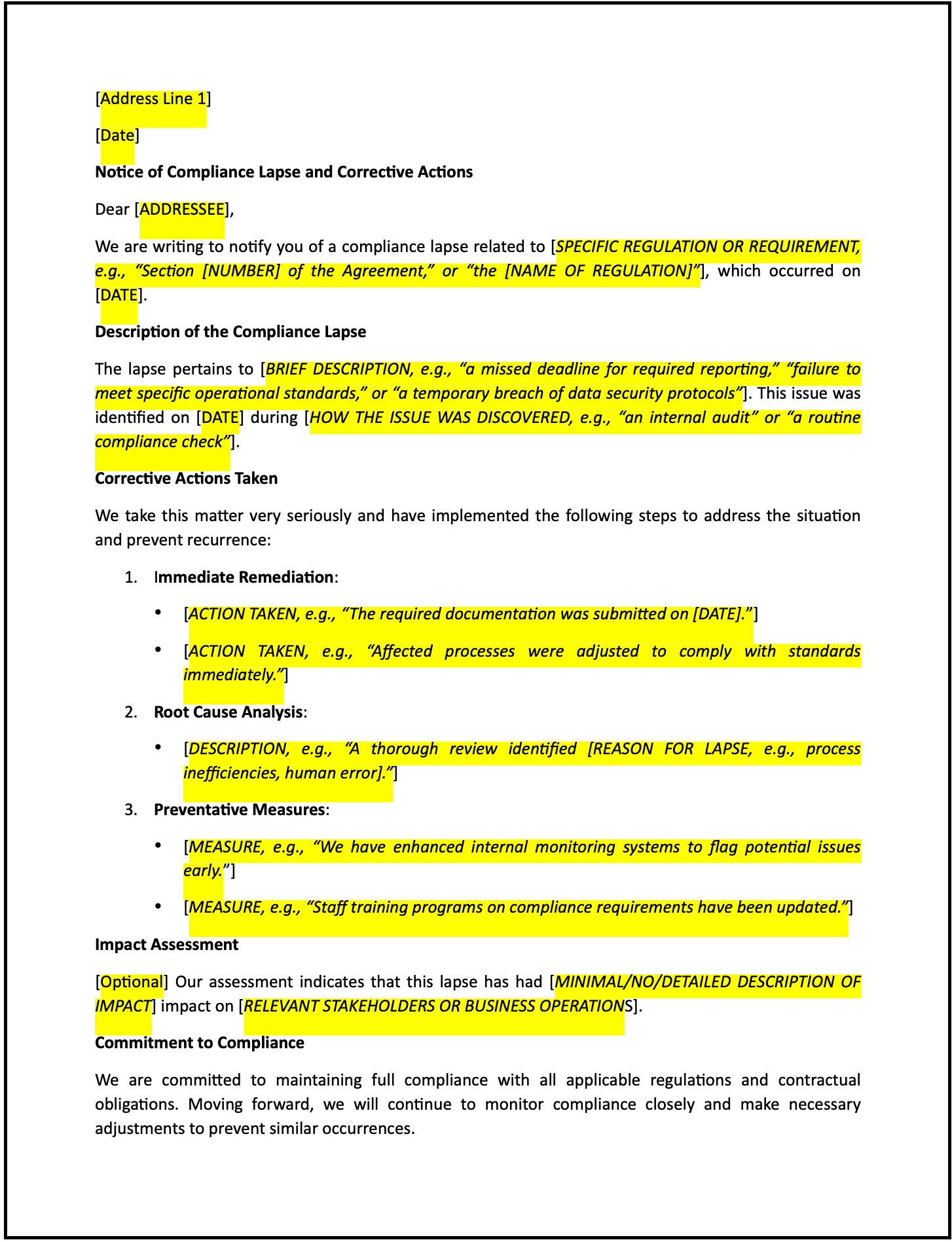
Notifies the recipient of a lapse in compliance and outlines the corrective actions being taken to resolve the issue and prevent future occurrences.