Request for return or destruction of confidential information letter: Free template
Customize it in Cobrief and see the moment it's opened, signed, or actioned.
Customize this template for free
TL;DR
A formal letter template for requesting the return or destruction of confidential information after a business relationship or project. It details the necessary steps for compliance, including citing relevant agreements and specifying the information involved, making it essential for legal teams and compliance officers to ensure proper handling of sensitive materials.
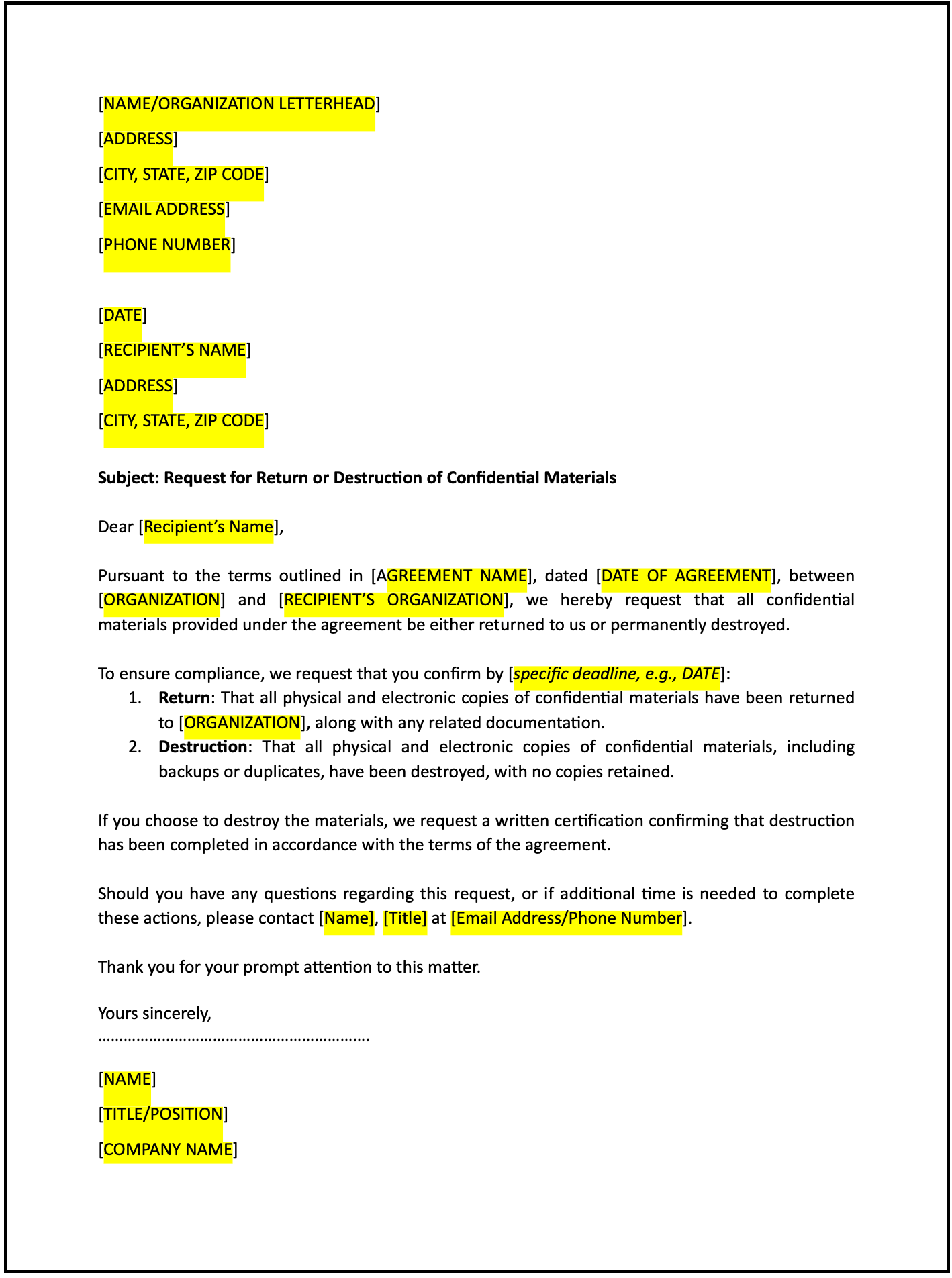
Request for return or destruction of confidential information letter
A request for return or destruction of confidential information letter is a formal communication used to ensure the proper handling of sensitive materials after the completion of a business relationship, project, or contractual obligation. This letter is typically sent under the terms of a confidentiality agreement (NDA) or data protection policy, requesting that the recipient either return or securely destroy all confidential materials in their possession.
The letter outlines the basis for the request, the specific information to be handled, instructions for compliance, and a timeline to ensure proper execution. It also reinforces professionalism, risk mitigation, and regulatory compliance by formally documenting the request.
How to use this request for return or destruction of confidential information letter
- Open with an introduction: Address the recipient professionally and reference the confidentiality agreement or any contractual arrangement that governs the handling of the confidential materials.
- State the purpose: Clearly explain that you are requesting the return or destruction of confidential information in accordance with the agreement’s terms.
- Specify the information: Identify the materials subject to return or destruction, including the format (e.g., physical documents, digital files, email communications, stored records).
- Reference the agreement: Cite the specific clauses in the confidentiality agreement, NDA, or contract that establish the recipient’s obligation to return or destroy the information.
- Provide instructions: Clearly outline the steps for returning the materials (e.g., via courier, encrypted digital transfer) or for securely destroying them, such as shredding, permanent deletion, or certified disposal.
- Request confirmation of compliance: If applicable, ask the recipient to provide written confirmation of destruction or a certificate of destruction as proof of compliance.
- Specify a deadline: Establish a reasonable timeframe for the completion of the request, ensuring timely action.
- Reaffirm commitment: Emphasize your organization's commitment to confidentiality and professional business practices.
- Maintain a professional tone: Keep the letter clear, concise, and respectful while reinforcing the importance of compliance.
- Provide contact information: Include your name, title, organization, phone number, and email address so the recipient can respond with confirmation or clarification.
Benefits of using a request for return or destruction of confidential information letter
- Promotes accountability: Clearly outlines the recipient’s responsibilities for returning or securely disposing of confidential materials.
- Reflects professionalism: Demonstrates a structured and respectful approach to handling post-engagement confidentiality requirements.
- Encourages compliance: Reinforces the importance of fulfilling contractual and legal obligations.
- Builds trust: Transparent communication supports a strong and professional business relationship.
- Supports risk mitigation: Ensures secure handling of sensitive materials and reduces the risk of data breaches or misuse.
Tips for writing an effective request for return or destruction of confidential information letter
- Be specific: Clearly describe the confidential information to be returned or destroyed, including its format and any identifying details.
- Use professional language: Maintain a respectful and constructive tone to encourage cooperation.
- Provide context: Briefly explain the basis for the request and reference the relevant confidentiality agreement.
- Highlight mutual benefits: Emphasize how fulfilling the request protects both parties and reduces risk.
- Include actionable steps: Share instructions for completing the actions, such as delivery methods or secure destruction protocols.
- Keep it concise: Focus on essential points while maintaining a professional and well-structured tone.
Frequently asked questions (FAQs)
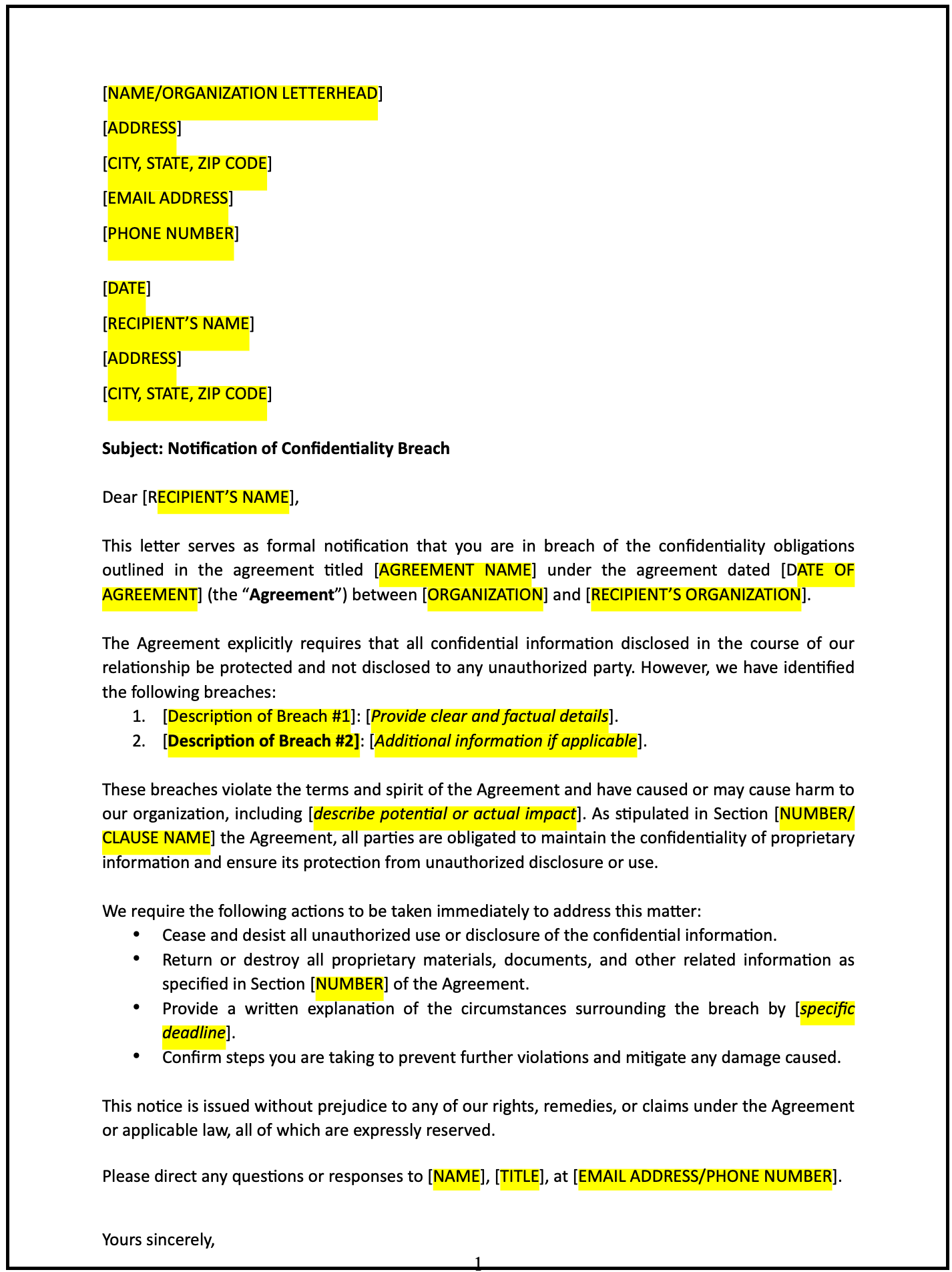
Notifies the recipient of a confidentiality breach, outlining the specifics of the breach and requesting immediate corrective action to prevent further incidents.
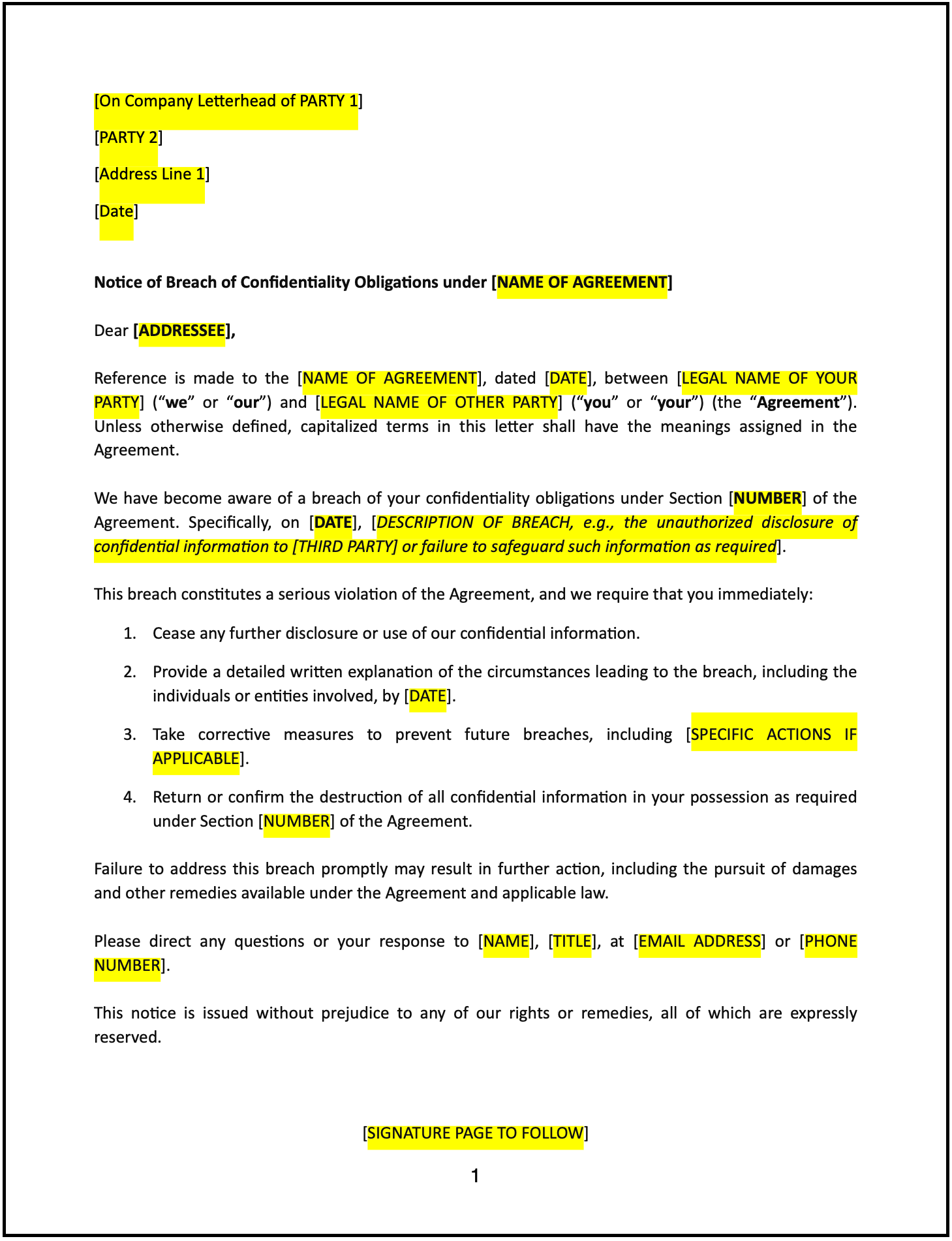
Notifies the recipient of a breach of confidentiality obligations, outlining the specific violation, the potential consequences, and requesting immediate corrective action.
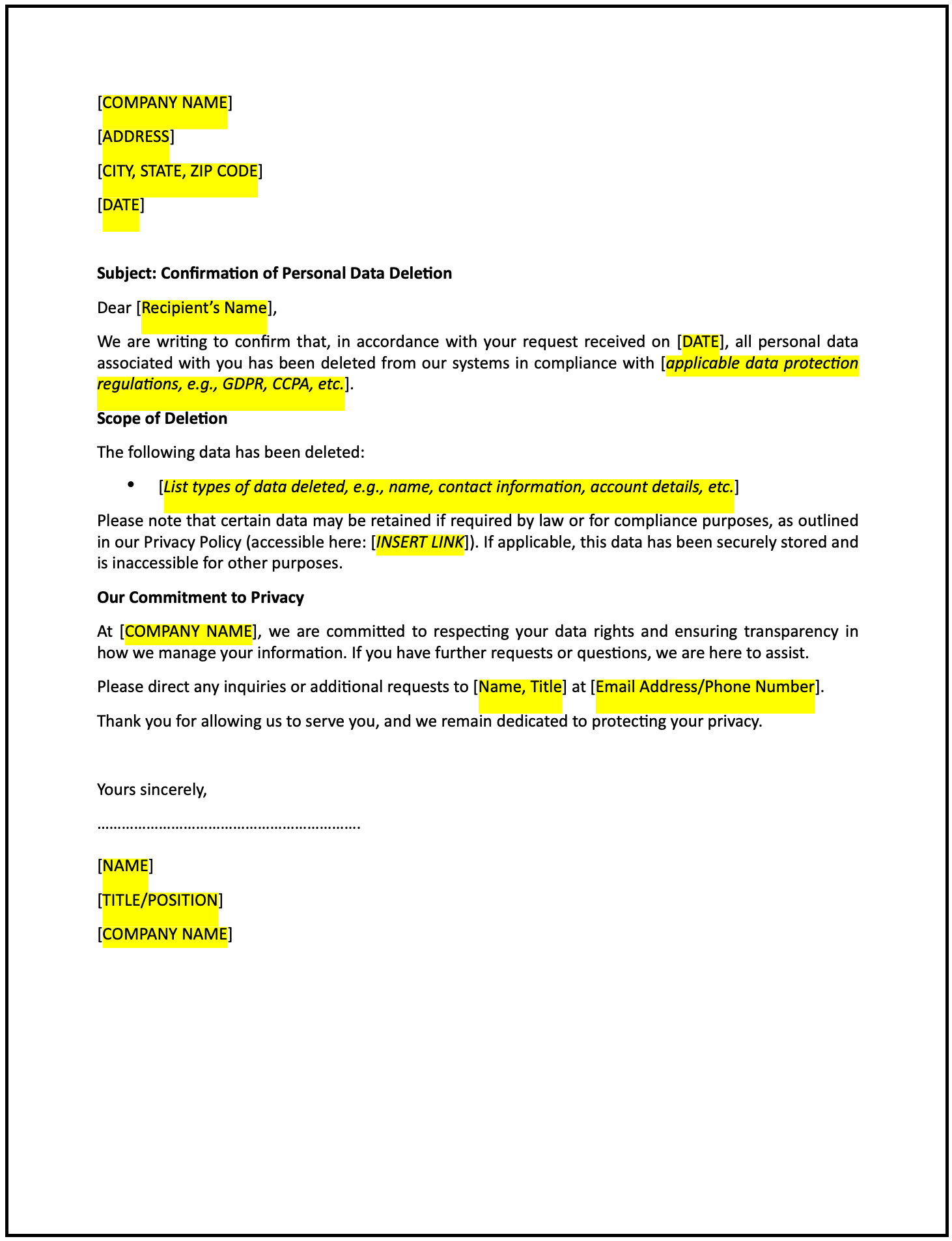
Confirms the deletion of personal data upon request, outlining the actions taken to ensure the data has been securely erased in compliance with privacy policies.
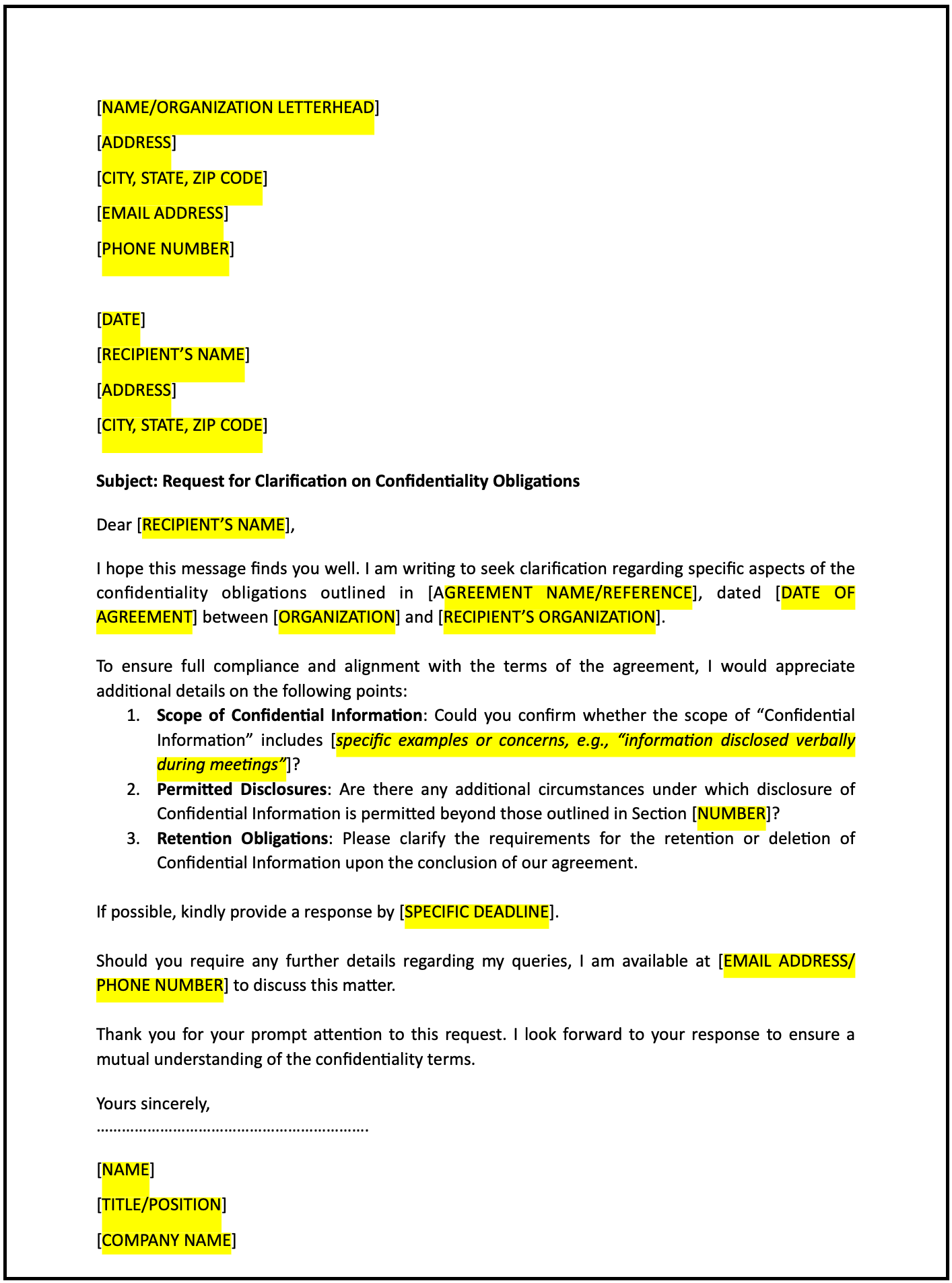
Requests clarification on confidentiality obligations, specifying the areas of uncertainty and seeking further explanation or details.
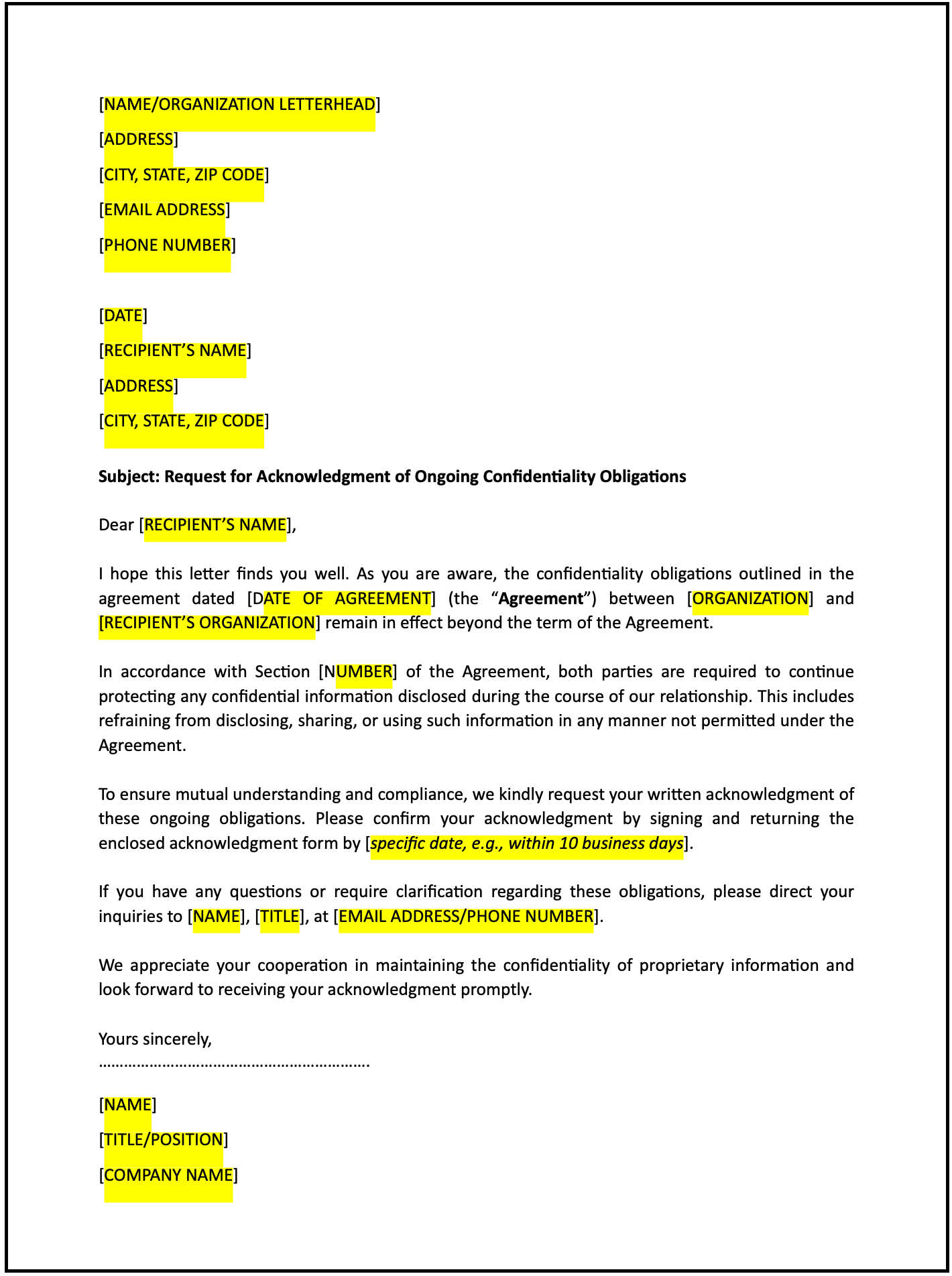
Requests ongoing acknowledgment of confidentiality, reminding the recipient of their continuing obligations and requesting confirmation of compliance.