Royalty payment clarification letter: Free template
Customize it in Cobrief and see the moment it's opened, signed, or actioned.
Customize this template for free
TL;DR
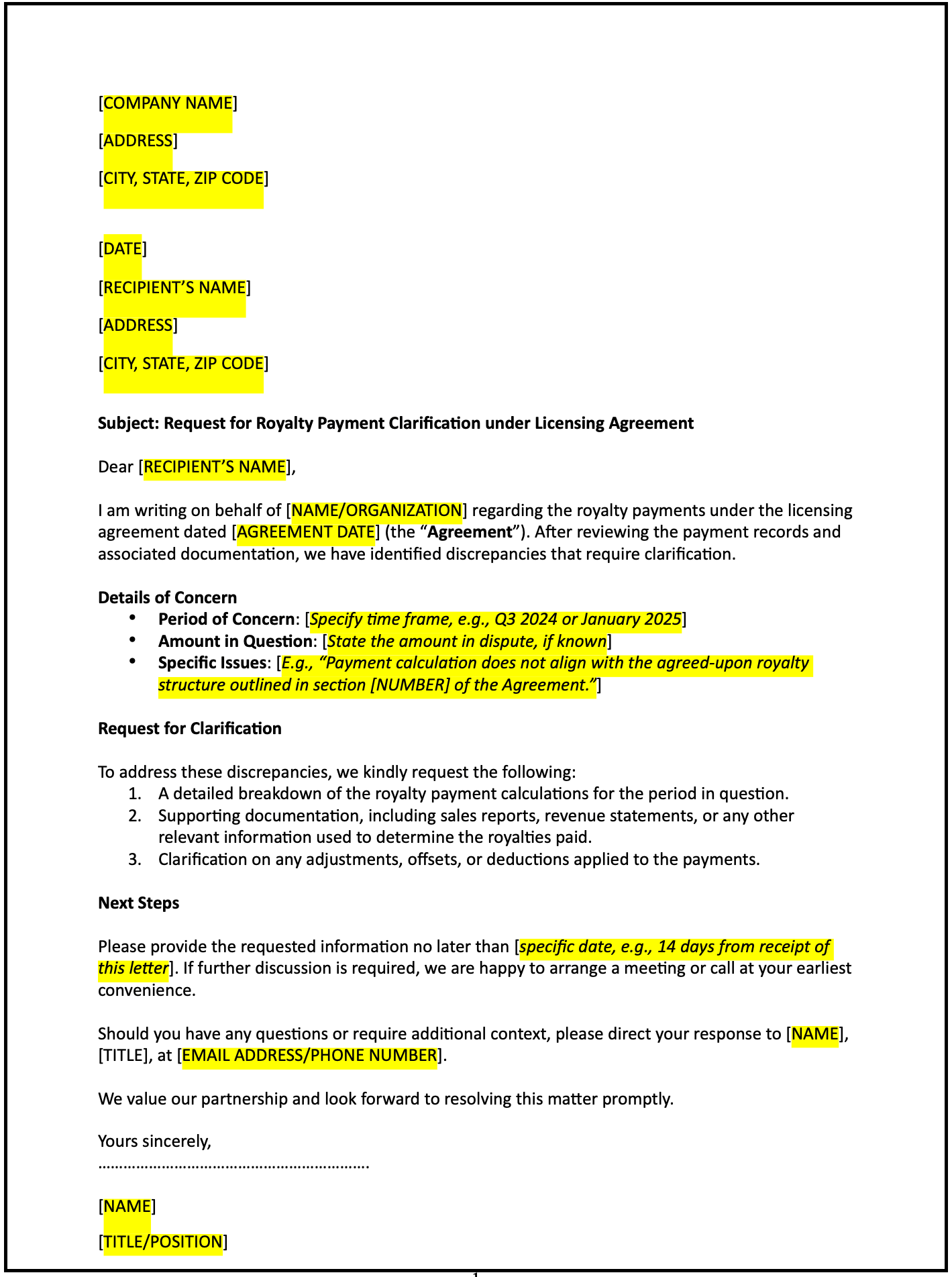
A royalty payment clarification letter used to formally request details about the calculation, timing, or distribution of royalty payments under a licensing agreement. It promotes transparency and mutual understanding between licensors and licensees, ensuring both parties can address discrepancies and comply with contractual obligations.
Royalty payment clarification letter
A royalty payment clarification letter under a licensing agreement is a formal communication used to seek details or explanations regarding the calculation, timing, or distribution of royalty payments outlined in the agreement. This letter ensures transparency and promotes mutual understanding between the licensor and licensee.
How to use this royalty payment clarification letter
- Open with an introduction: Address the recipient respectfully and reference the specific licensing agreement, including its title or date.
- State the purpose: Clearly communicate your intent to seek clarification about the royalty payments.
- Identify the area of concern: Specify the aspects requiring clarification, such as the calculation method, payment schedule, or reporting format.
- Provide context: Briefly explain why the clarification is necessary, such as addressing discrepancies, ensuring compliance, or confirming mutual understanding.
- Request specific information: Formally ask for the details needed to resolve the issue, such as supporting documentation, detailed calculations, or explanations.
- Offer collaboration: Reassure the recipient of your willingness to discuss the matter further and resolve any misunderstandings amicably.
- Maintain a professional tone: Ensure the letter is respectful and focused on fostering cooperation.
- Provide contact information: Include details for the recipient to respond or discuss the matter further.
Benefits of using a royalty payment clarification letter
This letter ensures a structured and professional way to address concerns about royalty payments while fostering trust and collaboration.
- Promotes clarity: Clearly communicating the request ensures mutual understanding of payment terms.
- Reflects professionalism: A well-crafted letter demonstrates respect and adherence to the agreement.
- Encourages transparency: Seeking clarification fosters open communication and accountability.
- Builds trust: Transparent dialogue reinforces a positive business relationship.
- Supports compliance: Ensuring clarity helps both parties fulfill their contractual obligations effectively.
Tips for writing an effective royalty payment clarification letter
- Be specific: Clearly describe the royalty-related details requiring clarification, such as calculations, reports, or timelines.
- Use professional language: Maintain a respectful and constructive tone to foster collaboration.
- Provide context: Briefly explain why the clarification is important, such as addressing discrepancies or ensuring accurate payments.
- Highlight mutual benefits: Emphasize how resolving the matter benefits both parties, such as avoiding disputes and ensuring accurate reporting.
- Include actionable steps: Share instructions for responding, such as providing documentation or scheduling a discussion.
- Keep it concise: Focus on the essential points while ensuring the tone is professional and engaging.
Frequently asked questions (FAQs)
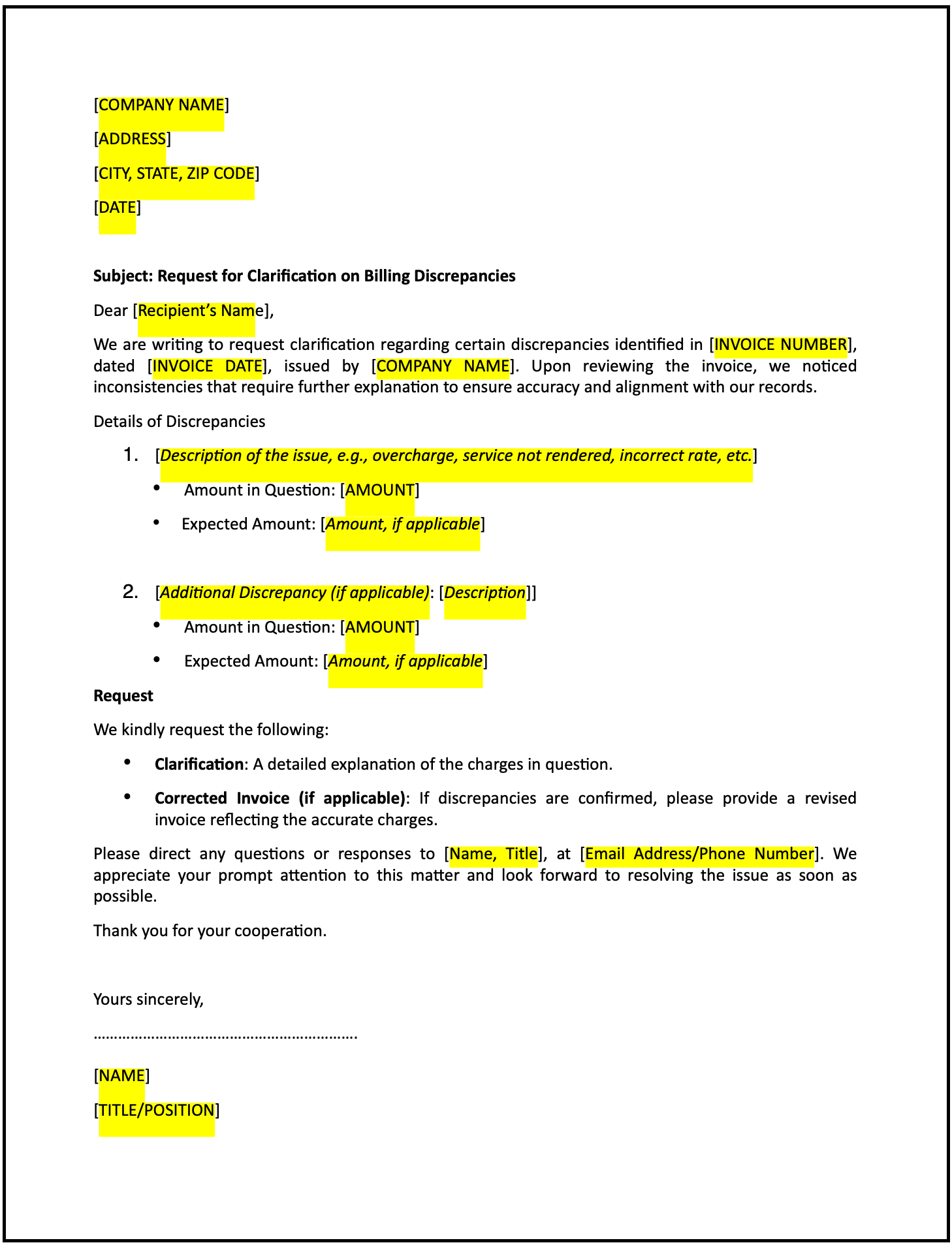
Requests clarification regarding billing discrepancies, specifying the discrepancies and asking for a detailed explanation.
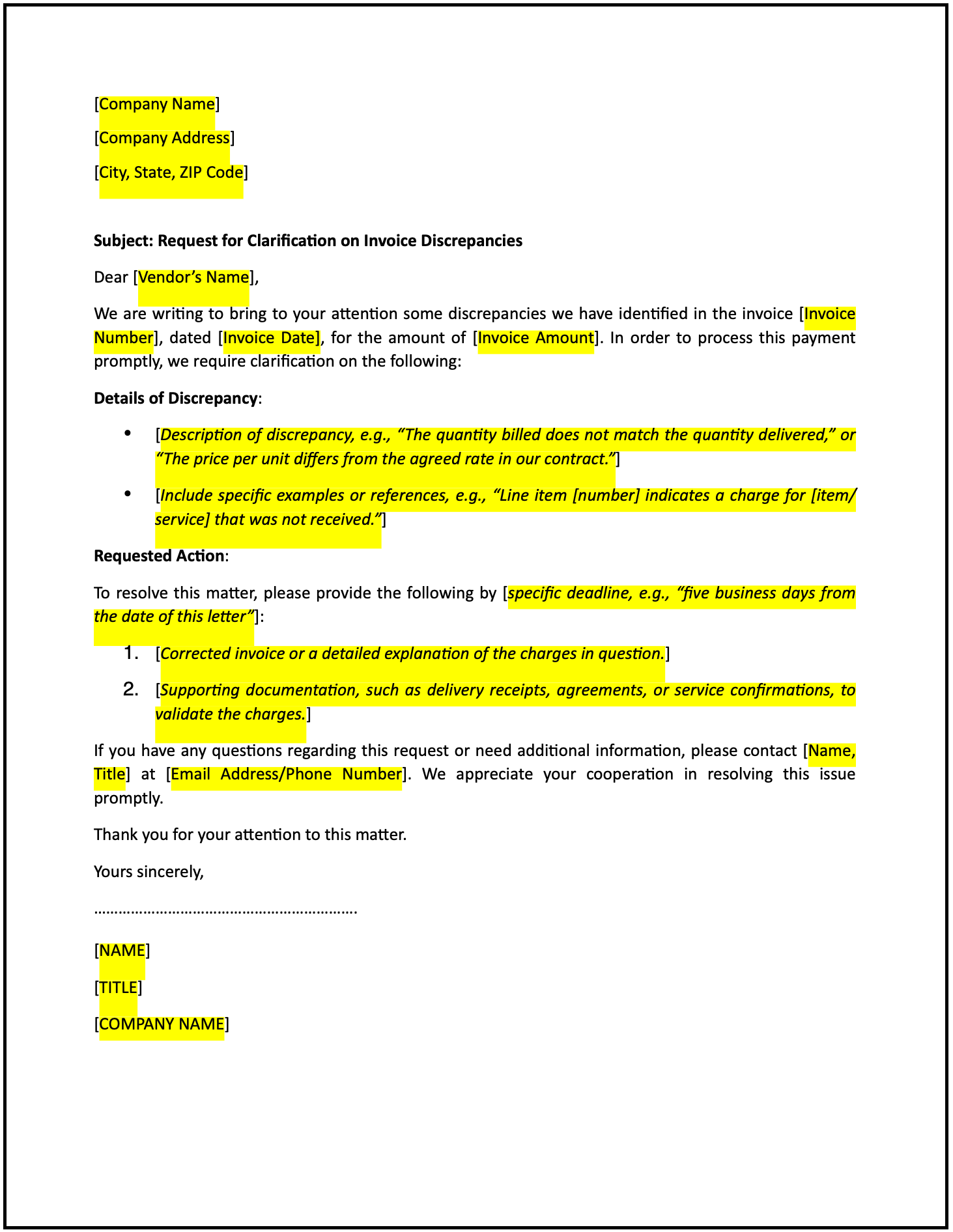
Requests clarification on invoice discrepancies, outlining the specific items or charges in question and seeking a detailed explanation or correction.
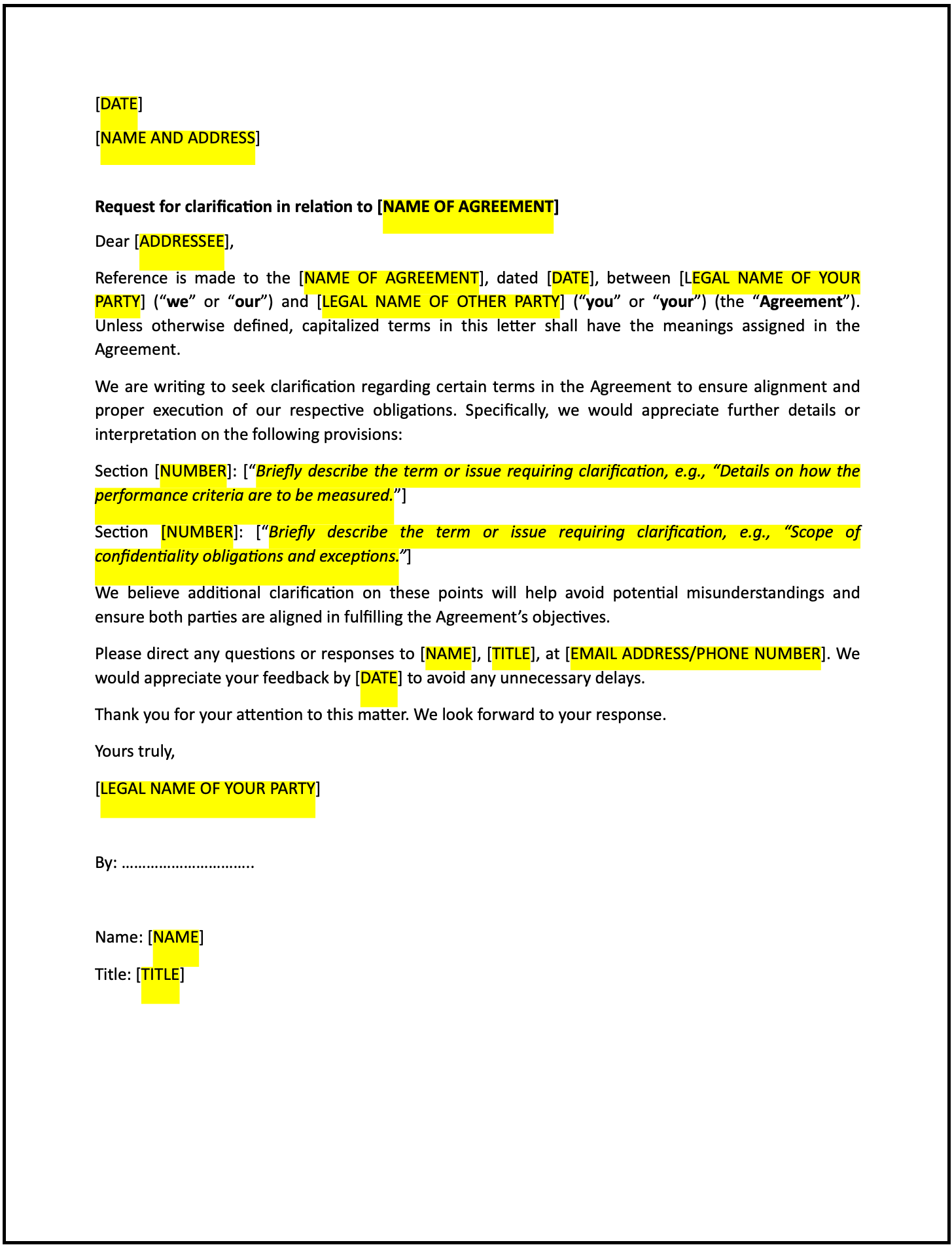
Requests clarification of specific contract terms, outlining the areas of uncertainty and seeking further explanation or documentation.
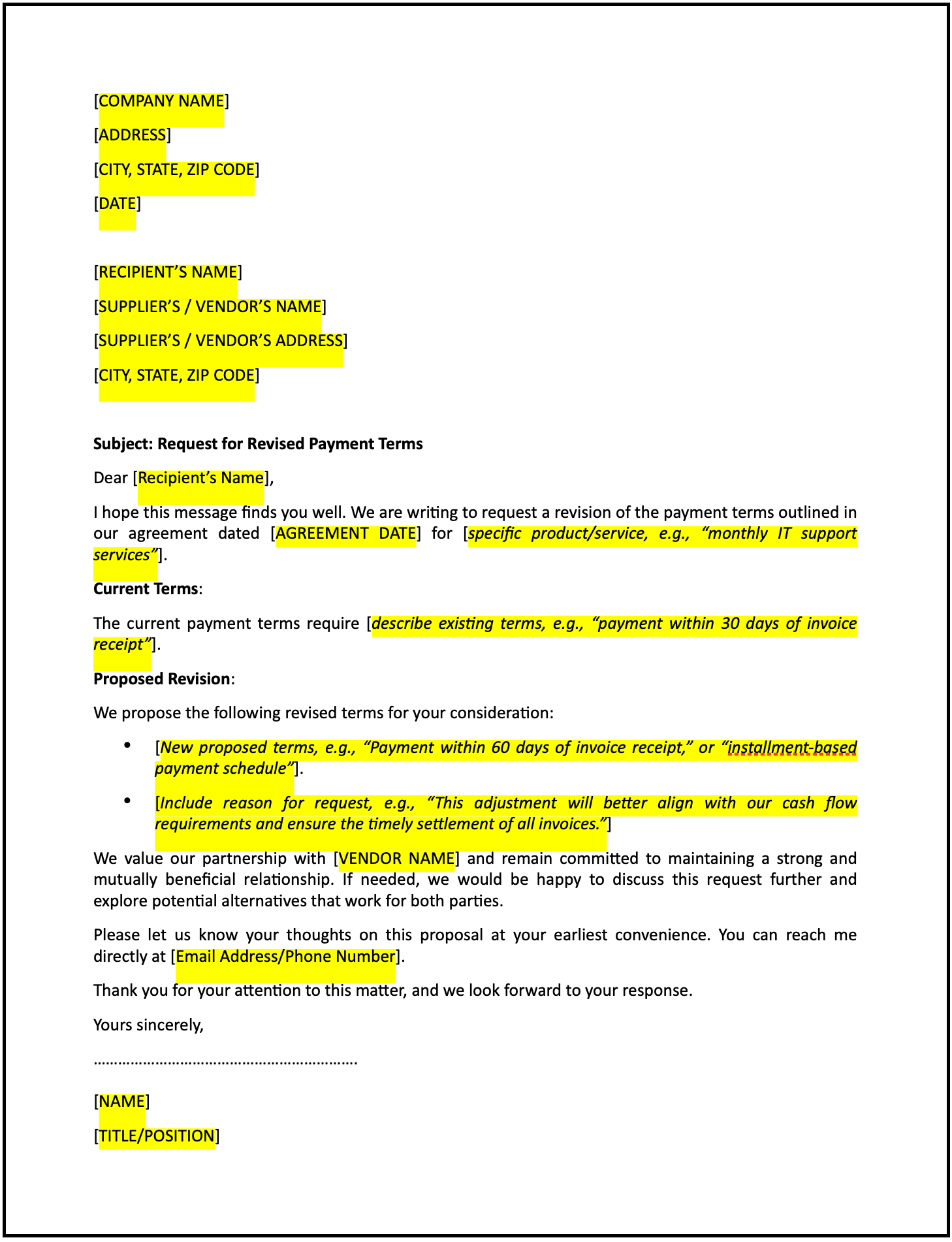
Requests revised payment terms, explaining the need for the adjustment and proposing new terms or a payment schedule.
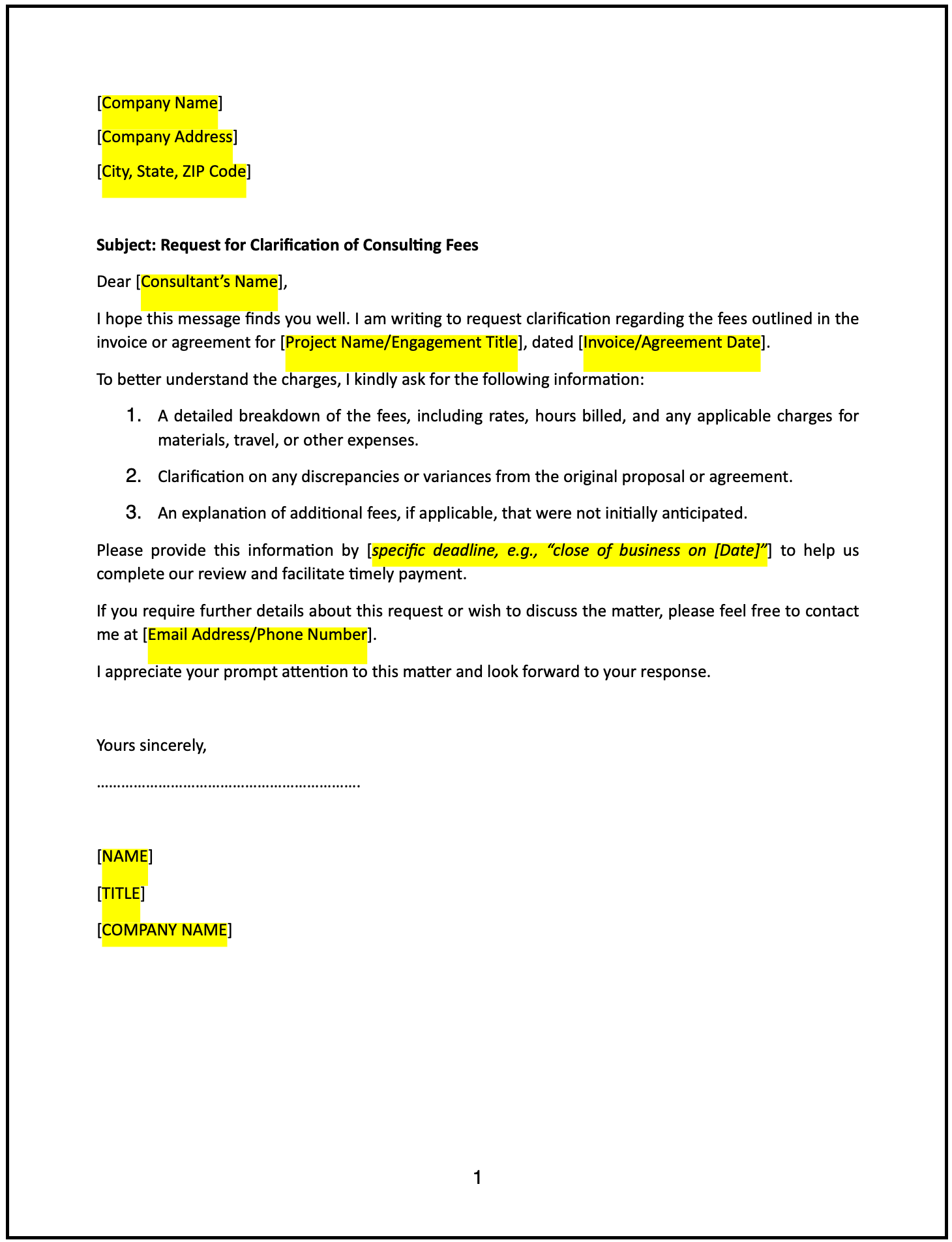
Requests clarification of consulting fees, seeking details on the fee structure, billing practices, and any additional costs involved.