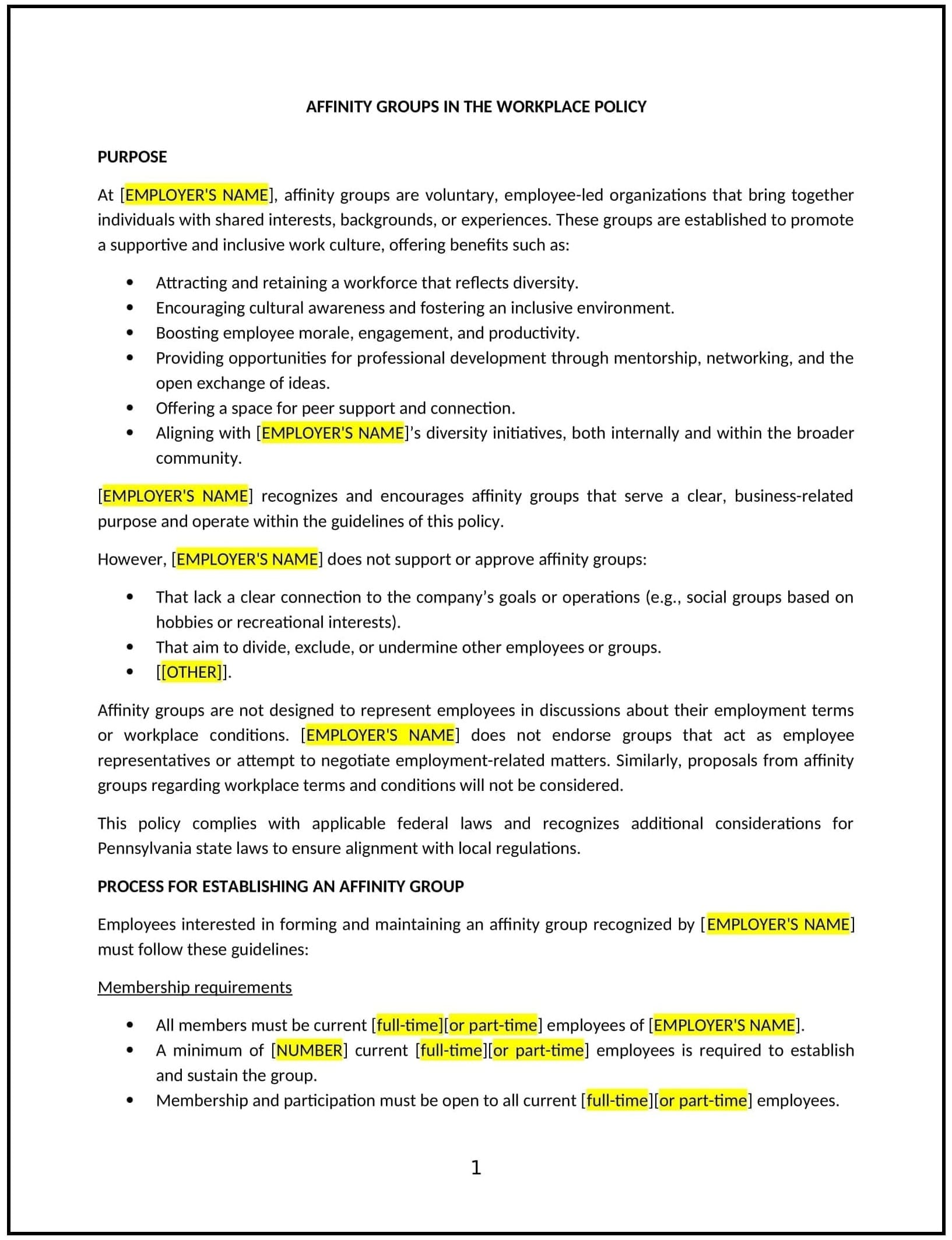
Affinity groups in the workplace policy (Pennsylvania): Free template
Encourages the formation of employee-led groups that foster inclusion, shared identity, and community engagement.
- Policies
- Pennsylvania
Affinity groups in the workplace policy
This affinity groups in the workplace policy is designed to help businesses in Pennsylvania create a supportive and inclusive environment by enabling employee-led groups that promote shared interests, diversity, and professional development. Whether operating in industries with diverse workforces or smaller organizations looking to foster inclusion, this template addresses key elements to guide the formation and management of affinity groups tailored to Pennsylvania’s unique workforce landscape.
By using this template, businesses can establish clear guidelines, encourage collaboration, and align group initiatives with organizational goals while considering Pennsylvania-specific workforce and industry characteristics.
How to use this affinity groups in the workplace policy
- Define the purpose: Affinity groups should foster inclusion, professional networking, and shared interests that enhance workplace culture, considering Pennsylvania's diverse industries like healthcare, education, and manufacturing.
- Outline formation procedures: Provide a clear process for creating groups, including submitting a proposal, defining objectives, and gaining approval from management, while reflecting local workforce needs in Pennsylvania.
- Clarify roles and responsibilities: Include expectations for group leaders, members, and management to ensure alignment with organizational policies and state-specific considerations.
- Manage resources: Offer guidance on resources available in Pennsylvania, such as accessible meeting spaces or tools for virtual collaboration to accommodate the state’s mix of urban and rural workplaces.
- Reflect Pennsylvania-specific considerations: Tailor group objectives to address issues relevant to the state's workforce, such as supporting bilingual employees in areas with large immigrant populations or focusing on regional diversity initiatives.
Benefits of using an affinity groups in the workplace policy
A well-crafted affinity groups policy provides a structured framework for fostering collaboration. Here's how it helps:
- Encourages inclusion: Helps Pennsylvania businesses support diversity initiatives by promoting collaboration among employees with shared identities or interests.
- Fosters engagement: Creates opportunities for networking, professional development, and cross-departmental collaboration, which are especially relevant in Pennsylvania's large corporate hubs like Philadelphia and Pittsburgh.
- Enhances workplace culture: Demonstrates a commitment to creating a respectful and supportive work environment, appealing to Pennsylvania's diverse workforce.
- Provides structure: Establishes clear processes for forming and managing groups, reducing ambiguity and aligning with Pennsylvania workforce priorities.
- Aligns with organizational goals: Ensures group initiatives complement broader business objectives and reflect local industry needs.
Tips for using affinity groups in the workplace policy
- Communicate expectations: Share the policy with employees and ensure all affinity groups align with organizational values and Pennsylvania workforce expectations.
- Encourage inclusivity: Promote participation across various departments and roles, considering Pennsylvania’s mix of industries and workforce demographics.
- Monitor group activities: Regularly review activities and objectives of affinity groups to ensure alignment with business goals and relevance to the local workforce.
- Provide training: Offer training for group leaders on facilitating inclusive discussions and managing group dynamics, particularly in addressing state-specific diversity challenges.
- Review periodically: Update the policy to reflect changes in Pennsylvania workforce trends, organizational priorities, or state-specific legal requirements.
Frequently asked questions (FAQs)
Similar templates
Where deals go from offer to paid
