Anti-corruption and foreign corrupt practices policy (New Hampshire): Free template
Prevents bribery and unethical practices in domestic and international business dealings.
- Policies
- New Hampshire
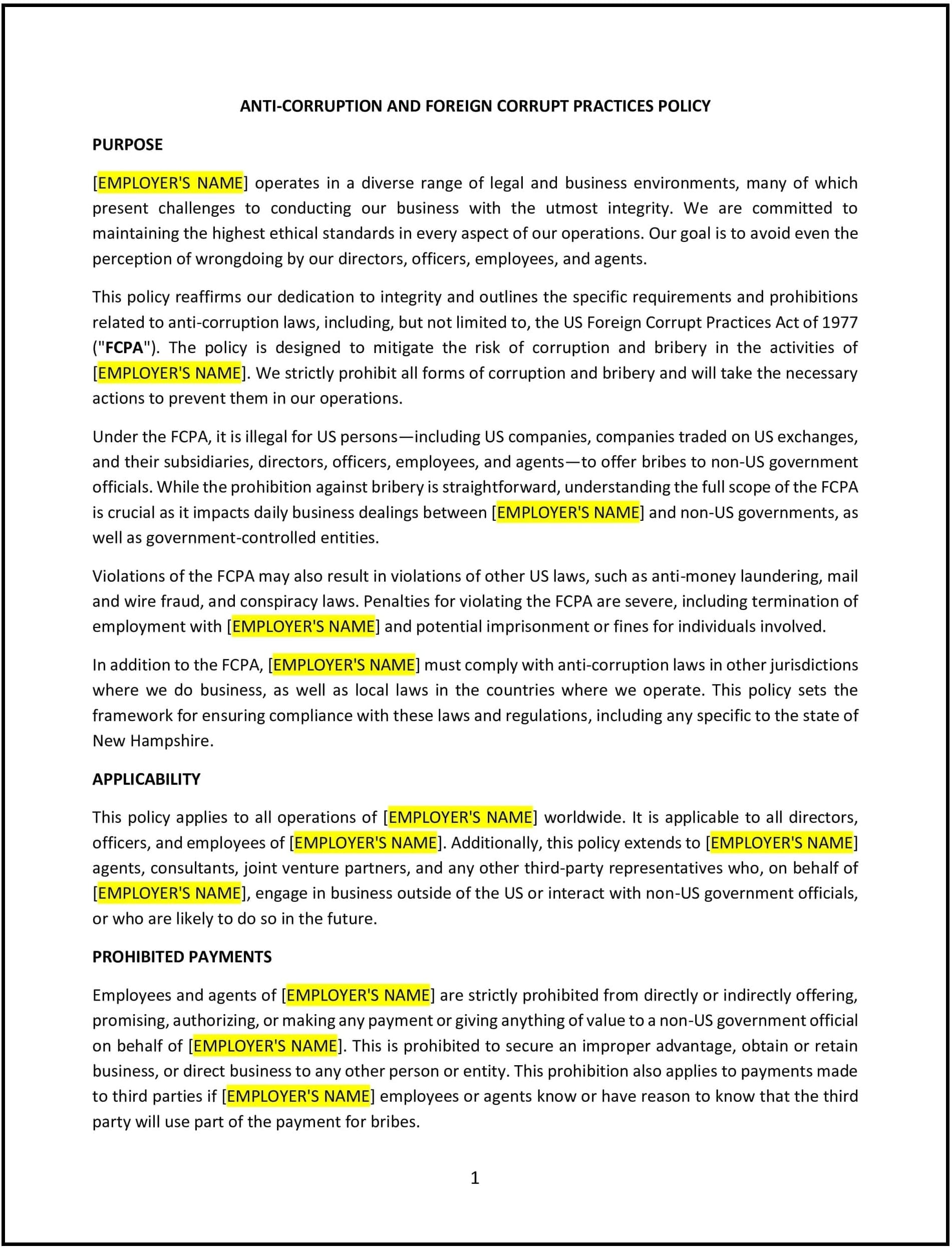
Anti-corruption and foreign corrupt practices policy (New Hampshire)
An anti-corruption and foreign corrupt practices policy helps New Hampshire businesses establish clear guidelines for ethical business conduct, preventing bribery, corruption, and unethical financial practices. This policy provides a framework for identifying and addressing risks related to corrupt practices in both domestic and international business activities.
By implementing this policy, businesses in New Hampshire can promote ethical decision-making, reduce legal and financial risks, and uphold strong corporate integrity.
How to use this anti-corruption and foreign corrupt practices policy (New Hampshire)
- Define corruption and bribery: Clearly outline what constitutes bribery, facilitation payments, and other forms of corruption.
- Establish prohibited activities: Specify the types of transactions, gifts, or favors that are not allowed under the policy.
- Set reporting procedures: Provide employees with a clear process for reporting suspected violations, including anonymous reporting options.
- Outline due diligence expectations: Require businesses to conduct due diligence when working with third parties, vendors, and international partners.
- Provide training and awareness: Ensure employees and leadership understand anti-corruption laws and best practices.
- Document financial transactions: Maintain accurate records of business transactions to prevent fraudulent activity.
- Clarify consequences for violations: Specify the disciplinary actions for employees or third parties who engage in corrupt practices.
- Monitor and review the policy: Regularly assess business activities and update the policy to reflect changes in laws and business operations.
Benefits of using this anti-corruption and foreign corrupt practices policy (New Hampshire)
This policy provides several advantages for New Hampshire businesses:
- Promotes ethical business practices: Establishes clear expectations for responsible conduct.
- Reduces legal risks: Helps businesses mitigate exposure to potential legal and financial penalties.
- Enhances corporate reputation: Strengthens trust with clients, investors, and regulatory bodies.
- Supports risk management: Provides a structured approach to identifying and addressing corruption risks.
- Improves transparency: Encourages accurate record-keeping and accountability in financial transactions.
- Aligns with international standards: Helps businesses navigate anti-corruption requirements when operating globally.
- Encourages internal compliance efforts: Reinforces a culture of integrity within the organization.
Tips for using this anti-corruption and foreign corrupt practices policy (New Hampshire)
- Communicate policies regularly: Ensure employees understand anti-corruption guidelines through training and internal communications.
- Implement due diligence measures: Vet third-party partners, suppliers, and clients to identify potential risks.
- Encourage reporting: Create an accessible and confidential reporting system for suspected corruption.
- Maintain financial oversight: Require documentation of all financial transactions and business expenses.
- Provide leadership support: Ensure management actively promotes and enforces ethical practices.
- Review and update the policy periodically: Adjust the policy as necessary to reflect regulatory and operational changes.
Frequently asked questions (FAQs)
Similar templates

Where deals go from offer to paid
