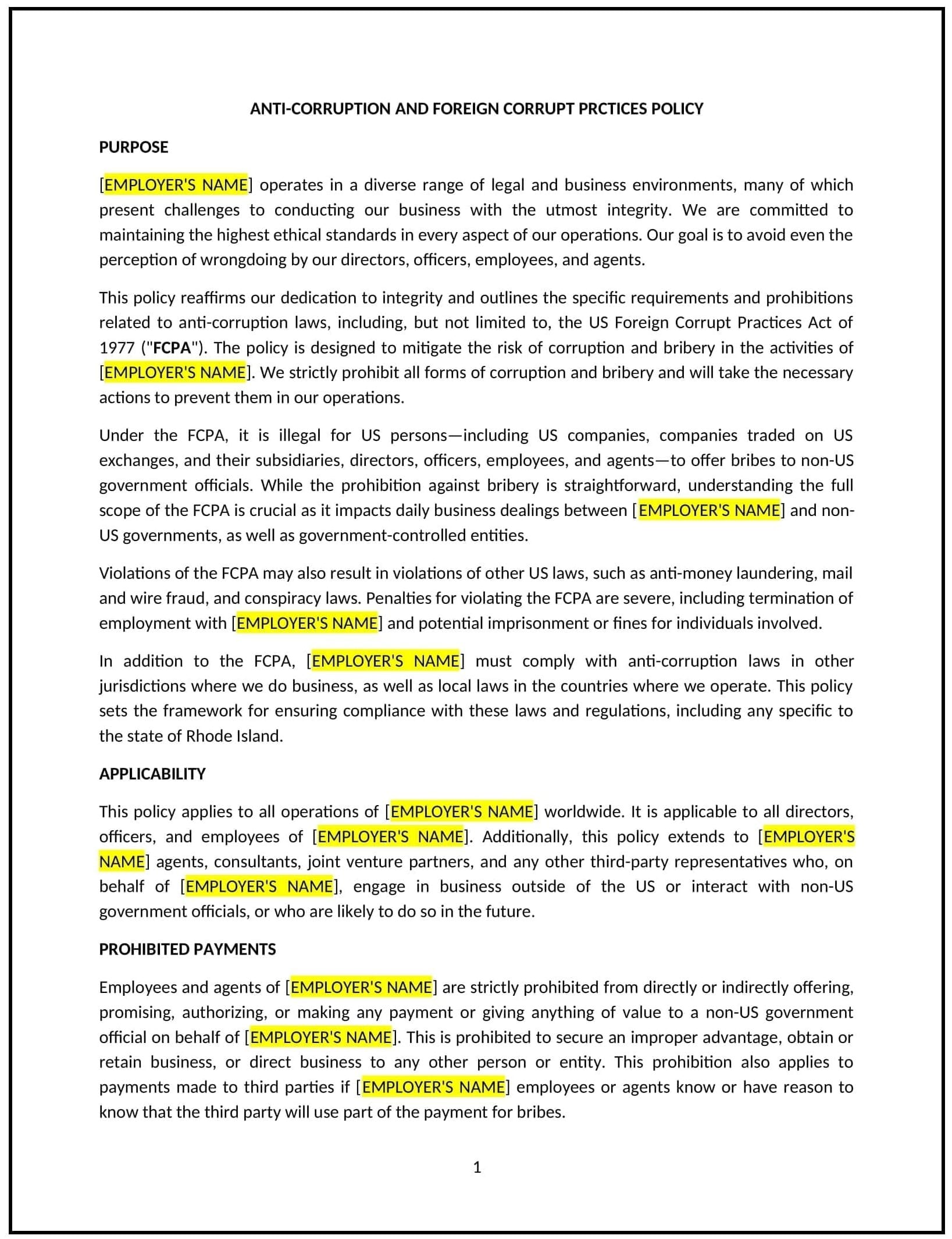
Anti-corruption and foreign corrupt practices policy (Rhode Island): Free template
Prohibits bribery and unethical business conduct to ensure compliance with anti-corruption regulations.
- Policies
- Rhode Island
Anti-corruption and foreign corrupt practices policy (Rhode Island)
This anti-corruption and foreign corrupt practices policy is designed to help Rhode Island businesses establish guidelines for preventing bribery, corruption, and violations of international trade laws. It outlines procedures for maintaining ethical business practices, complying with the Foreign Corrupt Practices Act (FCPA), and fostering a culture of integrity.
By adopting this policy, businesses can reduce legal risks, protect their reputation, and align with general best practices for ethical business conduct.
How to use this anti-corruption and foreign corrupt practices policy (Rhode Island)
- Define prohibited conduct: Explain what constitutes bribery, corruption, or violations of the FCPA, such as offering or accepting improper payments.
- Establish compliance procedures: Provide steps for ensuring compliance with anti-corruption laws, including due diligence on third parties and recordkeeping.
- Address reporting mechanisms: Outline how employees can report suspected corruption or unethical behavior, such as through anonymous hotlines.
- Set training requirements: Educate employees on anti-corruption laws, ethical business practices, and their responsibilities under the policy.
- Monitor adherence: Regularly review business practices and transactions to ensure compliance with the policy.
- Review and update: Assess the policy annually to ensure it aligns with evolving business needs and legal standards.
Benefits of using this anti-corruption and foreign corrupt practices policy (Rhode Island)
This policy offers several advantages for Rhode Island businesses:
- Reduces legal risks: Minimizes the potential for penalties or sanctions related to bribery or corruption.
- Protects reputation: Demonstrates a commitment to ethical business practices and compliance with international laws.
- Aligns with best practices: Provides a structured approach to managing anti-corruption efforts.
- Builds trust: Shows employees, customers, and partners that the business operates with integrity.
- Supports international trade: Facilitates smooth and compliant cross-border transactions.
Tips for using this anti-corruption and foreign corrupt practices policy (Rhode Island)
- Communicate the policy: Share the policy with employees and include it in the employee handbook.
- Provide training: Educate staff on anti-corruption laws, ethical business practices, and their responsibilities under the policy.
- Monitor adherence: Regularly review business practices and transactions to ensure compliance with the policy.
- Address issues promptly: Take corrective action if corruption or unethical behavior is suspected or reported.
- Update regularly: Assess the policy annually to ensure it aligns with evolving business needs and legal standards.
Frequently asked questions (FAQs)
Similar templates

Where deals go from offer to paid
