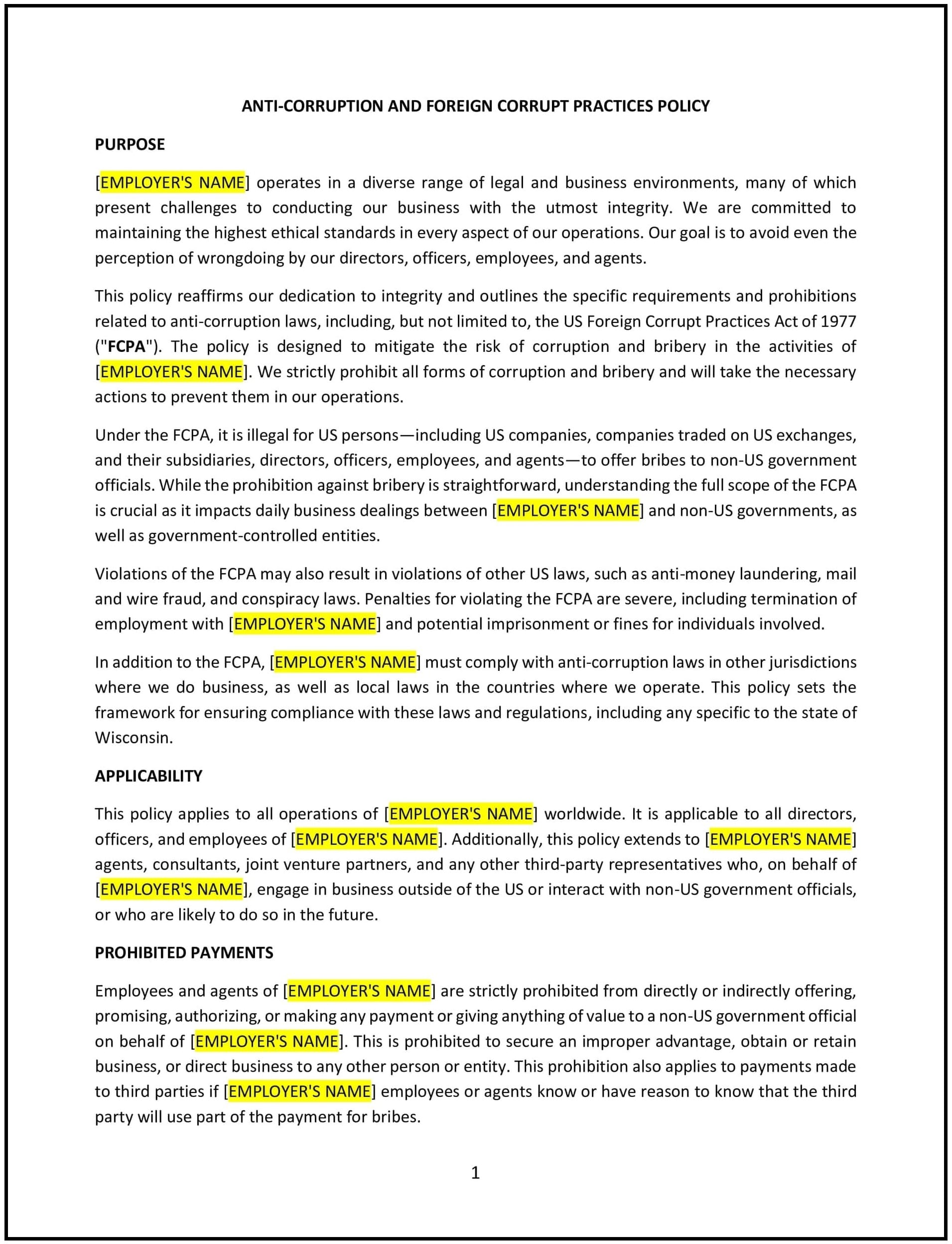
Anti-corruption and foreign corrupt practices policy (Wisconsin): Free template
Prohibits bribery and promotes ethical conduct in compliance with U.S. and international regulations.
- Policies
- Wisconsin
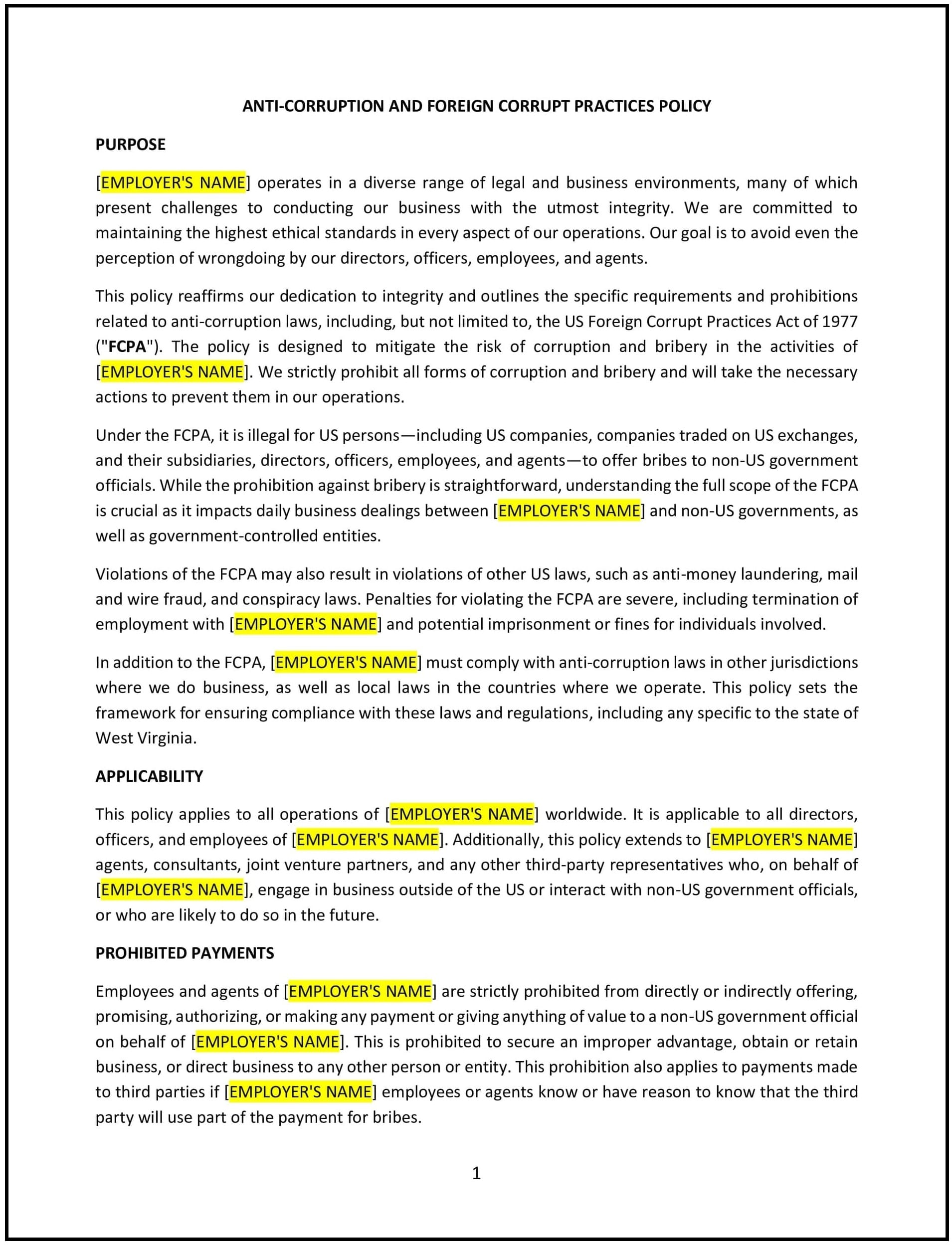
Anti-corruption and foreign corrupt practices policy (Wisconsin)
In Wisconsin, an anti-corruption and foreign corrupt practices policy is essential for protecting businesses from illegal activities that could lead to severe legal and financial consequences. This policy ensures that businesses maintain ethical practices and promotes compliance with both state and federal anti-corruption laws, including the U.S. Foreign Corrupt Practices Act (FCPA). It aims to prevent bribery, kickbacks, and other corrupt activities that could compromise the company’s integrity and reputation.
This policy establishes clear guidelines for employees and third-party agents, outlining prohibited actions and the procedures to report any suspected violations. Adherence to this policy supports a culture of transparency and accountability.
How to use this anti-corruption and foreign corrupt practices policy (Wisconsin)
- Define prohibited activities: Clearly state the actions that are prohibited, such as bribery, kickbacks, or offering anything of value to influence business decisions or government actions.
- Set expectations for employees: Ensure that all employees are aware of their responsibilities to avoid corrupt practices and understand the consequences of violating the policy.
- Establish reporting channels: Create a process for employees to report concerns about potential violations confidentially and without fear of retaliation.
- Train employees: Conduct training to educate employees on identifying and preventing corruption, including the implications of the FCPA and Wisconsin-specific anti-corruption laws.
- Conduct due diligence: Implement procedures for vetting third-party agents, contractors, and partners to ensure they adhere to anti-corruption standards.
Benefits of using an anti-corruption and foreign corrupt practices policy (Wisconsin)
An anti-corruption policy provides several benefits to businesses in Wisconsin:
- Protects reputation: By demonstrating commitment to ethical practices, businesses enhance their reputation and credibility in the market.
- Supports compliance: Aligns with the FCPA and Wisconsin state laws, reducing the risk of legal penalties or sanctions.
- Prevents financial loss: Helps avoid the significant financial consequences that may result from fines, lawsuits, or loss of business opportunities due to corruption.
- Promotes ethical behavior: Encourages a culture of integrity and transparency within the organization.
- Reduces legal risks: Ensures that employees and third-party agents are aware of and supports compliance with anti-corruption laws.
Tips for using an anti-corruption and foreign corrupt practices policy (Wisconsin)
- Educate regularly: Continuously educate employees and third-party agents on anti-corruption laws and ethical standards, ensuring they understand what constitutes a violation.
- Enforce the policy consistently: Apply the policy uniformly across all levels of the organization to prevent corruption and maintain fairness.
- Conduct internal audits: Regularly review business practices and transactions to identify potential risks and ensure compliance with anti-corruption regulations.
- Encourage transparency: Foster an environment where employees feel comfortable raising concerns and reporting violations without fear of retaliation.
- Review and update the policy: Periodically reassess the policy to ensure it remains up-to-date with changes in laws, regulations, and business practices.
Frequently asked questions (FAQs)
Similar templates


Where deals go from offer to paid
