Anti-harassment policy (Alabama): Free template
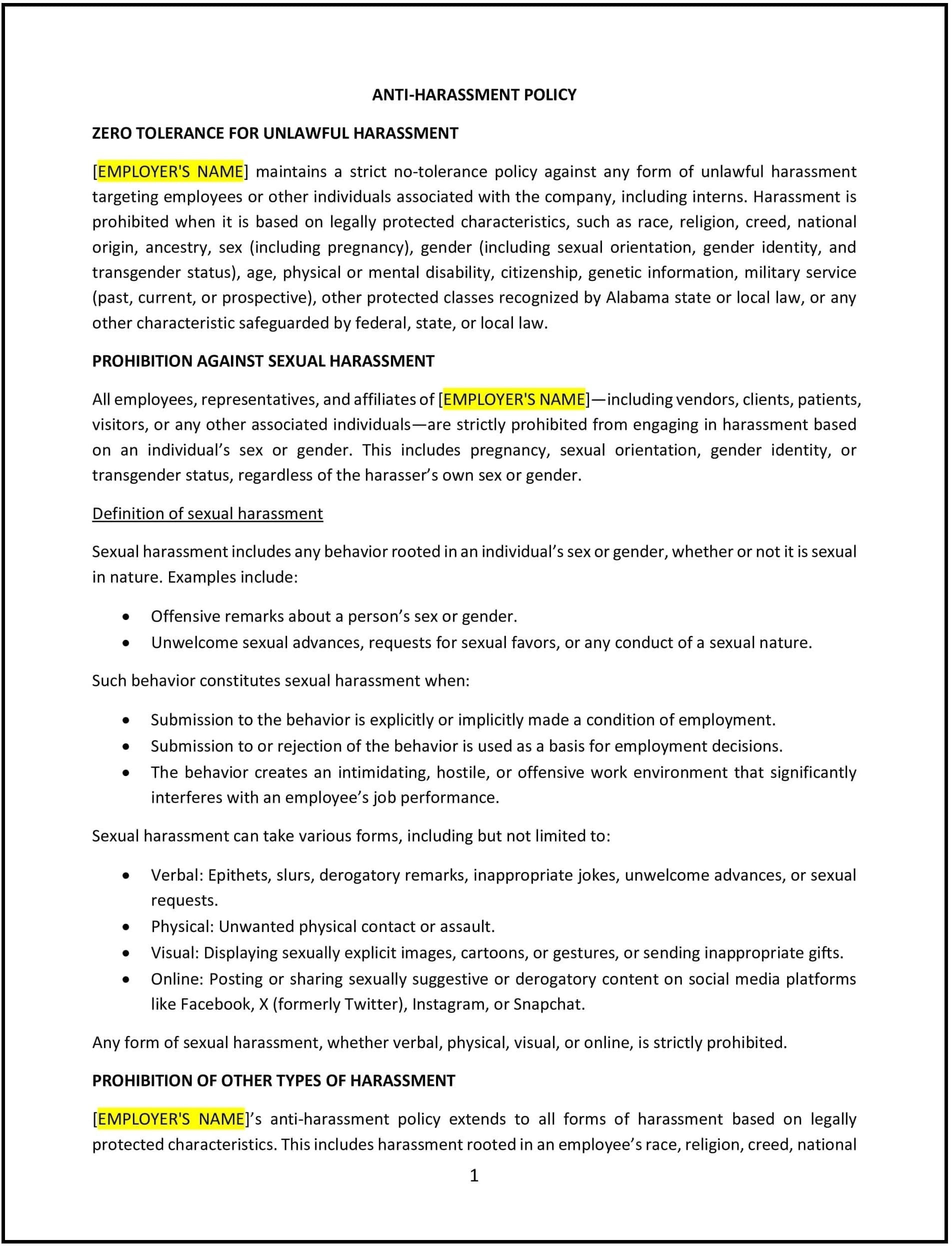
Establishes clear rules against workplace harassment, outlining reporting steps and protections under Alabama and federal law.
- Policies
- Alabama
Anti-harassment policy (Alabama)
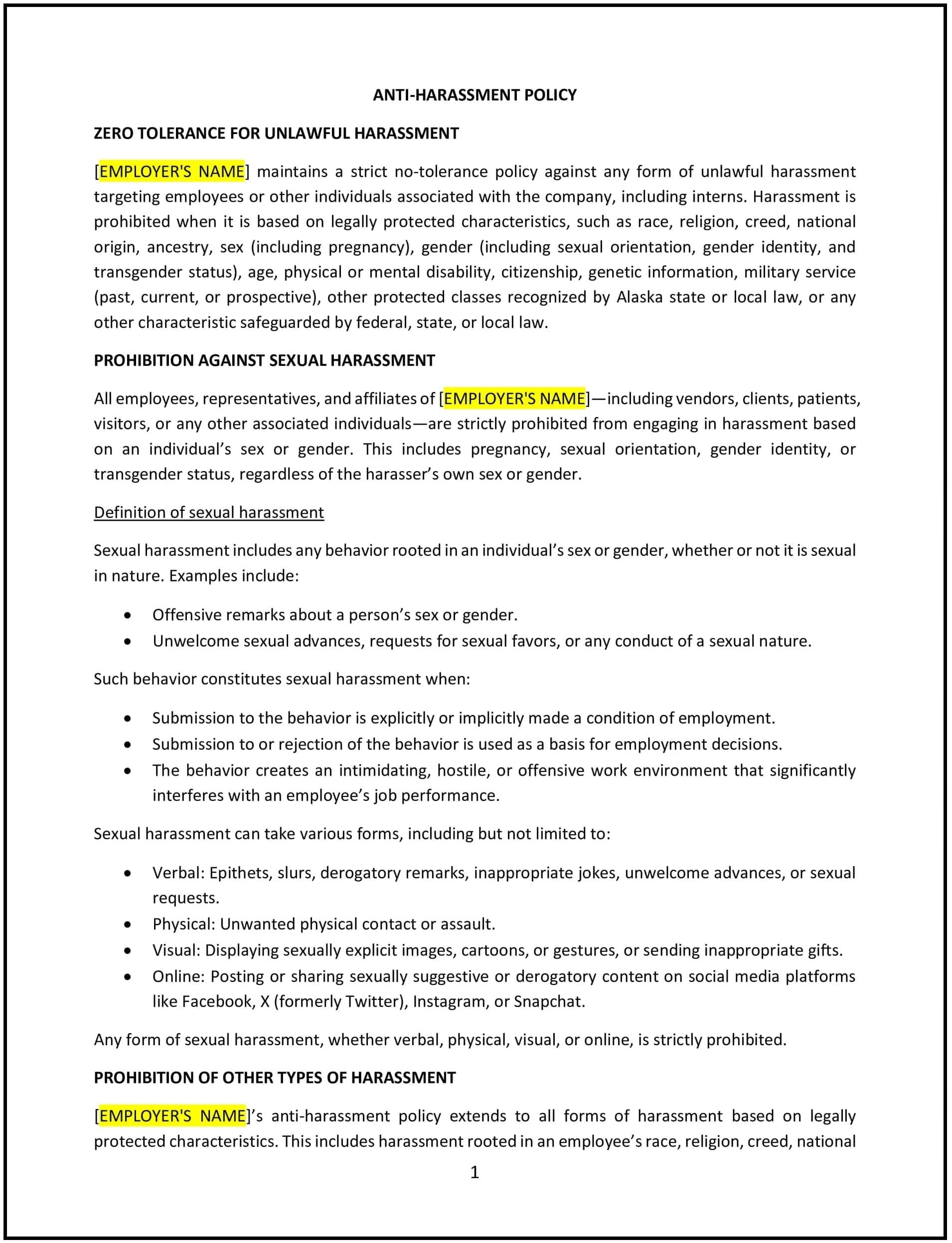
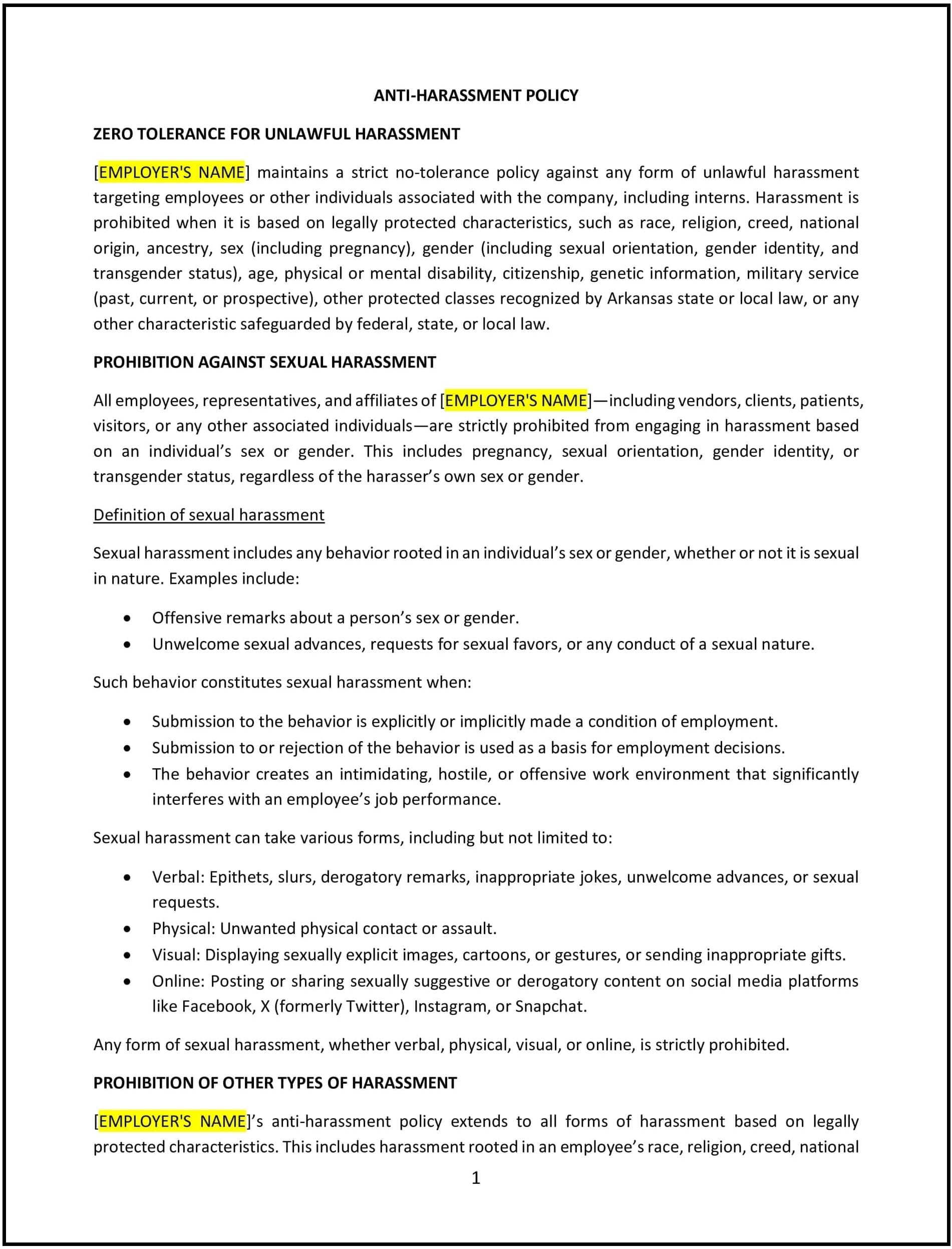
An anti-harassment policy is essential for fostering a safe, respectful, and inclusive workplace. In Alabama, this policy helps businesses comply with federal laws, such as Title VII of the Civil Rights Act, and ensures alignment with state-specific regulations. Tailoring this policy to your organization demonstrates your commitment to addressing and preventing harassment while protecting your employees and company reputation.
How to use this anti-harassment policy (Alabama)
- Define its purpose: Emphasize your commitment to maintaining a harassment-free workplace and complying with Alabama and federal laws.
- Customize for your workplace: Adapt the policy to reflect your company’s reporting structure, disciplinary procedures, and communication channels.
- Outline reporting processes: Provide employees with clear, confidential ways to report harassment without fear of retaliation.
- Train your team: Conduct regular training sessions to educate employees on identifying and preventing harassment.
- Monitor and update: Regularly review the policy to ensure it reflects changes in Alabama’s legal landscape or organizational practices.
Benefits of using an anti-harassment policy (Alabama)
A comprehensive anti-harassment policy protects your business and promotes a positive work environment. Here's how it helps:
- Promotes a respectful workplace: Establishes clear expectations for behavior and accountability.
- Ensures compliance: Aligns with Alabama and federal laws, reducing the risk of legal claims.
- Encourages reporting: Provides employees with safe, confidential mechanisms to address concerns.
- Reduces workplace conflict: Helps resolve issues before they escalate, improving team cohesion.
- Strengthens employee trust: Demonstrates your commitment to creating a safe and supportive work environment.
Tips for using an anti-harassment policy (Alabama)
- Include examples: Provide specific examples of prohibited behaviors, such as verbal, physical, or visual harassment.
- Designate contact points: Assign trusted individuals or HR representatives as primary contacts for reporting harassment.
- Emphasize confidentiality: Reassure employees that all reports will be handled with discretion.
- Address Alabama-specific risks: Consider industries like manufacturing or healthcare, where unique workplace dynamics may arise.
- Document responses: Maintain thorough records of reported incidents and actions taken to ensure transparency and accountability.
Frequently asked questions (FAQs)
Similar templates
Where deals go from offer to paid
