Anti-harassment policy (New Hampshire): Free template
Ensures a workplace free from harassment and provides steps for prevention, reporting, and resolution.
- Policies
- New Hampshire
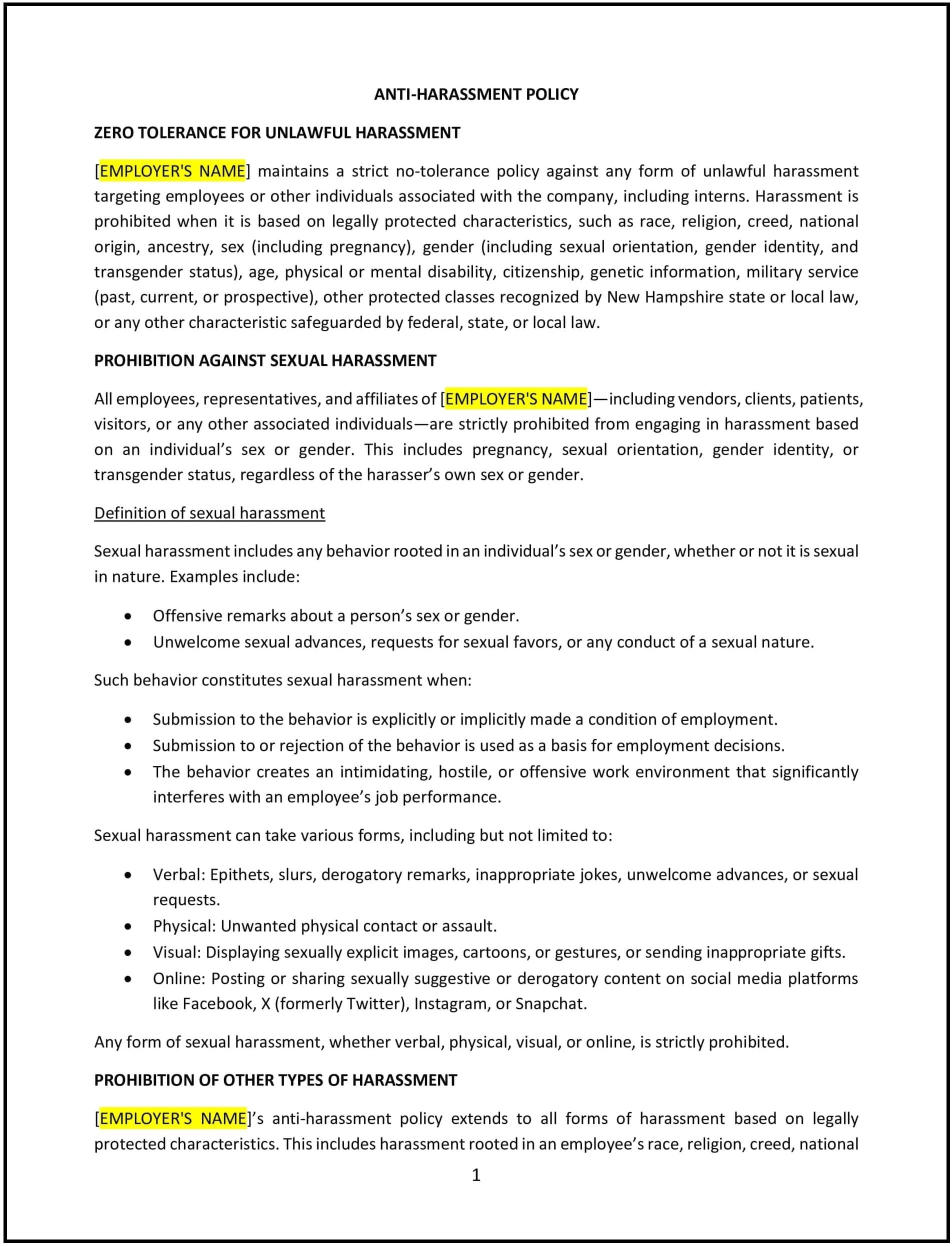
Anti-harassment policy (New Hampshire)
An anti-harassment policy helps New Hampshire businesses establish clear guidelines to prevent and address harassment in the workplace. This policy is designed to promote a respectful, inclusive, and safe work environment for all employees. By formalizing procedures for reporting and addressing harassment, businesses can foster a culture of accountability and support.
By implementing this policy, businesses in New Hampshire can enhance workplace culture, reduce conflicts, and demonstrate a commitment to fairness and respect.
How to use this anti-harassment policy (New Hampshire)
- Define harassment: Clearly outline what constitutes harassment, including verbal, physical, and visual forms, as well as sexual harassment and discrimination.
- Establish reporting procedures: Provide employees with multiple channels to report harassment, such as a designated HR representative or anonymous hotline.
- Set investigation protocols: Explain how harassment complaints will be investigated, including timelines, confidentiality, and impartiality.
- Address retaliation: Prohibit retaliation against employees who report harassment or participate in investigations.
- Communicate the policy: Share the policy with employees during onboarding and through internal communications to ensure awareness and understanding.
- Train employees: Educate staff on recognizing, preventing, and reporting harassment, including the policy’s guidelines and available resources.
- Train managers: Equip supervisors with the skills to handle harassment complaints fairly and promptly.
- Monitor and enforce the policy: Regularly review workplace behavior and address harassment incidents in a timely and respectful manner.
- Review and update the policy: Periodically assess the policy’s effectiveness and make adjustments as needed to reflect changes in workplace dynamics or legal requirements.
Benefits of using this anti-harassment policy (New Hampshire)
This policy offers several advantages for New Hampshire businesses:
- Promotes respect and inclusivity: Clear guidelines help create a workplace where all employees feel valued and safe.
- Reduces conflicts: Formal procedures minimize misunderstandings and disputes related to harassment.
- Enhances employee morale: A respectful and inclusive environment fosters trust, collaboration, and job satisfaction.
- Aligns with New Hampshire values: The policy reflects the state’s emphasis on fairness, community, and mutual respect.
- Improves retention: A positive work environment can increase employee loyalty and reduce turnover.
- Supports legal standards: A formal policy helps businesses align with federal and state laws regarding workplace harassment.
- Builds trust: Transparent procedures demonstrate the business’s commitment to fairness and accountability.
Tips for using this anti-harassment policy (New Hampshire)
- Communicate the policy effectively: Share the policy with employees during onboarding and through regular reminders, such as emails or training sessions.
- Provide training: Educate employees and managers on recognizing, preventing, and reporting harassment, including the policy’s guidelines.
- Encourage reporting: Foster a culture where employees feel comfortable reporting harassment without fear of retaliation.
- Address complaints promptly: Investigate harassment complaints thoroughly and take appropriate action to resolve issues fairly.
- Document incidents: Maintain records of all harassment complaints, investigations, and resolutions to ensure consistency and accountability.
- Review the policy periodically: Update the policy as needed to reflect changes in workplace dynamics, employee feedback, or legal requirements.
- Lead by example: Ensure senior leadership demonstrates a commitment to a harassment-free workplace and reinforces the policy’s importance.
Frequently asked questions (FAQs)
Similar templates
Where deals go from offer to paid
