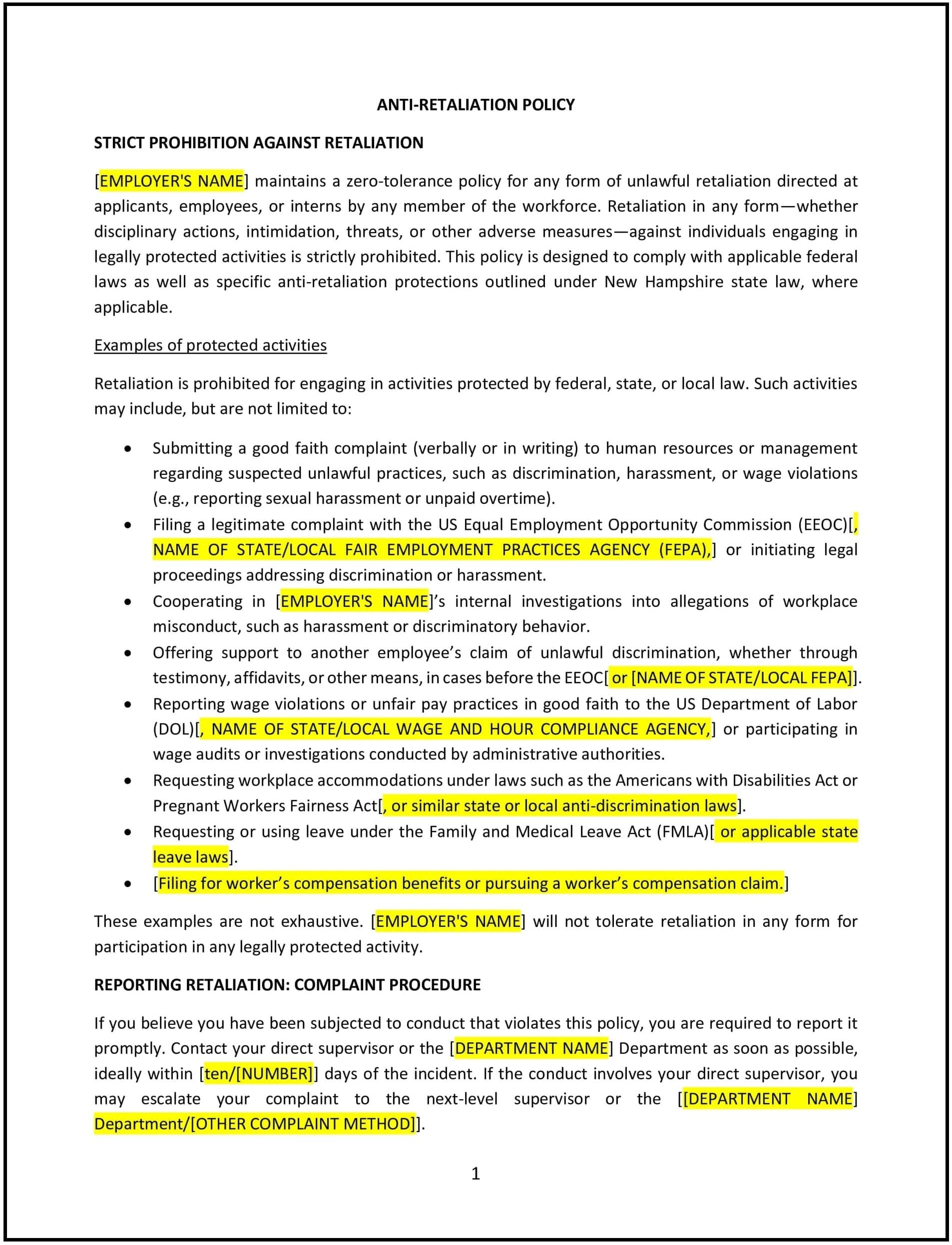
Anti-retaliation policy (New Hampshire): Free template
Prohibits retaliation against employees who report workplace issues or participate in investigations.
- Policies
- New Hampshire
Anti-retaliation policy (New Hampshire)
An anti-retaliation policy helps New Hampshire businesses protect employees from retaliation when they report misconduct, engage in protected activities, or assert their rights. This policy outlines the company’s commitment to providing a safe and supportive environment where employees can raise concerns or report violations without fear of retaliation.
By adopting this policy, businesses in New Hampshire can create an open, respectful workplace, prevent discrimination or retaliation, and foster trust between management and employees.
How to use this anti-retaliation policy (New Hampshire)
- Define retaliation: Clearly define what constitutes retaliation, including any adverse actions taken against employees for participating in protected activities such as reporting violations, filing complaints, or participating in investigations.
- List protected activities: Identify the activities that employees are protected from retaliation for, such as reporting harassment, discrimination, safety violations, or engaging in union activities.
- Outline the reporting process: Provide a clear, confidential process for employees to report any instances of retaliation, including whom to contact and how to document their concerns.
- Ensure confidentiality: Make it clear that reports of retaliation will be handled confidentially to protect the identity of the employee reporting the incident.
- Address investigation procedures: Explain how the company will investigate retaliation claims, including the steps taken to ensure fairness, confidentiality, and impartiality during the process.
- Set consequences for retaliation: Define the consequences for any employee found to be engaging in retaliation, which may include disciplinary actions, up to and including termination.
- Promote a supportive environment: Encourage employees to raise concerns or report misconduct without fear of negative consequences and reassure them that retaliation will not be tolerated.
- Review and update: Regularly review the policy to ensure it reflects New Hampshire state laws, company practices, and best practices for preventing retaliation in the workplace.
Benefits of using this anti-retaliation policy (New Hampshire)
This policy provides several benefits for New Hampshire businesses:
- Promotes a culture of trust: Encourages employees to speak up about issues or violations without fearing retaliation, improving transparency and trust between employees and management.
- Reduces legal risks: Helps businesses mitigate the risk of retaliation claims, discrimination lawsuits, or other legal challenges related to workplace misconduct.
- Increases employee morale: Ensures employees feel safe reporting concerns, which can lead to a more engaged and satisfied workforce.
- Strengthens company values: Reinforces the company’s commitment to fairness, equality, and ethical behavior, enhancing its reputation with employees, customers, and the public.
- Enhances compliance: Promotes a culture where employees feel empowered to report violations, improving overall workplace compliance with New Hampshire state laws and federal regulations.
Tips for using this anti-retaliation policy (New Hampshire)
- Communicate the policy clearly: Ensure that all employees are aware of the anti-retaliation policy, understand what constitutes retaliation, and know how to report any concerns.
- Offer training: Provide regular training for employees and managers on how to recognize retaliation and ensure that employees understand their rights to report misconduct without fear of reprisal.
- Monitor for retaliation: Take proactive steps to monitor the workplace for signs of retaliation, addressing any concerns swiftly to prevent further issues.
- Be transparent about reporting: Make sure employees know how to report retaliation in a confidential and safe manner, and that their concerns will be handled seriously.
- Review the policy regularly: Update the policy periodically to reflect any changes in New Hampshire law, company practices, or the workplace environment.
Frequently asked questions (FAQs)
Similar templates
Where deals go from offer to paid
