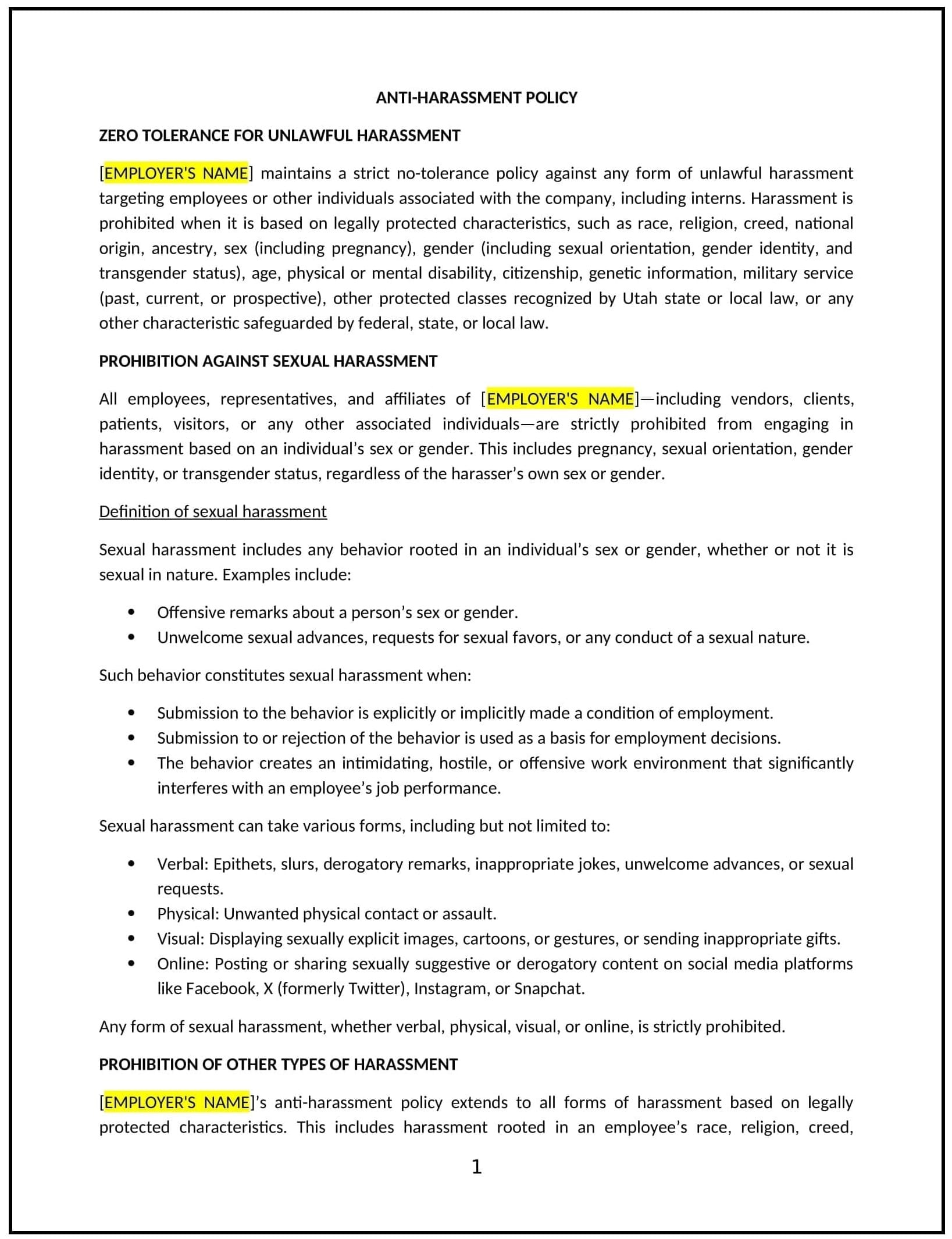
Anti-harassment policy (Utah): Free template
Prohibits harassment and describes how employees can report concerns, ensuring compliance with Utah law.
- Policies
- Utah
Anti-harassment policy (Utah)
This anti-harassment policy is designed to help Utah businesses create a safe and respectful workplace by addressing and preventing harassment. It outlines prohibited behaviors, reporting procedures, and steps for addressing complaints to foster a positive work environment.
By adopting this policy, businesses can promote a culture of respect, reduce the risk of workplace conflicts, and align with general best practices for maintaining a harassment-free workplace.
How to use this anti-harassment policy (Utah)
- Define harassment: Clearly outline behaviors considered harassment, such as verbal, physical, or visual conduct based on protected characteristics.
- Establish reporting procedures: Provide employees with multiple channels to report harassment, including anonymous options.
- Train employees: Educate employees and managers on recognizing, preventing, and addressing harassment.
- Investigate complaints: Outline a fair and impartial process for investigating harassment claims.
- Enforce consequences: Specify disciplinary actions for policy violations to reinforce its importance.
- Protect against retaliation: Ensure employees who report harassment in good faith are protected from retaliation.
- Review and update: Regularly assess the policy to ensure it remains effective and relevant.
Benefits of using this anti-harassment policy (Utah)
This policy offers several advantages for Utah businesses:
- Promotes a respectful workplace: Encourages a culture of dignity and respect for all employees.
- Reduces legal risks: Helps businesses address harassment proactively, minimizing potential disputes.
- Enhances employee morale: Demonstrates a commitment to employee well-being and safety.
- Aligns with best practices: Provides a structured approach to preventing and addressing harassment.
- Builds trust: Encourages open communication and transparency in handling complaints.
Tips for using this anti-harassment policy (Utah)
- Communicate the policy: Share the policy during onboarding and include it in the employee handbook.
- Provide training: Educate employees and managers on recognizing and preventing harassment.
- Encourage reporting: Foster an environment where employees feel safe reporting harassment.
- Investigate promptly: Address complaints quickly and impartially to maintain trust.
- Monitor effectiveness: Regularly review the policy to ensure it meets workplace needs.
Frequently asked questions (FAQs)
Similar templates

Where deals go from offer to paid
