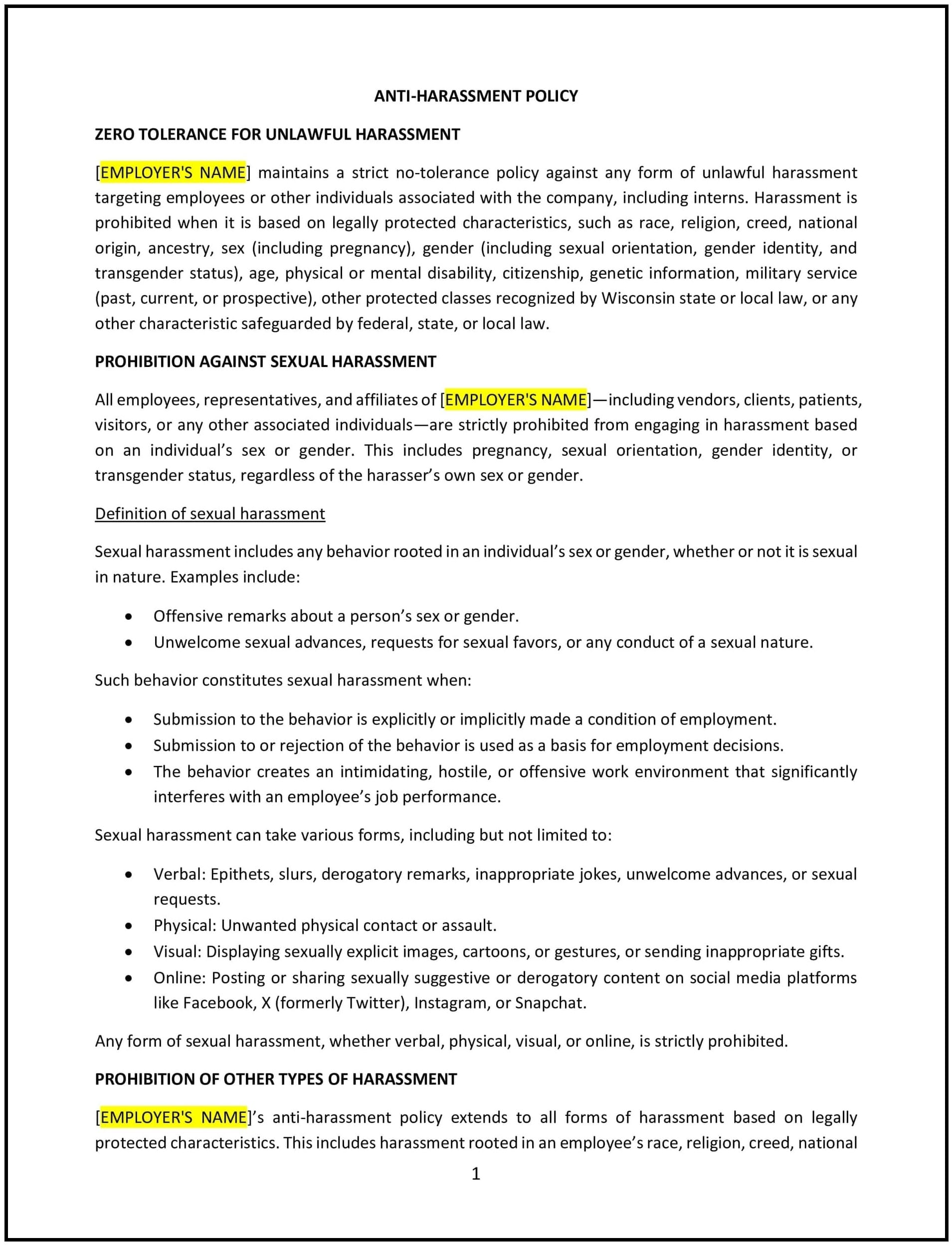
Anti-harassment policy (Wisconsin): Free template
Defines and prohibits workplace harassment while outlining steps for reporting and resolution.
- Policies
- Wisconsin
Anti-harassment policy (Wisconsin)
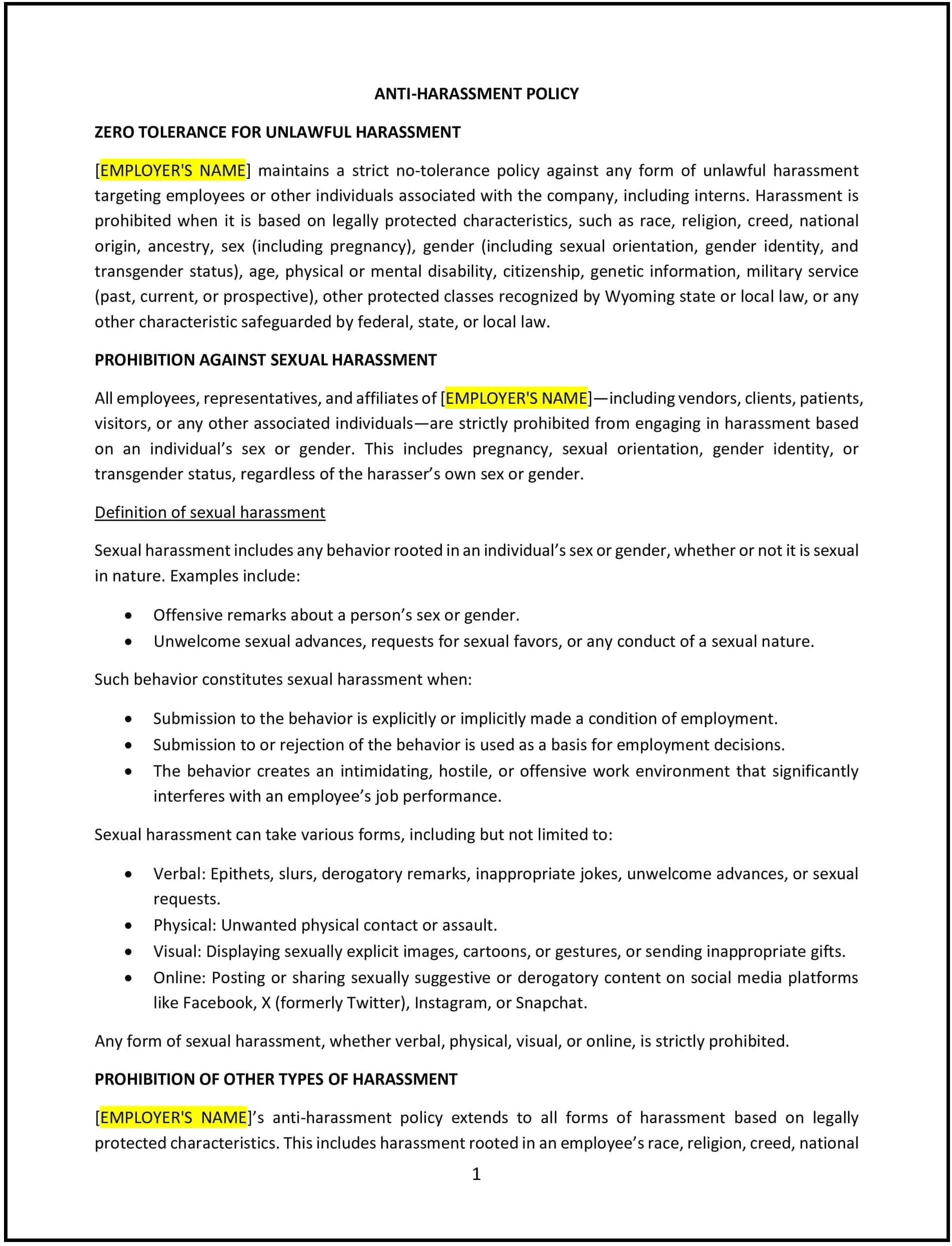
In Wisconsin, an anti-harassment policy is crucial for fostering a respectful and safe workplace environment. This policy helps businesses address and prevent workplace harassment, ensuring employees feel valued and protected from any form of discrimination or mistreatment. By using this policy, organizations can create a zero-tolerance stance against harassment while complying with Wisconsin state laws and federal regulations.
This policy outlines specific behaviors considered harassment, procedures for reporting incidents, and steps for addressing complaints. It also includes guidelines on the responsibilities of management and employees in maintaining a respectful and inclusive workplace.
How to use this anti-harassment policy (Wisconsin)
- Define harassment: Clearly state what constitutes harassment, including verbal, physical, and online conduct. Specify that any form of discrimination based on race, gender, religion, age, disability, or sexual orientation is not tolerated.
- Establish reporting procedures: Outline clear steps for employees to report harassment, including contact points for managers, HR, or an anonymous reporting system.
- Create accountability: Assign responsibilities for preventing harassment to both supervisors and employees. Ensure management sets the tone by modeling respectful behavior.
- Conduct investigations: Set procedures for investigating complaints, ensuring confidentiality and protection for those involved. Disciplinary actions should be outlined for verified cases of harassment.
- Provide training: Offer regular training to employees at all levels on recognizing, preventing, and responding to harassment, with special emphasis on Wisconsin-specific laws and regulations.
Benefits of using an anti-harassment policy (Wisconsin)
An anti-harassment policy provides multiple advantages to businesses in Wisconsin:
- Promotes a respectful workplace: Encourages employees to treat each other with dignity and respect, creating a positive work environment.
- Supports compliance: Helps organizations comply with both Wisconsin and federal anti-discrimination laws, such as Title VII of the Civil Rights Act and the Wisconsin Fair Employment Act (WFEA).
- Reduces legal risks: Proactively addresses potential harassment issues, reducing the likelihood of lawsuits or legal disputes.
- Enhances employee morale: Employees are more likely to feel valued and secure in their roles when they work in a harassment-free environment.
- Increases productivity: A safe and respectful workplace leads to higher employee satisfaction and productivity, as individuals are not distracted by negative workplace behaviors.
Tips for using an anti-harassment policy (Wisconsin)
- Communicate clearly: Ensure the policy is communicated to all employees during onboarding and through regular reminders.
- Encourage reporting: Promote an open-door policy for harassment complaints, ensuring employees feel comfortable reporting without fear of retaliation.
- Follow through with investigations: Take all complaints seriously, investigate promptly, and take appropriate disciplinary action when necessary.
- Foster an inclusive culture: Promote diversity and inclusion initiatives that help prevent harassment before it happens.
- Review periodically: Update the policy regularly to align with any changes in local or federal law or to address evolving workplace needs.
Frequently asked questions (FAQs)
Similar templates
Where deals go from offer to paid
