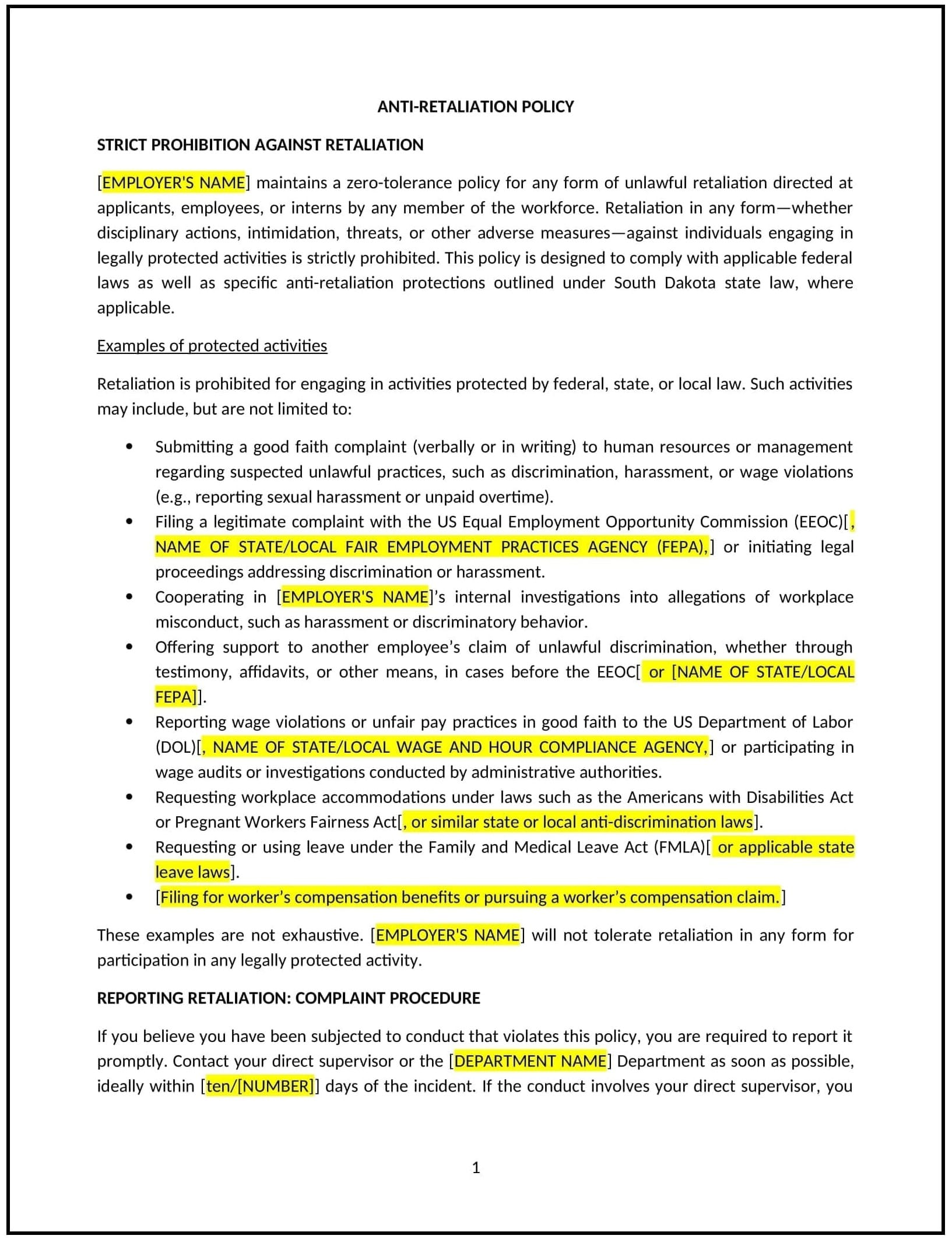
Anti-retaliation policy (South Dakota): Free template
Protects employees from retaliation when they report concerns or participate in investigations in good faith.
- Policies
- South Dakota
Anti-retaliation policy (South Dakota)
This anti-retaliation policy is designed to help South Dakota businesses protect employees who report workplace concerns, such as harassment, discrimination, or safety violations. It outlines procedures for preventing and addressing retaliation against employees who raise concerns in good faith.
By adopting this policy, businesses can foster a culture of transparency, encourage reporting, and promote a fair and respectful work environment.
How to use this anti-retaliation policy (South Dakota)
- Define retaliation: Explain what constitutes retaliation, such as demotion, termination, or other adverse actions against employees who report concerns.
- Establish reporting procedures: Provide clear steps for employees to report retaliation, including anonymous reporting options.
- Outline response protocols: Specify how the business will investigate and address reported retaliation, including corrective actions.
- Train managers: Educate supervisors on preventing retaliation and supporting employees who report concerns.
- Review and update: Assess the policy annually to ensure it aligns with evolving business needs and workplace standards.
Benefits of using this anti-retaliation policy (South Dakota)
This policy offers several advantages for South Dakota businesses:
- Encourages transparency: Promotes a culture where employees feel safe reporting concerns without fear of retaliation.
- Builds trust: Demonstrates a commitment to fairness and employee protection.
- Reduces risks: Helps prevent legal and reputational risks associated with retaliation claims.
- Enhances morale: Supports employee confidence in the workplace and encourages open communication.
- Supports reputation: Positions the business as a responsible and ethical employer in the community.
Tips for using this anti-retaliation policy (South Dakota)
- Communicate the policy: Share the policy with employees and include it in the employee handbook.
- Provide training: Educate employees and managers on recognizing and preventing retaliation.
- Monitor compliance: Regularly review reported incidents to ensure adherence to the policy.
- Address issues promptly: Take immediate action to investigate and resolve reported retaliation.
- Update regularly: Assess the policy annually to ensure it aligns with evolving business needs and workplace standards.
Frequently asked questions (FAQs)
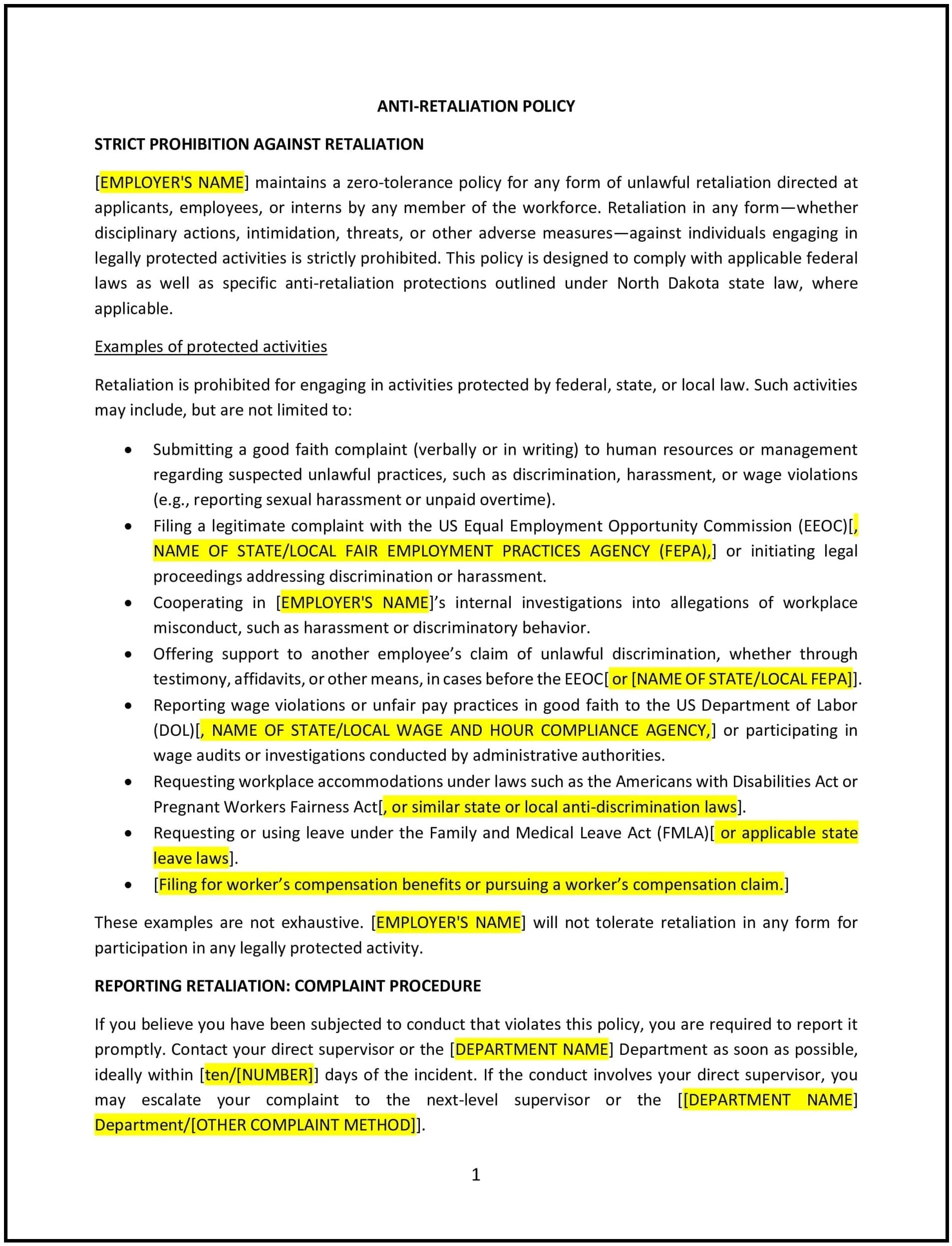
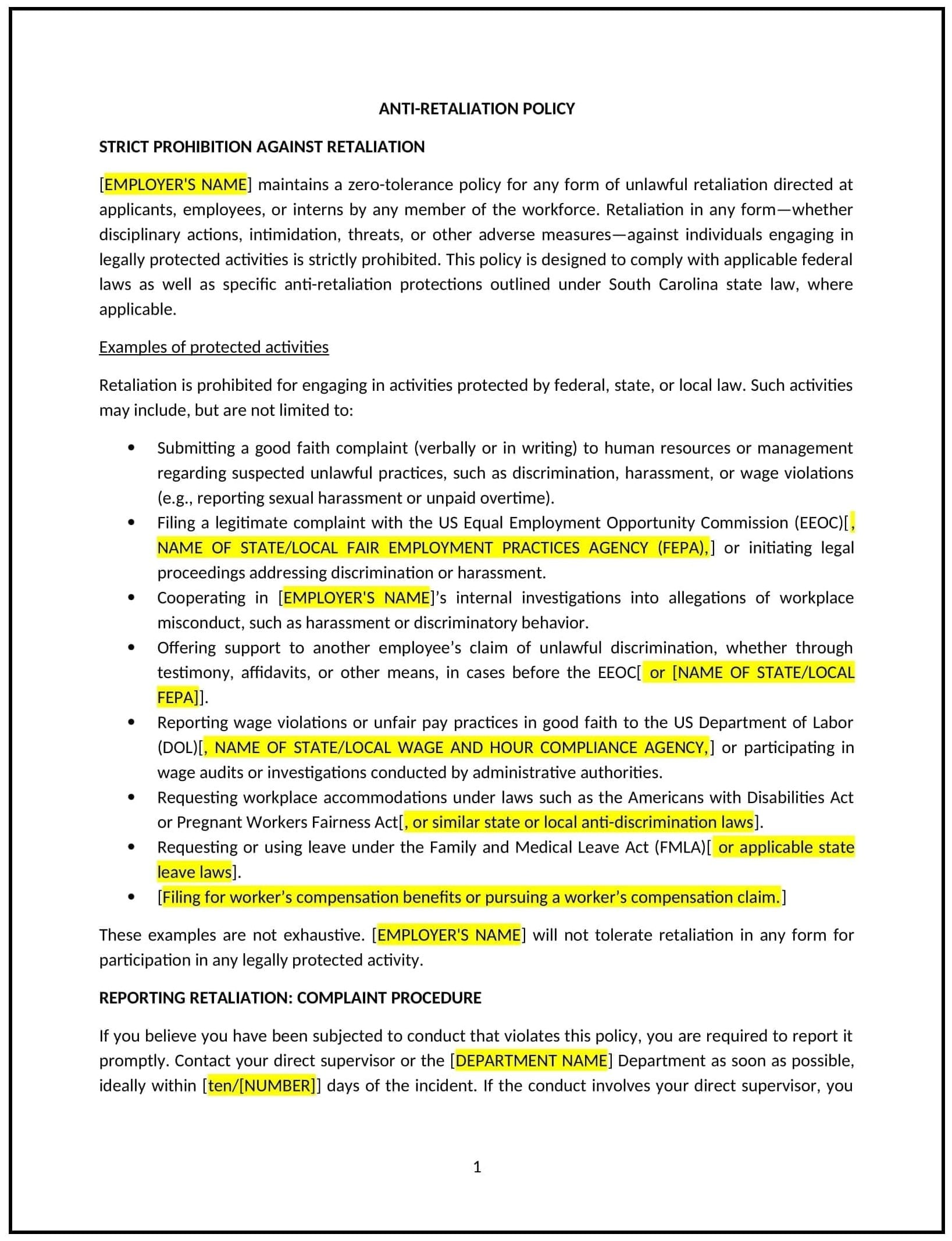
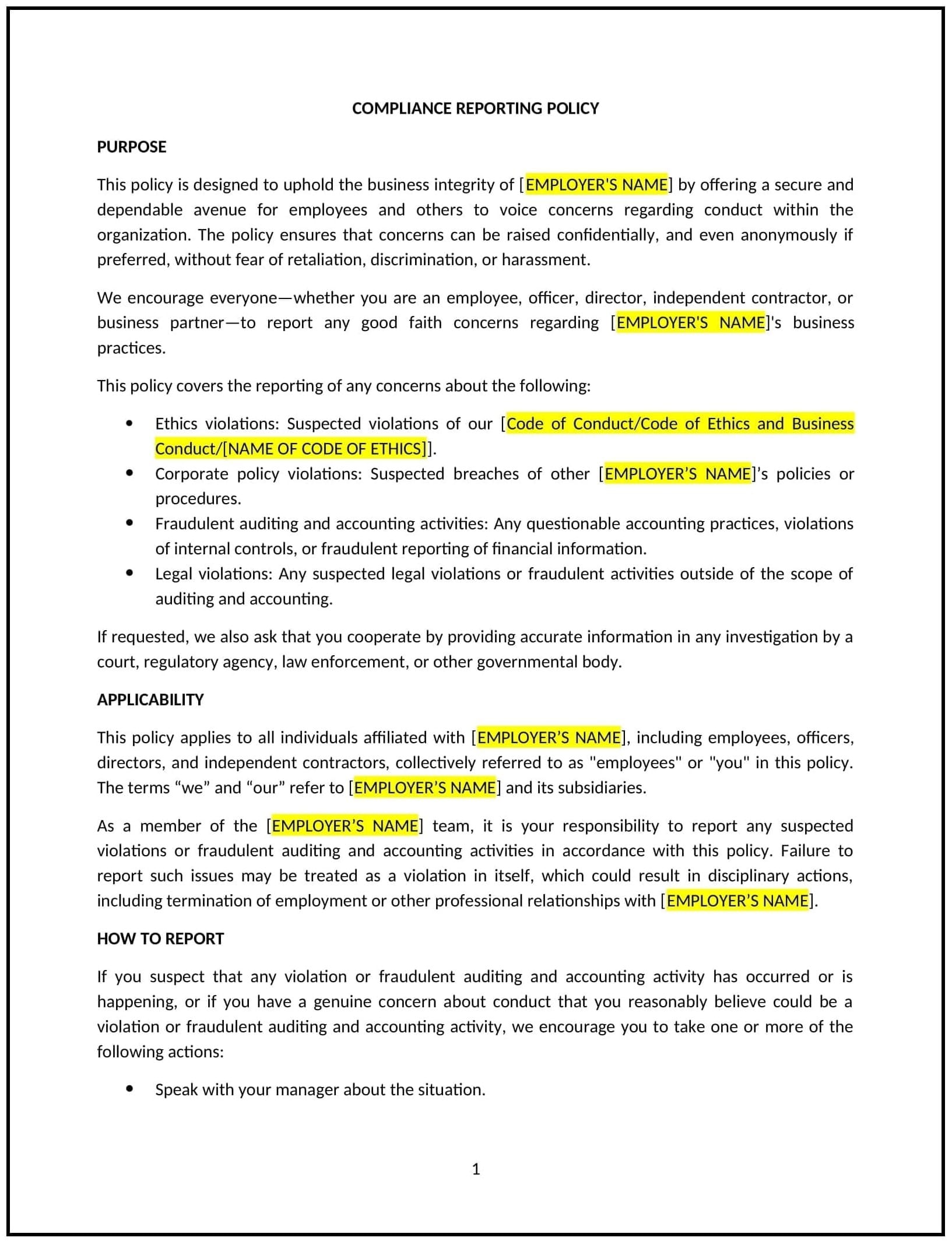
Similar templates
Where deals go from offer to paid
