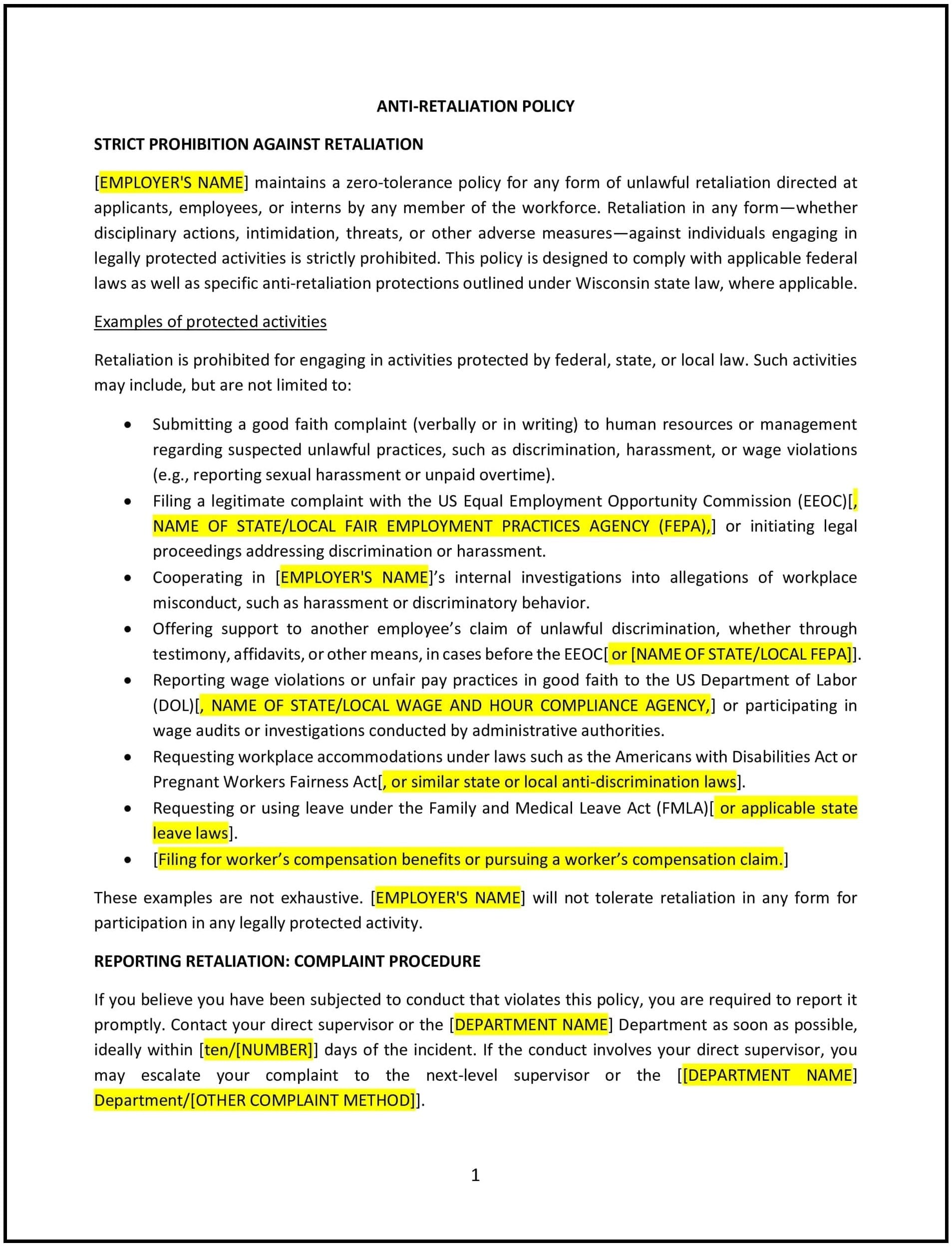
Anti-retaliation policy (Wisconsin): Free template
Protects employees from retaliation when they report misconduct or participate in investigations.
- Policies
- Wisconsin
This anti-retaliation policy is designed to protect employees in Wisconsin from retaliation for engaging in protected activities, such as reporting discrimination, harassment, safety violations, or other legal concerns. The policy promotes a safe and supportive work environment where employees feel confident raising issues without fear of adverse consequences.
By adopting this policy, businesses can create a culture of transparency, trust, and legal compliance, fostering an open environment for addressing workplace concerns.
How to use this anti-retaliation policy (Wisconsin)
- Clarify prohibited retaliation: Define what constitutes retaliation, including adverse actions such as demotion, termination, harassment, or other unfavorable treatment based on employees' protected activities.
- Encourage reporting: Provide clear instructions for employees on how to report concerns regarding retaliation or violations of the policy. Ensure that employees know how to reach HR or a designated representative for assistance.
- Outline investigation procedures: Specify the process for investigating retaliation complaints, ensuring fairness and confidentiality throughout the investigation.
- Establish consequences for retaliation: Clearly describe the potential consequences for those found guilty of retaliating against employees, including disciplinary actions or termination.
- Support compliance: Ensure the policy aligns with both state and federal laws, including Wisconsin’s labor laws and federal anti-retaliation statutes.
Benefits of using an anti-retaliation policy (Wisconsin)
Adopting this anti-retaliation policy provides several advantages for businesses in Wisconsin:
- Fosters trust: Promotes a culture where employees feel safe to voice concerns, leading to stronger relationships between staff and management.
- Supports compliance: Promotes alignment with federal and state labor laws, helping businesses avoid legal risks associated with retaliation claims.
- Improves morale: Demonstrates a commitment to fair treatment, reducing fear and promoting a positive, open workplace culture.
- Reduces liability: Mitigates the risk of lawsuits or legal penalties by taking a proactive stance against retaliation in the workplace.
- Encourages transparency: Encourages employees to report unethical behavior, leading to improved business practices and a healthier workplace environment.
Tips for using an anti-retaliation policy (Wisconsin)
- Promote awareness: Regularly communicate the policy to all employees, including during onboarding, training sessions, and periodic reminders.
- Train leadership: Provide training for managers and supervisors on identifying and preventing retaliation and how to handle complaints in compliance with the policy.
- Monitor the workplace: Keep an eye out for any signs of retaliation and take prompt action to address concerns before they escalate.
- Document actions: Maintain thorough records of any complaints, investigations, and actions taken to ensure transparency and accountability.
- Encourage feedback: Create channels for employees to provide anonymous feedback on the effectiveness of the policy, helping to refine and improve the system over time.
Frequently asked questions (FAQs)
Similar templates
Where deals go from offer to paid
