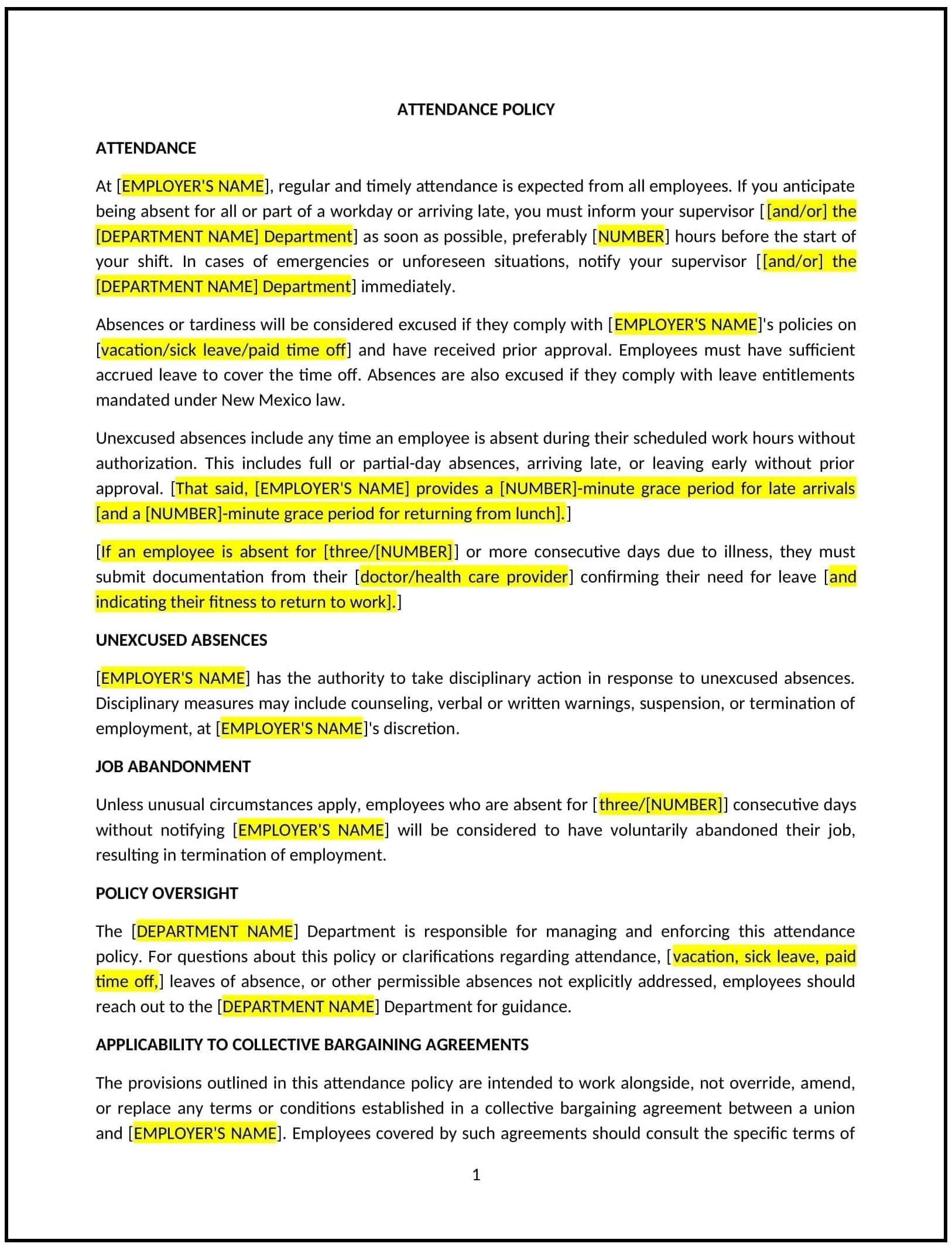
Attendance policy (New Mexico): Free template
Outlines expectations for punctuality, attendance, and procedures for reporting absences or tardiness.
- Policies
- New Mexico
Attendance policy (New Mexico)
This attendance policy is designed to help New Mexico businesses establish clear expectations regarding employee attendance, punctuality, and absence management. It outlines the process for requesting time off, the consequences of excessive absenteeism, and the procedures for tracking attendance.
By adopting this policy, New Mexico businesses can maintain operational efficiency, reduce disruptions, and foster a fair and consistent approach to managing employee attendance.
How to use this attendance policy (New Mexico)
- Define attendance expectations: Clearly outline expectations for regular attendance and punctuality, including the business’s definition of acceptable attendance behavior and expectations for all employees.
- Set procedures for requesting time off: Establish a formal process for requesting time off, including how much notice is required, the preferred method of submission (e.g., email, online request form), and approval procedures.
- Address various types of absences: Specify different categories of absences, including sick leave, vacation, personal leave, and other authorized or unauthorized absences, and how each will be treated.
- Include consequences for excessive absenteeism: Clearly define the consequences for excessive absenteeism, such as warnings, performance reviews, or potential disciplinary actions.
- Outline New Mexico-specific considerations: Incorporate any state-specific requirements, such as New Mexico's sick leave laws or other regional labor regulations related to attendance management.
Benefits of using this attendance policy (New Mexico)
Implementing this policy provides New Mexico businesses with several advantages:
- Improves operational efficiency: By setting clear expectations and procedures for attendance, businesses can better plan for absences and maintain productivity.
- Promotes fairness and consistency: Ensures that attendance issues are handled consistently across all employees, fostering a sense of fairness in the workplace.
- Reduces absenteeism: Clear attendance expectations and consequences can help reduce unplanned absences and encourage employees to adhere to their work schedules.
- Supports employee accountability: Establishes a transparent system for employees to request time off and ensures they are held accountable for their attendance patterns.
- Aligns with New Mexico regulations: Ensures compliance with New Mexico state laws related to paid sick leave and other relevant labor laws, reducing the risk of legal complications.
Tips for using this attendance policy (New Mexico)
- Communicate the policy clearly: Ensure all employees understand the policy at the outset of their employment, and provide reminders during performance reviews or other meetings.
- Provide flexibility for unforeseen circumstances: Consider allowing employees to request time off with reasonable notice in cases of emergencies or unexpected situations.
- Keep accurate records: Track attendance consistently, using a standardized system to record absences, tardiness, and leave requests.
- Review attendance regularly: Periodically review attendance patterns to identify any potential issues and address them before they escalate.
- Be proactive in addressing attendance issues: Address frequent or habitual absenteeism early through counseling or performance management, offering support where appropriate.
Frequently asked questions (FAQs)
Similar templates
Where deals go from offer to paid
