Background check policy (Pennsylvania): Free template
Outlines when and how background screenings are conducted in alignment with hiring laws and privacy standards.
- Policies
- Pennsylvania
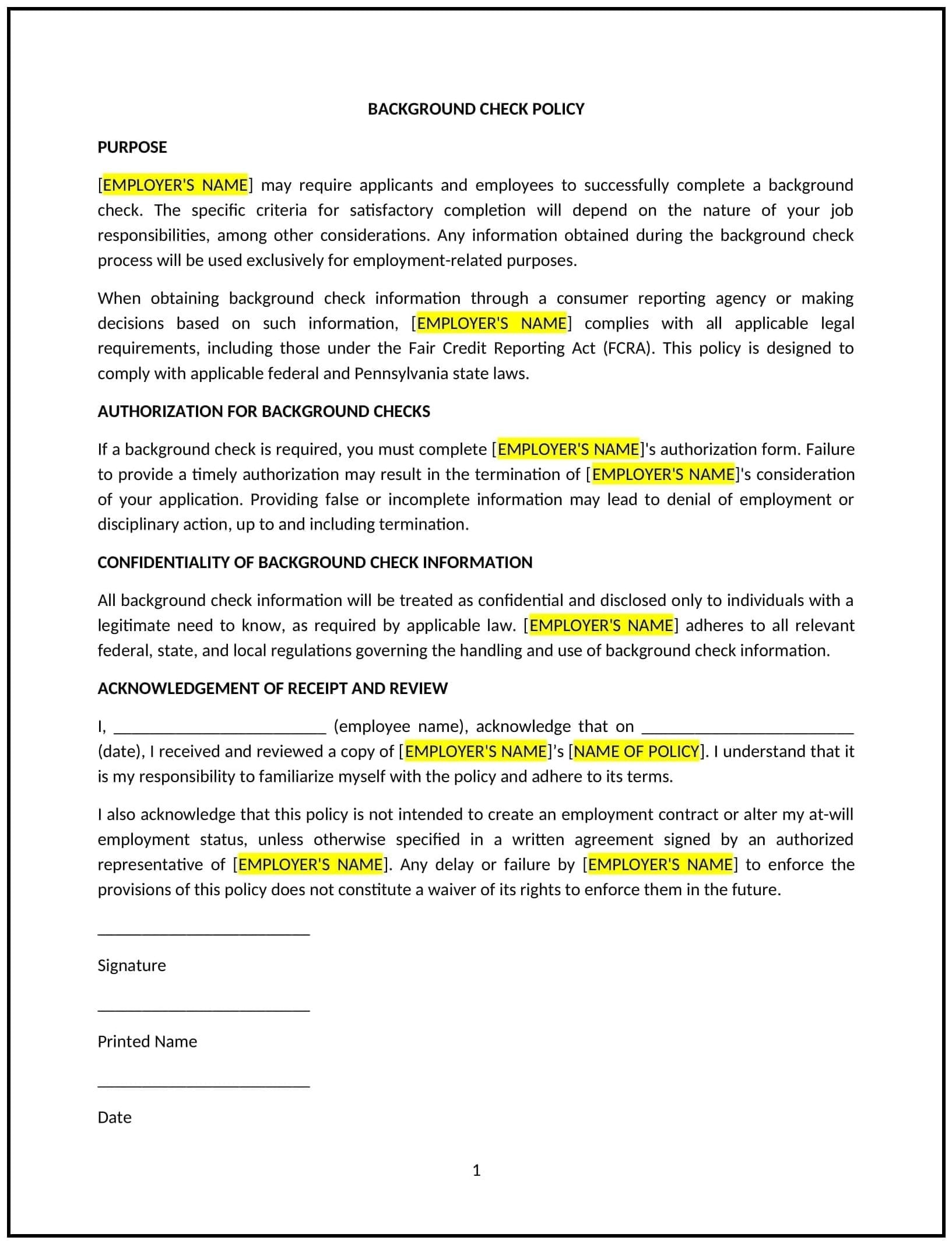
Background check policy (Pennsylvania)
This background check policy is designed to help businesses in Pennsylvania make informed hiring decisions while complying with state and federal regulations. Whether hiring for roles in sensitive industries or managing a growing team, this template outlines clear procedures for conducting background checks that respect candidate rights and adhere to Pennsylvania-specific laws, such as the Pennsylvania Criminal History Record Information Act (CHRIA).
By using this template, businesses can establish consistent screening processes, minimize risks, and build a trustworthy workforce.
How to use this background check policy (Pennsylvania)
- Define the purpose: Specify the purpose of conducting background checks, such as verifying credentials, assessing suitability for sensitive roles, or maintaining workplace safety.
- Outline screening procedures: Detail the types of checks conducted, such as criminal records, education verification, employment history, or credit checks, and specify when they will occur.
- Address compliance requirements: Ensure background checks align with Pennsylvania and federal laws, such as the Fair Credit Reporting Act (FCRA) and CHRIA.
- Include consent procedures: Explain how businesses will obtain written consent from candidates before conducting background checks.
- Establish result-handling guidelines: Define how findings will be evaluated and used in hiring decisions, ensuring fairness and compliance with Pennsylvania’s Ban the Box legislation where applicable.
Benefits of using a background check policy (Pennsylvania)
A well-structured background check policy supports informed decision-making and legal compliance. Here's how it helps:
- Promotes consistency: Establishes standardized procedures for conducting background checks, reducing bias in hiring practices.
- Supports compliance: Aligns with Pennsylvania-specific regulations, such as CHRIA, and federal laws like the FCRA.
- Enhances workplace safety: Reduces risks by ensuring candidates meet the organization’s standards for integrity and reliability.
- Protects candidate rights: Ensures transparency in the screening process while safeguarding sensitive information.
- Reduces hiring risks: Helps businesses make informed hiring decisions, minimizing the potential for fraud, misconduct, or liability.
Tips for using a background check policy (Pennsylvania)
- Communicate expectations: Clearly explain the background check process to candidates during recruitment to ensure transparency and understanding.
- Train hiring managers: Provide training to ensure managers understand the legal requirements and proper application of background check results.
- Focus on relevance: Ensure the scope of background checks is appropriate for the role being filled, avoiding unnecessary or overly intrusive screenings.
- Maintain confidentiality: Safeguard sensitive candidate information obtained during the background check process to protect their privacy.
- Review periodically: Update the policy to reflect changes in Pennsylvania laws, such as updates to CHRIA or Ban the Box requirements, or organizational practices.
Frequently asked questions (FAQs)
Similar templates
Where deals go from offer to paid
