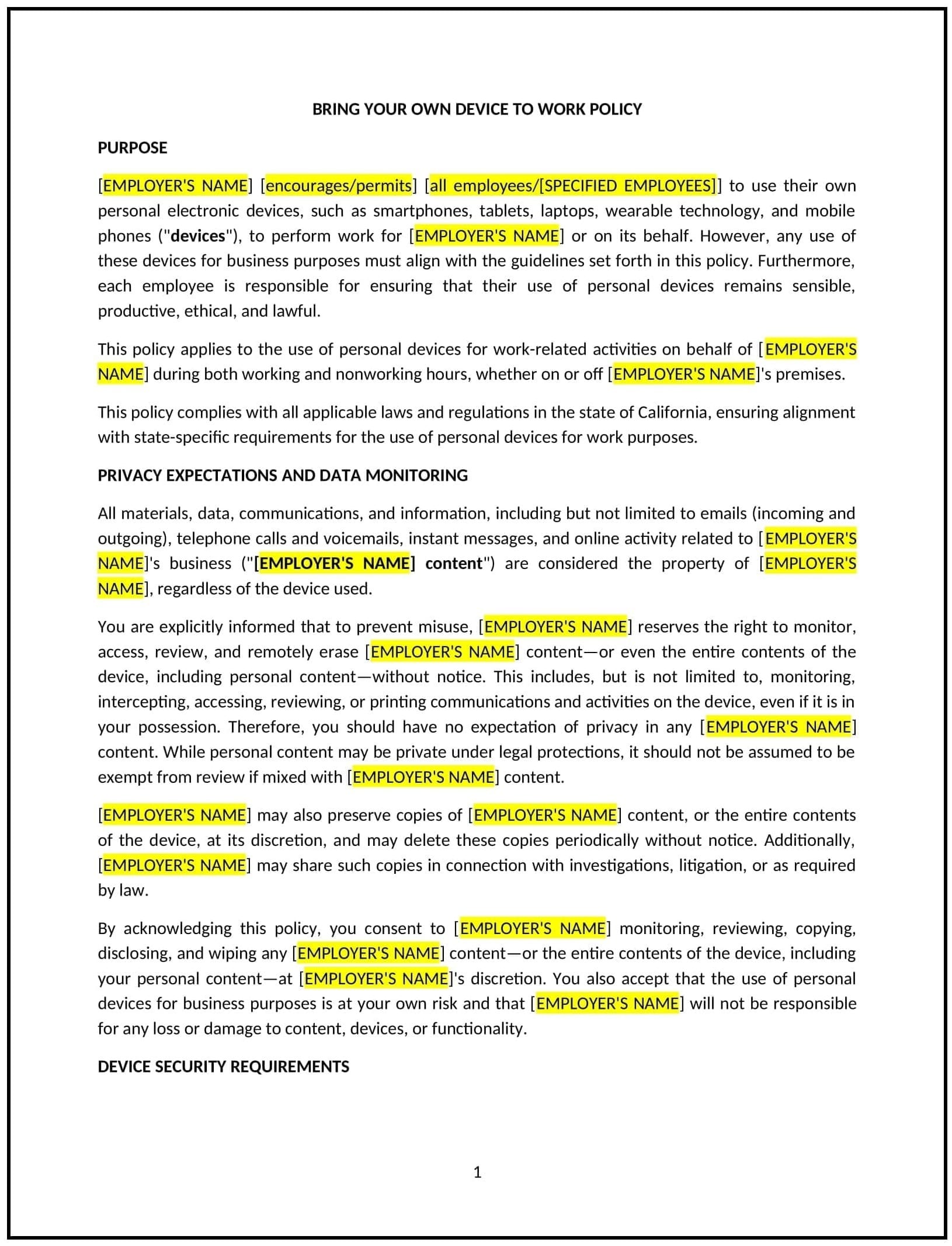
Bring your own device to work policy (California): Free template
Regulates personal device use for work, addressing security, support, and privacy concerns in California.
- Policies
- California
Bring your own device to work policy (California)
In California, a bring your own device (BYOD) policy provides businesses with guidelines for employees who use personal devices, such as smartphones or laptops, for work purposes. This policy helps businesses address security, privacy, and reimbursement concerns while supporting compliance with California labor laws, including those governing expense reimbursement.
This policy outlines acceptable use, security requirements, and the responsibilities of both employees and employers. By implementing this policy, California businesses can balance the flexibility of BYOD practices with operational security and legal compliance.
How to use this bring your own device to work policy (California)
- Define acceptable use: Specify the types of activities and applications employees may use their devices for, such as accessing work emails or business systems.
- Establish security requirements: Require employees to implement security measures, such as strong passwords, encryption, and remote wipe capabilities, to protect sensitive business data.
- Address reimbursement: Outline procedures for reimbursing employees for reasonable business-related expenses incurred while using personal devices, in compliance with California law.
- Communicate monitoring practices: Inform employees if and how their devices will be monitored when used for work purposes.
- Clarify ownership and liability: Specify that personal devices remain the property of the employee, and outline responsibilities for maintenance, repair, or loss of the device.
Benefits of using this bring your own device to work policy (California)
This policy offers several advantages for California businesses:
- Supports compliance: Reflects California labor laws regarding expense reimbursement and privacy.
- Enhances flexibility: Allows employees to use familiar devices while maintaining business efficiency.
- Protects data security: Establishes measures to safeguard business data on personal devices.
- Reduces costs: Minimizes the need for the business to provide company-owned devices to employees.
- Encourages accountability: Clarifies expectations and responsibilities for both employees and employers.
Tips for using this bring your own device to work policy (California)
- Address California-specific considerations: Ensure the policy reflects labor laws requiring reimbursement for reasonable expenses related to work use of personal devices.
- Train employees: Provide guidance on securing personal devices and following the business’s BYOD policy.
- Implement monitoring tools: Use software to monitor work-related activities on personal devices while respecting employee privacy.
- Keep data separate: Encourage employees to use secure apps or virtual private networks (VPNs) to separate personal and work-related data.
- Review regularly: Update the policy to reflect changes in technology, security risks, or California legal requirements.
Frequently asked questions (FAQs)
Similar templates
Where deals go from offer to paid
