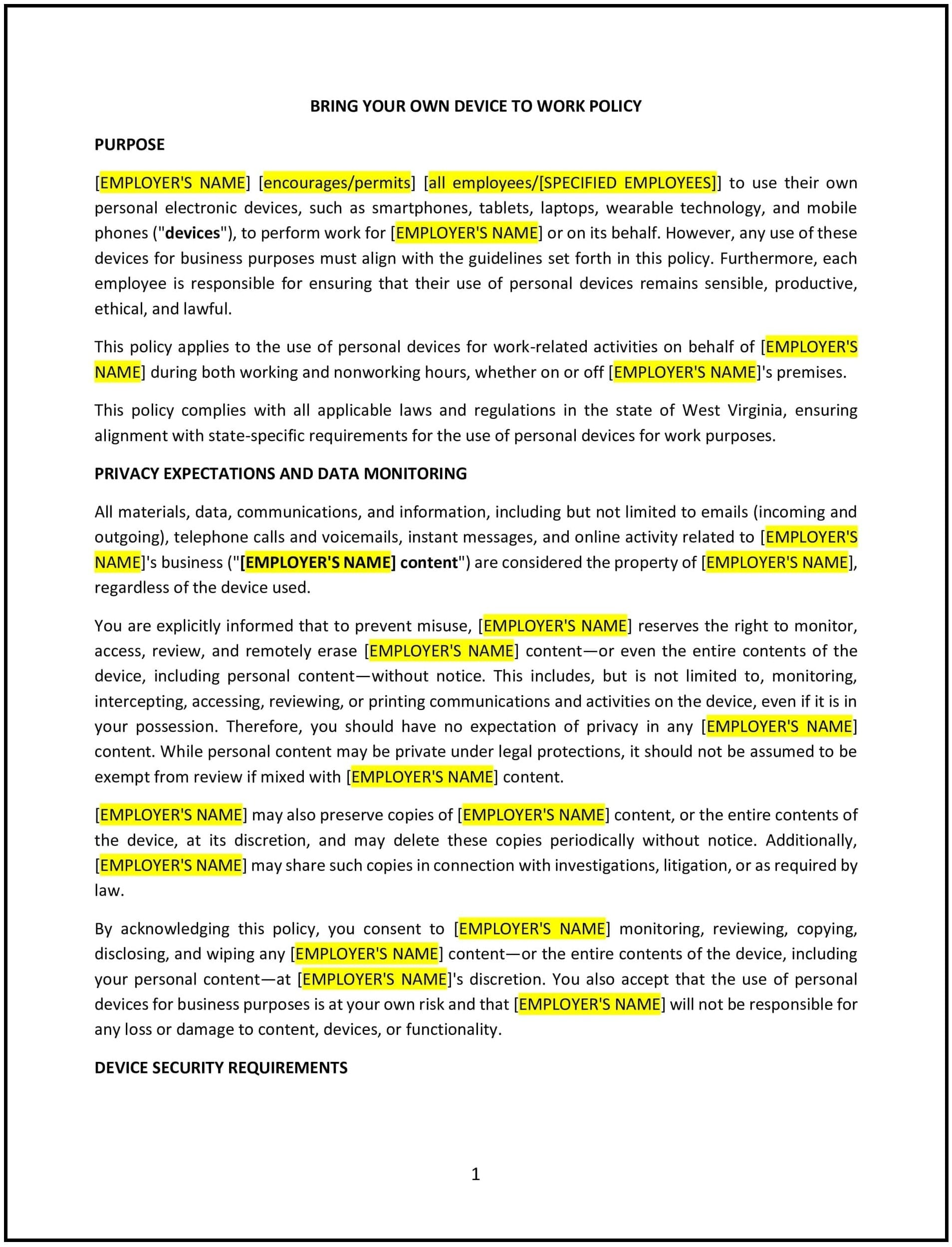
Bring your own device to work policy (West Virginia): Free template
Outlines rules for using personal devices at work while ensuring data security and IT compliance.
- Policies
- West Virginia
Bring your own device to work policy (West Virginia)
A bring your own device (BYOD) policy helps West Virginia businesses manage the use of personal devices (such as smartphones, tablets, and laptops) for work-related tasks. This policy outlines the guidelines for employees using their personal devices for business purposes, including security measures, acceptable use, and the company’s expectations for data protection and privacy.
By implementing this policy, businesses can reduce costs, improve flexibility, and maintain secure and efficient device usage while protecting sensitive business data.
How to use this bring your own device to work policy (West Virginia)
- Define allowed devices: Clearly specify which types of personal devices are allowed for work purposes (e.g., smartphones, laptops, tablets) and whether any specific models or operating systems are required.
- Set security requirements: Establish security protocols for personal devices, such as mandatory password protection, encryption, and the use of company-approved mobile security software.
- Address data protection: Specify how company data will be managed and protected on personal devices, including the use of virtual private networks (VPNs), access control measures, and data backup procedures.
- Establish acceptable use: Outline acceptable and unacceptable uses of personal devices for work purposes, such as restrictions on personal use during work hours, the prohibition of downloading unauthorized software, or accessing inappropriate content.
- Define access to company systems: Specify how employees’ devices will access company systems, such as through secure networks or company-provided software, and outline any restrictions or limitations on device access to sensitive data or systems.
- Provide for data loss or theft: Outline procedures for managing lost or stolen devices, including immediate reporting, remote wiping of company data, and steps for protecting sensitive information in the event of device loss.
- Set reimbursement and support guidelines: Clarify whether the company will reimburse employees for device-related expenses (e.g., data plans, hardware) or provide technical support for personal devices used for work.
Benefits of using this bring your own device to work policy (West Virginia)
This policy offers several benefits for West Virginia businesses:
- Reduces company costs: By allowing employees to use their personal devices for work, businesses can reduce the cost of providing company-owned devices and hardware.
- Increases flexibility: Employees can work more flexibly by using devices they are comfortable with, which can lead to increased productivity and employee satisfaction.
- Promotes security: By setting clear security requirements and using monitoring tools, businesses can ensure that personal devices meet the necessary security standards and protect sensitive company data.
- Supports remote work: BYOD policies can make it easier for employees to work remotely or access company systems on the go, increasing overall work flexibility.
- Maintains control: Establishing clear guidelines for device use helps businesses maintain control over how personal devices are used, reducing the risk of misuse or data breaches.
Tips for using this bring your own device to work policy (West Virginia)
- Communicate the policy clearly: Ensure that all employees understand the security requirements, acceptable use guidelines, and procedures for using personal devices for work purposes.
- Provide training: Offer training to employees on how to secure their devices and follow company protocols to protect company data.
- Monitor usage: Implement a system for tracking which devices are being used for work purposes and ensure they meet the company’s security standards.
- Offer support: Consider providing technical support for employees’ devices, such as assistance with setting up security software or troubleshooting issues related to the use of personal devices for work.
- Regularly review: Review the policy periodically to ensure it remains effective, up-to-date with the latest technology trends, and in compliance with applicable security regulations.
Frequently asked questions (FAQs)
Similar templates
Where deals go from offer to paid
