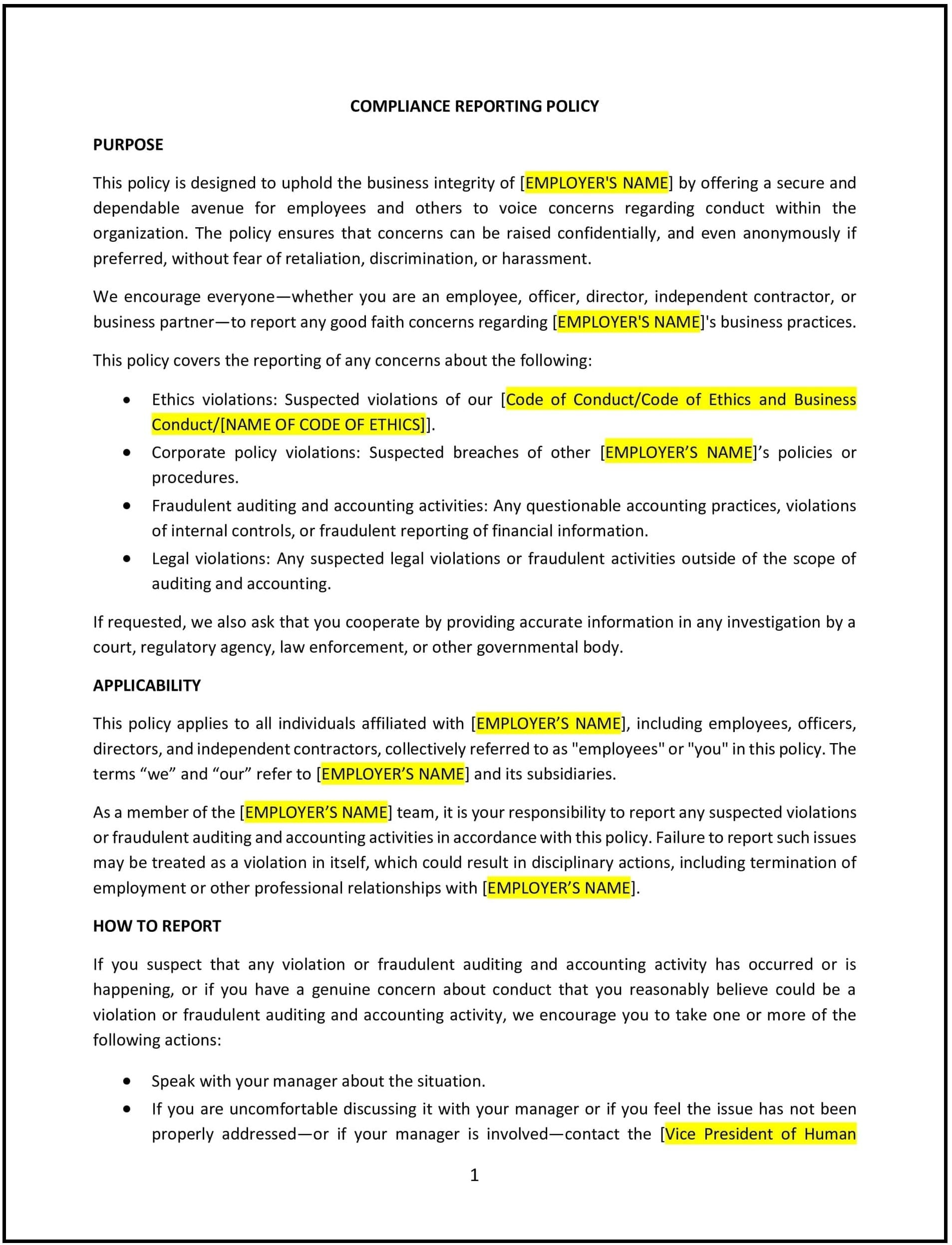
Compliance reporting policy (Delaware): Free template
Encourages confidential reporting of misconduct, protecting whistleblowers and ensuring compliance with Delaware law.
- Policies
- Delaware
Compliance reporting policy (Delaware)
A compliance reporting policy helps Delaware businesses establish a framework for employees to report violations of laws, regulations, or company policies. This policy outlines reporting procedures, protections for whistleblowers, and processes for investigating and addressing reported issues.
By implementing this policy, businesses can ensure transparency, support regulatory compliance, and foster a culture of accountability.
How to use this compliance reporting policy (Delaware)
- Define reportable issues: Clearly state the types of violations employees are encouraged to report, such as legal non-compliance, ethical breaches, or policy violations.
- Establish reporting procedures: Provide detailed instructions on how employees can report issues, including available channels such as hotlines, email, or designated officers.
- Ensure confidentiality: Emphasize the importance of maintaining confidentiality throughout the reporting and investigation process to protect whistleblowers.
- Protect whistleblowers: Include provisions that prohibit retaliation against employees who report concerns in good faith.
- Outline investigation processes: Describe how reported issues will be investigated, including timelines, responsible parties, and follow-up procedures.
- Communicate outcomes: Inform employees about the steps taken to address reported issues, while maintaining confidentiality as appropriate.
Benefits of using this compliance reporting policy (Delaware)
This policy offers several benefits for Delaware businesses:
- Promotes transparency: Encourages employees to report concerns, fostering an environment of openness and accountability.
- Supports regulatory compliance: Helps businesses identify and address potential violations promptly, reducing legal risks.
- Protects whistleblowers: Demonstrates a commitment to safeguarding employees who report concerns in good faith.
- Enhances company reputation: Shows a proactive approach to ethical practices and compliance, improving trust with employees and stakeholders.
- Reduces risks: Identifies and resolves issues early, minimizing the potential for regulatory fines or reputational damage.
Tips for using this compliance reporting policy (Delaware)
- Communicate the policy clearly: Ensure all employees understand their reporting options and the protections offered by the policy.
- Provide accessible reporting channels: Offer multiple, easy-to-use methods for employees to report concerns confidentially.
- Encourage a culture of accountability: Reinforce the importance of compliance and ethical behavior through training and leadership example.
- Monitor and review: Regularly assess the effectiveness of the policy and make adjustments as needed to improve reporting and investigation processes.
- Stay updated: Ensure the policy aligns with Delaware laws and industry regulations by periodically reviewing and revising it.
Frequently asked questions (FAQs)
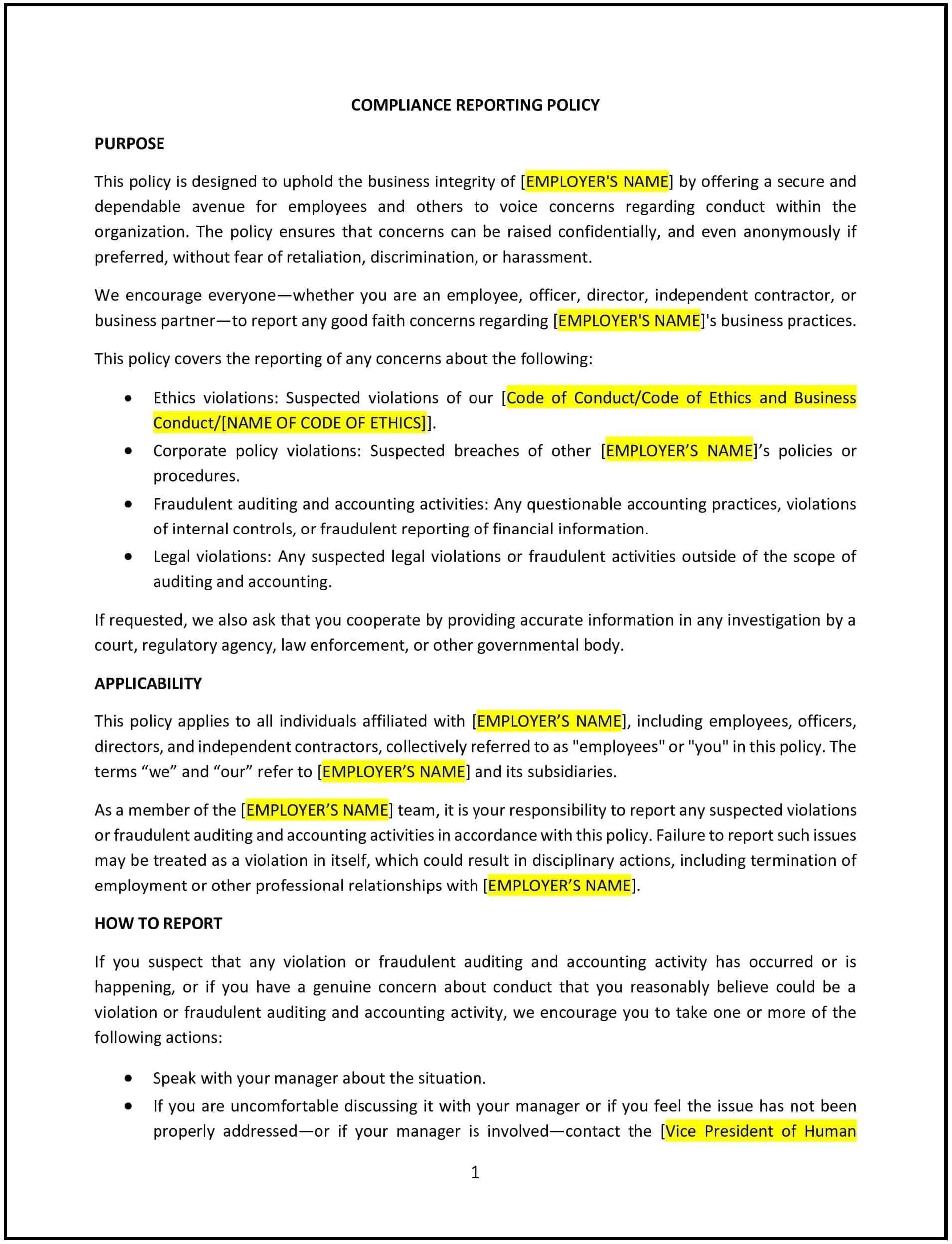
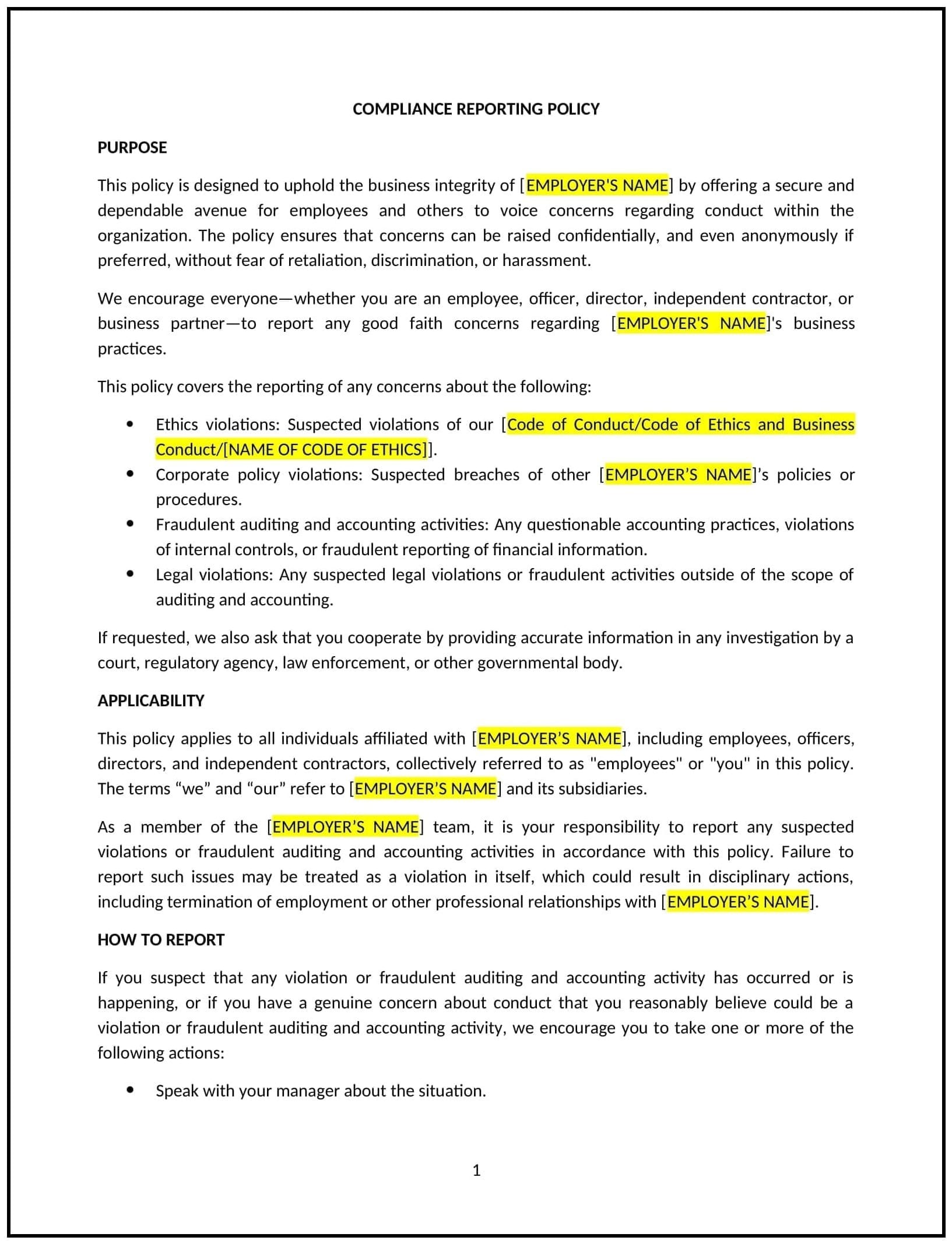
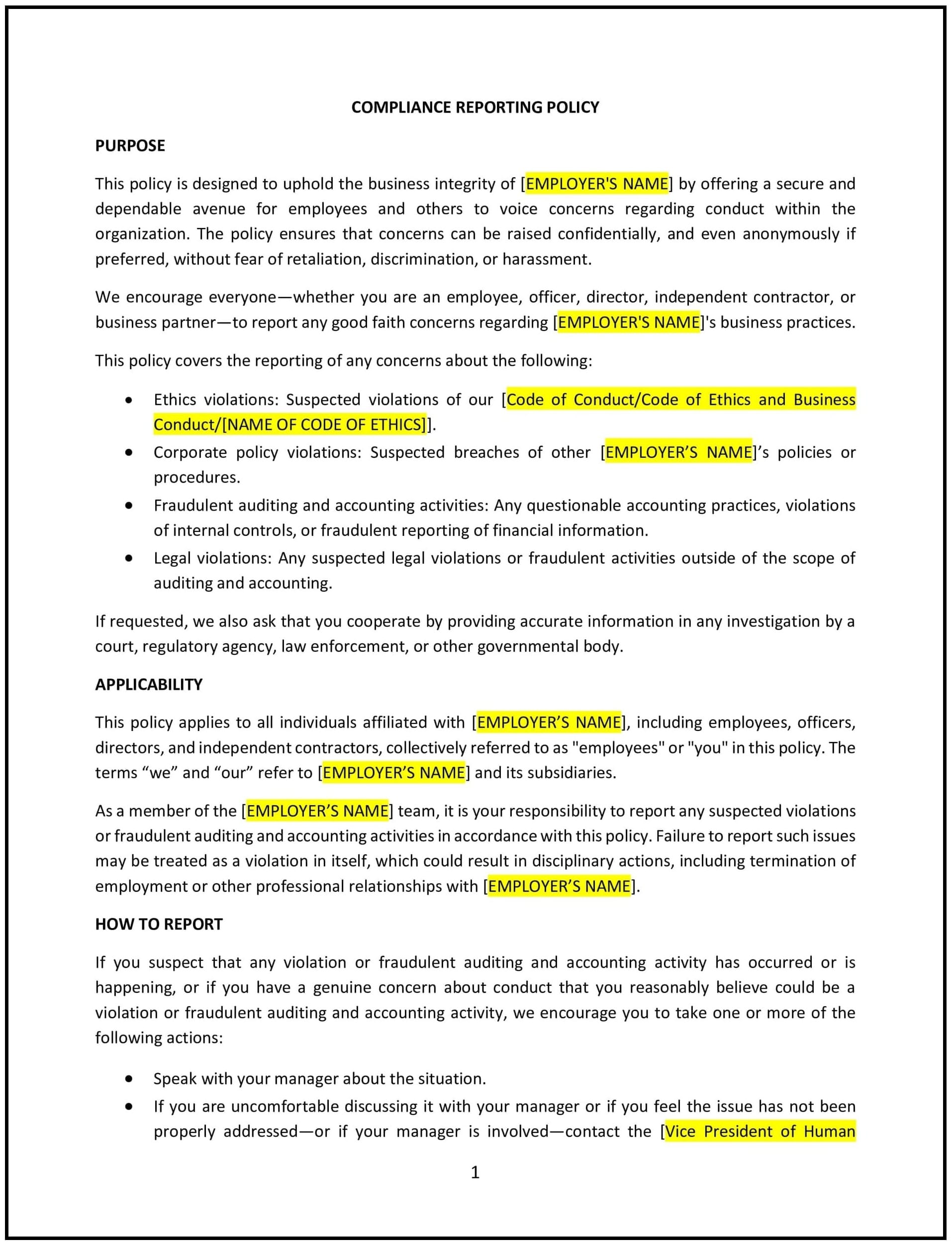
Similar templates
Where deals go from offer to paid
