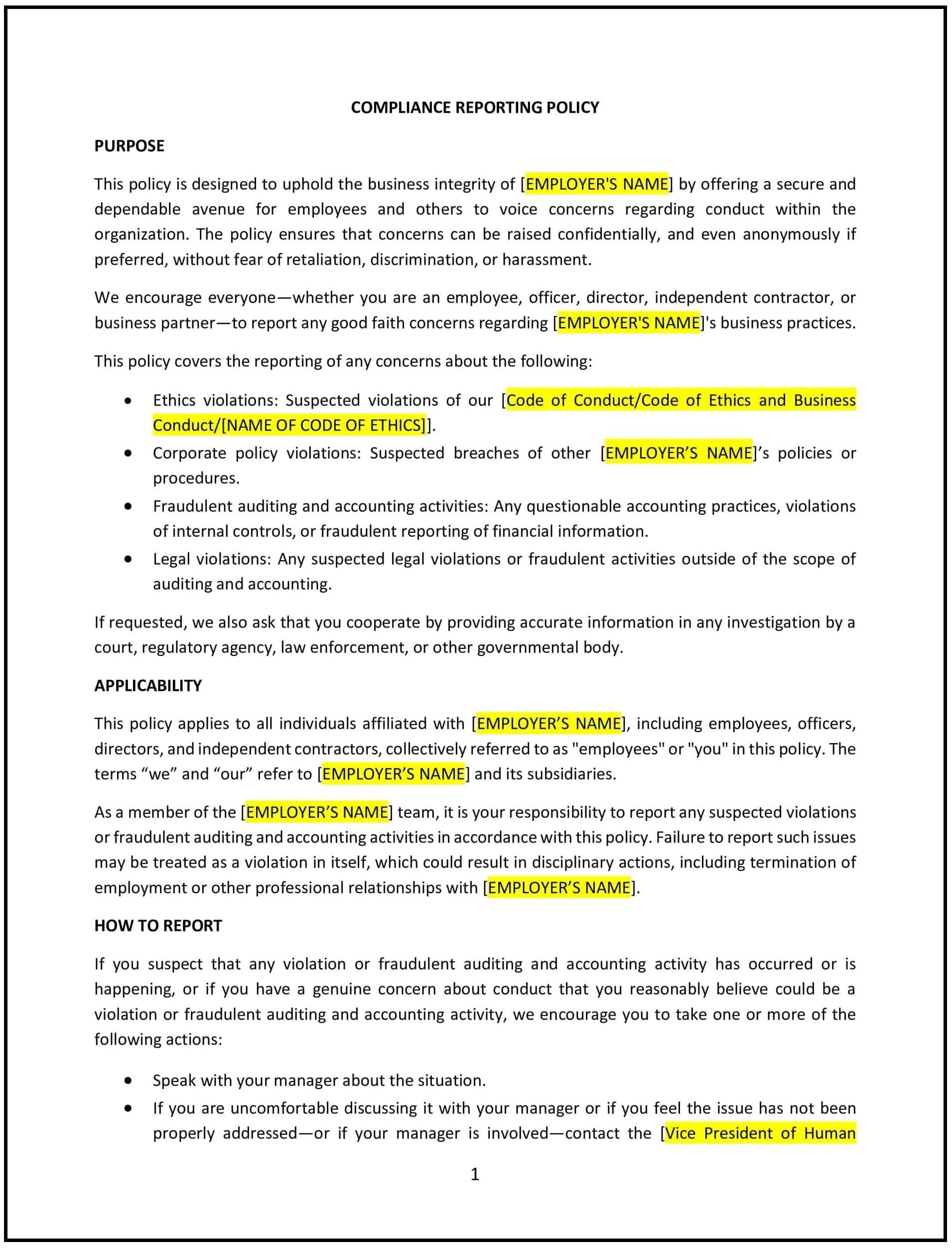
Compliance reporting policy (Georgia): Free template
Encourages confidential reporting of legal or policy violations, providing whistleblower protections under Georgia employment laws.
- Policies
- Georgia
Compliance reporting policy (Georgia)
This compliance reporting policy is designed to help Georgia businesses establish clear procedures for employees to report suspected violations of company policies, regulations, or laws. The policy outlines reporting channels, confidentiality assurances, and protections against retaliation, fostering a culture of accountability and ethical conduct.
By implementing this policy, businesses can address issues proactively, reduce risks, and promote transparency across the organization.
How to use this compliance reporting policy (Georgia)
- Define reportable issues: Clearly state the types of violations employees should report, such as fraud, harassment, safety concerns, or unethical behavior.
- Establish reporting channels: Provide employees with multiple options for reporting concerns, such as designated managers, HR, anonymous hotlines, or online reporting tools.
- Assure confidentiality: Emphasize that all reports will be handled confidentially to the extent possible, and sensitive information will be protected.
- Prohibit retaliation: Clearly state that employees who report concerns in good faith are protected from retaliation and outline the consequences for engaging in retaliatory behavior.
- Outline the investigation process: Describe how reports will be reviewed, investigated, and resolved, including timelines and communication with the employee who submitted the report.
- Provide training: Offer regular training to employees and managers on recognizing and reporting compliance concerns, as well as their roles in supporting the policy.
- Review and update regularly: Periodically review the policy to ensure it aligns with Georgia laws, workplace needs, and feedback from employees.
Benefits of using this compliance reporting policy (Georgia)
Implementing this policy provides several advantages for Georgia businesses:
- Promotes accountability: Employees understand their responsibility to report concerns, fostering a culture of ethical behavior.
- Mitigates risks: Addressing compliance issues early helps businesses avoid legal, financial, and reputational damage.
- Protects employees: The policy provides employees with a safe and confidential way to voice concerns, improving trust and engagement.
- Enhances transparency: Clear reporting procedures demonstrate the business’s commitment to ethical conduct and fair practices.
- Reflects Georgia-specific considerations: Tailoring the policy to local regulations and cultural norms ensures its relevance and effectiveness.
Tips for using this compliance reporting policy (Georgia)
- Communicate the policy: Ensure employees understand the importance of reporting concerns and know how to access reporting channels.
- Monitor reporting effectiveness: Regularly assess the reporting process to ensure it is user-friendly, confidential, and effective in resolving issues.
- Address concerns promptly: Investigate all reports thoroughly and take appropriate corrective actions to reinforce trust in the reporting process.
- Involve leadership: Encourage senior leaders to model ethical behavior and actively support compliance reporting initiatives.
- Provide feedback: Where appropriate, share outcomes of investigations with employees to demonstrate the organization’s commitment to resolving concerns.
Frequently asked questions (FAQs)
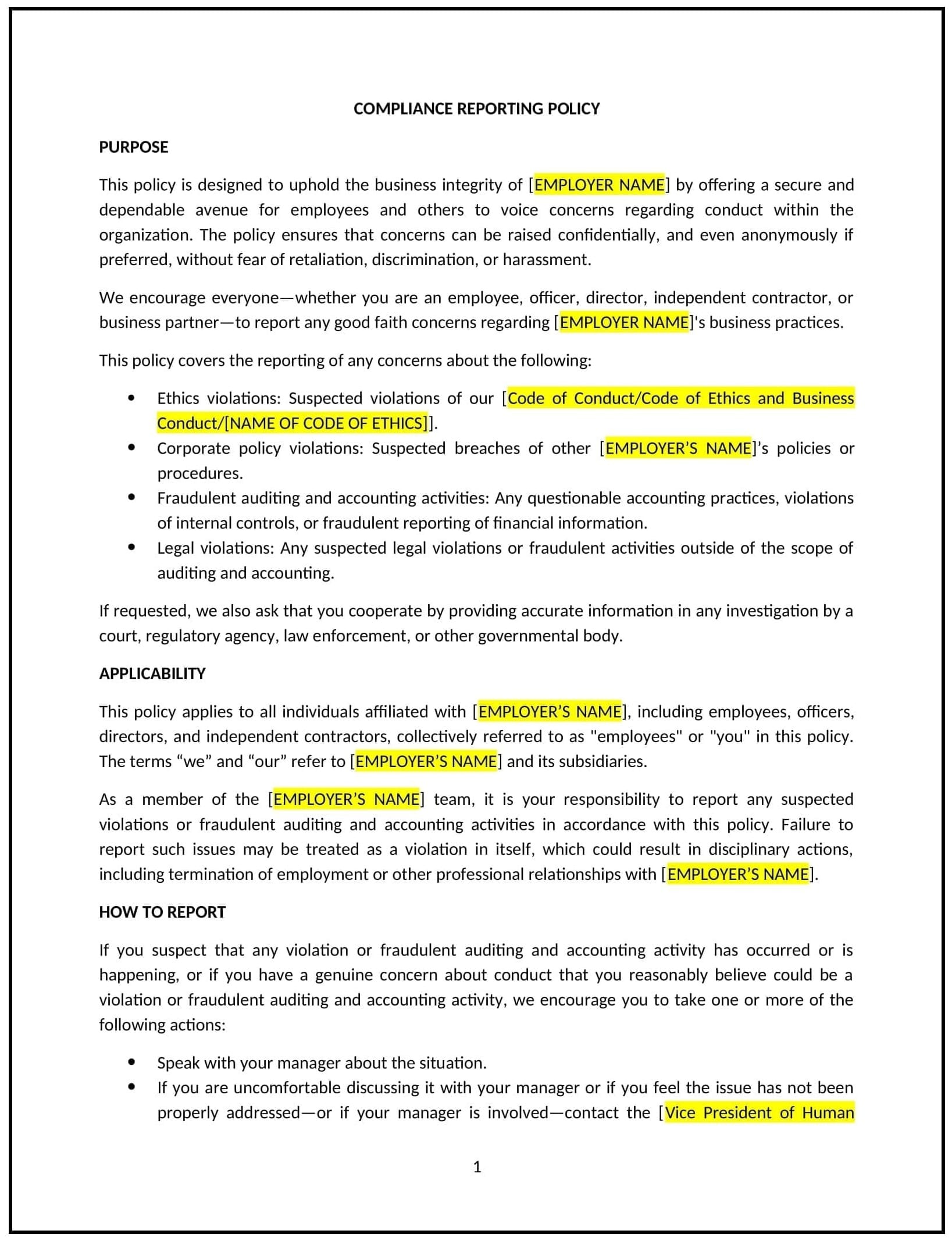
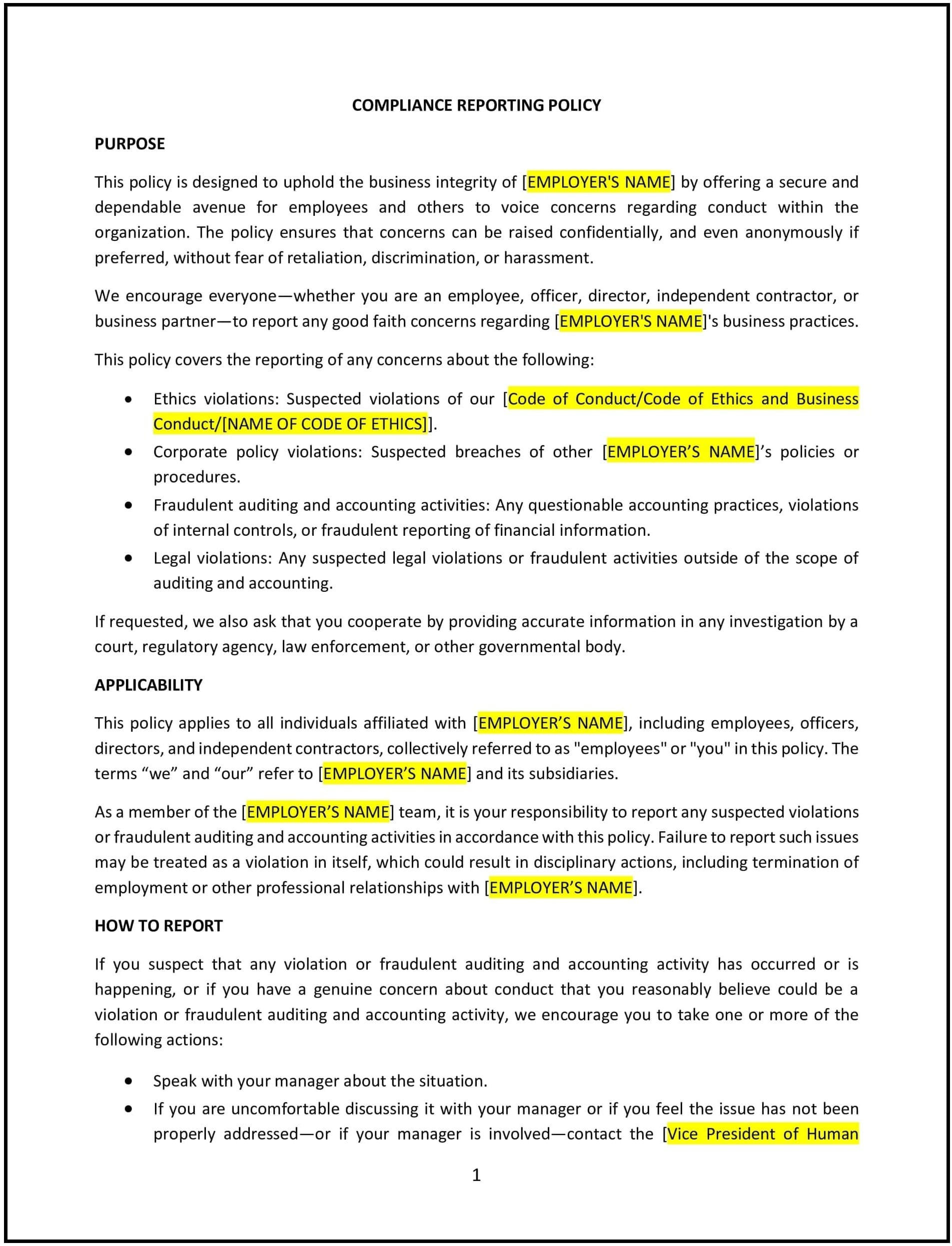
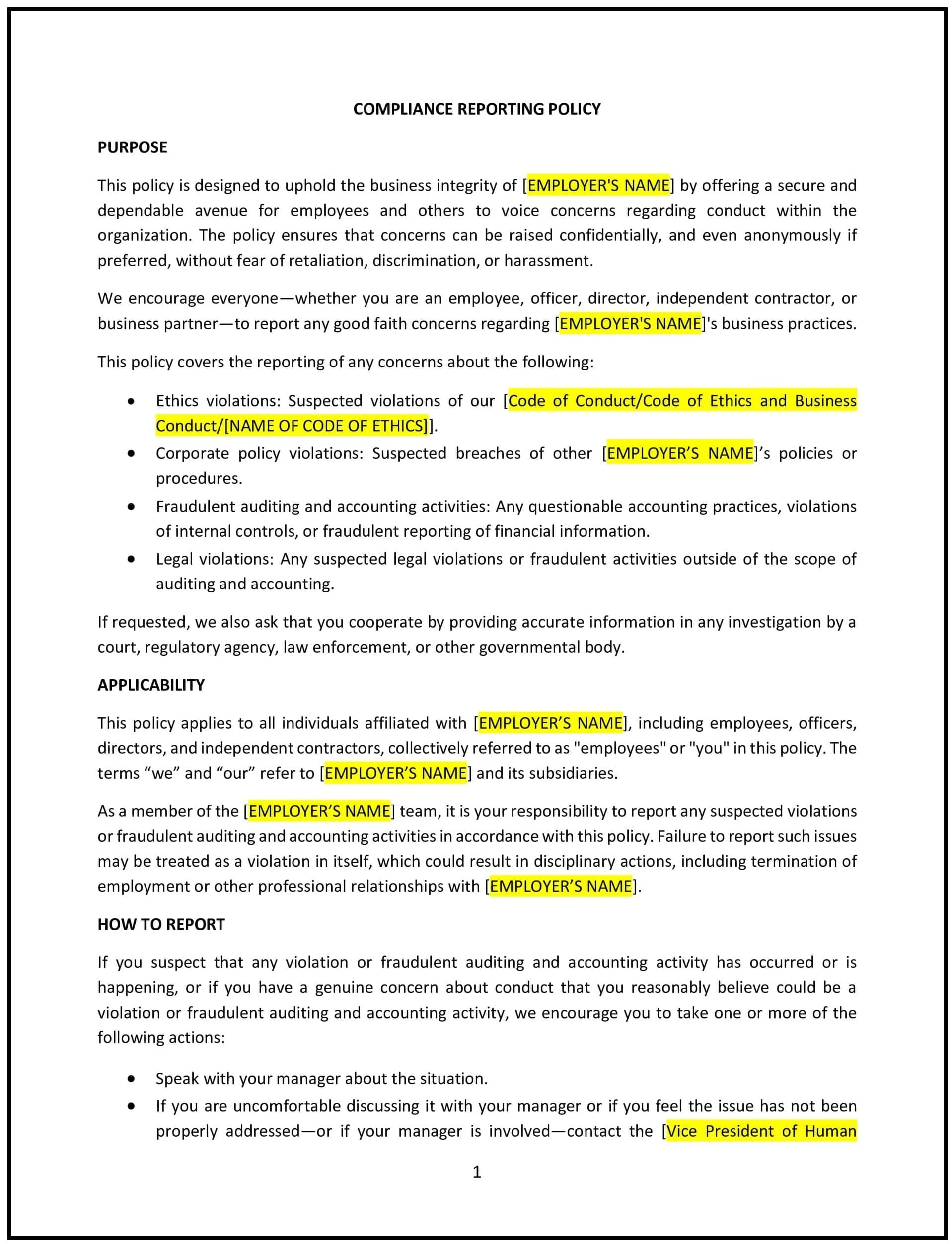
Similar templates
Where deals go from offer to paid
