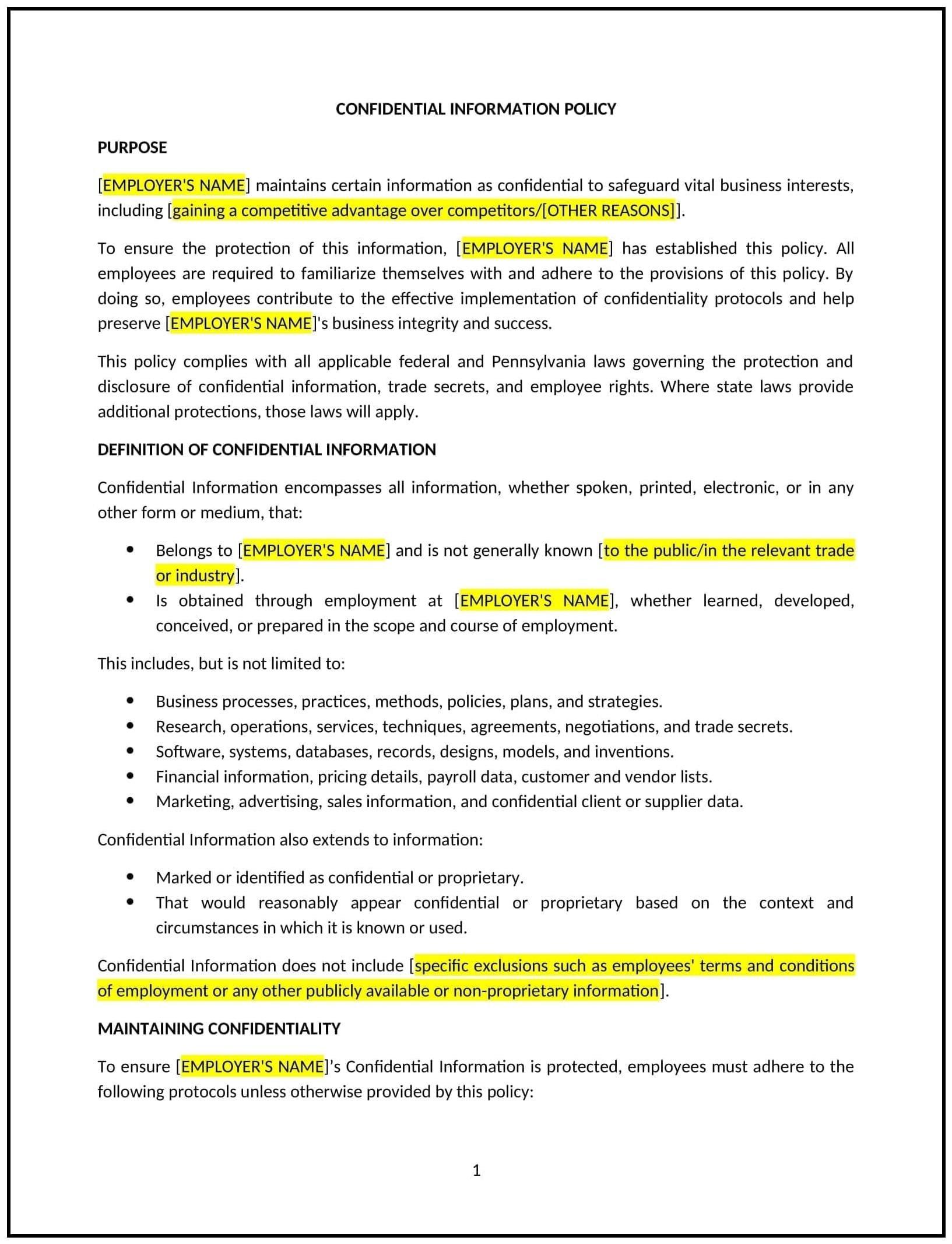
Confidentiality policy (Pennsylvania): Free template
Safeguards sensitive business and employee information through clear handling and disclosure rules.
- Policies
- Pennsylvania
Confidentiality policy (Pennsylvania)
This confidentiality policy is designed to help businesses in Pennsylvania protect sensitive information, including trade secrets, client data, and proprietary materials. Whether operating in healthcare, manufacturing, or other industries, this template provides clear guidelines for managing confidential information in compliance with Pennsylvania and federal regulations.
By using this template, businesses can safeguard their intellectual property, maintain client trust, and reduce the risk of unauthorized disclosures.
How to use this confidentiality policy (Pennsylvania)
- Define confidential information: Clearly specify what constitutes confidential information, such as customer data, trade secrets, and internal reports.
- Outline employee responsibilities: Provide guidance on how employees should handle, share, and protect confidential information in the course of their work.
- Set access controls: Detail how access to confidential information is limited to authorized personnel and outline any approval processes.
- Include reporting procedures: Establish protocols for employees to report unauthorized disclosures or potential breaches.
- Reflect Pennsylvania-specific considerations: Tailor the policy to include state-specific regulations, such as requirements for protecting healthcare or financial information.
Benefits of using a confidentiality policy (Pennsylvania)
A well-structured confidentiality policy supports information security and business integrity. Here's how it helps:
- Protects sensitive data: Safeguards trade secrets, customer information, and other confidential materials from unauthorized access or disclosure.
- Promotes trust: Demonstrates a commitment to protecting client and employee information, fostering stronger relationships.
- Encourages accountability: Sets clear expectations for handling and sharing confidential information within the organization.
- Reduces risks: Minimizes legal and reputational risks associated with breaches or unauthorized disclosures.
- Aligns with local requirements: Reflects Pennsylvania-specific laws and practices, ensuring compliance with state and federal regulations.
Tips for using a confidentiality policy (Pennsylvania)
- Communicate expectations: Share the policy with employees during onboarding and provide regular reminders about confidentiality responsibilities.
- Train employees: Offer training on best practices for protecting sensitive information and recognizing potential risks.
- Monitor compliance: Implement systems to monitor access to and usage of confidential information, identifying potential breaches early.
- Include NDAs: Use non-disclosure agreements where appropriate to provide additional legal protection for sensitive information.
- Review periodically: Update the policy to reflect changes in Pennsylvania laws, industry standards, or organizational needs.
Frequently asked questions (FAQs)
Similar templates
Where deals go from offer to paid
