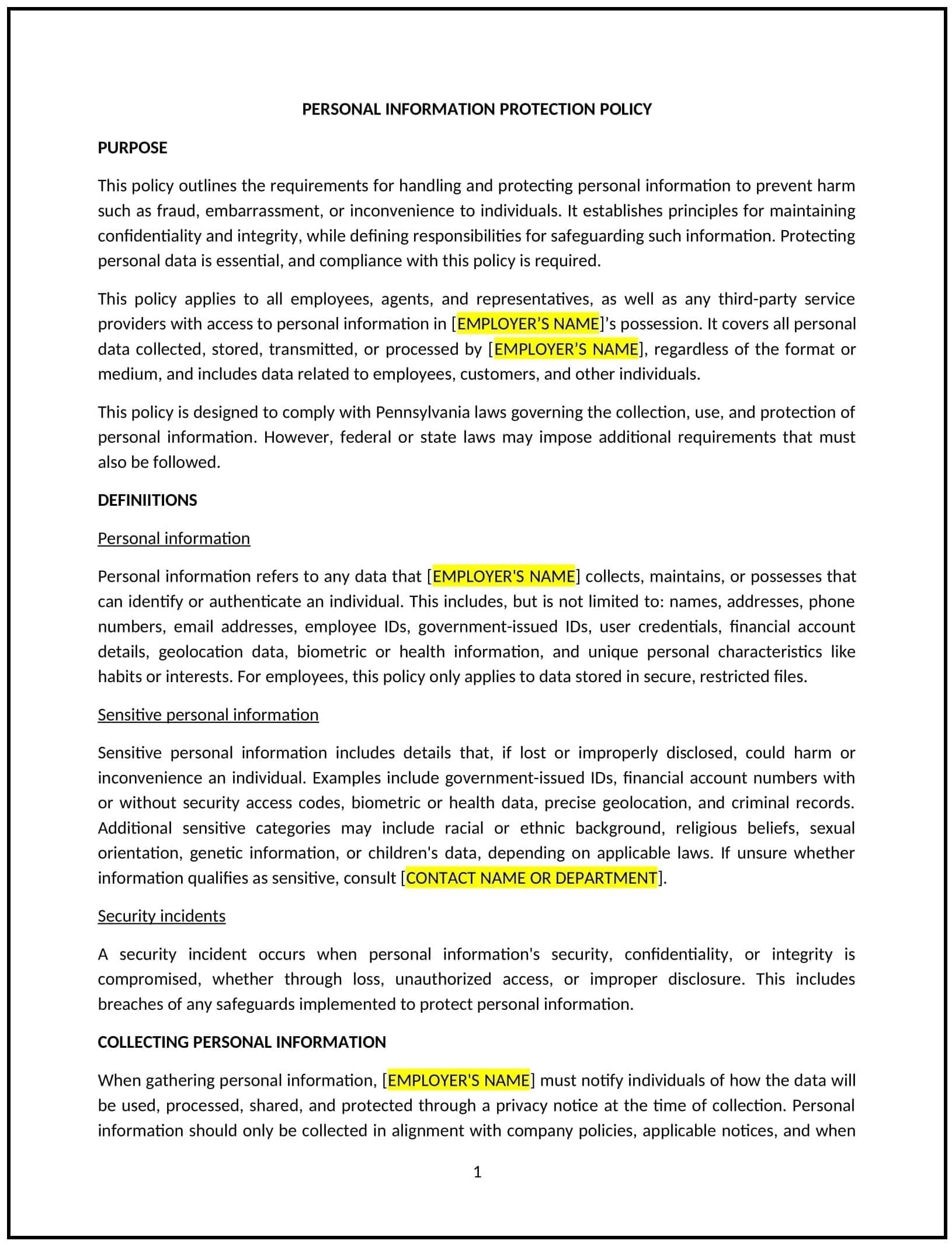
Personal information protection policy (Pennsylvania): Free template
Details how employee and client data must be handled to ensure privacy and legal compliance.
- Policies
- Pennsylvania
Personal information protection policy (Pennsylvania)
This personal information protection policy is designed to help businesses in Pennsylvania safeguard sensitive employee, customer, and business data from unauthorized access, breaches, or misuse. By outlining security protocols, access controls, and compliance measures, this template ensures businesses can responsibly manage personal information while aligning with Pennsylvania and federal data protection regulations.
By using this template, businesses can protect their digital and physical data assets, build stakeholder trust, and minimize legal risks.
How to use this personal information protection policy (Pennsylvania)
- Define personal information: Clearly specify the types of information covered under this policy, such as Social Security numbers, financial data, and contact information.
- Include data access protocols: Outline who can access sensitive information and under what circumstances, emphasizing role-based access controls.
- Establish security measures: Provide guidelines for securing personal information, such as encryption, password policies, and regular security audits.
- Detail breach response procedures: Specify steps to take in the event of a data breach, including notification timelines, reporting requirements, and mitigation actions.
- Reflect Pennsylvania-specific considerations: Tailor the policy to address state laws, such as the Pennsylvania Breach of Personal Information Notification Act.
Benefits of using a personal information protection policy (Pennsylvania)
A well-structured personal information protection policy supports data security and stakeholder confidence. Here's how it helps:
- Protects sensitive data: Prevents unauthorized access to or misuse of employee, customer, and business information.
- Enhances trust: Demonstrates a commitment to protecting personal information, fostering confidence among stakeholders.
- Supports compliance: Aligns with Pennsylvania data protection laws and federal regulations, reducing legal risks.
- Reduces risks: Implements preventive measures to minimize the likelihood of data breaches and security incidents.
- Reflects local needs: Addresses Pennsylvania’s specific legal and regulatory landscape for managing personal information.
Tips for using a personal information protection policy (Pennsylvania)
- Communicate the policy: Share the policy with employees and provide training on how to handle personal information securely.
- Regularly audit systems: Conduct periodic audits to identify and address vulnerabilities in data protection practices.
- Monitor compliance: Use access logs and monitoring tools to ensure adherence to data protection protocols.
- Provide breach response training: Train staff on how to respond effectively to data breaches to minimize damage and ensure timely reporting.
- Review periodically: Update the policy to reflect changes in Pennsylvania laws, technology advancements, or organizational needs.
Frequently asked questions (FAQs)
Similar templates
Where deals go from offer to paid
