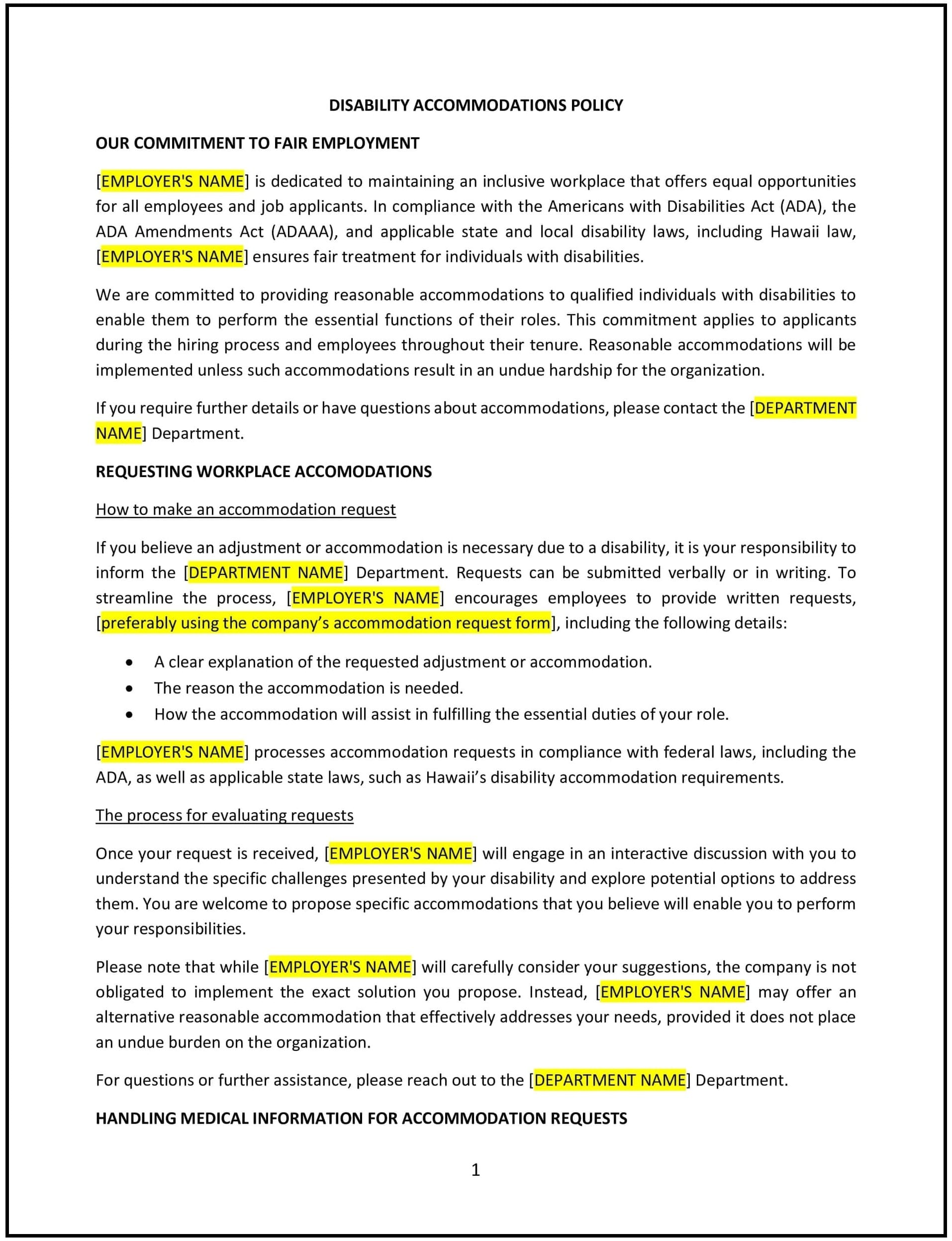
Disability accommodations policy (Hawaii): Free template
Provides process for requesting workplace adjustments and ensures compliance with ADA and Hawai‘i law.
- Policies
- Hawaii
Disability accommodations policy (Hawaiʻi)
A disability accommodations policy helps Hawaiʻi businesses create an inclusive workplace by providing reasonable accommodations for employees with disabilities. This policy outlines the process for requesting, evaluating, and implementing accommodations, while addressing Hawaiʻi-specific legal and cultural considerations. It is designed to promote equal opportunities, support employee well-being, and foster a diverse and inclusive work environment.
By implementing this policy, businesses in Hawaiʻi can demonstrate their commitment to inclusivity, improve employee satisfaction, and reduce the risk of legal disputes.
How to use this disability accommodations policy (Hawaiʻi)
- Define reasonable accommodations: Specify the types of accommodations that may be provided, such as modified work schedules, assistive technology, or physical workspace adjustments.
- Establish a request process: Provide clear instructions for employees to request accommodations, including required documentation and timelines for evaluation.
- Evaluate requests: Outline steps for reviewing accommodation requests, including interactive discussions with the employee and consideration of medical documentation.
- Implement accommodations: Specify how approved accommodations will be implemented, including timelines, responsibilities, and communication with the employee.
- Train employees and managers: Educate staff on the policy’s guidelines, including how to request accommodations and how managers should handle requests.
- Maintain confidentiality: Protect the privacy of employees requesting accommodations by limiting access to medical information and related discussions.
- Communicate the policy: Share the policy with employees during onboarding and through internal communications to ensure awareness and understanding.
- Review and update the policy: Regularly assess the policy’s effectiveness and make adjustments as needed to reflect changes in laws, employee needs, or workplace dynamics.
Benefits of using this disability accommodations policy (Hawaiʻi)
This policy offers several advantages for Hawaiʻi businesses:
- Promotes inclusivity: Providing reasonable accommodations ensures employees with disabilities have equal opportunities to succeed in the workplace.
- Supports employee well-being: Accommodations help employees perform their jobs effectively, improving job satisfaction and retention.
- Enhances workplace culture: A commitment to inclusivity fosters a positive and supportive work environment for all employees.
- Reduces legal risks: A clear policy helps businesses align with Hawaiʻi state laws and federal regulations, such as the Americans with Disabilities Act (ADA).
- Attracts diverse talent: Demonstrating a commitment to inclusivity can make the business more attractive to job seekers with disabilities.
- Encourages productivity: Accommodations enable employees to work more effectively, benefiting both the individual and the business.
- Builds trust: Employees are more likely to trust leadership when they see a commitment to supporting their needs.
Tips for using this disability accommodations policy (Hawaiʻi)
- Communicate the policy effectively: Share the policy with employees during onboarding and through regular reminders, such as emails or training sessions.
- Provide training: Educate employees and managers on the policy’s guidelines, including how to request and handle accommodations.
- Be flexible: Consider individual circumstances when evaluating accommodation requests and be open to creative solutions.
- Maintain confidentiality: Protect the privacy of employees by limiting access to medical information and related discussions.
- Monitor effectiveness: Regularly review the implementation of accommodations and gather feedback from employees to ensure their needs are met.
- Review the policy periodically: Update the policy as needed to reflect changes in laws, employee needs, or workplace dynamics.
Frequently asked questions (FAQs)
Similar templates
Where deals go from offer to paid
