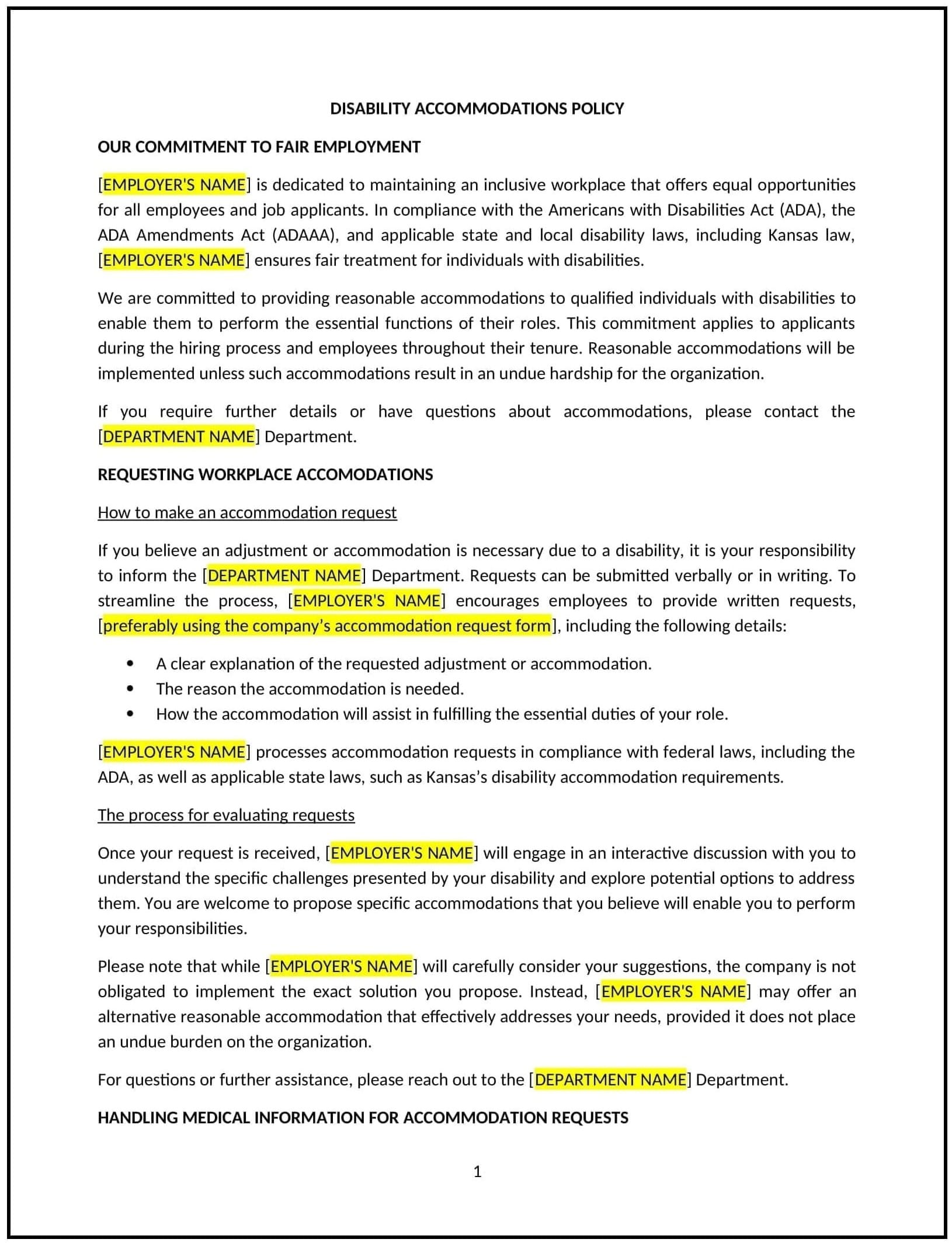
Disability accommodations policy (Kansas): Free template
Provides process for requesting reasonable accommodations, ensuring equal access under ADA and Kansas law.
- Policies
- Kansas
Disability accommodations policy (Kansas)
A disability accommodations policy helps Kansas businesses provide a structured process for supporting employees with disabilities in the workplace. This policy outlines how employees can request accommodations, the review process, and the business’s role in fostering an inclusive work environment.
By implementing this policy, businesses can create a supportive workplace, improve accessibility, and enhance employee retention.
How to use this disability accommodations policy (Kansas)
- Define reasonable accommodations: Businesses should specify the types of workplace adjustments that may be available, such as modified workstations, flexible schedules, or assistive technology.
- Establish the request process: Employees should have a clear procedure for requesting accommodations, including whom to contact and what information to provide.
- Outline the review and approval process: Businesses should assess each request individually, considering the nature of the disability, job requirements, and potential accommodations.
- Maintain confidentiality: Businesses should ensure that all disability-related information remains confidential and is only shared with those involved in the accommodation process.
- Encourage open communication: Businesses should engage in an interactive process with employees to determine effective accommodations.
- Provide training for managers: Supervisors should be trained on handling accommodation requests, fostering inclusivity, and ensuring fair treatment of all employees.
- Review and update regularly: Businesses should periodically assess accommodations processes and workplace accessibility to support employees effectively.
Benefits of using a disability accommodations policy (Kansas)
- Supports workplace inclusivity: Promotes a culture where employees with disabilities feel valued and supported.
- Enhances employee retention: Encourages long-term employment by addressing workplace accessibility needs.
- Improves productivity: Helps employees perform their roles effectively by providing necessary accommodations.
- Reduces misunderstandings: Establishes a clear and structured process for requesting and evaluating accommodations.
- Encourages fairness and transparency: Ensures that all accommodation requests are reviewed consistently and objectively.
- Strengthens workplace morale: Demonstrates a commitment to employee well-being and equal opportunities.
Tips for using this disability accommodations policy (Kansas)
- Communicate the request process clearly: Businesses should ensure employees know how to seek accommodations and what to expect.
- Document all requests and decisions: Keeping records of accommodation requests helps businesses track implementation and ensure consistency.
- Encourage an inclusive culture: Businesses should promote awareness and understanding of disability accommodations in the workplace.
- Monitor the effectiveness of accommodations: Businesses should check in with employees to ensure accommodations are meeting their needs.
- Address accommodation disputes promptly: Businesses should establish a resolution process for disagreements regarding accommodations.
- Adapt policies as needed: Businesses should update accommodations based on workplace changes, new technologies, or employee feedback.
Frequently asked questions (FAQs)
Similar templates
Where deals go from offer to paid
