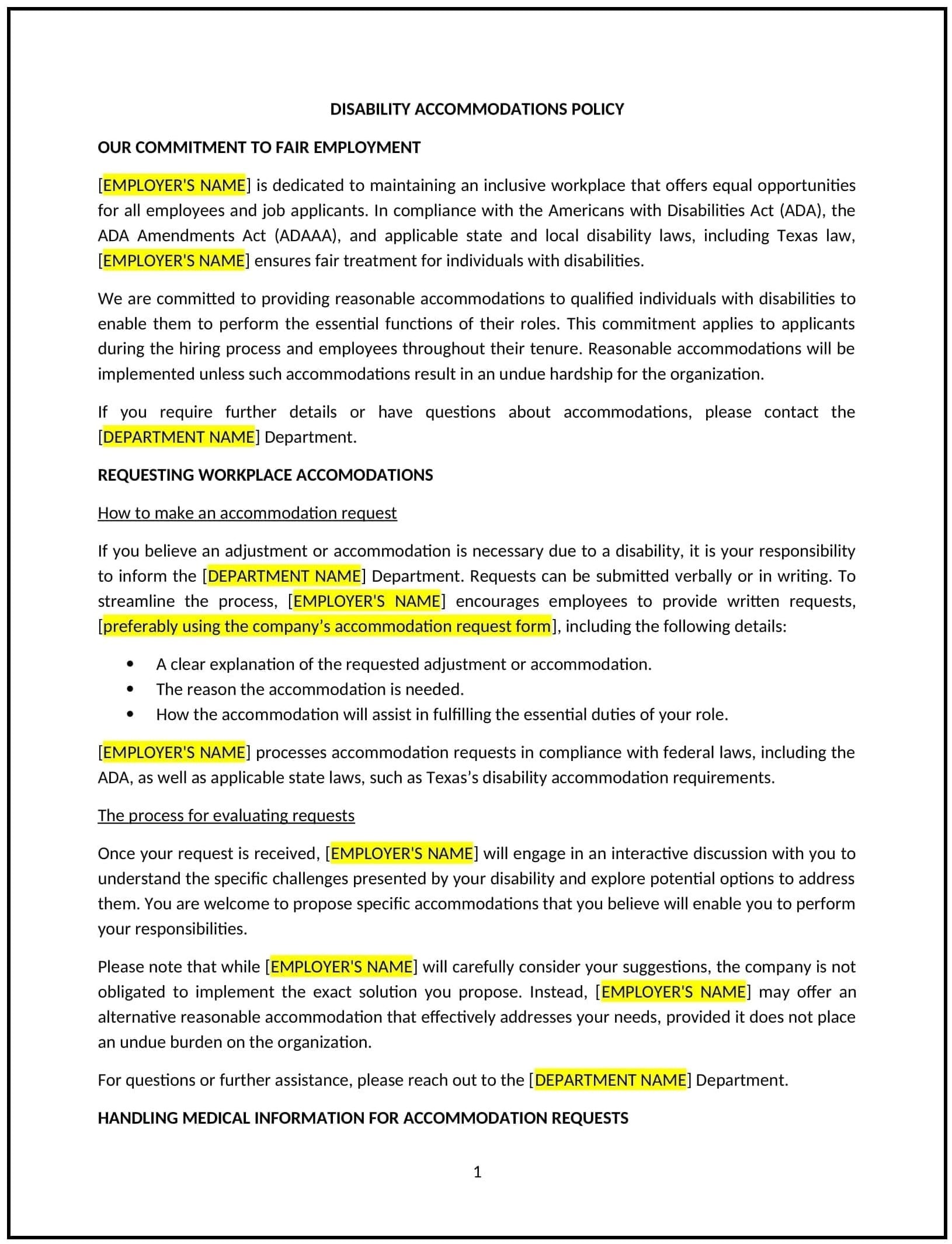
Disability accommodations policy (Texas): Free template
Outlines how the company supports employees with disabilities through reasonable accommodations.
- Policies
- Texas
Disability accommodations policy (Texas)
This disability accommodations policy is designed to help Texas businesses establish clear guidelines for providing reasonable accommodations to employees with disabilities. Whether businesses are addressing physical or mental health conditions, or supporting compliance with the Americans with Disabilities Act (ADA), this template provides a structured approach to supporting employees with disabilities in the workplace.
By adopting this template, businesses can promote an inclusive environment, support compliance with legal obligations, and provide equal opportunities for all employees.
How to use this disability accommodations policy (Texas)
- Define disability: Clearly specify the types of disabilities covered under the policy, including physical, sensory, cognitive, and mental health conditions that substantially limit one or more major life activities.
- Set accommodation request procedures: Outline the process for employees to request accommodations, including how to submit a request, the documentation required (e.g., medical certifications), and the timeframe for responding to requests.
- Identify reasonable accommodations: List examples of reasonable accommodations that the business may offer, such as modified work schedules, assistive technology, ergonomic adjustments, or remote work options, while ensuring that the accommodations do not pose an undue hardship on the company.
- Set evaluation and approval processes: Explain how the business will assess accommodation requests, including how decisions will be made, who will be involved in the evaluation, and how the company will communicate the outcome to the employee.
- Specify confidentiality: Emphasize that all information related to an employee’s disability and accommodation request will be kept confidential and shared only with those who need to know.
- Address undue hardship: Define what constitutes an undue hardship for the business, such as significant financial or operational impact, and how the company will handle requests that may be deemed unreasonable.
Benefits of using this disability accommodations policy (Texas)
This policy offers several benefits for Texas businesses:
- Promotes inclusivity: Providing reasonable accommodations helps create an inclusive and supportive workplace, ensuring that employees with disabilities have equal opportunities to succeed and contribute to the business.
- Reduces legal risks: By following the guidelines set forth in the ADA and Texas state laws, businesses can reduce the risk of legal challenges related to disability discrimination or failure to provide appropriate accommodations.
- Improves employee morale and retention: Employees who feel supported and valued are more likely to remain engaged and loyal to the company, reducing turnover and improving overall job satisfaction.
- Enhances diversity: Supporting employees with disabilities contributes to workplace diversity, which can enhance creativity, problem-solving, and innovation within the business.
- Supports compliance with legal requirements: This policy helps businesses meet their legal obligations under the ADA and Texas state law, improving compliance with regulations related to disability rights in the workplace.
Tips for using this disability accommodations policy (Texas)
- Communicate clearly: Ensure that all employees are aware of the disability accommodations policy and understand how to request accommodations, the evaluation process, and their rights under the law.
- Offer training: Provide training to managers and HR staff on how to handle accommodation requests, evaluate potential accommodations, and address any challenges in a respectful and legal manner.
- Maintain confidentiality: Keep all medical information and accommodation requests confidential, sharing only the necessary details with those who need to be involved in the accommodation process.
- Review requests promptly: Respond to accommodation requests in a timely manner, ensuring that employees receive the necessary support without unnecessary delays.
- Review regularly: Update the policy as needed to reflect changes in Texas state laws, federal regulations, or business practices related to disability accommodations.
Frequently asked questions (FAQs)
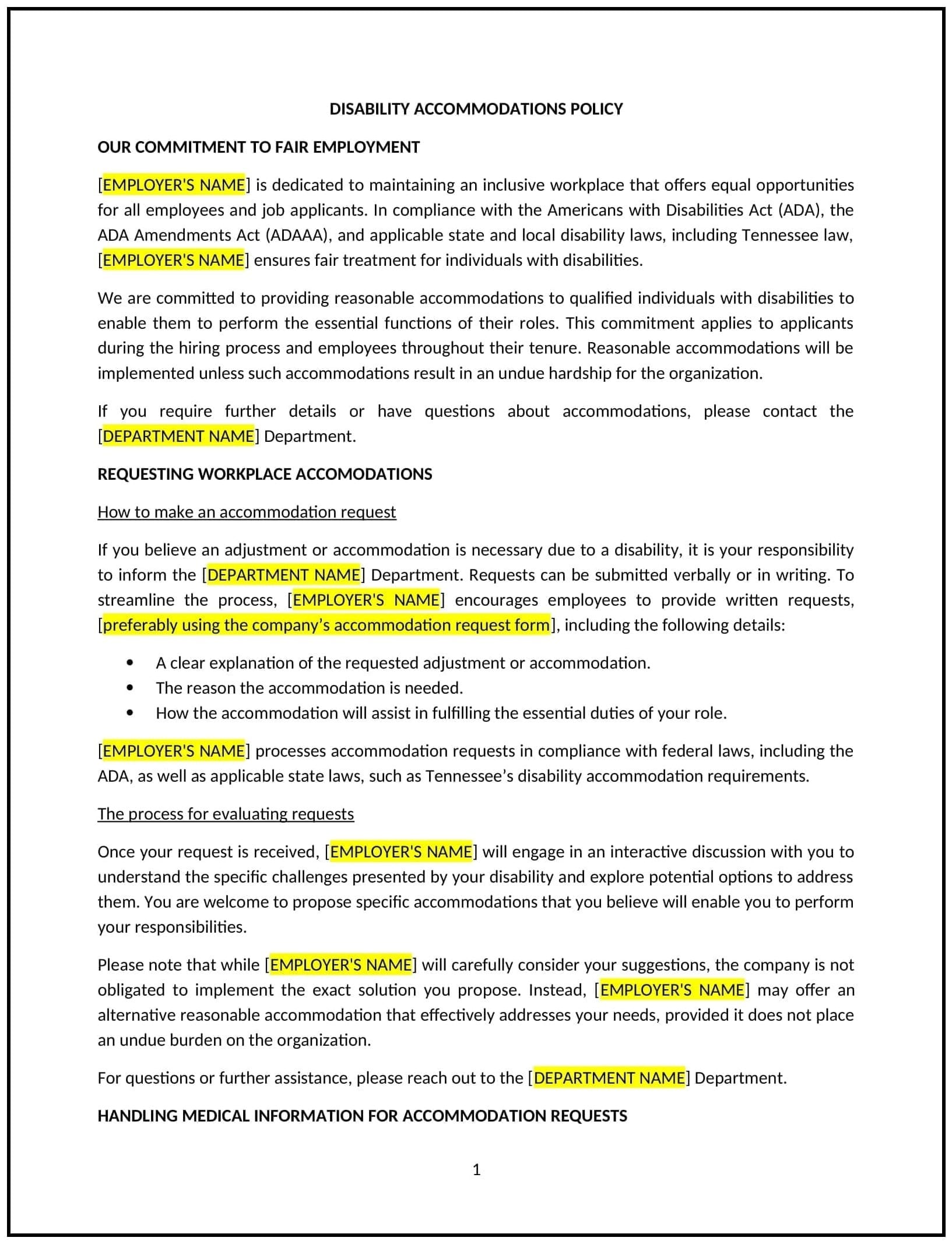
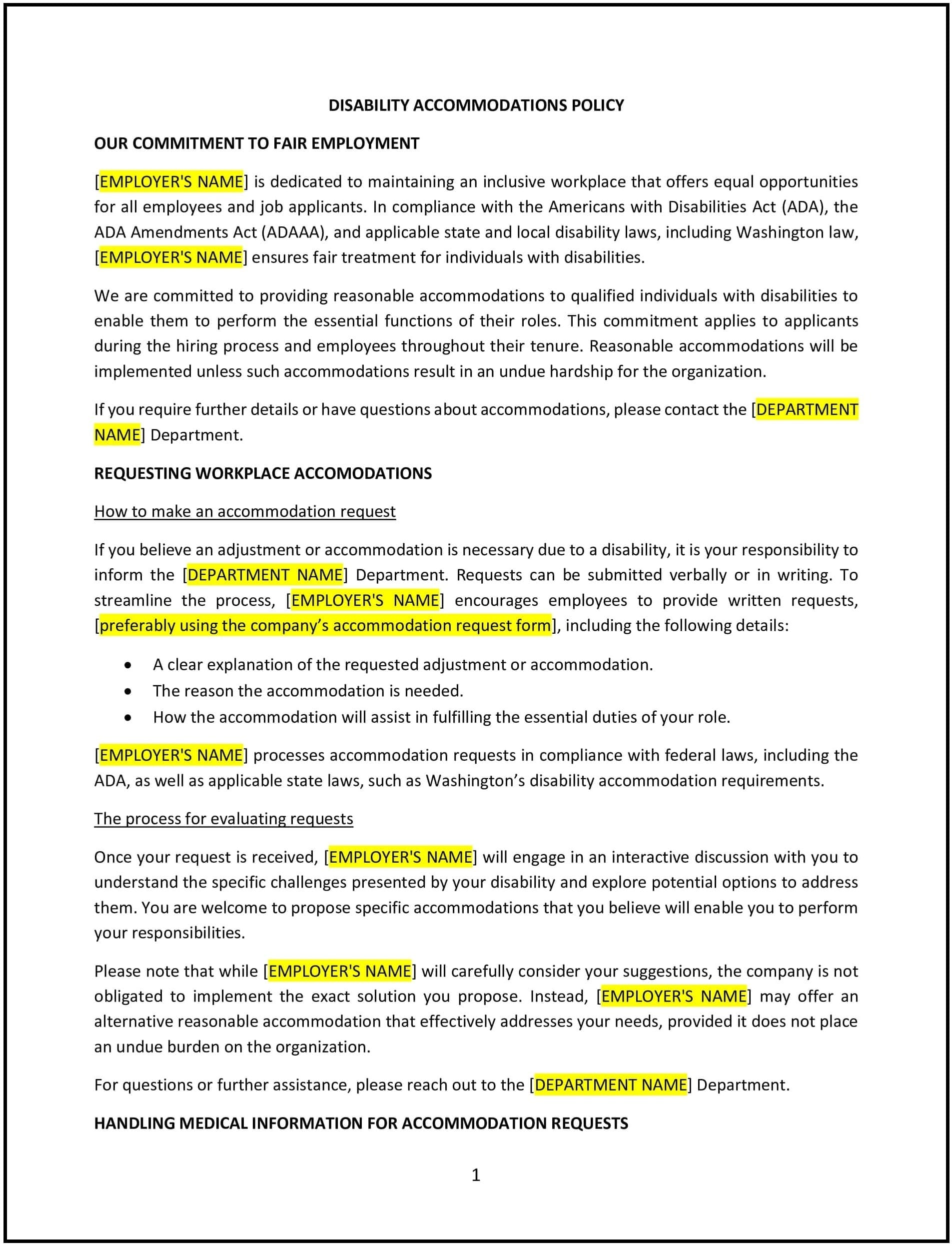
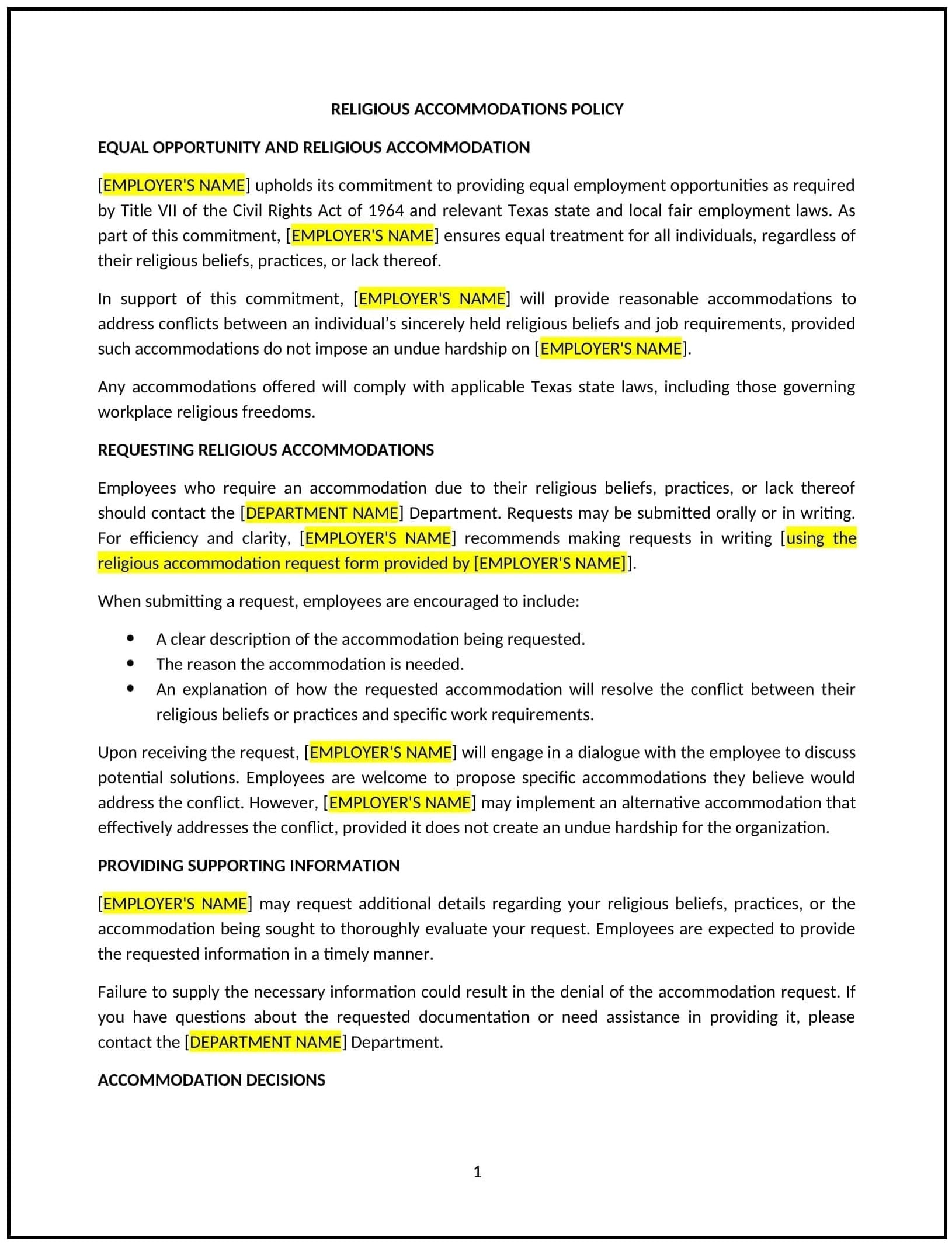
Similar templates
Where deals go from offer to paid
