Disability accommodations policy (Vermont): Free template
Customize it in Cobrief and get sign-off from employees, contractors, or partners in one place.
Customize this template for free
TL;DR
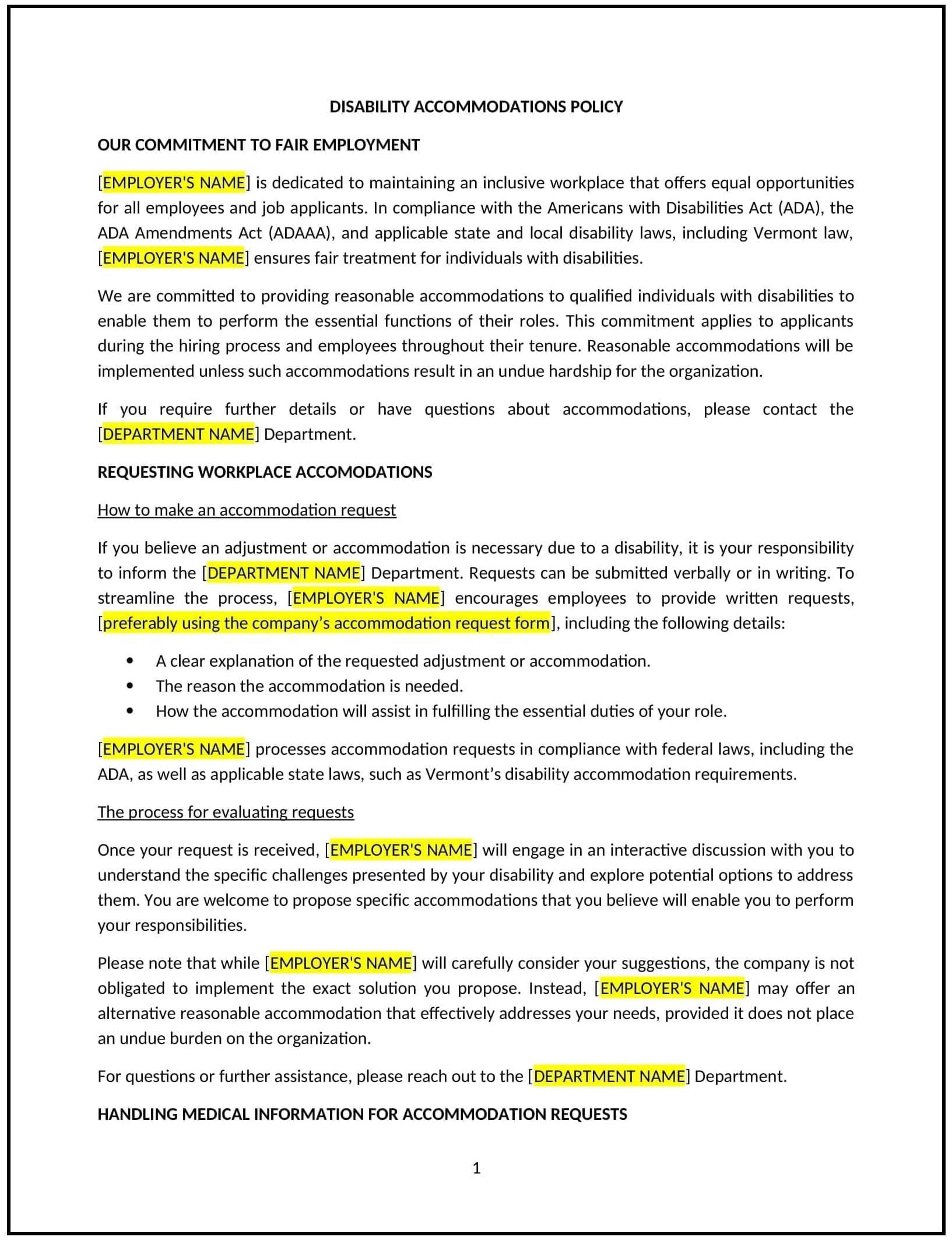
A disability accommodations policy tailored for Vermont businesses to ensure compliance with the ADA and VFEPA. It outlines procedures for requesting and implementing workplace accommodations for employees with disabilities, promoting inclusivity and enhancing productivity while mitigating legal risks.
Disability accommodations policy (Vermont)
This disability accommodations policy is designed to help Vermont businesses comply with the Americans with Disabilities Act (ADA) and Vermont’s Fair Employment Practices Act (VFEPA). It provides guidelines for requesting, evaluating, and implementing workplace accommodations for employees with disabilities.
By adopting this policy, businesses can foster an inclusive workplace, enhance employee productivity, and improve compliance with Vermont and federal laws.
How to use this disability accommodations policy (Vermont)
- Define reasonable accommodations: Specify the types of adjustments or modifications available, such as flexible schedules, assistive technologies, or facility modifications.
- Outline the request process: Provide clear instructions for employees to request accommodations, including whom to contact and what information to provide.
- Include evaluation procedures: Detail how accommodation requests will be assessed, including an interactive process to identify effective solutions.
- Emphasize confidentiality: Assure employees that all medical and disability-related information will be handled confidentially and stored securely.
- Address undue hardship: Clarify that accommodations may not be provided if they impose significant difficulty or expense on the business, as defined by law.
- Promote training: Educate managers and HR staff on handling accommodation requests and supporting employees with disabilities.
- Monitor compliance: Regularly review accommodations and workplace practices to ensure alignment with Vermont laws and evolving employee needs.
Benefits of using this disability accommodations policy (Vermont)
This policy provides several benefits for Vermont businesses:
- Promotes inclusivity: Creates a supportive environment for employees with disabilities to thrive.
- Enhances compliance: Aligns with ADA and VFEPA requirements, reducing legal risks.
- Improves retention: Supports employees in maintaining employment by addressing their unique needs.
- Boosts productivity: Helps employees with disabilities perform their roles effectively through tailored accommodations.
- Demonstrates commitment: Reflects the company’s dedication to diversity and equal opportunities.
Tips for using this disability accommodations policy (Vermont)
- Communicate the policy: Share the policy with employees during onboarding and include it in the employee handbook.
- Encourage open dialogue: Foster a workplace culture where employees feel comfortable discussing their accommodation needs.
- Provide resources: Offer access to tools and technologies that support employees with disabilities.
- Track accommodations: Maintain records of accommodation requests, decisions, and implementations to ensure accountability and compliance.
- Update regularly: Revise the policy to reflect changes in Vermont laws, workplace needs, or best practices.
Frequently asked questions (FAQs)
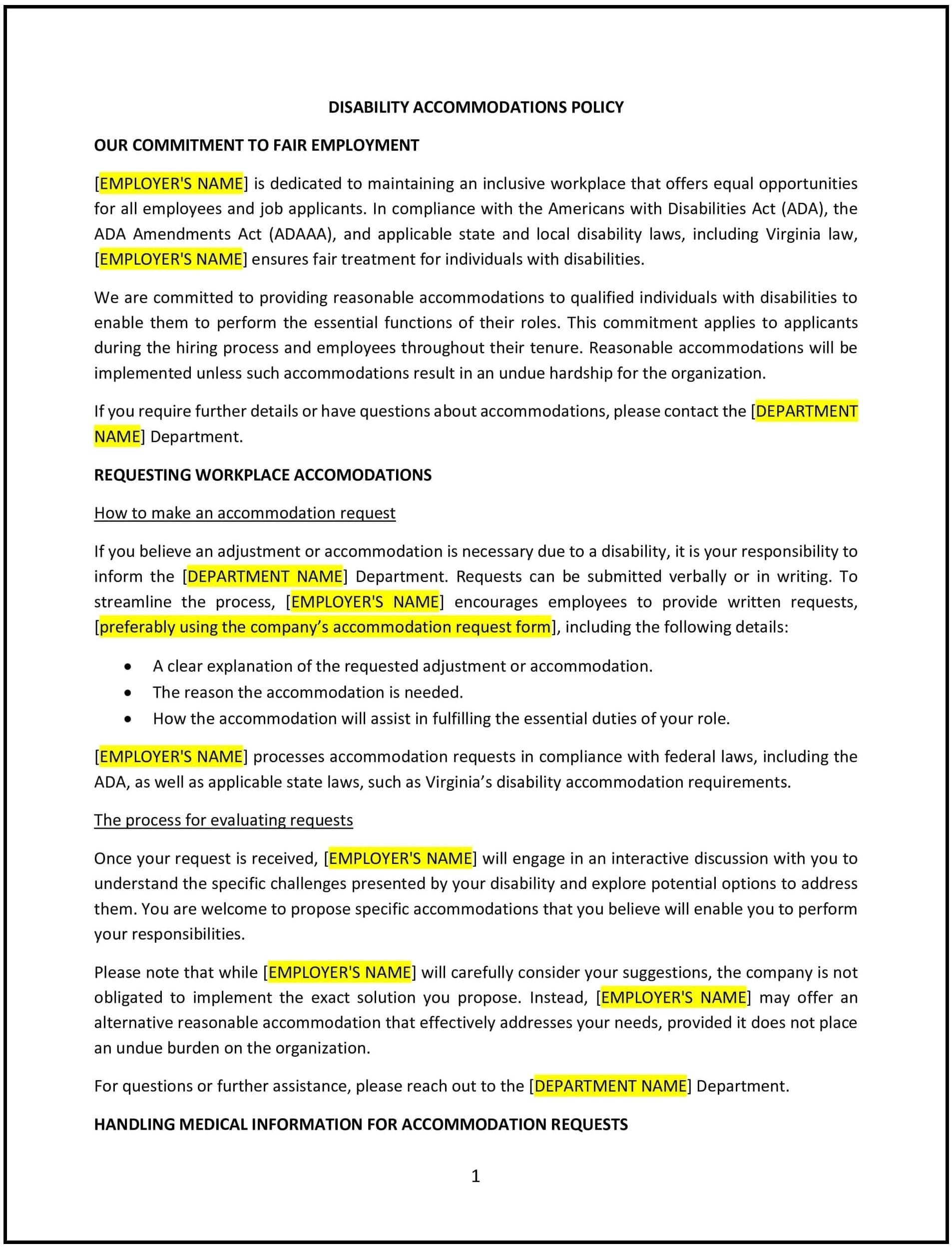
Supports equal access by explaining how employees can request accommodations under Virginia and federal law.
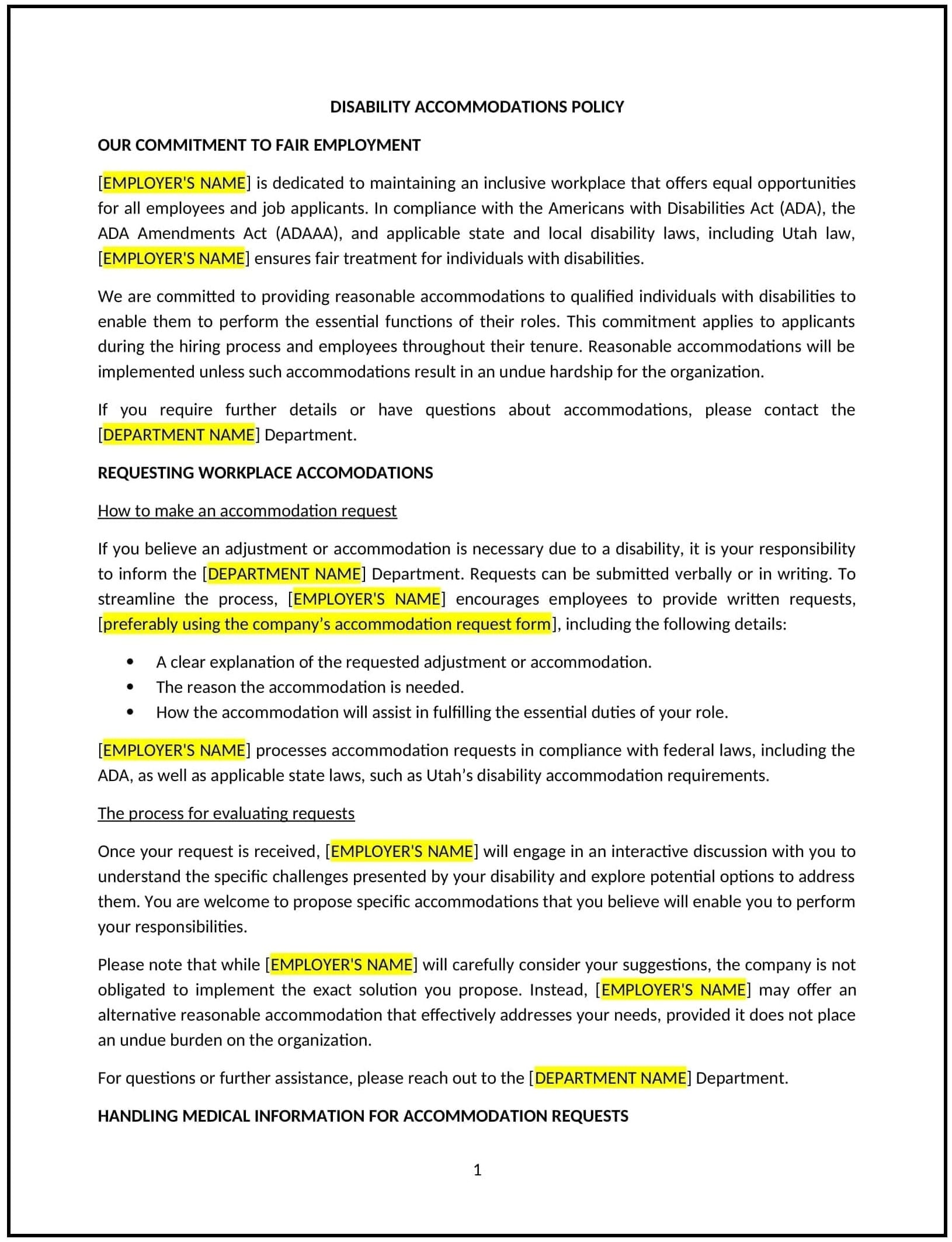
Outlines how employees may request accommodations and how employers must respond under Utah and federal law.
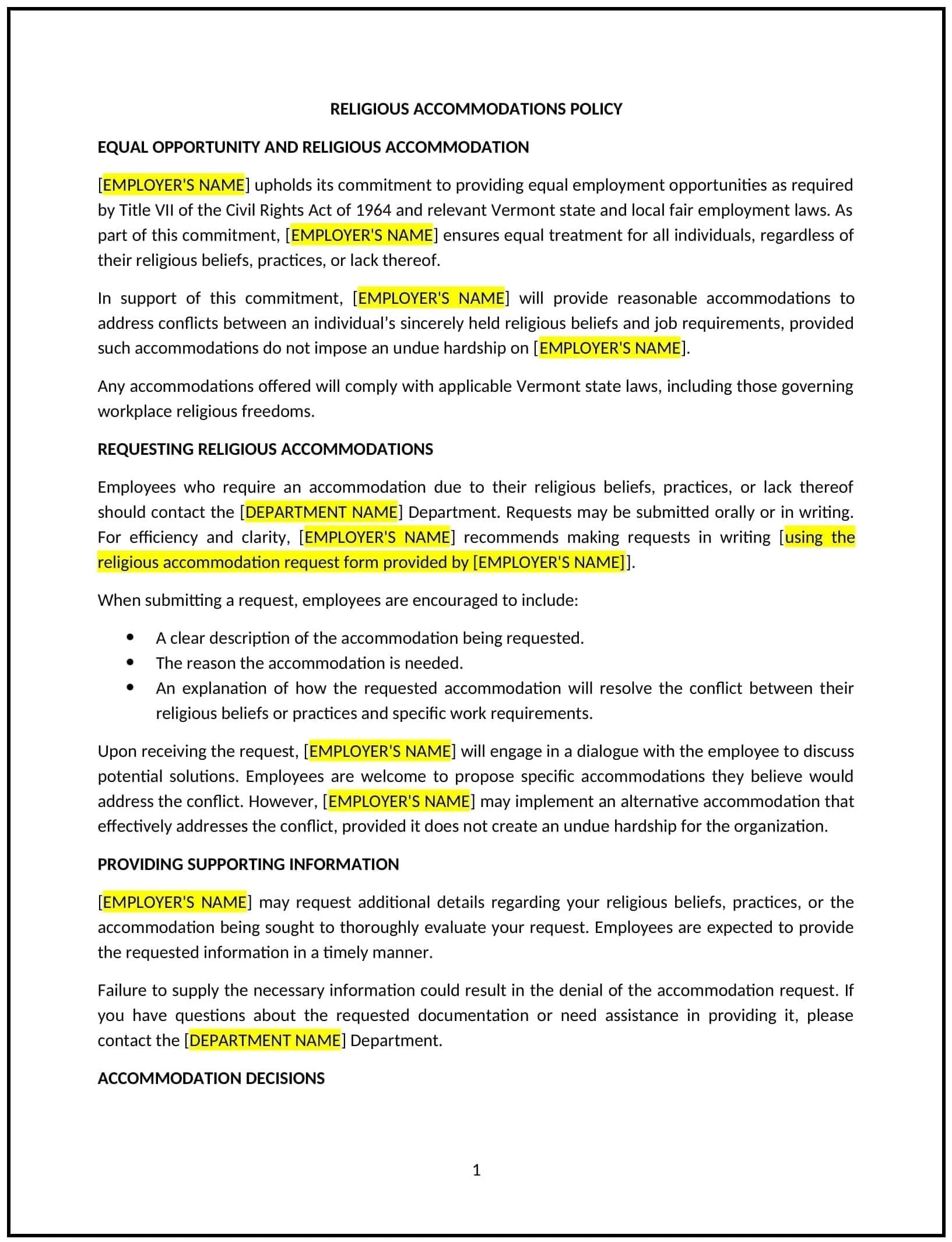
Explains how employees can request religious accommodations while ensuring legal compliance in Vermont workplaces.
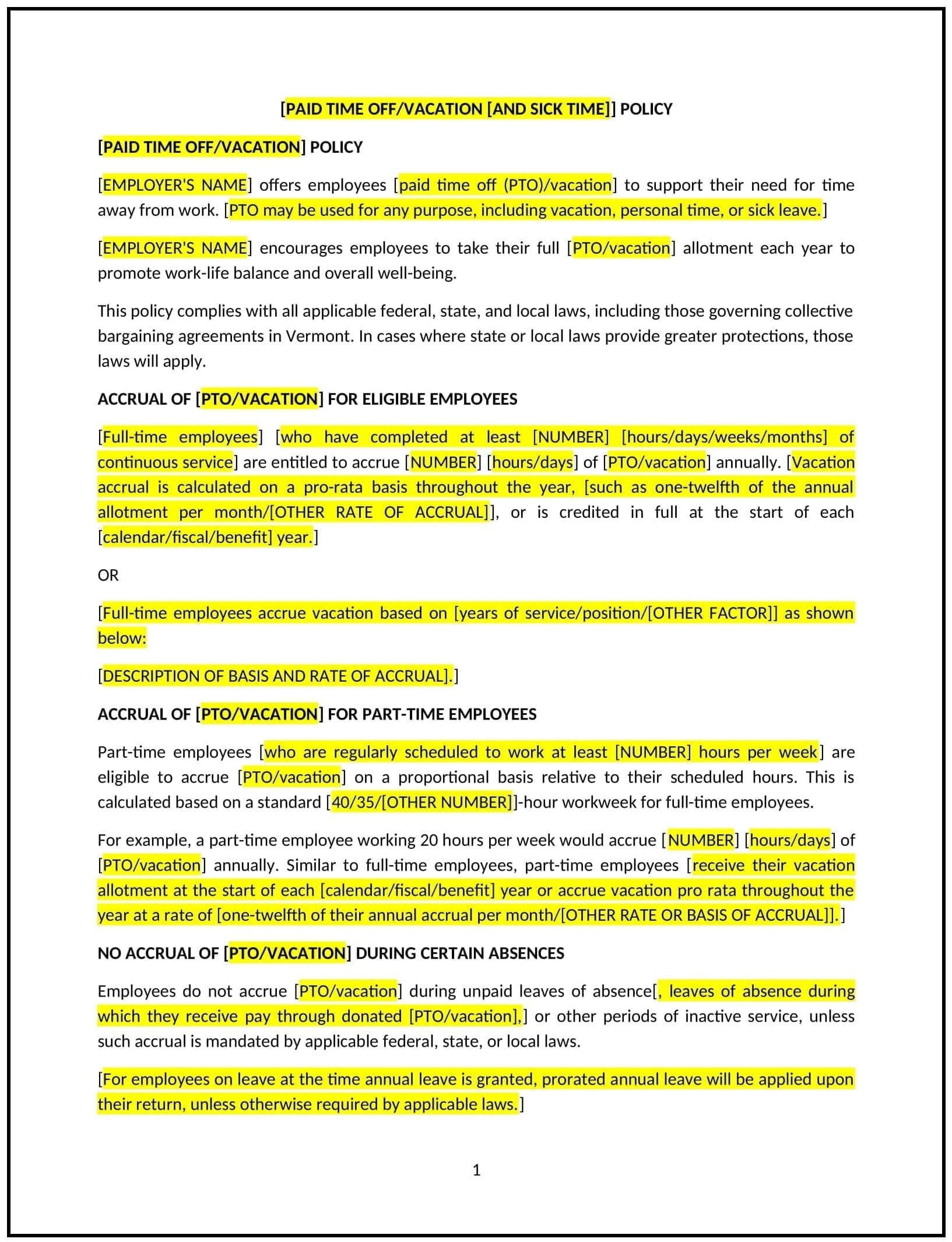
Explains how vacation is earned, requested, and tracked to ensure consistency under Vermont employment rules.
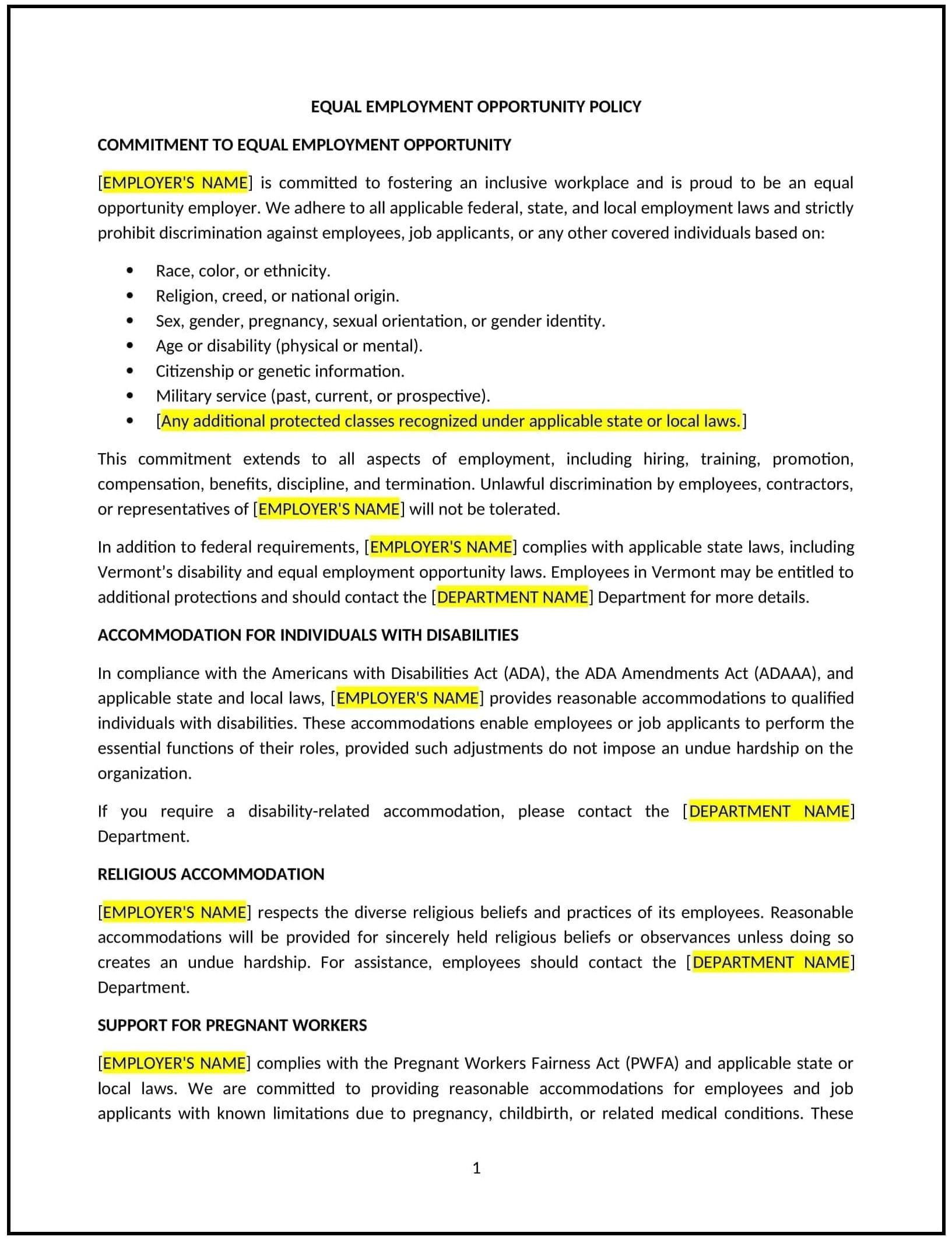
Prohibits workplace discrimination and promotes fair treatment in hiring and employment under Vermont law.