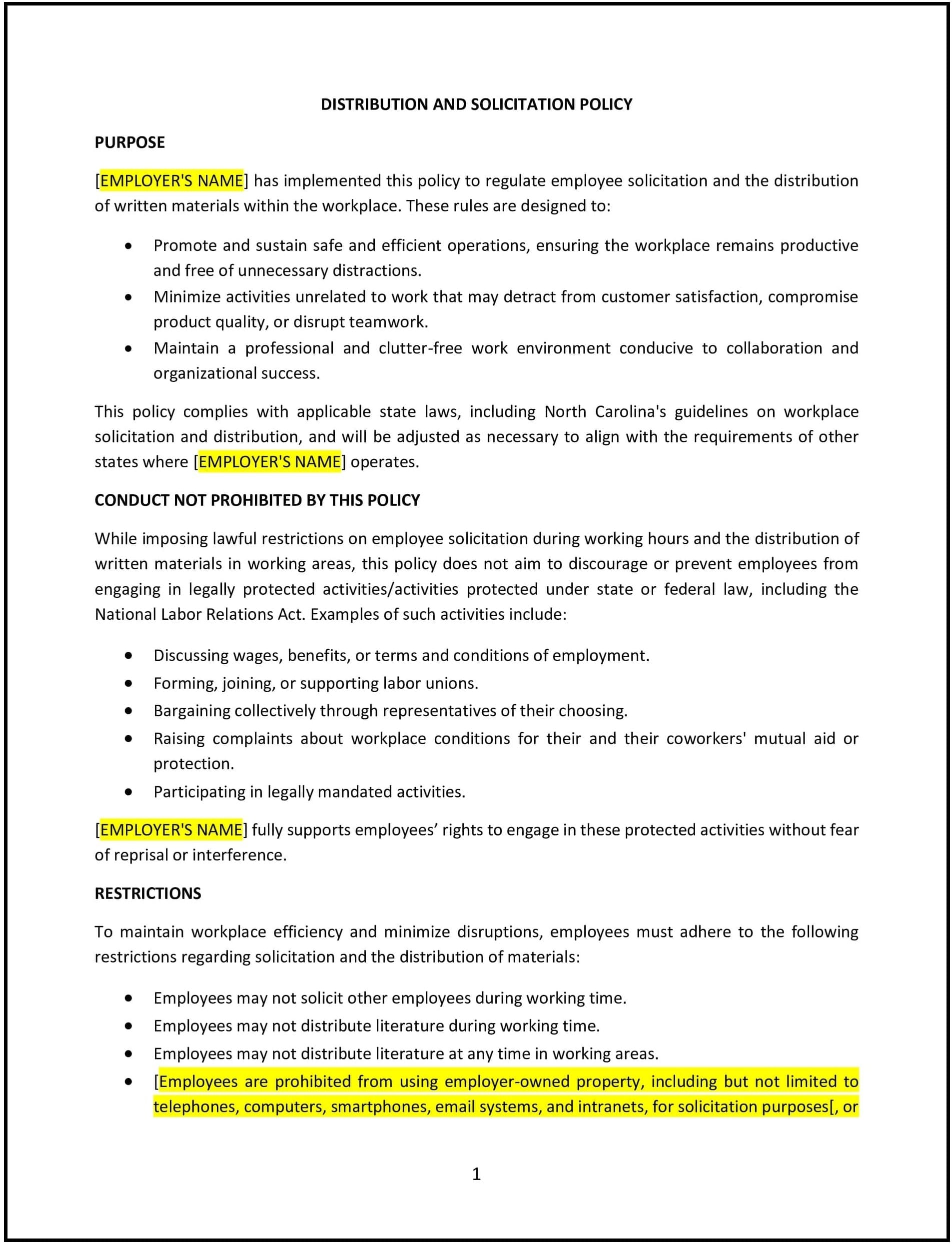
Distribution and solicitation policy (North Carolina): Free template
Controls the distribution of materials and solicitation activities to avoid workplace disruptions.
- Policies
- North Carolina
Distribution and solicitation policy (North Carolina)
A distribution and solicitation policy helps North Carolina businesses manage and regulate the distribution of materials and solicitation within the workplace. This policy establishes rules for employees and third parties wishing to distribute materials, solicit donations, or engage in other activities within company premises.
By adopting this policy, businesses can ensure that all activities are conducted in a controlled, non-disruptive manner that respects both employees' rights and the company’s operational needs.
How to use this distribution and solicitation policy (North Carolina)
- Define solicitation activities: Specify what types of solicitation are permissible, such as employee-driven charitable fundraising or external vendors offering products and services.
- Set guidelines for distribution of materials: Establish rules for the types of materials that may be distributed, whether they relate to company business or external promotional materials.
- Designate solicitation locations: Define where solicitation and distribution can occur, such as designated areas or during specific times, to minimize disruption to business operations.
- Address the involvement of third parties: Clarify whether third-party vendors, charities, or other external organizations can engage in solicitation and what procedures they must follow.
- Reflect North Carolina-specific considerations: Ensure that the policy complies with state and local laws regarding solicitation, including any restrictions or permits required for certain types of solicitation.
Benefits of using this distribution and solicitation policy (North Carolina)
This policy provides several benefits for North Carolina businesses:
- Maintains a productive work environment: By controlling solicitation and distribution activities, businesses can ensure that work is not disrupted by outside solicitations or internal distractions.
- Protects employee rights: The policy ensures that employees are not unfairly subjected to unsolicited sales pitches, charitable solicitations, or other unwanted activities during work hours.
- Promotes fairness: The policy creates a level playing field for employees and external parties who wish to distribute materials or solicit donations.
- Reduces legal risks: By establishing clear guidelines and compliance procedures, businesses can avoid legal issues related to solicitation, including those related to free speech and public access rights.
- Enhances company reputation: A fair and transparent solicitation process ensures that the company is seen as ethical and considerate of employee interests.
Tips for using this distribution and solicitation policy (North Carolina)
- Communicate the policy clearly: Ensure all employees understand the rules surrounding solicitation and distribution, and provide a copy of the policy in the employee handbook.
- Monitor compliance: Regularly monitor solicitation activities to ensure they are being conducted according to the policy and without disrupting the workplace.
- Handle complaints professionally: If employees or external parties complain about solicitation or distribution, address the issue promptly and fairly.
- Review the policy regularly: The policy should be reviewed periodically to ensure it complies with North Carolina’s laws and reflects any changes in company practices.
Frequently asked questions (FAQs)
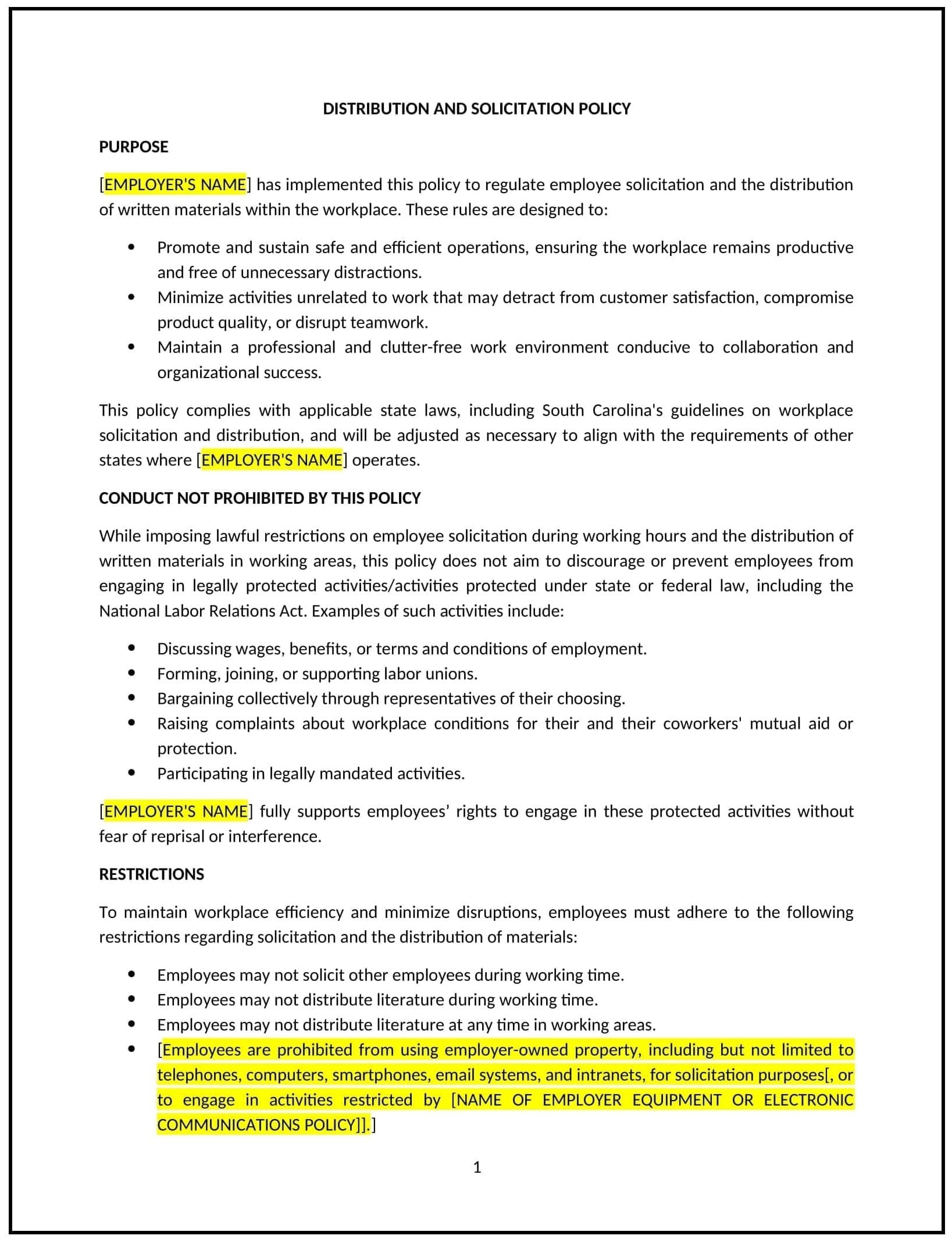
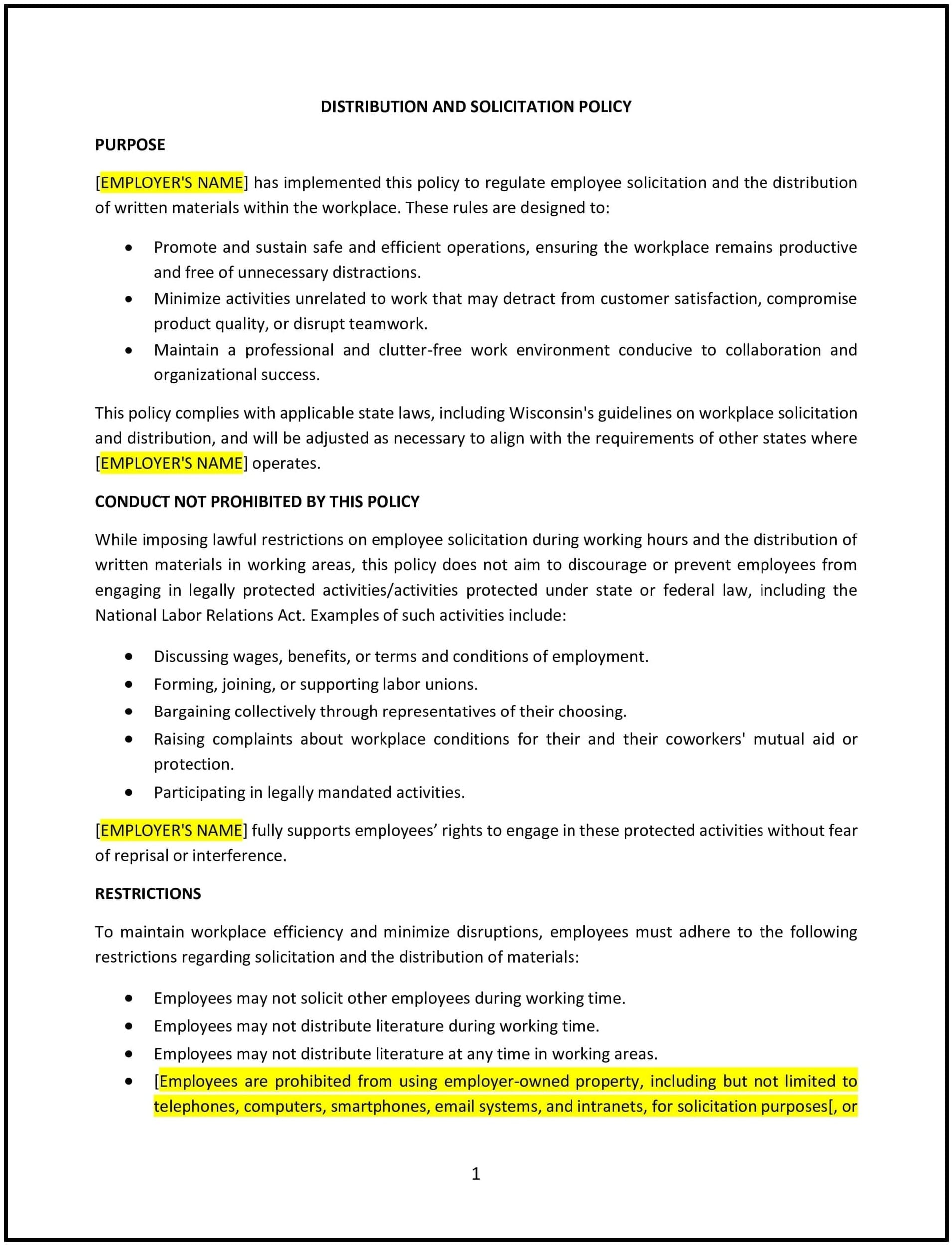
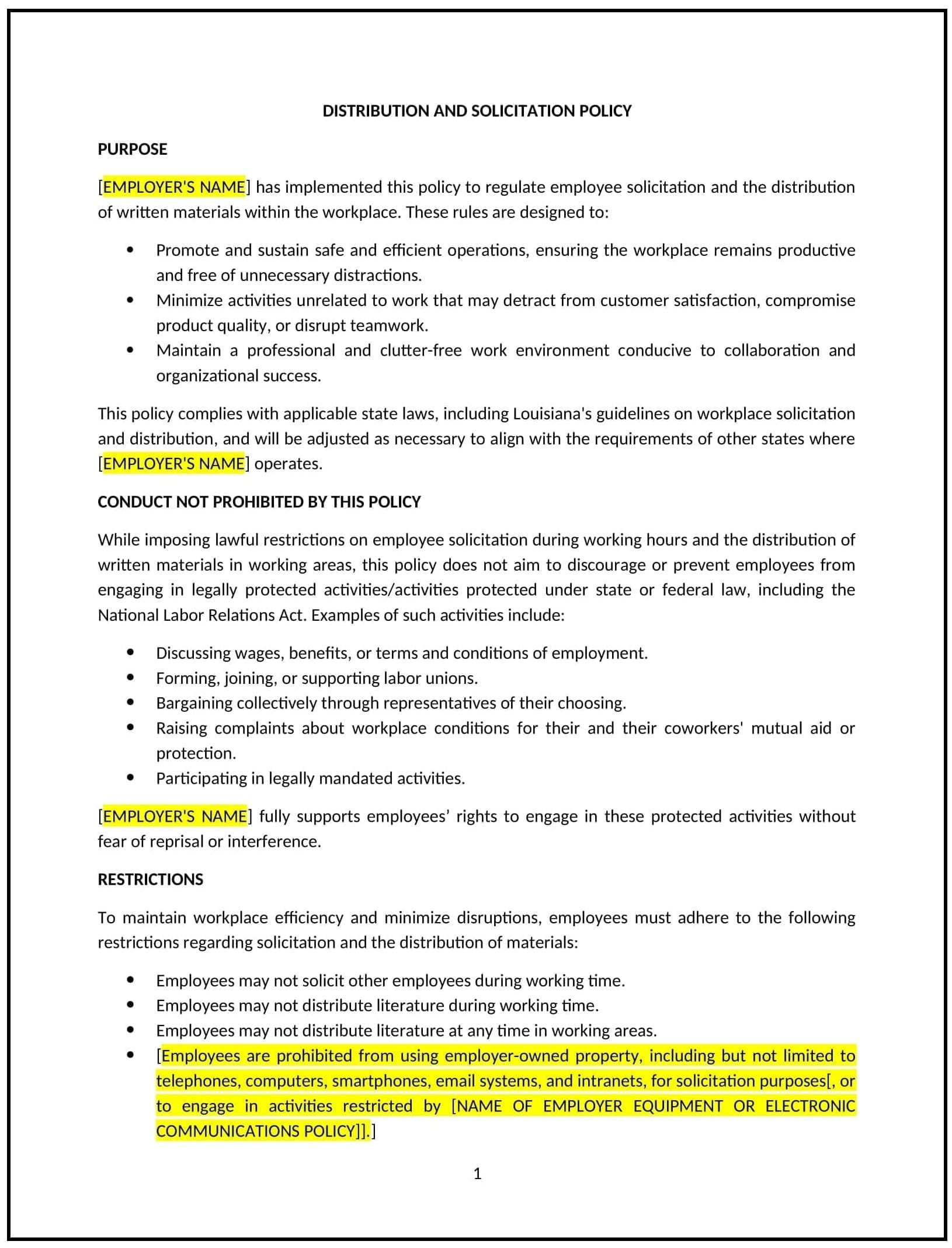
Similar templates
Where deals go from offer to paid
