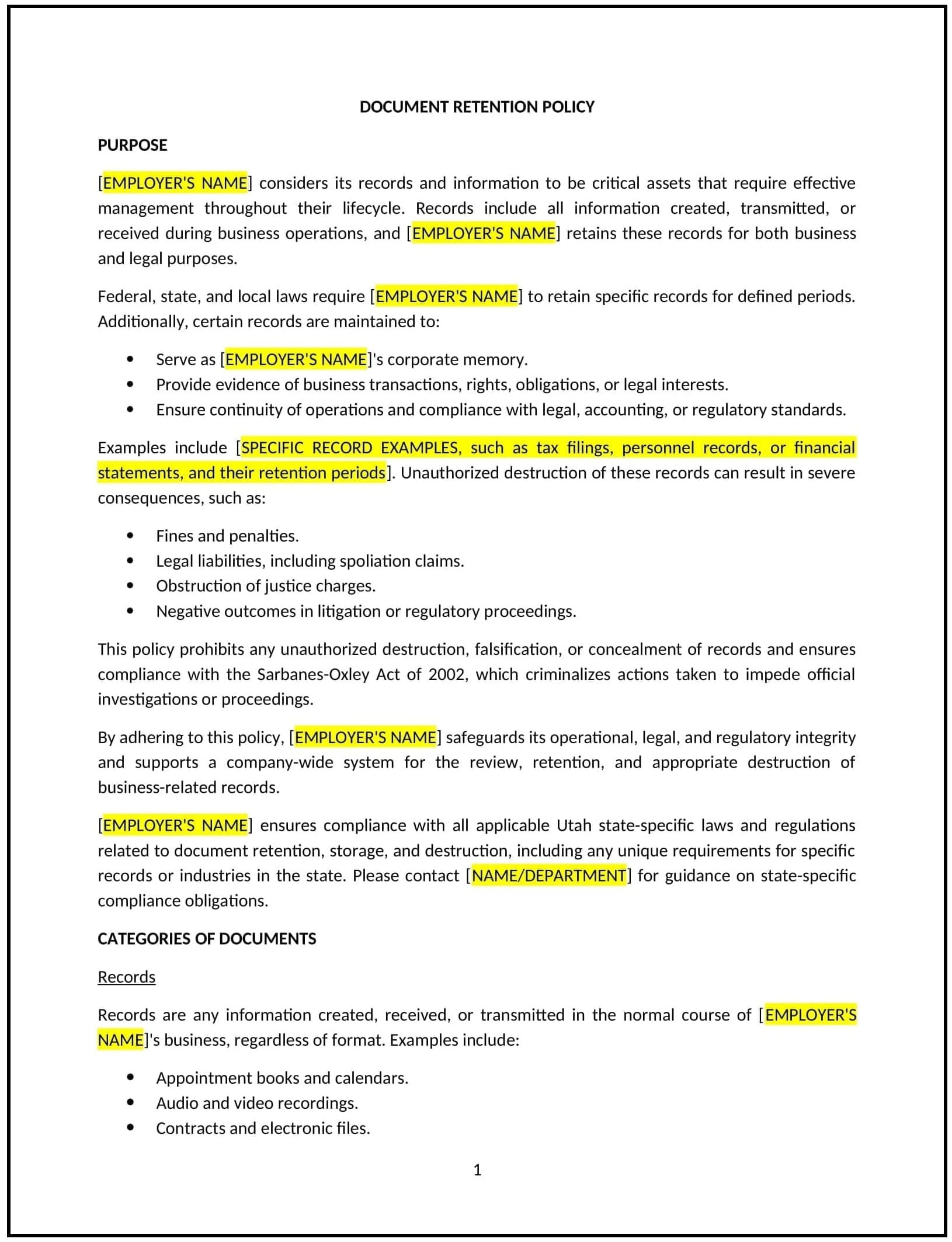
Document retention policy (Utah): Free template
Specifies how long to keep, store, and dispose of records in compliance with Utah regulations.
- Policies
- Utah
Document retention policy (Utah)
This document retention policy is designed to help Utah businesses establish guidelines for retaining, storing, and disposing of business records. It outlines procedures for managing documents to ensure compliance with legal requirements, protect sensitive information, and maintain organizational efficiency.
By adopting this policy, businesses can reduce legal risks, improve record-keeping practices, and align with general best practices for document management.
How to use this document retention policy (Utah)
- Define document categories: Specify the types of documents the business retains, such as financial records, employee files, or contracts.
- Establish retention periods: Outline how long each category of documents should be retained based on legal and business requirements.
- Provide storage guidelines: Specify how documents should be stored, including physical and digital storage methods.
- Outline disposal procedures: Define secure methods for disposing of documents, such as shredding or digital deletion.
- Train employees: Educate employees on document retention procedures and their importance.
- Monitor compliance: Regularly review document retention practices to ensure adherence to the policy.
- Review and update: Assess the policy annually to ensure it aligns with evolving legal requirements and business needs.
Benefits of using this document retention policy (Utah)
This policy offers several advantages for Utah businesses:
- Reduces legal risks: Ensures compliance with federal and state document retention laws.
- Protects sensitive information: Safeguards confidential data by establishing secure storage and disposal procedures.
- Improves efficiency: Streamlines record-keeping practices and reduces clutter.
- Aligns with best practices: Provides a structured approach to managing business records.
- Supports audits: Ensures necessary documents are available for audits or legal proceedings.
Tips for using this document retention policy (Utah)
- Communicate the policy: Share the policy with employees and include it in the employee handbook.
- Provide training: Educate employees on document retention procedures and their importance.
- Monitor compliance: Regularly review document retention practices to ensure adherence to the policy.
- Address issues promptly: Take corrective action if documents are not retained or disposed of properly.
- Update regularly: Assess the policy annually to ensure it aligns with evolving legal requirements and business needs.
Frequently asked questions (FAQs)
Similar templates
Where deals go from offer to paid
