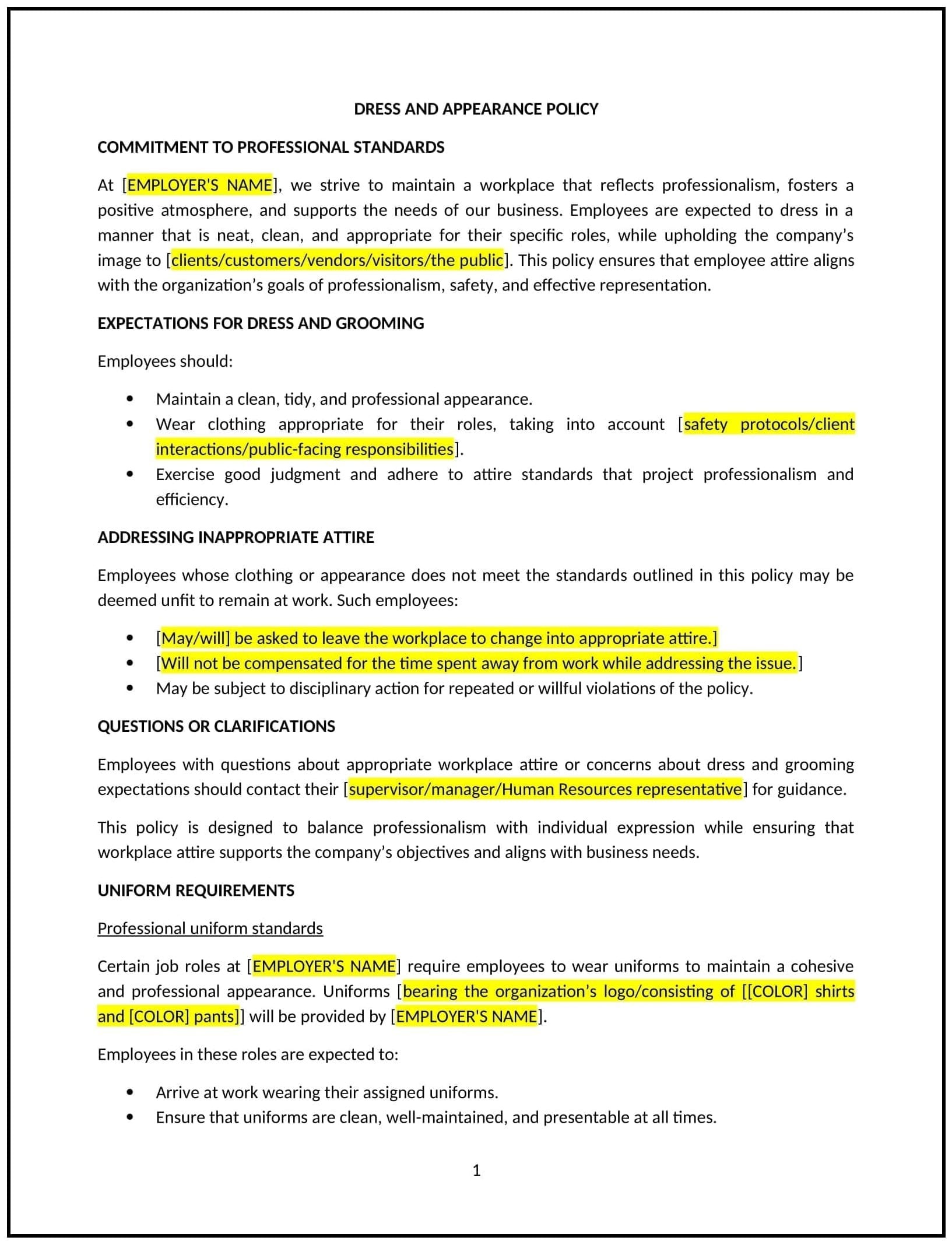
Dress and appearance policy (New York): Free template
Defines acceptable workplace attire to maintain professionalism while accommodating reasonable personal expression.
- Policies
- New York
Dress and appearance policy (New York): Free template
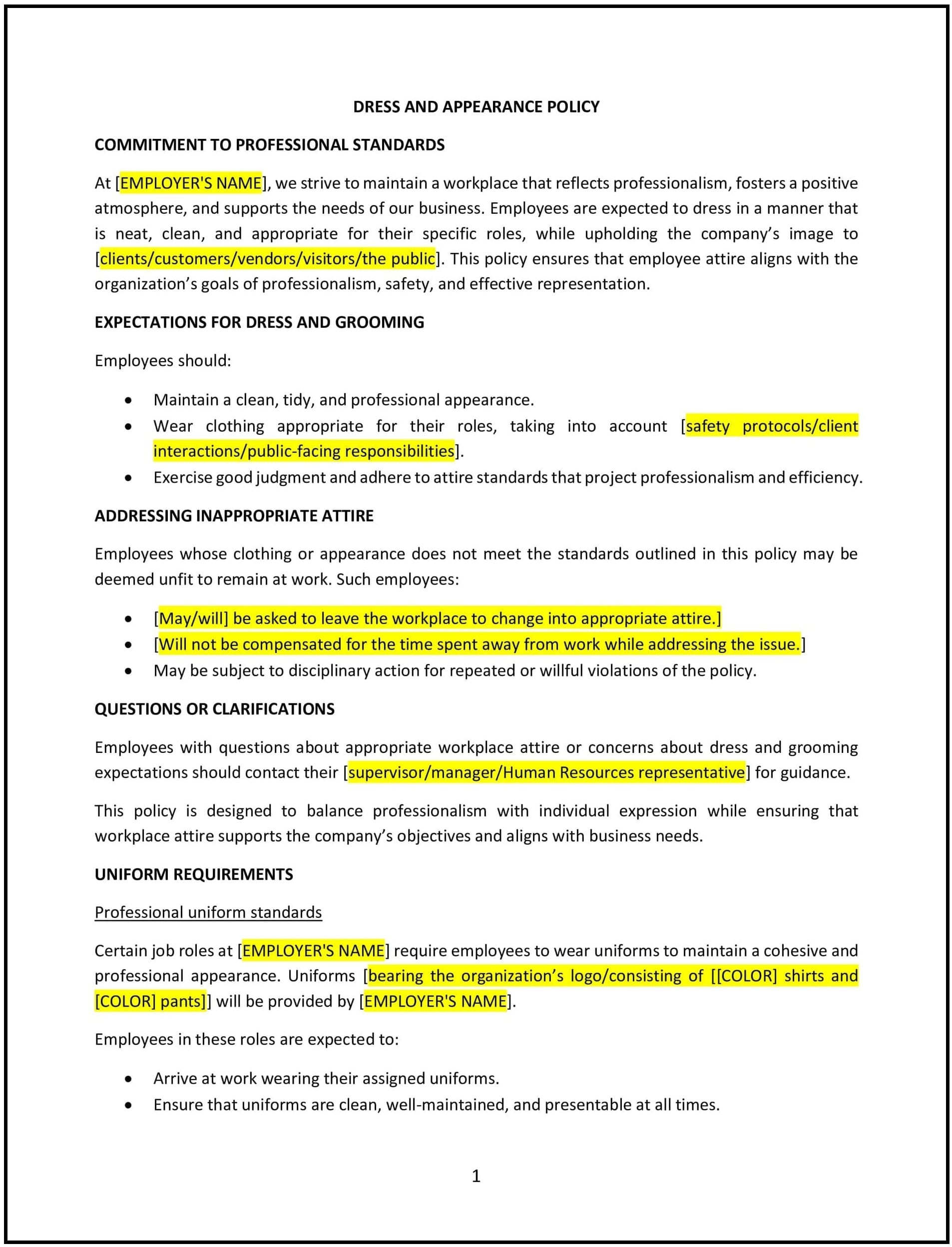
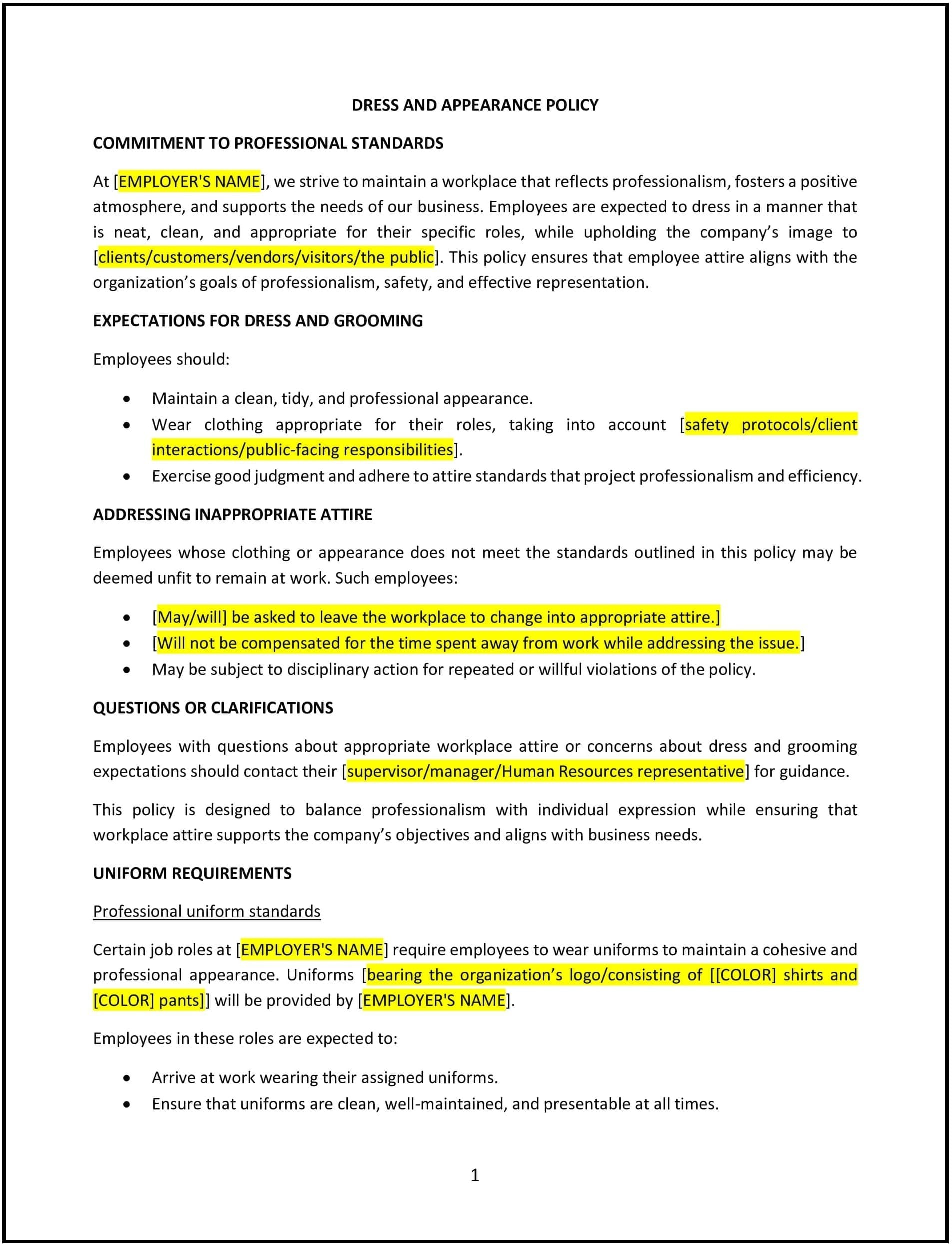
This dress and appearance policy is designed to help New York businesses establish clear expectations regarding workplace attire and grooming standards. Whether you’re maintaining a professional office environment, addressing safety concerns in industrial settings, or fostering a welcoming customer-facing space, this template ensures your guidelines are consistent and easy to follow.
By using this template, you’ll promote a professional image, support employee safety, and align with New York state laws regarding non-discrimination and workplace rights.
How to use this dress and appearance policy (New York)
- Define workplace attire expectations: Clearly outline acceptable dress codes based on the type of workplace, such as business casual for office roles, uniforms for customer-facing positions, or safety attire for industrial work.
- Address grooming and hygiene standards: Specify expectations regarding personal hygiene, grooming, and appearance, ensuring they are reasonable and inclusive. Avoid overly restrictive requirements that may lead to discrimination claims.
- Provide accommodations for personal needs: Include provisions for religious, cultural, and medical accommodations, ensuring compliance with New York Human Rights Law and federal regulations like Title VII.
- Focus on safety and functionality: Where applicable, outline mandatory safety attire, such as non-slip footwear, protective clothing, or hard hats, to align with workplace safety standards.
- Include enforcement procedures: Explain how the policy will be communicated, enforced, and updated. Clarify the steps employees should take if they have questions or require accommodations.
Benefits of using a dress and appearance policy (New York)
This policy offers several benefits for New York businesses:
- Promotes professionalism: Establishing clear expectations for attire and grooming helps maintain a polished and cohesive workplace image, especially in customer-facing or formal settings.
- Supports inclusivity and fairness: By including guidelines for accommodations and avoiding overly prescriptive standards, the policy fosters a respectful and inclusive workplace culture.
- Enhances safety compliance: For roles requiring safety attire, this policy ensures employees adhere to proper standards, reducing the risk of accidents or injuries.
- Reduces workplace conflicts: Clear and consistent guidelines help avoid misunderstandings or disputes related to dress code enforcement.
- Aligns with legal requirements: The policy ensures compliance with New York Human Rights Law and federal anti-discrimination laws, minimizing legal risks.
Tips for using this dress and appearance policy (New York)
- Be clear and specific: Use straightforward language to outline expectations, including examples of acceptable and unacceptable attire where necessary.
- Communicate proactively: Ensure employees are informed about the policy during onboarding, and reinforce it through regular training or updates.
- Offer flexibility: Provide options for employees to request accommodations related to cultural, religious, or medical needs. A formal process for these requests can help ensure consistency.
- Monitor and enforce consistently: Apply the policy fairly across all employees to avoid perceptions of bias or favoritism. Document any policy violations and actions taken.
- Regularly review the policy: Update the policy to reflect changes in New York labor laws, workplace safety requirements, or evolving workplace culture.
Frequently asked questions (FAQs)
Similar templates
Where deals go from offer to paid
