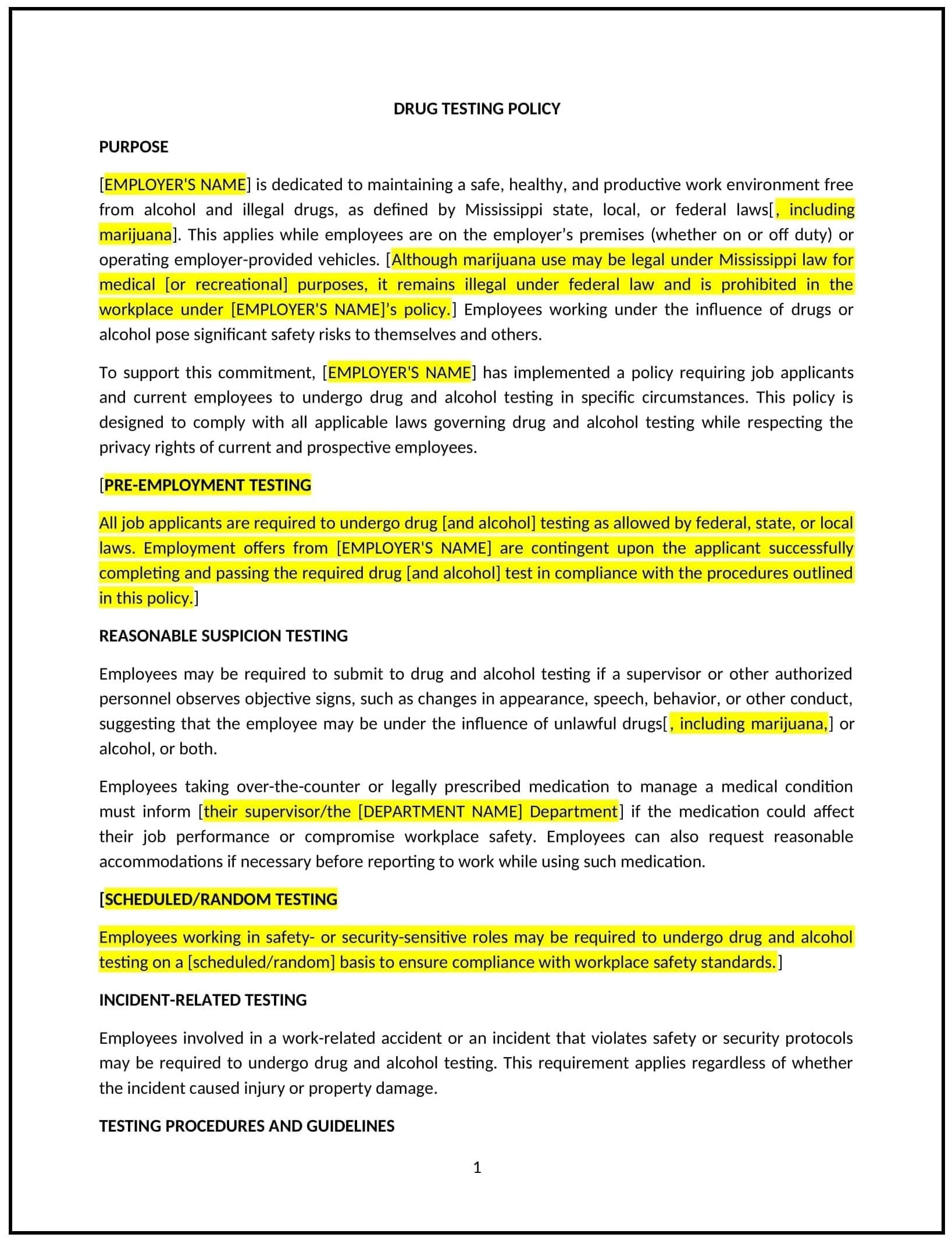
Drug testing policy (Mississippi): Free template
Specifies when and how drug and alcohol tests may be conducted to maintain a safe work environment.
- Policies
- Mississippi
Drug testing policy (Mississippi)
A drug testing policy helps Mississippi businesses ensure that employees maintain a safe, productive, and healthy work environment. This policy outlines the company’s stance on drug use and specifies when and how drug testing will be conducted, including pre-employment, random, and post-accident testing. The goal is to reduce the risks associated with substance abuse, improve workplace safety, and maintain legal compliance.
By implementing this policy, businesses can create a safe and supportive environment where employees are held accountable for their actions and encouraged to perform their jobs without the influence of drugs or alcohol.
How to use this drug testing policy (Mississippi)
- Define when testing will occur: Outline the circumstances under which employees will be required to undergo drug testing. This can include pre-employment testing, random testing, post-accident testing, and for cause testing (if there is reasonable suspicion of drug use).
- Specify the testing methods: Clearly describe the testing methods that will be used, such as urine, hair, or saliva tests, and the process for collecting and analyzing samples.
- Address consequences of positive results: Outline the consequences of a positive drug test, such as disciplinary actions, mandatory counseling, or termination of employment.
- Ensure privacy and confidentiality: Detail how employee privacy will be protected throughout the testing process, including safeguarding test results and maintaining confidentiality.
- Include testing during work hours: Specify whether employees will be tested during work hours or if they need to go to a testing facility outside of work hours.
- Outline the appeal process: Provide employees with the opportunity to appeal a positive test result if they believe it was inaccurate.
- Address testing for legal and prescription drugs: Clarify the company’s stance on employees using legally prescribed medications and how it may impact drug testing results.
- Promote awareness and education: Include provisions for educating employees about the drug testing policy, the dangers of drug use, and the benefits of maintaining a drug-free workplace.
Benefits of using this drug testing policy (Mississippi)
This policy provides several benefits for Mississippi businesses:
- Promotes a safe and healthy work environment: Drug testing helps to prevent accidents, injuries, and unsafe behavior caused by substance abuse, leading to a safer workplace for all employees.
- Improves productivity: By ensuring employees are not impaired by drugs or alcohol, businesses can reduce absenteeism, tardiness, and decreased job performance, leading to improved productivity.
- Reduces legal risks: A clear drug testing policy helps businesses comply with federal and state laws regarding drug use and workplace safety, reducing the risk of legal liabilities.
- Protects company reputation: Businesses that enforce drug-free policies demonstrate their commitment to a safe and professional work environment, enhancing their reputation among clients, customers, and stakeholders.
- Encourages employee well-being: Providing a drug-free workplace sends a positive message about the importance of health and wellness, supporting employees’ efforts to maintain healthy lifestyles.
Tips for using this drug testing policy (Mississippi)
- Communicate the policy clearly: Ensure that all employees understand the drug testing policy, including when testing will occur and the potential consequences of a positive result. This should be done during onboarding and through regular employee communications.
- Be consistent with enforcement: Apply the policy consistently across all employees to ensure fairness and transparency. Make sure that employees know the rules and understand that any violations will result in the same consequences.
- Provide education and support: Offer educational materials and programs on the risks of substance abuse and how employees can access support, such as counseling or rehabilitation services, if needed.
- Keep testing procedures confidential: Ensure that all drug testing is done in a manner that respects employee privacy and confidentiality, including keeping test results secure and limiting access to authorized personnel.
- Review and update the policy regularly: The drug testing policy should be reviewed periodically to ensure it remains compliant with current laws and regulations, and that it is still relevant to the business’s needs.
Frequently asked questions (FAQs)
Similar templates
Where deals go from offer to paid
