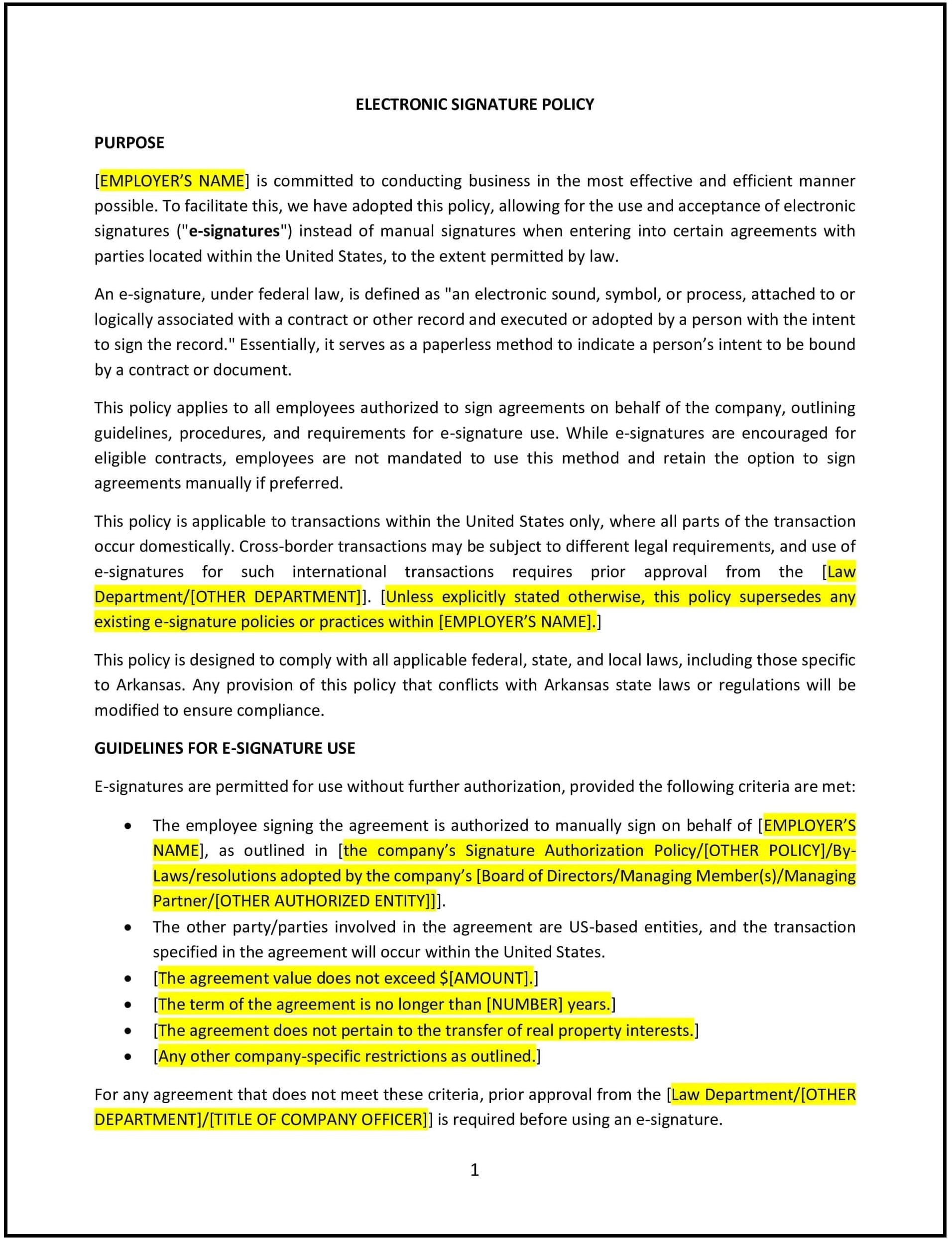
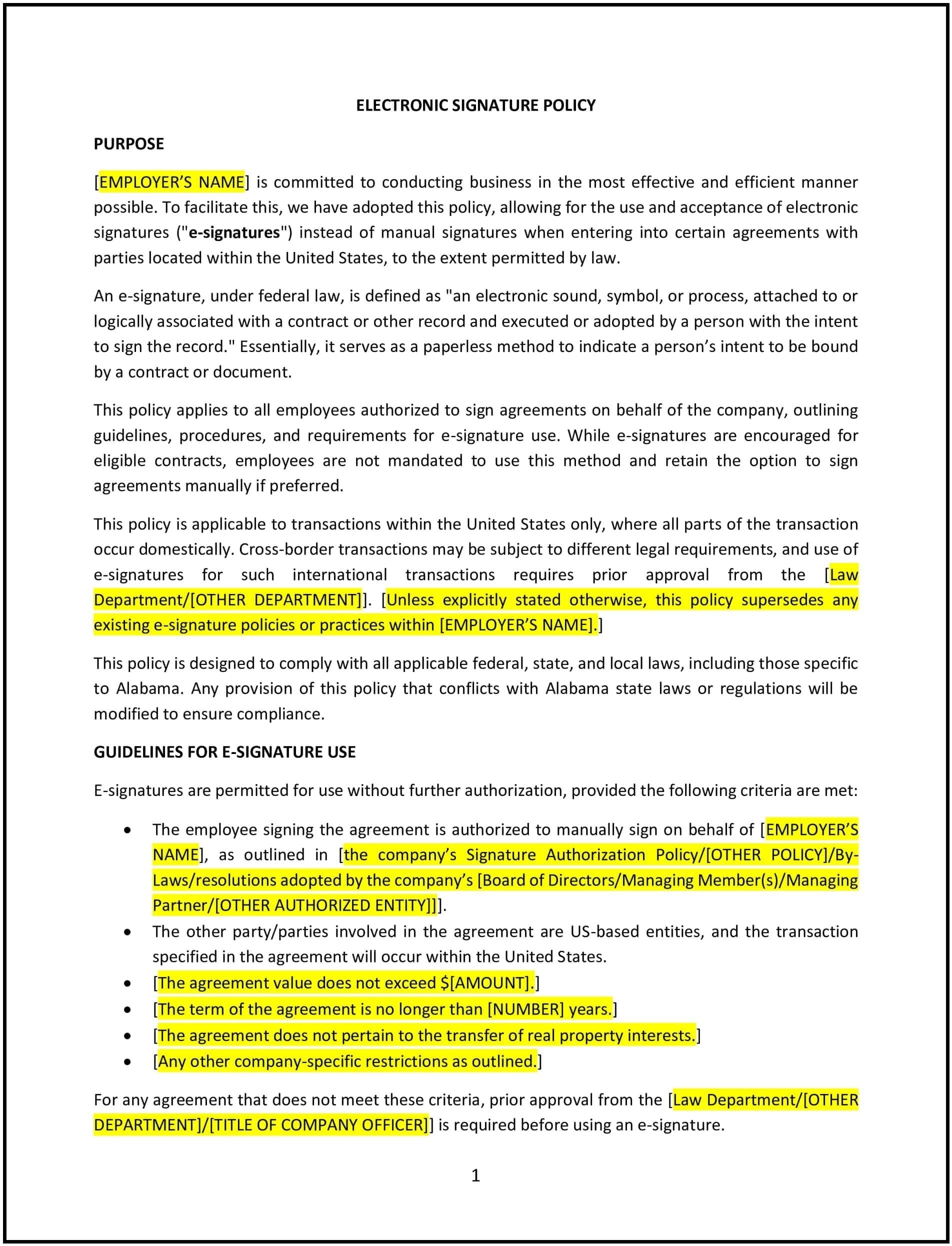
Electronic signature policy (Alaska): Free template
Specifies legally binding e‑signature usage, authentication, and retention standards under Alaska’s UETA.
- Policies
- Alaska
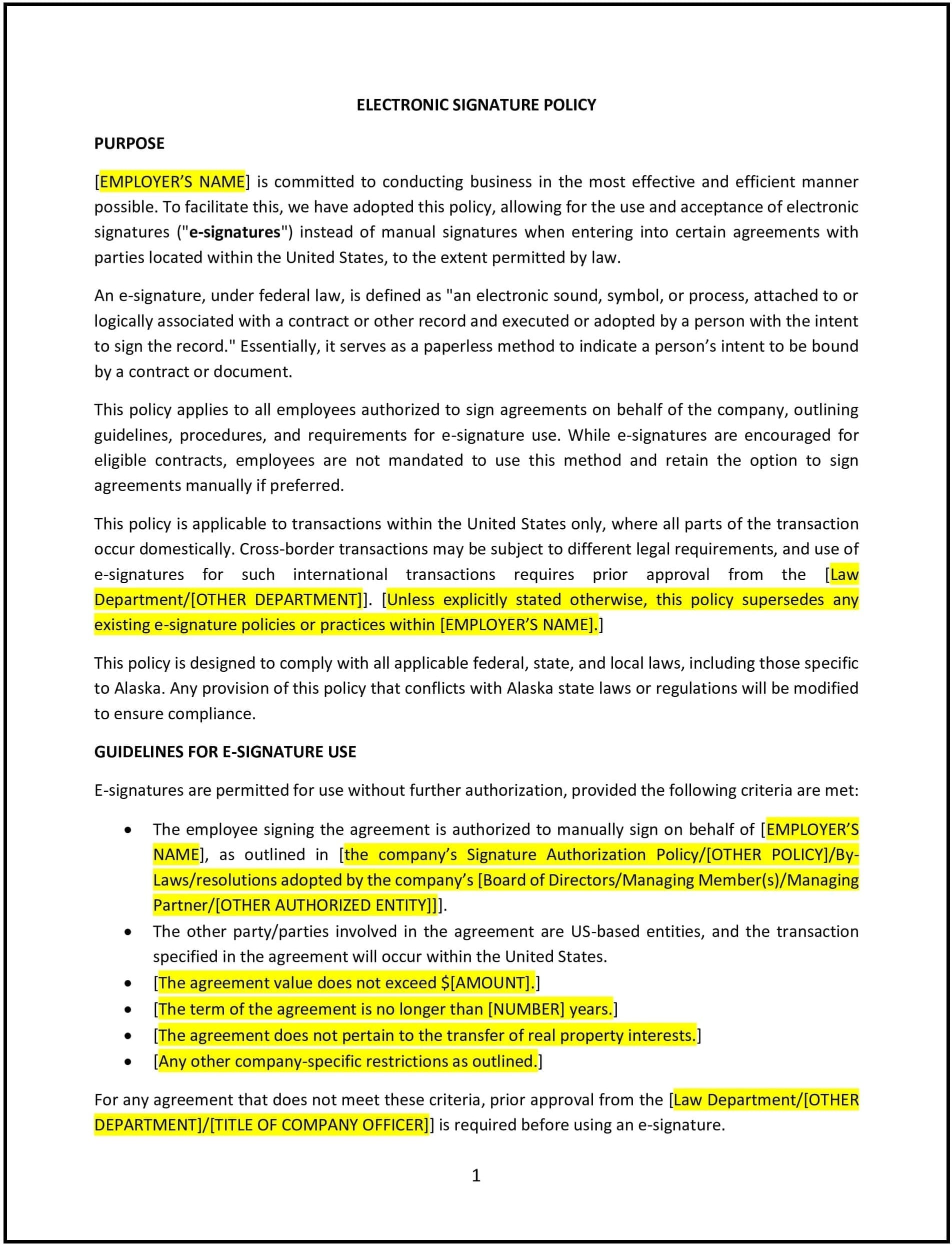
Electronic signature policy (Arkansas)
In Arkansas, an electronic signature policy provides businesses with guidelines for using electronic signatures (e-signatures) to execute documents securely and efficiently. This policy ensures that e-signatures are legally valid, properly managed, and compliant with Arkansas and federal laws, such as the Electronic Signatures in Global and National Commerce Act (E-SIGN Act).
This policy outlines acceptable e-signature tools, authentication processes, and record-keeping requirements. By implementing this policy, Arkansas businesses can streamline workflows, reduce paperwork, and enhance operational efficiency.
How to use this electronic signature policy (Arkansas)
- Define acceptable tools: Specify which e-signature platforms or technologies are approved for use by the business, ensuring they meet legal and security standards.
- Establish authentication procedures: Outline the steps to verify the identity of signatories, such as email verification, multi-factor authentication, or secure login credentials.
- Address legal validity: Ensure the policy aligns with Arkansas and federal laws, specifying when and how e-signatures are valid and enforceable.
- Set record-keeping standards: Provide guidelines for securely storing signed electronic documents, including retention periods and access controls.
- Communicate expectations: Ensure employees understand how and when to use e-signatures and the importance of adhering to the policy.
Benefits of using this electronic signature policy (Arkansas)
This policy offers several advantages for Arkansas businesses:
- Enhances efficiency: Speeds up document execution processes, reducing delays and improving workflows.
- Supports compliance: Aligns with Arkansas laws and federal regulations, ensuring the enforceability of e-signed documents.
- Reduces costs: Eliminates the need for printing, scanning, and storing paper documents, saving on operational expenses.
- Improves security: Ensures the authenticity and integrity of electronic documents through robust authentication and encryption measures.
- Promotes sustainability: Reduces paper usage, contributing to the business’s environmental goals.
Tips for using this electronic signature policy (Arkansas)
- Address Arkansas-specific considerations: Include state-specific requirements, such as laws governing specific types of contracts or records.
- Train employees: Provide training on the approved e-signature platforms and the importance of following authentication and security protocols.
- Monitor usage: Regularly review e-signature activities to ensure compliance with the policy and address any potential issues.
- Update as needed: Revise the policy periodically to reflect changes in legal requirements, technology, or business practices.
- Document processes: Maintain detailed records of all e-signature transactions, including authentication logs and signed documents, to ensure traceability.
Frequently asked questions (FAQs)
Similar templates
Where deals go from offer to paid
