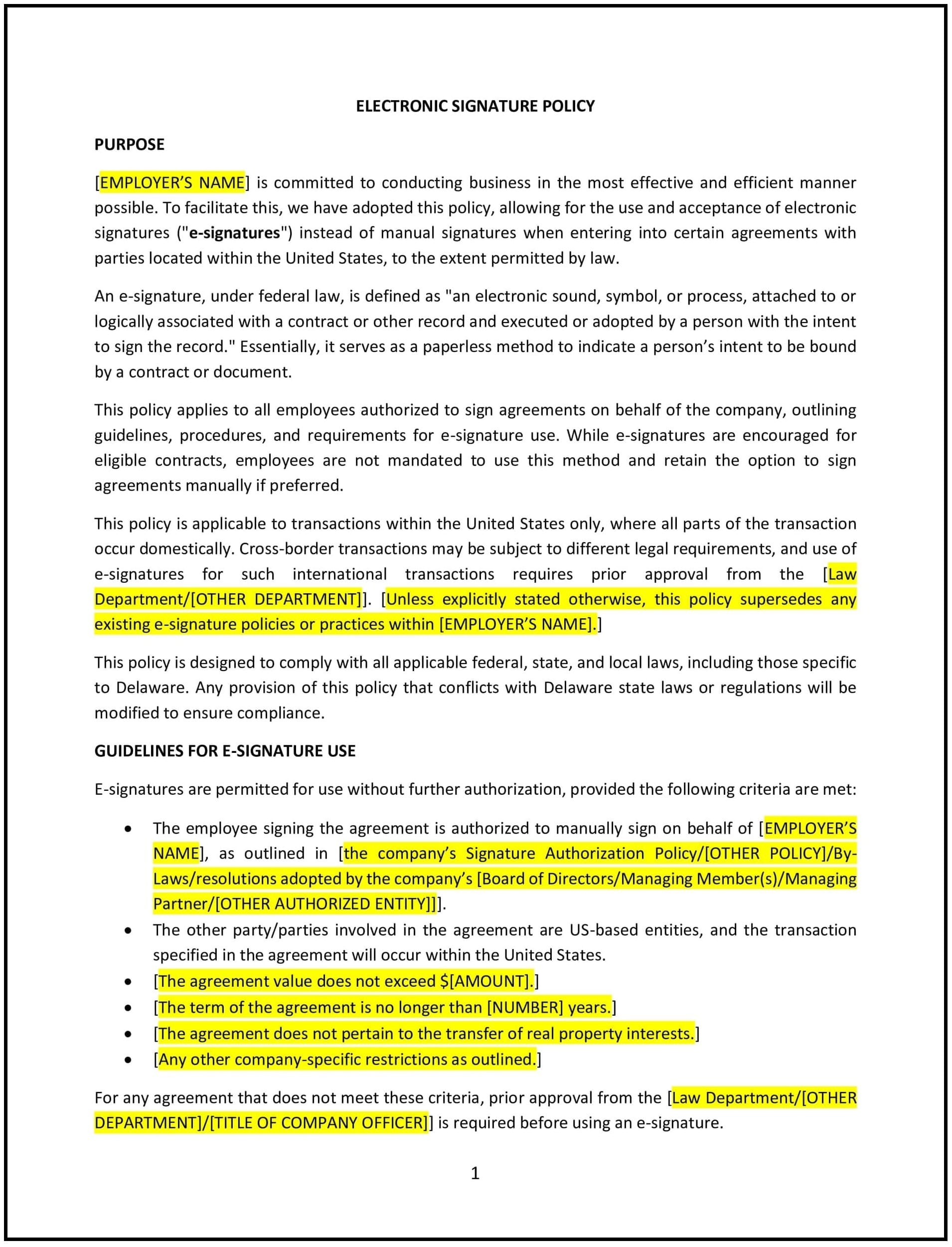
Electronic signature policy (Delaware): Free template
Authorizes secure electronic signatures, defining authentication, retention, and compliance with Delaware Uniform Electronic Transactions Act.
- Policies
- Delaware
Electronic signature policy (Delaware)
An electronic signature policy helps Delaware businesses establish guidelines for using electronic signatures in transactions and document approvals. This policy outlines the legal framework, acceptable use cases, and procedures to ensure compliance with Delaware’s Uniform Electronic Transactions Act (UETA) and other relevant regulations.
By implementing this policy, businesses can streamline processes, enhance efficiency, and ensure the security and validity of electronic signatures.
How to use this electronic signature policy (Delaware)
- Define acceptable use cases: Specify which documents and transactions are eligible for electronic signatures, such as contracts, approvals, or internal forms.
- Ensure legal compliance: Align the policy with Delaware’s UETA and federal laws like the ESIGN Act to validate electronic signatures.
- Specify technology requirements: Outline the approved platforms or software for creating, sending, and storing electronically signed documents.
- Address authentication methods: Require secure processes for verifying the identity of signatories, such as email verification, multi-factor authentication, or audit trails.
- Maintain record-keeping: Provide guidelines for storing electronically signed documents securely and ensuring they remain accessible for audits or legal purposes.
- Communicate limitations: Clarify situations where electronic signatures may not be acceptable, such as documents requiring notarization under Delaware law.
Benefits of using this electronic signature policy (Delaware)
This policy offers several benefits for Delaware businesses:
- Streamlines processes: Reduces the time and cost associated with obtaining handwritten signatures and managing physical documents.
- Enhances compliance: Ensures electronic signatures meet Delaware and federal legal requirements, reducing the risk of disputes.
- Improves security: Provides clear guidelines for secure authentication and storage of signed documents.
- Increases accessibility: Allows for faster and more convenient transactions, especially for remote or hybrid teams.
- Promotes environmental sustainability: Reduces reliance on paper, aligning with eco-friendly business practices.
Tips for using this electronic signature policy (Delaware)
- Communicate the policy clearly: Ensure all employees and stakeholders understand the acceptable use of electronic signatures and the approved platforms.
- Provide training: Offer guidance on using electronic signature tools and understanding legal compliance requirements.
- Use secure platforms: Choose software with robust security features, such as encryption and audit trails, to protect signed documents.
- Monitor compliance: Regularly review electronically signed documents to ensure they adhere to the policy and legal standards.
- Review and update: Periodically revise the policy to reflect changes in Delaware laws, technology, or business needs.
Frequently asked questions (FAQs)
Similar templates
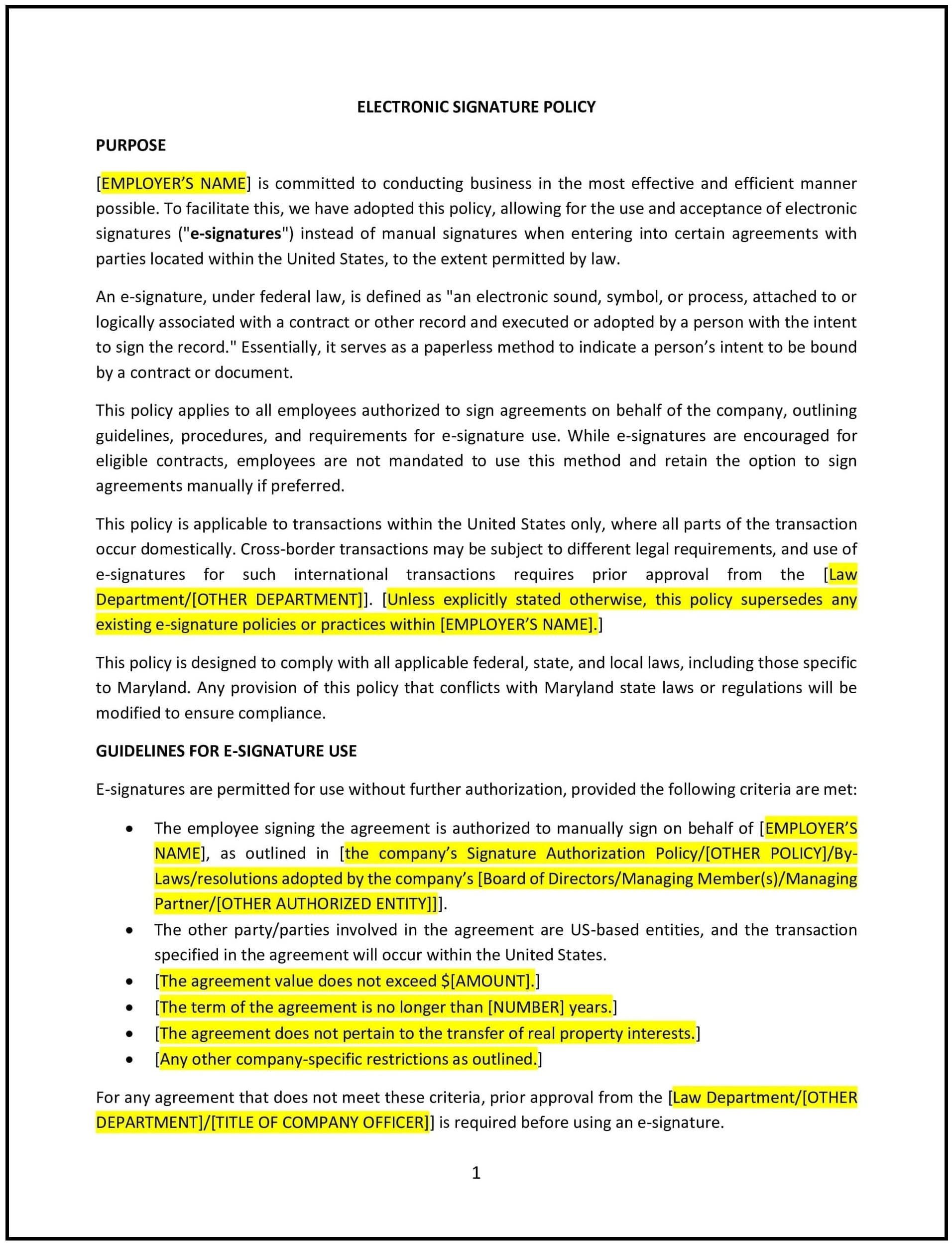
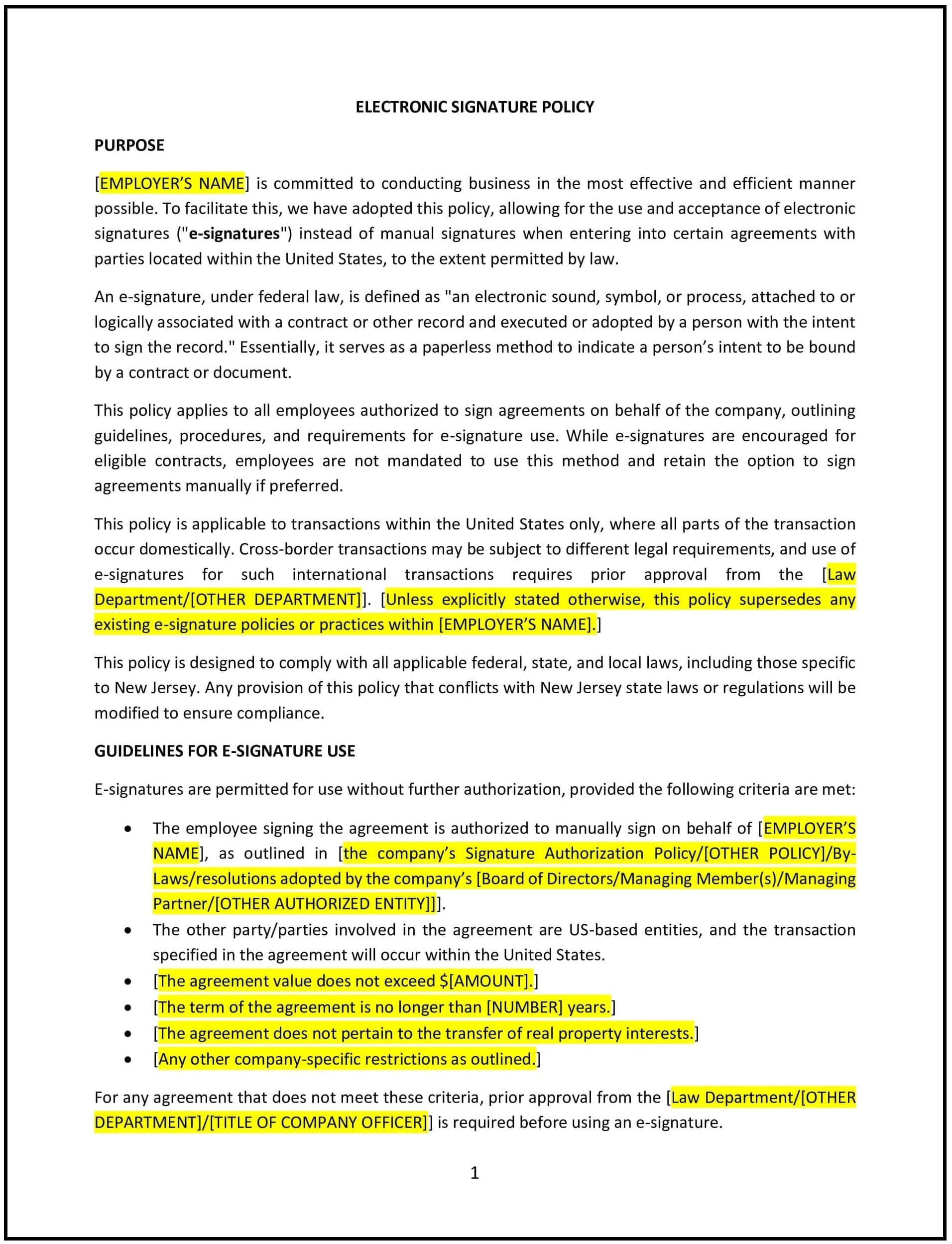
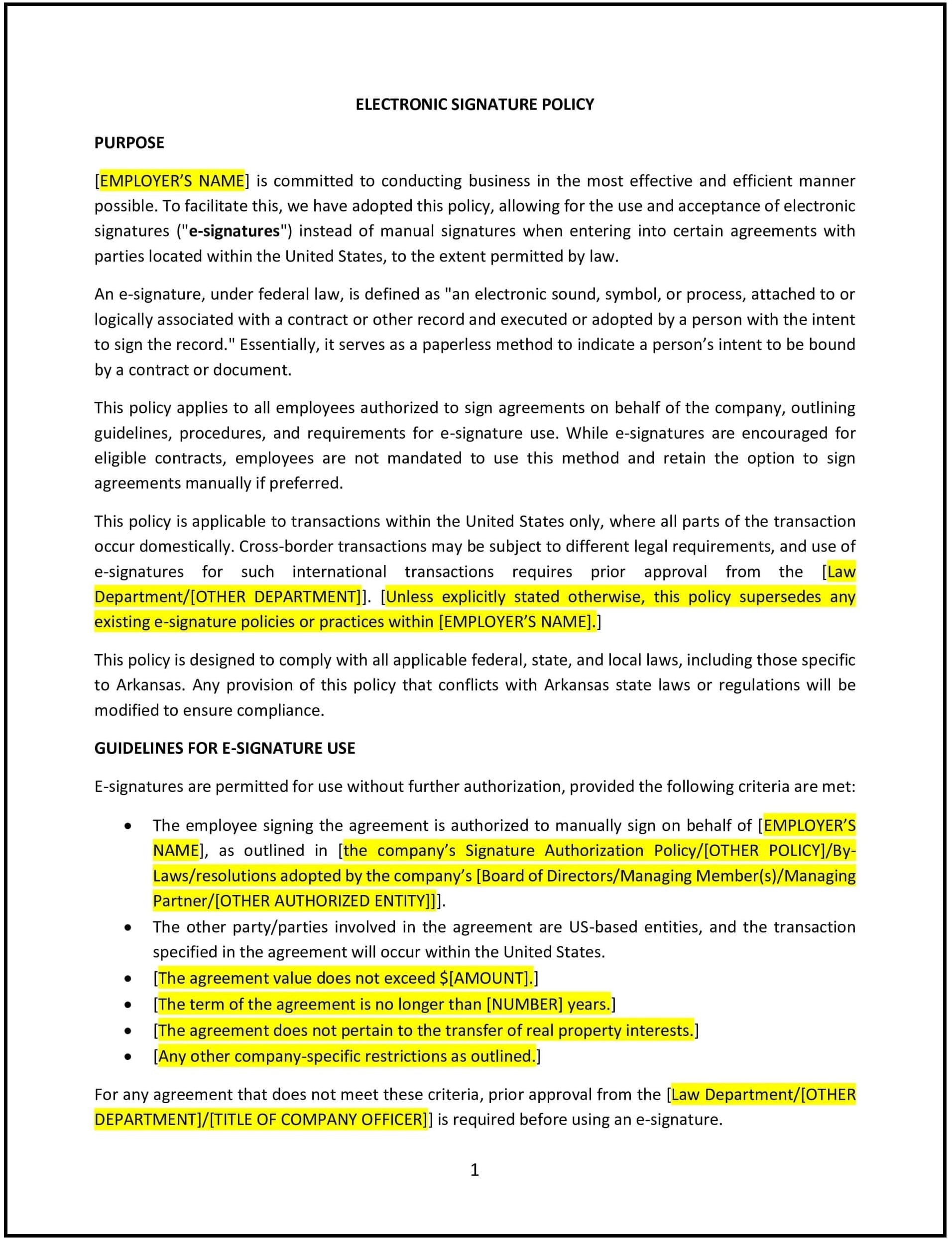
Where deals go from offer to paid
