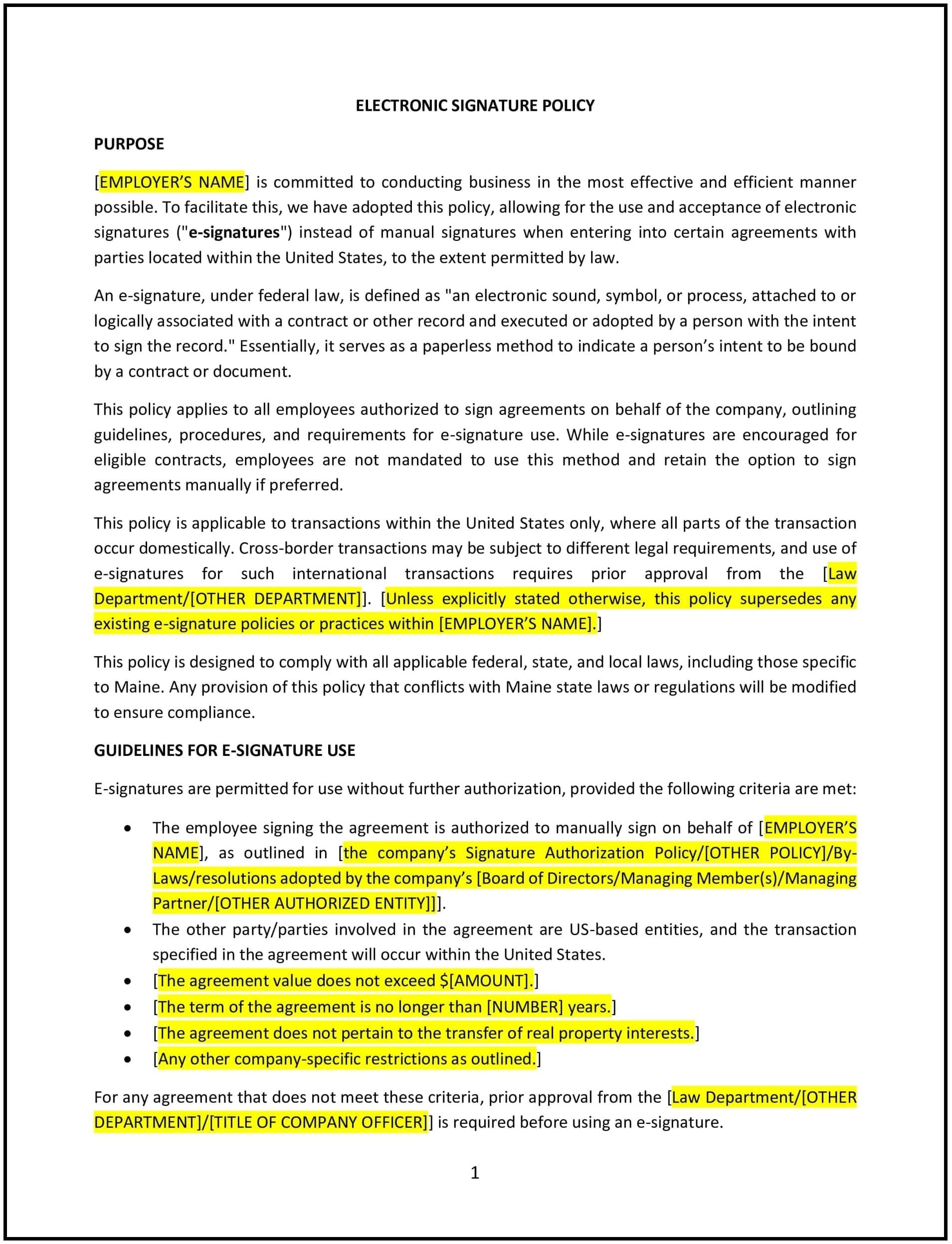
Electronic signature policy (Maine): Free template
Establishes guidelines for electronic signatures in Maine, covering legal validity, security, acceptable uses, compliance, and record-keeping procedures.
- Policies
- Maine
Electronic signature policy (Maine): Free template
This electronic signature policy is designed to help Maine businesses establish clear guidelines for using electronic signatures in contracts, agreements, and other official documents. It outlines the legal validity of electronic signatures, their appropriate use, and procedures to ensure security and support compliance with Maine and federal laws.
By implementing this policy, Maine businesses can streamline document workflows, enhance efficiency, and maintain the integrity of electronically signed documents.
How to use this electronic signature policy (Maine)
- Define electronic signatures: Specify what constitutes an electronic signature, such as typed names, digital certificates, or biometric methods.
- Outline acceptable uses: Detail the types of documents that can be signed electronically, such as contracts, invoices, or employee agreements.
- Establish security measures: Include steps to authenticate signers, such as password protection, two-factor authentication, or encryption.
- Address legal compliance: Ensure the policy aligns with Maine’s Uniform Electronic Transactions Act (UETA) and federal laws like the ESIGN Act.
- Provide record-keeping guidelines: Specify how electronically signed documents will be stored and accessed securely.
- Clarify limitations: Identify any documents or transactions that cannot be signed electronically under Maine law or business practices.
- Review regularly: Update the policy to reflect changes in laws, technology, or business needs.
Benefits of using this electronic signature policy (Maine)
Implementing this policy provides several benefits for Maine businesses:
- Enhances efficiency: Speeds up workflows by eliminating the need for physical signatures.
- Ensures compliance: Aligns with Maine and federal laws, ensuring the legal validity of electronic signatures.
- Reduces costs: Minimizes expenses related to printing, mailing, and storing physical documents.
- Promotes security: Implements safeguards to protect signed documents from tampering or unauthorized access.
- Increases accessibility: Allows signers to complete transactions remotely, improving convenience and flexibility.
Tips for using this electronic signature policy (Maine)
- Train employees: Provide guidance on the proper use of electronic signatures and security protocols.
- Use trusted software: Implement reliable e-signature platforms that comply with legal and security standards.
- Authenticate signers: Require identity verification measures to ensure the validity of signatures.
- Maintain backups: Store electronically signed documents securely and create backups to prevent data loss.
- Communicate clearly: Share the policy with employees and business partners to ensure alignment on expectations.
- Monitor compliance: Regularly audit the use of electronic signatures to identify and address any issues.
Frequently asked questions (FAQs)
Similar templates
Where deals go from offer to paid
